A tearful phone call from a friend this summer prompted a dharma reflection for me. She sounded spiritually distressed. Her practice and the love of the dhamma were strong, but the slippery minefield of concepts was tripping her up. She lamented that she wasn’t sure she was learning. If someone asked her to define mudita, for example, could she? Was she applying these elusive concepts correctly in the right moments? “Is anything sticking, going in?” she asked me.
I could relate. A memory came to mind from a long retreat, at the end of which I decided that I couldn’t teach anymore because I didn’t know anything. The teacher to whom I reported this decision responded, with much compassion, that she, too, had felt that way sometimes. “The dhamma is so vast,” she said. She then strongly suggested I look that doubt straight in the eye and continue.
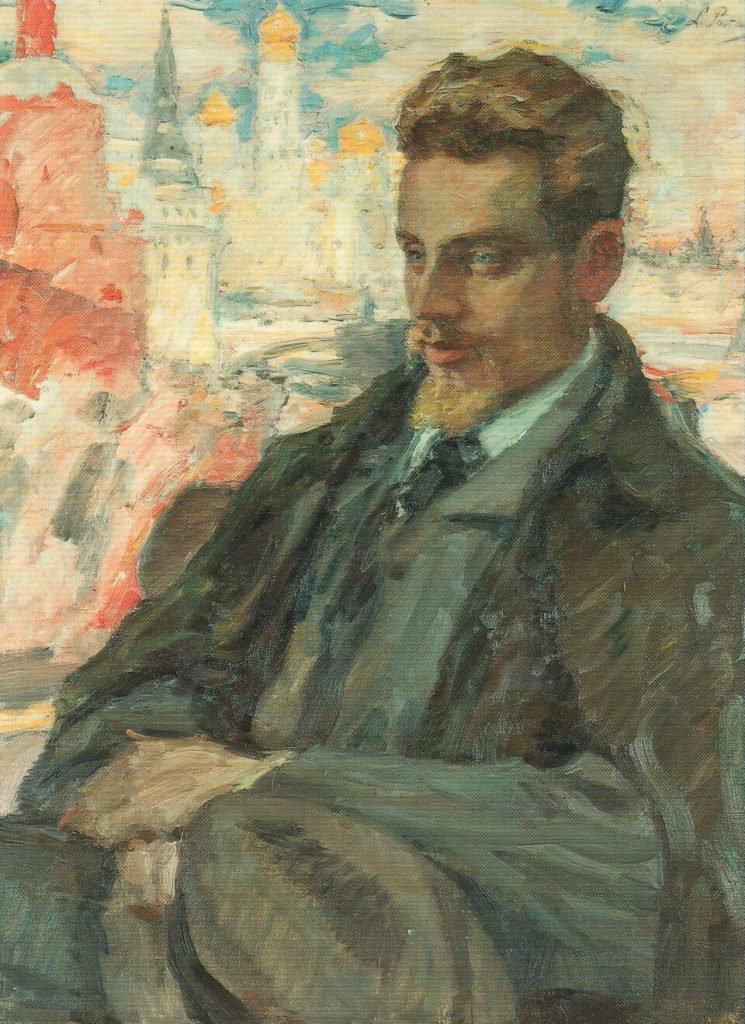
As practitioners, we’re called to live the teachings rather than theorize about them. We’re training our bodies, hearts, and minds not to achieve but to keep arriving at the truth of our present moment’s experience. In this way, understanding unfolds. As Rainer Maria Rilke in Letters to a Young Poet says, as translated by Stephen Mitchell:
“Have patience with everything unresolved in your heart and try to love the questions themselves, as if they were locked rooms or books written in a very foreign language. Don’t search for the answers, which could not be given to you now, because you would not be able to live them. And the point is, to live everything. Live the questions now. Perhaps then, someday far in the future, you will gradually, without even noticing it, live your way into the answer.”
We hear the Buddha’s teachings first with the mind. We reflect on them, practice them, and gradually they move from something we understand intellectually to something we know in our bones, something embodied and deeply integrated into who we are. Indian scholar-monk and Yogacara school cofounder Vasubandhu describes the progression essentially as having heard, one reflects; having reflected correctly, one engages in cultivation. In Vasubhandhu’s Abhidharmakosabhasya, wisdom (Skt: prajna) is divided into three fundamental types:
1. Wisdom through hearing/listening (Skt: srutamayi prajna)—receiving the teachings intellectually through hearing, study, or reading.
2. Wisdom through reflection (Skt: cintamayi prajna)—contemplating and questioning the teachings until they become personally understood and meaningful.
3. Wisdom through meditation/cultivation (Skt: bhavanamayi prajna)—directly experiencing and embodying the truth through practice, so that it is no longer merely something you know about.
In my friend’s case, I knew her to be heart-led, attuned to intuition, and sincere with embodiment. Perhaps the medicine was to renew faith and stay focused on direct experience. This was enough. However, as Joseph Goldstein has encouraged, “studying the dharma can give us access to enlarging our understanding of the Buddha’s teachings because our personal experience is always limited.” Thus, if more study was called for, then pursuing that, but not seeing conceptual blocks as a lack of progression.
I knew this to be true from personal experience. Last year, I had the good fortune to sit a monthlong meditation retreat and then afterward traveled to India to check in on my elderly parents. It was a difficult trip, mired in a few untenable dilemmas due to mental illness and physical diminishment. In other words, I was triggered at every turn and my nervous system was on high alert, but I didn’t keel over. Long after I returned home to the United States, I remembered that during challenging moments, I had noticed something sliding in. I didn’t think then, “Oh, I’m applying equanimity here.” Equanimity arose. I literally felt the support of the earth element shoring me up. I had the space to respond to things rather than explode or act unskillfully. I was able to be fully present with the suffering of my parents and understand what was controllable and what was asking for surrender.
I didn’t think then, “Oh, I’m applying equanimity here.” Equanimity arose.
It was clear that when I first heard the formal teachings on equanimity early in my practice, a part of me had recognized those qualities and found them very appealing. I had read books where equanimity was fleshed out, heard many dharma talks on the topic, and discussed it extensively in my Kalyana Mitta groups. But my experience of equanimity was revealed to me only through practice. When I needed it, equanimity showed up. The small “I” had nothing to do with making it happen. As Andrea Fella put it, “The brahmaviharas are the map of the heart when it stops clinging.” Embodied, consistent, dedicated practice is when the fetters of greed, hatred, and delusion begin to fade, our conditioned habit patterns shift, and true transformation becomes a reality.
It’s all a marvelous mystery. The encouragement, then, is to trust the process and allow the practice to unfold.

Thank you for subscribing to Tricycle! As a nonprofit, we depend on readers like you to keep Buddhist teachings and practices widely available.