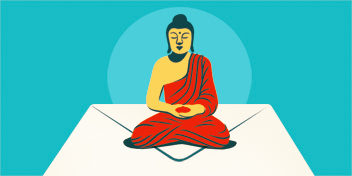

Thirty-one years ago, when the book Thoughts without a Thinker: Psychotherapy from a Buddhist Perspective came out, Buddhism and psychotherapy were not the obvious pairing they are today. Author Mark Epstein was an early voice in explaining how Buddhism is relevant to psychotherapy. Drawing on his own clinical work and personal experience, he showed how Buddhist meditation and methods of analytic inquiry into the self are fundamentally aligned with the practice of psychotherapy. Going further, he pointed out that while psychotherapy can identify what ails us, it doesn’t offer a path to freedom from the self’s craving. Buddhism does.
Yes, Buddhism teaches there is no self, but Epstein argues that we have to uncover how the self appears in order to diminish its hold. Yes, the goal of Buddhism is to find freedom from the suffering of samsara—the cycle of birth, death, and rebirth—but Buddhist wisdom can have a concrete impact on everyday life.
The landmark Thoughts without a Thinker was recently re-released with a new preface by Epstein. Join us on November 9 for an interview with Epstein to hear about this influential book and its enduring relevance.
Speaker

Mark Epstein
Mark Epstein is a psychiatrist and author who has written widely on the interface of Buddhism and psychotherapy. His best-selling books include Thoughts without a Thinker, Going to Pieces without Falling Apart, The Trauma of Everyday Life, and What the Buddha Felt. His latest work is The Zen of Therapy: Uncovering a Hidden Kindness in Life.
-
DETAILS
- Date: November 9, 2026
- Time: 3 p.m. – 4 p.m. ET
- Format: Zoom
- Price: Free this month