Tibetan Buddhism
Tibetan Buddhism is the form of Vajrayana Buddhism that developed in Tibet and the surrounding Himalayan regions. Over more than a thousand years, it brought together Indian, Central Asian, and Chinese Buddhist teachings. It also reflects the cultural and historical heritage of Tibet itself. Many people first encounter it through its visual culture: intricate mandalas, elaborate rituals, and images of peaceful and wrathful deities. Behind these forms, however, lies a complex, living tradition rooted in centuries of training, scholarship, and monastic life. This page introduces key ideas, schools, figures, texts, and practices that have shaped Tibetan Buddhism, both in Tibet and beyond.
Table of contents
- History of Tibetan Buddhism
- Tibetan Buddhist Schools
- Ngondro: Foundational Practices
- Lojong and Tonglen
- Chöd: Severance Practice
- Dzogchen and Mahamudra
- Dark, Three-Year, and Wandering Retreats
- Lamas, Rinpoches, and Tulkus
- The Dalai Lama Lineage
- Key Figures of Tibetan Buddhism
- Key Tibetan Buddhist Texts
- The Tibetan Buddhist Canon: Kangyur and Tengyur
- Tibetan Buddhism in the West
History of Tibetan Buddhism

Buddhism first took root in Tibet during the Yarlung dynasty in the 7th century. Songtsen Gampo (605–650), the thirty-third king, played a foundational role. He invited Indian Buddhist teachers, developed the Tibetan alphabet, and sponsored the construction of temples. His wives, princesses from Nepal and China, also supported Buddhism early on. Tradition credits them with bringing the sacred statues still enshrined in the Jokhang, Lhasa’s most revered temple.
In the 8th century, King Trisong Detsen (742–797) invited the Indian masters Shantarakshita and Padmasambhava to establish Buddhism more firmly. Together, they founded Samye, Tibet’s first monastery. They hosted landmark debates between Indian and Chinese monks on the topic of gradual versus sudden enlightenment. Royal support enabled the translation of Sanskrit texts into Tibetan. Buddhism then flourished until the mid-9th century, when an assassin killed King Langdarma. His death marked the start of political unrest and institutional decline. Tibetan historians call this the age of fragmentation or the dark age. While traditional accounts cite religious persecution, many scholars point instead to widespread economic hardship across Asia during this period.
By the 11th century, a revival had begun. Indian teachers traveled to Tibet, and Tibetans journeyed to India to study and translate tantric scriptures. These transmissions gave rise to the “new” traditions (Tib.: sarma): Kadampa, Kagyu, and Sakya. In contrast, older lineages began calling themselves Nyingma, meaning “ancient ones.” The Bön tradition, blending pre-Buddhist Tibetan practices with Buddhist elements, also emerged as a distinct school during this second wave.
Although Buddhism declined in India, Tibetan Buddhism spread to Mongolia, Bhutan, Nepal, and parts of modern-day Russia and India. During the Yuan dynasty (1271–1368), Tibetan lamas advised Mongol rulers, including Kublai Khan (1215–1294). With Mongol support, the Fifth Dalai Lama (1617–1682) unified much of Tibet under Gelug rule.
In 1959, the Chinese People’s Liberation Army invaded Tibet. The Fourteenth Dalai Lama, Tenzin Gyatso (b. 1935), fled into exile with thousands of Tibetans. Since then, many Tibetan Buddhist leaders have worked to preserve their teachings and traditions across a growing global diaspora.
Tibetan Buddhist Schools

As Tibetan Buddhism gained prominence, distinct schools developed around influential lamas and teachers.
The Nyingma tradition traces its origins back to the earliest wave of Buddhist transmission in Tibet. It looks especially to the teachings of the 8th-century master Padmasambhava, also known as Guru Rinpoche. This tradition emphasizes indigenous scriptures and dzogchen, or great perfection, meditation. During the dark age, when centralized support for Buddhism collapsed, lay communities largely preserved these lineages.
The Kadampa emerged in the 11th century through the Indian master Atisha (982–1054). He spent the last twelve years of his life teaching in Tibet. His lay disciple Dromtön (1004–1064) founded the school, which emphasized monastic discipline, ethical conduct, and mind training practices.
The Kagyu school also developed in the 11th century. Its lineage runs through the Indian tantric masters Tilopa (988–1069) and Naropa (ca. 11th century). From them it passed to the Tibetan translator Marpa (1012–1097), and his disciple Milarepa (1040–1123). Milarepa’s student Gampopa (1079–1153) systematized the tradition, which branched into several sub-schools, most notably the Karma, Drikung, and Drukpa Kagyu.
Khon Konchok Gyalpo (1034–1102) founded the Sakya school. His descendants still lead the tradition in an unbroken family line. Sakya owes much of its reputation to the lamdre (“path and result”) teachings, which draw on Indian tantric systems. Its scholars made lasting contributions to Tibetan philosophy.
The Bön tradition incorporates pre-Buddhist Tibetan rituals alongside Buddhist elements. It began to differentiate itself more clearly during the new translation period. Today, it stands as the fifth major school of Tibetan Buddhism. The Jonang tradition arose somewhat later, focusing on the Kalachakra Tantra. It also holds a distinctive view of other-emptiness (shentong), developed by Dölpopa (1292–1361).
The Gelug school, the youngest of the major traditions, is based on the teachings of Tsongkhapa (1357–1419). It emphasizes monastic discipline and rigorous philosophical analysis. The Fifth Dalai Lama’s political consolidation elevated the Gelug school while marginalizing others, such as the Bön and Jonang. In modern times, the Fourteenth Dalai Lama has worked to foster unity among all schools.
Throughout Tibetan history, these traditions have had a profound influence on one another. In the 19th century, the rimé (nonsectarian) movement emphasized the value of each school. The current Dalai Lama continues this legacy, especially in the context of preserving Tibetan Buddhism in exile.
Ngondro: Foundational Practices

All Tibetan Buddhist schools emphasize a foundational set of practices known as ngondro, or foundational practices. Practitioners often undertake these before engaging in more advanced teachings, particularly tantric practices. Tradition divides ngondro into two stages. General contemplations establish the motivation for practice. Specific ritual practices then purify obscurations, generate merit, and open the student to the blessings of the lineage.
The first stage consists of the four thoughts that turn the mind toward the dharma:
- The rarity and preciousness of human birth
- The impermanence of all things
- The law of karma—cause and effect
- The pervasive suffering of samsara, or cyclic existence
These reflections serve to awaken a deep sense of urgency and direction on the Buddhist path. Traditional presentations describe in detail the six realms of rebirth and the consequences of unwholesome actions. Modern teachers, particularly those teaching in Western contexts, may instead frame these contemplations in psychological or existential terms. This framing emphasizes their potential for transforming the mind.
The second stage involves a series of ritualized practices, typically performed in retreat or as part of a daily regimen. Though details vary by lineage, the core practices usually include:
- Bodily prostrations, which express devotion and purify pride
- Recitation of the Hundred-Syllable Mantra of Vajrasattva, the buddha of purification
- Mandala offerings, which cultivate generosity and nonattachment
- Guru yoga, visualizes the root teacher as inseparable from a central lineage figure like Padmasambhava, Tsongkhapa, or the Karmapa.
Traditionally, practitioners repeat each practice 100,000 times or more, though the requirement is not absolute. Many practitioners today incorporate these foundational practices into their daily routines, especially when on pilgrimage or visiting monasteries.
Ngondro serves as essential preparation for advanced tantric practices and meditation. It also grounds students in ethics, devotion, and mental clarity. While teachers have made various adaptations for modern students, the foundational practices remain central in all Tibetan Buddhist schools.
Lojong and Tonglen

Lojong, or “mind training,” is a key Tibetan Buddhist method for transforming self-centeredness and cultivating compassion. The practice aims to shift the focus from oneself to others, helping practitioners develop resilience, emotional openness, and altruistic intention. The Kadam school, or Kadampa, first systematized lojong in the 11th century, and all major Tibetan traditions later adopted it.
Lojong teachings draw from Indian sources, especially Atisha (982–1054) and Shantideva’s Way of the Bodhisattva (Skt.: Bodhicaryavatara). This influential Mahayana text outlines the bodhisattva’s path of wisdom and compassion. Tibetan teachers drew on these sources to compile lists of short, memorable slogans. Students internalize these and apply them in daily life. Examples include: If you can practice even when distracted, you are well trained. Another is Don’t wait in ambush, meaning don’t hold grudges while waiting for the perfect moment to take revenge.
These slogans foster a mindset of equanimity and empathy, enabling practitioners to utilize challenging circumstances for self-cultivation. Practitioners often combine lojong with meditation, contemplation, and ethical discipline.
One of the most widely taught lojong practices is tonglen, also known as sending and taking. In this visualization-based meditation, the practitioner breathes in the suffering of others, perhaps imagining a thick, black smoke. The suffering then dissolves in the heart. On the outbreath, one sends out healing, peace, or happiness, represented as light or fresh air. This exchange inverts the typical habits of avoiding pain and prioritizing personal comfort.
Practitioners can take up tonglen in formal sitting meditation or on the spot during emotionally charged situations. As American Buddhist teacher Pema Chödrön notes, it is especially powerful when applied to personal challenges. While widely accessible, tonglen can be emotionally intense, and teachers often advise beginners to start under guidance.
Together, lojong and tonglen provide practical tools for cultivating compassion and embracing adversity on the path to awakening.
Chöd: Severance Practice

Chöd, meaning “severance” or “cutting through,“ is one of Tibetan Buddhism’s most evocative practices. The practice draws on Mahayana philosophy and tantric ritual. It challenges practitioners to confront and relinquish deep-rooted attachments, especially the attachment to the self. In its central visualization, practitioners offer their bodies as a feast to demons, spirits, and obstructive forces. This radical act of generosity that embodies the Mahayana ideal of compassion. Severing ego-clinging and fear transforms self-centeredness into empathy and a desire to alleviate others’ suffering.
Ritual instruments play a key role in chöd practice. A chöda (a large drum) and kangling (a trumpet made from a human femur) summon spirits to the feast. A karika (a curved ritual knife) symbolizes cutting through attachment. Combined with haunting melodies and chants, these elements help create an atmosphere that intensifies the practice.
Chöd traditionally takes place in charnel grounds, graveyards, or other sites associated with death. These settings deliberately evoke fear, bringing practitioners face-to-face with the impermanence of life. In some Tibetan regions, chöd has even entered into sky burial rites. There, ritual specialists cut the body and offered it to scavenging animals, mirroring the practice’s symbolic offering.
In addition to personal practice, chöd has long served a healing and protective function in Tibetan communities. Practitioners may perform chöd on behalf of the sick, the suffering, or anyone believed to suffer from harmful forces. Tibetans credit the practice with dispelling obstacles, clearing karmic blockages, and restoring energetic balance. These functions keep chöd popular among monastics and lay practitioners.
Chöd has roots in Indian Buddhism, especially in the teachings on the pacification of suffering (Tib.: zhi byed). These come from Padampa Sangye (ca. 11th–12th), but chöd reached full development in Tibet. The renowned female practitioner Machig Labdron (1055–1149) synthesized Indian tantric methods with Tibetan elements. She created her own lineage of mahamudra chöd. This version of the practice became especially influential in the Nyingma, Kagyu, and Bön traditions.
In contemporary contexts, especially in the West, teachers often interpret the demons and spirits of chöd as “inner demons.” These include habitual emotions, mental afflictions, and psychological fears. This framing also appears in older Tibetan texts, but it has gained prominence in the modern era. Whether understood literally or symbolically, chöd remains a powerful practice for cutting through self-grasping and cultivating fearless compassion.
Dzogchen and Mahamudra

Dzogchen (“great perfection”) and mahamudra (“great seal”) are two advanced forms of Tibetan Buddhist meditation. The Nyingma tradition emphasizes dzogchen, while Mahamudra remains central to the Kagyu tradition. Both trace their origins to Indian Buddhist teachings, which Tibetan masters later refined and systematized. Scholars have noted similarities between dzogchen and Chinese Chan. Each approach emphasizes the direct realization of the mind’s nature. However, these traditions developed largely independently of each other. Over time, numerous masters adopted Dzogchen and Mahamudra practices. Even the Fifth Dalai Lama, a major Gelug political and religious figure, studied Dzogchen with a Nyingma teacher.
Both meditation systems point to the mind’s natural clarity and awareness, which practitioners recognize rather than create. Instead of focusing on an external object, such as the breath, they rest in open awareness and observe consciousness itself. Central to this process is the use of “pointing-out instructions” (Tib.: ngo sprod). In these, a qualified teacher directly introduces the student to the nature of mind. Teachers may draw these instructions from traditional texts or give them spontaneously, depending on the context.
Dzogchen and mahamudra carry a reputation as effortless paths, but neither is casual or easy to follow. Foundational practices typically precede them, often including tantric visualizations, mantra recitation, and ethical training. Practitioners must prepare thoroughly and receive instruction from a skilled teacher. Without sufficient grounding, there is a risk of misunderstanding these subtle teachings.
While traditionally reserved for advanced students, some modern lamas have made these teachings more accessible to a broader audience. Tulku Urgyen Rinpoche (1920–1996), for example, gave pointing-out instructions to visitors at his monastery in Kathmandu. He sometimes offered them even to beginners. His sons, including Mingyur Rinpoche and Chokyi Nyima Rinpoche, have helped bring these teachings to a global audience. Today, both lay and monastic students take up dzogchen and mahamudra, often through modern retreats and online instruction. Though presented in new formats, they continue to offer a direct path to realizing the mind’s innate freedom and clarity.
Dark, Three-Year, and Wandering Retreats

In Tibetan Buddhism, long retreats offer a powerful means of deepening meditative experience and strengthening commitment to the path. While most practitioners never undertake long retreats, those who do often follow specific formats that have developed over centuries. Among the most well-known are dark retreats, three-year retreats, and wandering retreats.
Dark retreats are in complete darkness, sometimes for weeks or even months. These retreats connect closely to advanced dzogchen practice, particularly the visionary techniques of thögal. They require significant prior training and experience. In complete sensory isolation, meditators report vivid sensory experiences that reveal the nature of mind and reality. Practitioners historically undertook dark retreats in mountain hermitages, sealed huts, or caves. The format has recently gained interest outside Buddhist contexts, often among individuals with little meditation experience. This has raised concerns among traditional teachers, who emphasize the need for proper preparation and guidance.
The three-year retreat is a standard model across Tibetan schools today. Yet it only became widespread in the 19th century. The tradition took shape for mahamudra practitioners, drawing on the Kalachakra Tantra. That text sets the retreat’s precise length: three years, three months, and three days. Typically, practitioners undertake a three-year retreat as a group in a remote setting. In the Gelug tradition, they often go alone. Today, completing a three-year retreat usually confers the title of lama or teacher (see below).
In a wandering retreat, practitioners travel from place to place. They spend time in isolated hermitages or wilderness areas, never settling in one location for long. Milarepa, the renowned Tibetan yogi and poet, popularized this style, and devoted meditators have followed it for centuries. Mingyur Rinpoche (b. 1975) continued this tradition by undertaking a wandering retreat from 2011 to 2015 across India and Nepal.
Each retreat style reflects a different way of deepening one’s commitment to the path. Some rely on seclusion, others on structured practice or the open journey of the wandering mendicant.
Lamas, Rinpoches, and Tulkus

Monastics have long been central to Tibetan Buddhism. Major monasteries once housed thousands of monastics, and even small villages typically supported at least one monastic institution. Families often encouraged one child to ordain as a way to generate merit. Tibetan monastics usually devote their days to study, ritual, and mentoring junior monastics, rather than to solitary meditation. Some undertake extended retreats, but in hermitages away from the main monastery. Most monastics remain celibate. Some lineages integrate family life with serious practice, including the Sakya and Nyingma traditions of lay tantric yogis (ngagpa). Nuns have historically received less institutional support and recognition. Many have still earned wide respect as practitioners and teachers in their own right.
The title lama, translating the Sanskrit word guru, refers to a revered teacher. Traditionally, the term did not denote a specific attainment. However, today it often refers to someone who has completed a three-year retreat. It also serves as an honorific for both monks and lay teachers. Nuns commonly go by ani. The title rinpoche, meaning “precious one,” usually belongs to high-ranking teachers, especially those recognized as tulkus.
Tibetan tradition identifies a tulku as the reincarnation of a previous master who returns to continue guiding students. Recognized in childhood through divination or ritual tests, tulkus grow up and study within their predecessor’s monastery. They may be male or female, monastic or lay. The tulku system emerged in the 12th and 13th centuries and has since become deeply embedded in Tibetan religious institutions. Tulkus often inherit the residence and resources of their previous incarnation, known as a labrang. This inheritance can lead to disputes over succession and control.
The most widely known tulku is the Dalai Lama, regarded as the fourteenth incarnation in his line. Tibetan teachers have also identified a few Western children as tulkus, though most have not undergone complete traditional training. In recent decades, some senior lamas have increasingly raised questions about reforming the tulku system. They ask how it can meet the challenges of modernity.
The Dalai Lama Lineage

The Fourteenth Dalai Lama, Tenzin Gyatso, belongs to a lineage that extends back over five centuries. He is the most well-known Tibetan Buddhist teacher alive today. The title dalai lama means ocean of wisdom. Mongol ruler Altan Khan (1508–1582) first bestowed it on Sonam Gyatso (1543–1588). Later tradition applied the title retroactively to two earlier figures, making Sonam Gyatso the Third Dalai Lama.
Over time, the Dalai Lama lineage became closely associated with Avalokiteshvara, the bodhisattva of compassion and patron deity of Tibet. It also came to hold both religious and political authority. This dual role culminated in the leadership of the Fifth Dalai Lama (1617–1682). He unified much of the Tibetan plateau under Gelug rule and established a centralized government. Under him, construction began on the Potala Palace in Lhasa, the symbolic and administrative seat of the Dalai Lamas. His government suppressed rival traditions such as Bön and Jonang and destroyed some of their monasteries and texts.
Not all Dalai Lamas exercised significant authority. Several died young under mysterious circumstances. Others won fame for poetry and unconventional living rather than governance, among them the Sixth Dalai Lama (1683–1706). The Thirteenth Dalai Lama (1879–1933) sought to modernize Tibet and resist foreign influence. His efforts met with limited success.
The current Dalai Lama, Tenzin Gyatso, received recognition as a tulku in childhood. He assumed leadership just as the Chinese People’s Liberation Army asserted control over Tibet. Following a failed uprising in 1959, he fled to India and established a government-in-exile. From there, he promoted nonviolence, human rights, and the preservation of Tibetan culture. He is the first Dalai Lama to speak directly to a global audience. His teachings on compassion, secular ethics, and interfaith dialogue have earned him respect well beyond Buddhist circles.
Now in his 90s, the Fourteenth Dalai Lama travels less, and the institution’s future remains uncertain. He has at times questioned whether the lineage should continue. His memoir, Voice for the Voiceless, affirms that the next Dalai Lama will not take birth in Chinese-controlled Tibet. Meanwhile, the Chinese government has asserted its authority to appoint the next Dalai Lama. That claim increases the likelihood of competing successors and heightens concerns about political interference. What happens after his death remains one of the most significant and unresolved questions facing Tibetan Buddhism.
Key Figures of Tibetan Buddhism

Tibetan Buddhism places great emphasis on lineage and the teacher-student relationship. Most major schools trace their teachings back to Indian masters, Tibetan translators, and yogis. Each embodied and transmitted the tradition in their own way. Tibetan texts often record long lists of masters. Still, a handful of figures stand out. They shaped entire schools, wrote foundational texts, or brought Buddhism to new regions and audiences.
In the Nyingma tradition, practitioners revere Padmasambhava, also known as Guru Rinpoche, as a second Buddha. Accounts credit him with subduing obstructive spirits in Tibet and concealing treasure texts (terma) for future generations. They likewise honor his consort, Yeshe Tsogyal, as a foundational figure. Later Nyingma masters such as Longchenpa (1308–1364) and Jigme Lingpa (1730–1798) helped systematize and transmit these teachings.
The Kagyu lineage traces its roots to Marpa the Translator and his famous disciple Milarepa (1040–1123), a hermit, poet, and yogi. Gampopa (1079–1153) integrated Indian Mahamudra and monastic training, establishing a lasting institutional foundation. His student Phagmodrupa (1110–1170) gave rise to numerous Kagyu sub-lineages.
Khon Konchok Gyalpo (1034–1102) founded the Sakya school, and his family continues to lead the tradition. Sakya Pandita (1182–1251), a brilliant philosopher and debater, played a pivotal role in shaping the school’s intellectual legacy. His nephew, Drogön Chögyal Phagpa (1235–1280), became a spiritual advisor to the Mongol court.
The Gelug tradition centers on Tsongkhapa (1357–1419), a scholar who emphasized Madhyamaka philosophy, ethics, and the integration of tantra. His disciples, including Gyeltsab Dharma Rinchen (1364–432) and Khedrup Je (1385–1438). They established the institutional base for the Gelug order and the future Dalai Lama lineage.
Female practitioners have also made significant contributions to the tradition. Machik Labdron (1055–1149) founded the mahamudra chöd lineage. Sera Khandro (1892–1940) and Shugsep Jetsun Rinpoche (1853/1865–1951) earned respect as treasure-revealers (Tib.: terton). Both taught in the 20th century. In the West, Jetsunma Tenzin Palmo and Pema Chödrön have become influential voices.
Three modern figures helped reestablish Tibetan Buddhism in exile. They were the Fourteenth Dalai Lama, the Sixteenth Karmapa (1924–1981), and Dudjom Rinpoche (1904–1987). Their students carry these teachings forward, ensuring that Tibetan Buddhism remains vibrant in both Asia and the global diaspora.
Key Tibetan Buddhist Texts

Tibetan Buddhism preserves one of the most expansive and diverse textual traditions in the Buddhist world. In addition to translating Indian and Chinese texts, Tibetan scholars and practitioners created a diverse body of indigenous literature. These included philosophical treatises, ritual manuals, meditation instructions, poetry, biographies, and revealed treasure texts. They reflect the range of schools and styles of practice. They also demonstrate how Tibetans interpreted and adapted Buddhist teachings across the region.
Indian texts played a key role in the development of Tibetan Buddhist scholastics and practices. In the Nyingma Tradition, the Guhyagarbha Tantra serves as the root tantra of the entire Vajrayana path. It lays out that path’s visionary cosmology, deity practice, and view of emptiness. Atisha’s Lamp for the Path to Enlightenment (Skt.: Bodhipathapradipa) helped establish the lamrim genre in Tibet. Tsongkhapa’s Great Treatise on the Stages of the Path to Enlightenment (Lamrim Chenmo) is a landmark example. It outlines a comprehensive system of ethical, meditative, and philosophical training.
Another core Mahayana work is Shantideva’s Way of the Bodhisattva. Tibetans translated in the 9th century and have studied across all schools. Gyelsay Tongmay Sangpo’s 37 Practices of a Bodhisattva is another widely memorized and recited guide to the bodhisattva path.
Lojong, or mind-training, literature also holds a central place across Tibetan traditions. Langri Thangpa wrote the Eight Verses of Thought Transformation, and Chekawa Yeshe Dorje wrote the Seven-Point Mind Training. Both offer practical guidance on cultivating compassion and navigating adversity.
The Bardo Thodol is a visionary guide to the after-death state known as the bardo. In the West, it is known as the Tibetan Book of the Dead. It gained fame through a 1927 English translation by Walter Evans-Wentz. The idea of the bardo has become influential outside Tibetan Buddhism.
Tsangnyon Heruka (1452–1507) wrote Life of Milarepa and the Hundred Thousand Songs of Milarepa. Both offer poetic insight into the hardship and realizations of one of Tibet’s most revered yogis.
These examples illustrate the breadth of Tibetan Buddhist expression, from tantric visionary revelation to heartfelt autobiography. But they represent only a small portion of a vast and evolving canon that continues to inspire devotion and practice.
The Tibetan Buddhist Canon: Kangyur and Tengyur

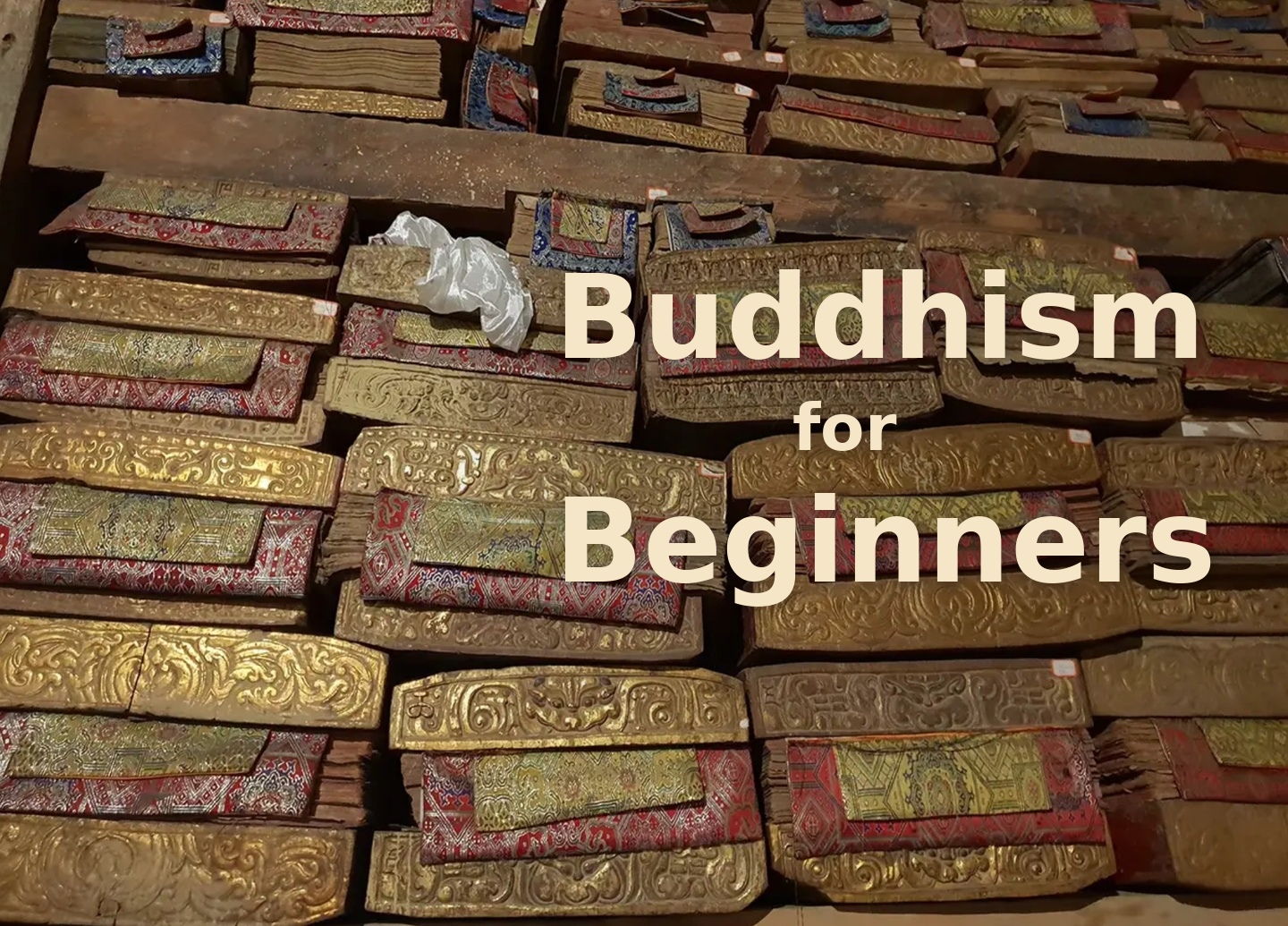
Rather than relying solely on oral transmission, Tibetan Buddhists prioritized the preservation of texts as a cornerstone of religious life. Monasteries became centers of translation, study, and printing, producing a literary legacy unmatched in scope. Beginning in the 7th century, scholars worked to translate Buddhist scriptures from Sanskrit, Chinese, Central Asian languages, and others into Tibetan. These efforts gave rise to a structured canon that not only preserved Indian Buddhist thought but also served as a foundation for Tibet’s own intellectual and ritual traditions.
The canon falls into two main collections: the Kangyur (“Translated Words”), which contains texts attributed to the Buddha, and the Tengyur (“Translated Treatises”), which includes commentaries, treatises, and scholarly works by Indian and later Tibetan masters. Together, these collections encompass thousands of texts and preserve many texts from various traditions that no longer exist elsewhere. The 84,000 project is a significant effort to translate the entire Tibetan canon into English, approximately 231,800 pages of classical Tibetan!
Over time, different regions and monastic centers compiled their own editions of the canon, selecting which texts to include or exclude and how to organize them. As a result, editions vary in size, content, and format. The texts began as handwritten manuscripts, were later carved into woodblocks for printing, and now exist in digital formats. The scholar Gene Smith (1936–2010) helped pioneer the preservation of Tibetan texts, including the creation of a digital canon that fits on a single hard drive.
In addition to the Kangyur and Tengyur, there are other important school-specific collections. The Nyingma Kama, or Oral Instructions of the Ancient Ones, is central to the Nyingma tradition. Nyingma Buddhists also emphasize terma, or treasures, hidden by the tantric master Padmasambhava and his consort, Yeshe Tsogyal, for discovery by a future treasure-revealer (Tib.: terton). These can take the form of physical objects, visionary revelations, or scriptures revealed through dreams or meditation. Treasure texts appear not only in the Nyingma school but also in the Kagyu and Bön traditions. Many of these now sit in collections such as the Rinchen Terdzö (“Treasury of Precious Treasure Teachings”), which students still study and transmit today.
Tibetan Buddhism in the West

Before the 20th century, Tibetan Buddhism was largely unknown in the West, but as travel became easier, it began to capture the imagination of spiritual seekers. In 1888, Theosophical Society cofounder Madame Blavatsky wrote about Tibetan mystics in The Secret Doctrine, helping shape romanticized views that persist to this day. Scholar Donald S. Lopez Jr. later critiqued these fantasies in his influential book Prisoners of Shangri-La.
In the early 20th century, Tibet remained largely closed to most foreigners, but a few Europeans managed to gain access. Travelers like Alexandra David-Néel, Lama Anagarika Govinda, and Heinrich Harrer published popular accounts of their encounters with Tibetan Buddhism. Meanwhile, Christian missionaries attempted, largely unsuccessfully, to convert Tibetans, and the British launched a brief invasion in 1903.
Tibetan Buddhism began to reach broader Western audiences only after the 1959 Chinese invasion of Tibet. Following the Dalai Lama’s escape to India, many senior lamas also fled, reestablishing their traditions in exile. In 1958, Geshe Ngawang Wangyal founded the first Tibetan Buddhist center in the United States, the Lamaist Buddhist Monastery of America, in New Jersey. In the 1960s and ’70s, Western travelers encountered Tibetan teachers in India and Nepal. Some, like scholar Robert Thurman, took ordination and helped introduce the teachings back home.
As interest grew, lamas were invited to teach abroad. Chögyam Trungpa (1939–1987) became particularly influential in the United States, founding the Vajradhatu community, now known as Shambhala International. Tibetan scholars such as Geshe Lhundup Sopa (1923–2014) took academic posts, and Tibetan language and literature became subjects of serious study in select universities. The Dalai Lama’s first visit to the West came in 1979, and he gained international recognition after receiving the Nobel Peace Prize in 1989.
Tibetan refugees gradually settled in Europe, North America, and other parts of the world, establishing new practice communities. Over time, Western-born students completed traditional training and became respected teachers, some of whom taught in both the West and Asia.
Today, all the major Tibetan schools maintain international dharma centers. While Tibetan Buddhism continues to evolve in new cultural contexts, its teachers and communities remain committed to preserving the tradition’s rich heritage.
Buddhism for Beginners is a free resource from the Tricycle Foundation, made possible by the generous support of the Tricycle community. It reflects our mission to make the Buddha’s teachings widely available. We welcome your feedback at feedback@tricycle.org.