Playing 1 of 1
The Six Aphorisms of Chöd
Download Transcript It has been edited for clarity. Subscribe or Log in to Download Transcript
The Tibetan practice of chöd, or cutting through the ego, originated with the 11th-century teacher Machig Labdron. In this Dharma Talk, the teacher of Tibetan Buddhism Sunisa Manning introduces the aphorisms given to Machig by her teacher, Padampa Sangye. Much like the lojong (“mind-training”) slogans, these aphorisms can be memorized and worked with repeatedly to help navigate life’s turbulence and joy.
In addition to this Dharma Talk, Sunisa Manning leads this month’s meditation group. Sign up to join Sunisa every Monday in October at 11 a.m. ET.
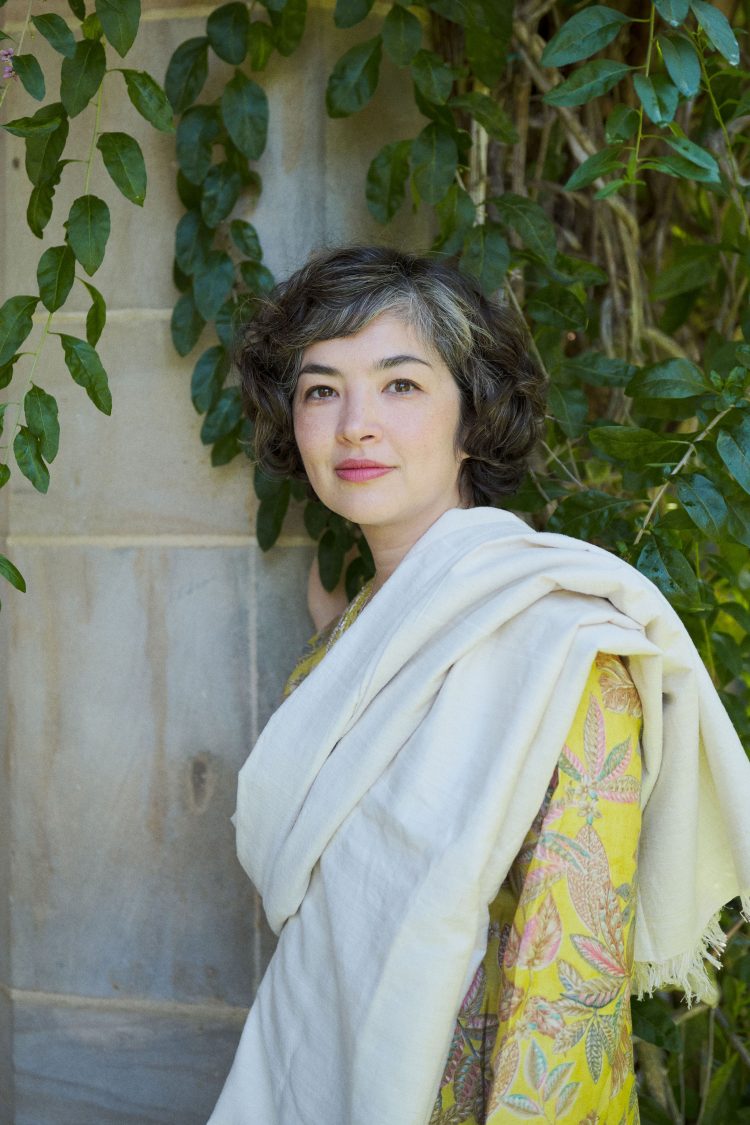
Sunisa Manning is the guiding teacher of Heart Sangha in Philadelphia. She was ordained by her teacher Anam Thubten in the Nyingma school of Tibetan Buddhism. She carries the Dudjom lineage, and primarily teaches Chöd.
Transcript
It has been edited for clarity.
Hello. I’m Sunisa Manning. Thank you for having me. I live in Philadelphia, and I lead Heart Sangha. I’m the guiding teacher. I’m in the Nyingma tradition, and I hold the Dudjom lineage. I wanted to tell you a little bit about myself first. I’m mixed race—Thai and American, white American. I was born and raised in Bangkok, in a very devout Theravada family and, really, a Theravada culture. I came to college in the U.S. and encountered Tibetan Buddhism, Nyingma, right away, when I was 20. And then I found my teacher when I was 25—Anam Thubten—and I’ve been with him ever since. Really nice for me.
READ MORE
I’m going to be giving a dharma talk today. Thank you so much for having me. It’s called The Aphorisms of Chöd. And why am I giving this talk? Well, first of all, there are many beautiful paths, and luckily for us practitioners, Chöd is my path. It’s my main practice, and it’s also what I teach. I teach on Sundays, really, how to get through the day. And then, if you spend more time with me and come into the Vajrayana—which means doing the preliminaries—then I’m teaching Chöd.
But Chöd is an amazing path for people, even for those who aren’t going to become Vajrayana practitioners, because some of us come in sort of intense. I have a passionate nature. I’m really not probably your picture of the very spacious and peaceful teacher or student. But luckily for me, I found Chöd, and my teacher teaches Chöd, and it really works for me. So I’ve created something—my teacher teaches it too—it’s called Chöd Healing, and it’s Chöd for anyone. So the aphorisms of Chöd are a way to really get some of the flavor of Chöd and the culture of Chöd without being inside the Vajrayana. You can see if you like it; you can see how it lands.
From there, I wanted to begin with the Chöd orientation—there’s a dharmic orientation, if that makes sense: Chöd’s orientation toward life. The way I talk about it is that Chöd really flips our usual tendencies on its head. Live long enough, and we will inevitably go through periods of turbulence in our life. I don’t even need to list them; I’m sure you know what it looks like. Usually, our habitual pattern will be conditioned to deny that it’s happening, and when the denial doesn’t work, we try to repress it, suppress it. Chöd really looks at these upheavals and faces them straight on.
It’s not always so comfortable, OK? I’m going to be honest. But it’s really looking at it and saying, “This upheaval, this turbulence, is here.” And when you really get into this, it’s even more radical: Chöd starts to say, “Come out and play.” Like, let’s try this upheaval—we call up even more upheaval, because the idea is we’re really testing our equanimity. We’re testing our compassionate qualities. Can we have lovingkindness toward ourself and others, even when, you know, the shit has hit the fan? That’s how you know that you’re really practicing. I love this so much.
So the orientation is really turning toward upheaval and seeing that it is really through working with our darkness that we will find our liberation. It’s not comfortable. It’s not a comfortable thing, I get it. I want to say, really, there’s no shortcut for anyone. It’s hard. But when we look at our times of upheaval and take responsibility for our neurotic tendencies—which is also very hard—that is, in fact, how we start to find freedom.
How do we work with our darkness? How do we work with these tendencies? This is where the aphorisms come in. This is a little bit of a Mahayana approach to Chöd, which is good, because we can all do it—it’s very accessible. My sense is that not a lot of people have heard of these aphorisms, but the way to work with them will be much like the lojong slogans, which I think you know people work with. If this appeals to you, you memorize them—this is how I’ve done it—and you carry them around in your pocket. And there will be scenarios in life, for sure, one hundred percent guaranteed, when you’ll be like, “Oh, goodness, I’m out of my depth. I’m scared. I feel incapacitated by my anxiety. I can’t. I don’t know how. Please help.” All of us have these moments, and those are the very juicy moments that we’re looking for. You’re like, “Oh, this is upheaval. Wait a minute—what did I memorize? Here are the aphorisms of Chöd.” And then you test it.
I don’t think any of us should really be running around doing this because someone told us to—that really doesn’t work over time, and it keeps us in a child orientation, obedience. That’s not what we’re talking about. But if it appeals to you, memorize the aphorisms. Stuff happens, and then you’ll be like, “Well, let’s try. What’s it going to cost me? Let me see if I can apply these aphorisms.” They’re really helpful in working with upheaval. That’s the frame.
But first, let me tell you the story of how these aphorisms came to be—I think it’s very interesting.
Chöd, you may or may not know, was originated by Machig Labdrön, a real human. She lived in Tibet in the eleventh or twelfth century, depending on the chronicle. She was a householder, and she became a mother—it’s very precious to me, as a woman who’s also a mother. And maybe to some of you it’s very rare to have a woman teacher, an immense mahasiddha. She was known in her childhood for being a great chanter of the Prajnaparamita, the wisdom of emptiness—this is the great wisdom of Mahayana. So even as a young girl—very rare—one, she knew how to read. And two, she was given a place in the temples and monasteries to chant the Prajnaparamita: the long versions, not the short one most of us would typically have chanted, the one that takes just a couple of minutes. She could recite it, and people felt like they received a transmission from that. Wonderful.
But then, what upheaval—even in Machig Labdrön’s life. The journey from being the girl who wears nice clothes and gets to eat, you know, nice temple food—I have no idea what that was—but the journey from there into what we call a mahasiddha, a highly realized one, is, of course, for her, also full of upheaval.
She met one of her two root teachers—her tsawé lama, in Tibetan—named Padampa Sangye. That term, “dampa,” is his name, but “pa” means male, and “sangye” means Buddha—”Father Buddha Dampa,” which is kind of my messy translation. She met him—he was already a renowned Indian teacher—and she went to bow to him, you know, all the levels. She was going to bow all the way down; he was going to receive her bow. Except, in this moment, something very unique and special happened: he received her bow as an equal. Imagine—make the imaginative leap, historically and now—how different it is to have a younger woman received as an equal by an esteemed, established male teacher. He received her bow as an equal. I want to just let that land.
And he handed her these aphorisms, and they outlined this dharma that she would go on to create. It’s not Padampa Sangye’s dharma; it’s Machig’s dharma. Not that ownership is that important, but it’s really interesting. What are we talking about in that moment? We’re talking about someone seeing the full buddhahood potential inside us—in Tibetan Buddhism, that’s what we’re talking about. It’s a little scary, but it’s true. Padampa Sangye was seeing the full potential of what had not yet been born within Machig Labdrön, and saying these. And these aphorisms, they kind of create the container. Who knows—I don’t know—did she continue to work with them? I’m not going to continue her biography, because that’s its own dharma talk, but ask me if you want it. But it’s a really profound, beautiful moment, and we could all hope to have that: to have a teacher see who we might become. Because, equally, maybe we could have gone in another direction. But seeing that, and how she continues on, she creates something very radical.
And it’s an uncomfortable path. I want to be honest with you—it turns a lot of our orientation on its head. And I’m here talking about it for no other reason than that it works for me, very much so—profoundly. It’s been able to be a practice vehicle within this lineage that has held all of my really big, tempestuous—I really don’t want to admit to it—stuff. So take it as you will.
OK, so the first aphorism—and I’m using Anam Thubten’s translation; he’s my teacher, and I don’t read Tibetan, so lucky me, he translated it, and lucky all of us. The first one is called Reveal Your Hidden Faults. “Faults” is very tricky—English is a language run through with Judeo-Christianity, and I say this as someone whose mother tongue is Thai. So it’s always important to know that “fault” doesn’t have the connotation of sin and judgment that it can carry—you hear the echo, right? Fault. That’s not what we’re talking about. Fault in Tibetan—Rinpoche says it’s skyon—and there’s no judgment implied in the term. So we could even say “reveal your hidden neuroses,” which is to reveal all the things you’ve been very reluctant to expose to the light of your awareness. Only the practitioner can do this, and only the practitioner will know if you haven’t done it, honestly.
But the first aphorism reveals your hidden neuroses. Everything about ego’s tactics of hiding—we’re all very squirrely. It’s good. And so we want to just call those up and say, “I’m going to see this now. I’m going to try it. Pretending that I don’t have neuroses doesn’t seem to be working, and maybe I should just try something else.” Ten minutes—just for ten minutes. That’s the first one.
The second aphorism: trample on what scares you. Whoa. I think, if we’re honest, a lot scares us—a lot. In this aphorism, there’s a Tibetan teaching on the six fears. One of the fears is danger and phobia—that includes fear of sickness and fear of death. What would it be like for us to trample on our fear of sickness and death? Again, very uncomfortable, but we spend a lot of energy, as an American society, denying that we’re going to die. We’re all destined for it—one hundred percent guaranteed to happen to us. And when we can see our fears, we can just say, “Wow”—when you look at the fear of death rationally, it makes sense to some extent, but also it kind of doesn’t, because we’re going to die. So we can just cut right through that, saying, “I’m destined for this.” And maybe we’re carrying around—I am—fear that my children will die. And, again, very juicy, I know—oh, my goodness, I have young sons—and just saying they are destined to die, and what does that bring? Really working with this. It’s a big one. I don’t say it lightly.
One of the other fears—another juicy one, you can hear my intensity, but I only have twenty minutes, so I’ve got to go for this. No, I’m kidding—they said I can go as long as I want. Uh-oh. But one of the other fears is fear of generosity, which, specifically, is a fear of opening the heart. I think this is very profound. Maybe we ourselves have lived through periods of time where we’ve really allowed this fear of exposing the true tenderness of our heart to be so in charge of what we can and cannot do. Maybe we know people—I think, actually, all of us do—who are really ruled by their fear of opening their heart, that vulnerability. That is one of the things that “trample on what scares you” is pulling up.
Trample is also a beautiful translation—thank you, Anam Thubten, and his translation committee. It has the connotation of something courageous, ecstatic—you’re not kind of tiptoeing on what scares you, you’re not mushing what scares you, you’re trampling on it. It’s very powerful: I can do this, I will do this now, I will do this immediately. You’re getting the flavor of Chöd, right? This cultural flavor where you’re like, “Whoa.” And maybe you’re feeling a little worried—that’s OK, that’s normal too. Your ego’s like, “What is she talking about? Oh no, back away, back away.” I’ve gone through periods of that. And then I come back to Chöd, and I’m like, “I’m going to try again.” Ten minutes.
The third aphorism: cultivate what seems impossible. A lot of our limitations are limitations we’ve created in our mind—”that’s impossible, we’ve given it away, this is not going to happen.” The third aphorism, on the Chöd path, is to actually cultivate it—we go toward that. Once you’ve cut through your fears, once you’ve seen your demons—what is it that seems impossible for you? You might start small, I recommend. It could be traveling alone, you know, with a bow. Say you’re traveling as a female-presenting person—there are a lot of dangers out there. There are. And how have we let the projection of what might happen to us really curtail our freedom? I’m not talking about the freedom to go to Peru; I’m talking about our inner freedom.
I’ll give a little example of this one. I’m from Bangkok, which is a very big city in Thailand and in Asia—we’re not known for being outdoorsy, and there’s a lot of gendered stuff. But Chöd is a practice path where we spend time outside, traditionally in a cemetery, a charnel ground. Luckily for me, I live in North America—no real charnel ground. But when Anam Thubten decided to make me a teacher, he said, “I’m inviting you to spend four nights camping by yourself in the wilderness before we have the ceremony in the temple in California.” And I was like, “Well, Rinpoche, I’m a Thai woman, and I don’t really do that. No.” I said, “Of course, yes.” And that, to me—I’m sure a bunch of people watching this love camping, but you can get the idea: for me, that was impossible. I had never set up a tent before, and I had to practice in my backyard with my husband and one of my sons—headlamps, packing lists, and all of my fears and neurotic tendencies.
This is a small example, but: cultivate what seems impossible. You let all of this come up, and you go through it. And if you can—if you’re within the dharma already, I’d say you cut through it. Fear is empty of fear. Camping is empty of—wilderness solo camping is empty of whatever I had been projecting into it. And I survived. Here I am. And I spend more time in the wilderness now. It’s really the third one: cultivate what seems impossible. You have to try this for yourself to know that you can do it, and when you do, it builds this enormous resilience. It really builds an inner freedom, where you’re like—there are other things in my life that I look at and I’m like, “I really hope I don’t have to do that,” but when I do, I’ve had these experiences—labor is one of them—that I was very scared of. These little experiences, they’re like building a little ladder toward being like, “I don’t know if I can do it, but maybe I can.” Maybe. Because instead of trying to stay away from everything that has been scaring me and seems impossible in my life, I started to go toward it. It’s big.
The fourth aphorism: cut your fetters. And, again, I love the translation—can you hear these clipped, short words? Cut your fetters. We can be bound—I’m going to paraphrase Longchenpa—by shackles of metal or shackles of gold. Shackles of metal are things like a nice haircut, a nice car, a certain type of car—”I’m not going to let the gray show in my hair because I’m not aging.” That’s a metal shackle. Shackles of gold are the dharmic shackles. Sometimes, when we get really into the path—we’re in love with the dharma, we’re so far into it—we can fall into a kind of dualism that’s very deep and very sneaky. “All of this is sacred.” You know what happens when you make something sacred in this category? You create the category of not sacred—those idols, those people, those places, those practices, I don’t know—but those are shackles of gold. And they have bound us, even though they seem pretty enticing, pretty exalted. So when you cut your fetters, you’re cutting all of them.
Within this category, you may have heard, is the practice in some Vajrayana traditions of putting excrement or other repulsive substances on the altar, and letting your whole body go, “Whoa!”—and really seeing that, oh wow, that is not sacred, but this is. And, in the end, with humility, even Green Tara is empty of Green Tara. So that’s cut your fetters.
The fifth aphorism is let go of attachment. This is a dharma talk in itself, and I hope everyone, no matter where you are on the path, spends time with this, because it’s really, really misunderstood. The way I love my kids—that’s not an attachment I’m meant to let go of. People misunderstand this. To be attached, in the example of my children, is to really capitalize the “my” part of it—even though their temperaments, their achievements, and their life paths aren’t mine to control. A lot of parents do this; I’m probably going to do this too. But we want to really tune in here to that attachment and say, “What is my job?” To keep them safe, to cherish them, to adore them—oh, yeah. To tell them they should be a lawyer? Maybe no. That’s an easy example, but it gets much more subtle than this, and I think a lot of us have seen it.
So, let go of attachment, the fifth aphorism. I like to encourage students to think more about the eight worldly winds—of praise and blame, for example. You’d have to be crazy not to want praise and not want blame, but if you can see it, you’d be like, “Hmm, that’s an attachment I can let go of.” So really, there are practices of equanimity here, holding this huge view that says: over my lifetime, I will receive blame, and I will experience loss—uh-oh. And I will probably have disrepute, and that will be really uncomfortable. And I will, I guarantee, be in pain. Letting go of our attachment to the inverse of those things is really important if we are to find the sixth aphorism.
The end of the Chöd path—and “the path,” if you’re asking me—is realize mind like sky. This is how you know that Chöd is a complete path. I’m speaking within the Nyingma lineage, so it’s a complete path: this is the end, the cessation. It’s where everything falls away, and we’re really, quite simply, able to—we don’t do anything. It’s that our buddha-nature can express, because we’ve done all the other work: revealing hidden faults—I really don’t want to do that, but I really have to—trampling on your fears, cultivating what seems impossible, cutting fetters, letting go of attachment. Then, at the end, thank goodness, there’s nothing to do. And you can really let our true nature, which is pretty tremendous, express—the tragedy of samsara is that this feels so foreign to most of us. You know, me too, I get it, I really do.
But realize mind like sky—this is dzogchen—it’s really just: we fall open. There’s nothing to do. And this avalanche of love and compassion and spacious, luminous mind is just there. And we go, “Huh, I’ve really spent a lot of effort kind of running circles around it,” pretending it’s not there. We really can make it very complicated, and it’s not that complicated. And for some of us—and I put myself very much in this category—the knot of our mind wasn’t exactly going to unknot itself on its own. And so I’ve always really enjoyed, and still enjoy so much, using these aphorisms as things I put in my pocket. We don’t even have to make it sacred—we can just say, “This is what’s in my pocket.” And they’re with me all the time, as long as I’m breathing.
And I was teasing my sangha—we all happen to be very tattooed, for whatever reason—and I was like, “Who’s putting these on your arm?” But you can go ahead, have fun. They’re available. This isn’t a secret teaching. It is a profound teaching. I think it’s very accessible. And thank you for tuning in and listening.