Cooperate with one another and aim to create a place where sincere practitioners can practice without trouble.
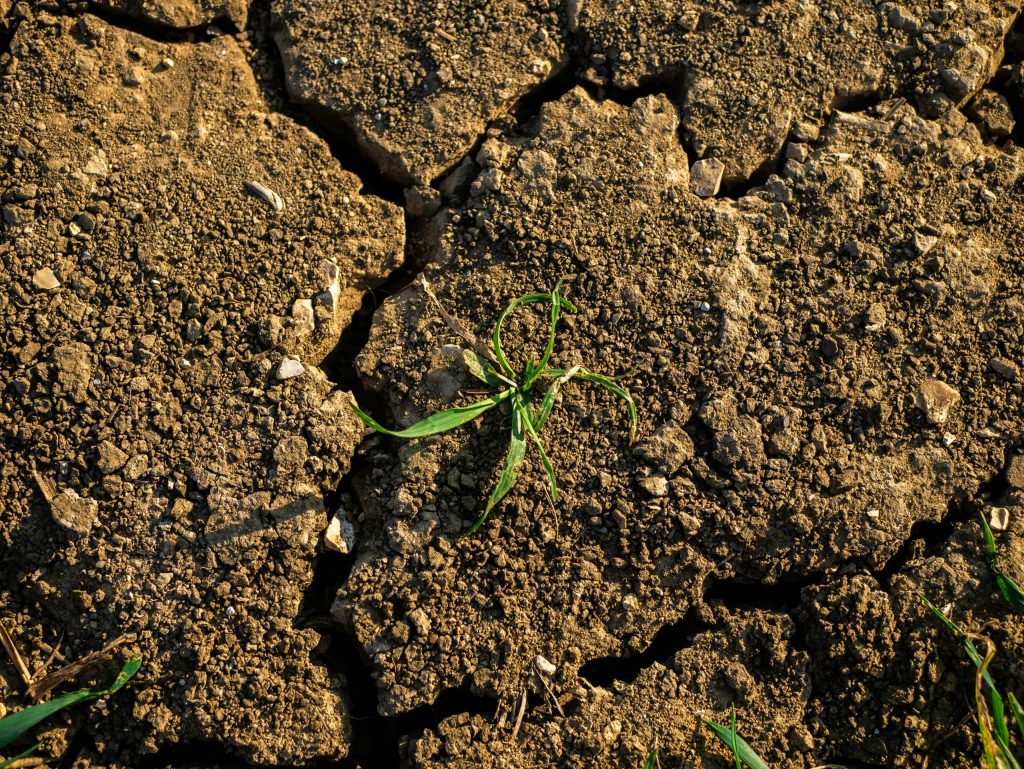
A place of practice is as important to the practitioner as soil is to the farmer. A good practice place must neither be a place for carrying on religious political intrigues, nor a place to try to clamber up the pseudo-spiritual ladder. To be practicing and to get caught up in sexual affairs, money, or fame—or even to be blinded by your own practice—is a terrible waste of time. There’s an old saying, “The poor farmer makes weeds, the mediocre one makes crops, and the skilled farmer makes soil.” I have spent my life trying to improve the soil, or practice-ground, where I practice, aiming to make Antaiji a place where sincere practitioners can live and work together with the least amount of trouble.
There’s another side to this matter of cooperation. Sometimes people will cooperate with each other not only in working or in practicing zazen, but also in playing around and drinking. These things are not necessarily bad in and of themselves, but we have to be careful not to simply cooperate in diversion and delusion.
It is important that every one of us cooperate with each other, to protect and maintain an atmosphere conducive to practicing together. There is no one who can claim to always embody bodhi-mind, the mind that aspires to practice and attain enlightenment. Each of us gathers and contributes his or her own little bodhi-mind to the general effort. Sawaki Roshi often said that a monastery is like a charcoal fire in a hibachi. If you put in just one little coal, it will go out right away. But if you gather many small coals, each glowing just a little bit, then the fire will flare up. In the same way, every one of us should contribute a little bodhi-mind and thus enable our sangha to thrive.
Leaving Antaiji
The preceding seven points cover the things I kept before me all the time I was abbot of Antaiji. I hope they will serve you as a point of reference. I wrote a poem about where I am now, though I am not sure whether it really qualifies as a poem or not.
As an old man
I have my own practice.
It is different from that of youth.
It is not working facing outward,
but just facing inward, gazing at myself.
And like the clouds that disappear
into the expansive sky
I, too, will disappear quietly.
Lately, I have fully realized that when we open the hand of thought, we are the self of the whole dharma world whether we think so or not.
Do you understand this self of the whole dharma world? Everything is one with everything, whether we think so or not. That is our true self. Perhaps you don’t believe it, but the reality of it continues anyway. If we open the hand of thought, we are one with the whole universe. This truth leads to the crucial point for us of what role we should be playing right now, right here.
When we open the hand of thought, we are the self of the whole dharma world whether we think so or not.While Sawaki Roshi was alive, my role was that of a novice monk. I played that role for a pretty long time. I was a novice until I was fifty-two or fifty-three years old. Even though I was a novice, I was already an old monk. I played the role of the old novice right up to the end.
After Sawaki Roshi passed away I took on a new role, that of an abbot. Giving talks and being a teacher have been part of my role. I have spent all my effort at fulfilling that role.
Then my role became that of retiring. It would be silly to think that being a novice was no good, being an abbot was good, and that going into retirement was becoming worthless again. People too often think that way. But it isn’t true. I think the most important thing is our attitude toward each role, devoting ourselves to it entirely. An old priest counseled me not to retire. He said that once you retire all your power gets taken away by your disciples. Personally, I don’t think that way at all. It’s just another role.
When I became abbot I declared that I would retire after ten years, because the population of old people is increasing in Japan. If old people do not retire to make way for the younger generation, there is going to be trouble, so I wanted to set an example.
We shouldn’t imagine that life after retirement has to be miserable or impoverished. To be old is also one of our roles. When we’re young, our role is to work; upon retirement, we take up another role. Since we have less income, we should simplify our lives as much as possible. That is the way to fulfill the role of an old person. We should not judge it miserable, but just devote ourselves to that particular role. We function through our roles and exert ourselves in our occupations as a role. Finally, dying is one of our roles.
I wrote another poem about this:
This “I” is the self of the whole dharma world
whether I think so or not.
This self of the whole dharma world
fulfills the role of life when in life,
and the role of death when in death.
Life is the manifestation of one’s entire self.
Death is the manifestation of one’s whole self.
As I said before, we don’t actually live and die in our thoughts. When we are alive, life is the whole—all is alive. When we are dead, death is the whole—all is death. When we are alive, the entirety of life beyond thought is living. When we die, all of life including thought will die. When we are alive, the self-of-the-whole-dharma-world is in the role of life. Then, when we die, the self-of-the-whole-dharma-world is in the role of death. This is the meaning of “Life is the manifestation of one’s entire self. / Death is the manifestation of one’s whole self.” After I retired, being retired became a manifestation of my whole self.
When I announced my retirement, the mother of one of my disciples visited me and she, too, said, “You’re retiring too young.” But I disagree. When I became the abbot after Sawaki Roshi’s death, that gave me the role of teacher. So I devoted myself to fulfilling that role. I don’t think you should be a teacher for too long. You can be a good teacher only in the beginning, because you’re filled with the passion to educate. After a time, even if your technique has improved, you lose that passion. The passion to teach is more essential than any teaching technique.
Please let me lie cheerfully in the shadow of the grass.
The students you teach when you are a young schoolteacher will remember you and come to visit you in later years. But the students you teach as you get older do not visit you after they graduate. The students you taught when you first began teaching, when you had that passion to educate but no technique, are the ones who miss you.
Some people asked, “Since you’re retiring so young, does that mean you are planning to control things at Antaiji after you retire?” They were referring to the practice of some of the early emperors of Japan, who actually interfered and controlled the government more after their retirement; it seems as if they retired especially in order to devote themselves to power. I have no desire whatsoever to do that. Seeing retirement as a role in itself, I have to die completely to active service. I know I will probably have to be taken care of by my disciples, because I am getting old, but I have no wish to interfere with them. I have decided to die completely to that kind of life and will lie happily in the shadow of the grass—that is, in the grave— knowing you’re all practicing sincerely. I will lie there sorrowing if you live blindly. Please let me lie cheerfully in the shadow of the grass. I ask this of you wholeheartedly.
♦
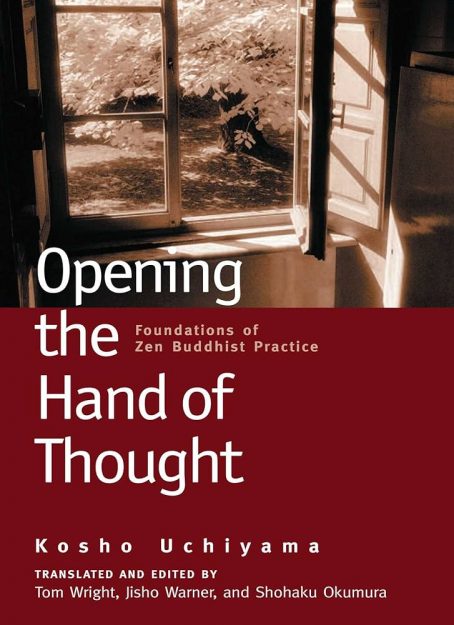
© 2004 by Kosho Uchiyama, Opening the Hand of Thought: Foundations of Zen Buddhist Practice. Reprinted by arrangement with Wisdom Publications.

Thank you for subscribing to Tricycle! As a nonprofit, we depend on readers like you to keep Buddhist teachings and practices widely available.