Playing 1 of 1
Buddha as Psychologist, Buddha as Somatic Therapist
Download Transcript It has been edited for clarity. Subscribe or Log in to Download Transcript
The initial instruction on breathing in the Satipatthana Sutta is entirely directed toward the mind and presents the classical foundation for mindfulness practice, but the culminating instruction on breathing is an entirely somatic instruction that is directed not toward an awareness of breath but to a felt liberation of breath. Was the Buddha presenting a kind of somatic koan? This talk explores how you might experience breath moving through the entire body, and through discovering how to breathe in this way, consciousness is transformed.
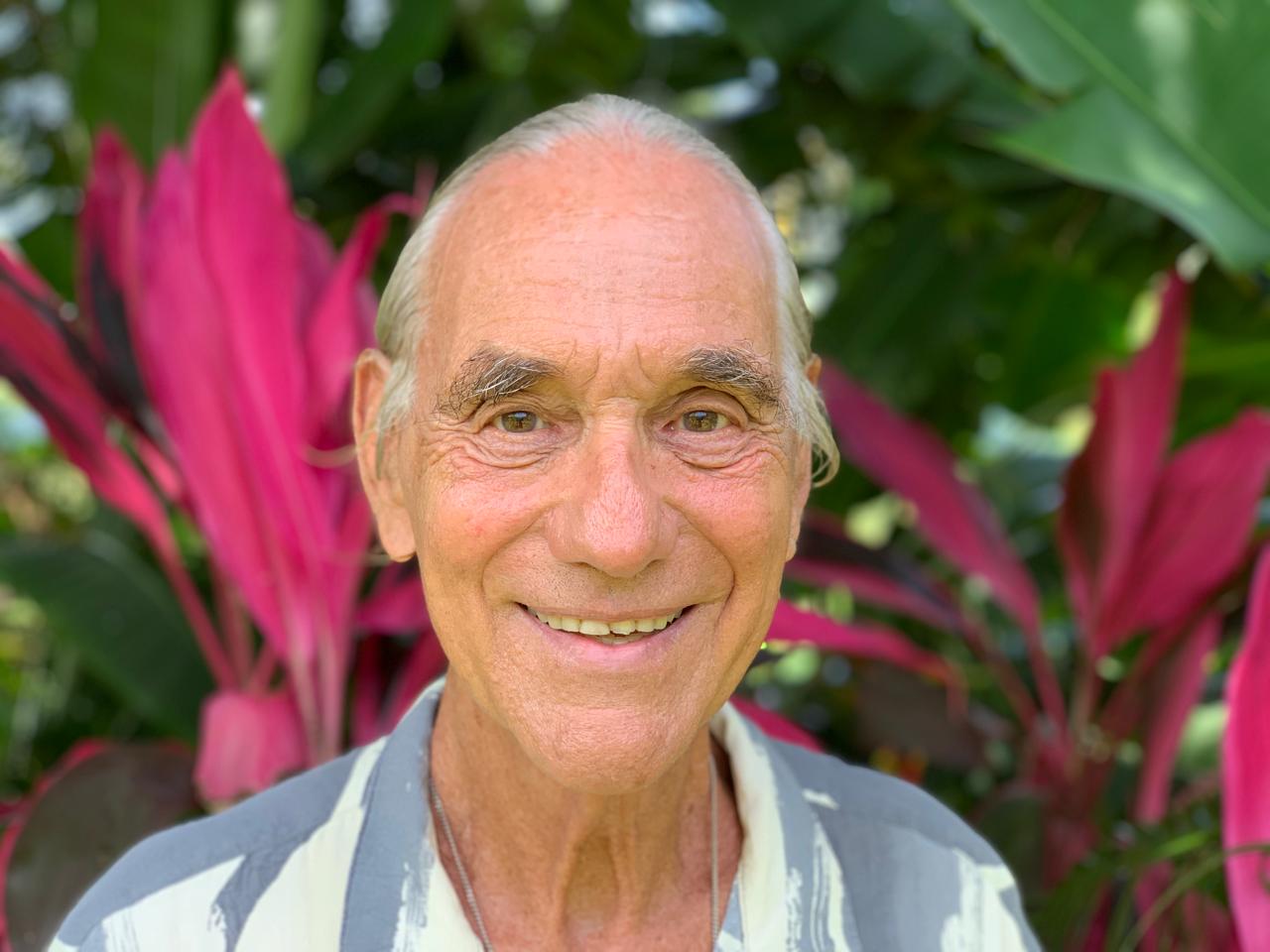
Will Johnson is the author of several books about the role of the body in meditation practice including The Posture of Meditation; Yoga of the Mahamudra; and The Radical Path of Somatic Dharma: Radiant Body, Radiant Mind.
Transcript
It has been edited for clarity.
Hello, I’m Will Johnson, and I’m wanting to talk to you today about the opening passage in the Satipatthana Sutta. The Satipatthana Sutta is one of the oldest texts of Buddhism, still existent today, and in this opening passage, the Buddha outlines the entire Path of Awakening through examining the breath. As we’ll see, there are three distinct steps to this opening passage. Each one gives a little bit more of what’s happening as we pay attention to our breath, and over time, allow an awakening to occur.
Now the way that I interpret this progression—steps one, two and three—is that in the opening passage, the Buddha is speaking very much in the language of a psychologist of the mind. Indeed, the opening instruction is about calming the mind, clearing the mind. However, by the time that he gets to the culminating instruction, he’s speaking much more in the language of a somatic therapist. As we will see, it’s less about the mind and more about awakening the felt presence of the body and liberating the breath from its restrictions that keep it contained.
The opening instruction says something very interesting. First of all, it starts by saying, “Keep your awareness at the front of your body.” We’ll talk about this in a second. “Keep your awareness at the front of your body, and as you breathe in, remain aware that you’re breathing. As you breathe out, remain aware that you’re breathing.” This is the classical foundation of mindfulness of breathing.
Why is this even necessary? Well, if we really examine how we breathe and the quality of consciousness that passes as normal in the world at large, what you’re going to realize is, well, not only there’s not much breath happening, but you have no awareness of its passage—no awareness in, no awareness out. So the first thing that the Buddha is wanting to do, is wanting to have us explore, is just become more aware, more conscious of this most primal bodily function. You don’t have to do anything, don’t have to change anything, just remain aware. “I’m aware breath comes in. I’m aware breath goes out.”
Now, what is very fascinating for me about this opening instruction is the Buddha is very clear that the place where you want to focus your attention so you can experience breath coming in, breath going out, is the front of the body. I’ve always found this very fascinating. Why? Why does he do that? Why does he do that right at the beginning?
My understanding, over all these years of exploring these practices, is that the quality of consciousness that passes is normal in the world at large. We’re kind of involved in self image, lost in thought. It sits right here, right at the front of the body. I even have named it the virtual virtual reality headset. We all know what this quality of mind is. It sits right here, ah, it’s kind of a watcher at the gate. It’s always looking out, a veil between the inside here and everything else out there. It’s looking out: “Oh, am I going to let that in?” Or, “Do I want to deal with that?” And then it projects back out interpretations and judgments.
The virtual reality headset is right here. That’s where I am. That’s where I start these practices. So it only would make sense that the Buddha would ask us to begin this observation of the passage of breath going in and out, right there at the front of the body, right at the front of the body. “As I breathe in, I remain aware. As I breathe out, I remain aware.”
For most of the Buddhist world that explores breath, the practices both begin and end with this first instruction: just to remain aware. Ah, breathing in, breathing out, over and over and over and over and over again. Those of us who’ve explored these practices know how fiendishly difficult that can be because, “Oh, a couple of breaths going in-breath going out, then my mind goes off,” right? OK, gentle. Bring it back to the front of the body.
Again, what’s very interesting for me is that the two most common places where teachers over the centuries have interpreted where to focus our attention at the front of the body is either at the nostrils… We feel breath coming in-breath going out. We can be aware of it, watching it. We can feel it right here at the front of the body. And the other one is the front belly wall.
In my case, the first dharma retreat that I ever did over 50 years ago now was with a lovely Thai monk named Koon Kum Heng. He taught us a practice that he called rising and falling. Even in the stillest of bodies when we sit, there’s going to be some rising, expansive motion on the inhalation, and some falling back retractive motion on the exhalation. So both of these places are right at the front of the body, and both are preferred locations in different traditions, certainly in Southeast Asia, in the Theravadin tradition. As I said, those of us who’ve sat through retreats know both how wonderful it can be to spend long hours and long days exploring this and how challenging it can be. Mind goes off, we bring it back. Mind goes off, we bring it back. In this way, we learn how to remain aware of the breath at the front of the body.
Now, the quality of breath that passes as normal in the world at large is small, fitful, a little grabby. It could be a little coarse because we’re not opening to the awareness of this primal process. We’re, frankly, off in our minds, often a thought enmeshed in some kind of self image about what’s good for me that I see in the world out there, or maybe not so good. What starts happening to anybody who takes this practice on sincerely? This is certainly my experience: The first three days of that retreat, I had no idea what I was doing. Finally, by the end of the retreat, something had started happening, and it was almost as though, still small, the breath was breathing itself very, very smooth. Ah. I felt myself drop down into my belly. Ah, breathing in, breathing out, over and over and over and over.
What those of us who’ve taken on this kind of practice inevitably find—why we like it so much—is that the mind does become calmer, a little bit clearer. There’s not so much racing around, one thought ping ponging off another thought, left and right side. It’s like that. So it’s a beautiful and wonderful practice, and that clarity, that calming, that occurs, is so good that I can understand why most Buddhist schools that explore breath—examining the quality of breath, passing in, passing out—why their practices both begin and end with that instruction. Breathing in, I remain aware. Breathing out, I remain aware. It’s wonderful practice.
However, that’s not where the instructions say. In this beginning level of practice, we’re mentally focusing. We’re using our mind. We’re using a faculty of focus and awareness, and in many ways narrowing down our attention onto a specific point of the front of the body. In this way, we become so much more conscious, so much more aware, of all that is lost in thought—the ticker tape parade, a random unbidden thought that goes through the mind. We start off very unconscious. Through the practice, we become much more aware of what’s actually going on inside our heads.
In this way, you know, I think of the Buddha as the master psychologist of the mind, of how the mind works—how it functions.
First of all, as I interpret the instructions, we have to establish that base: very calm, very clear, “Ah.” I can do that by linking my felt attention to the passage of breath—in and out.
Step two, however, is asking us to start becoming more discerning about the breath that we’re taking. The Buddha spoke in a kind of maddening shorthand. All he says is some breaths are long, some are short. Distinguish between those. I think what he’s getting at is that every breath, not unlike every snowflake, they kind of all look the same. But they’re all distinctly different. What happens when I breathe in? Yes, some are longer, some are a little shorter. I’m just watching. I’m just watching. But wow, there’s shadings, there’s colorings, hues, nuances, differentiations. Remember, no two breaths are exactly the same.
One of the ways that I’ve interpreted this intermediary step between one and three is that we’re going to now start taking a literal step backward into the mystery space of the body, because that’s where breath occurs. I’m not just focusing my entire attention on the breath of my nostrils, how it’s causing the front belly wall to expand or contract. I’m wanting to get more discerning in each breath. In some ways, I start feeling the breath going in. I feel it passing in my throat. I feel it affecting my lungs and hence, my rib cage.
Starting from the very front of the body. Now I’m kind of in the center of my body. Now this, to me, is an intermediary state of passage between totally focusing on the mind and moving into a far more somatic ask that the Buddha is making of us. Because the culminating instruction, in an altogether remarkable statement, the Buddha says, “As you breathe in, breathe in through the whole body. As you breathe out, breathe out through the whole body.”
What started out as a narrowing of attention to help calm the mind, we become more discerning of what’s happening. The Buddha is now suggesting, in my interpretation, that we figure out what it would be to actually breathe through the whole body.
Now, what can that possibly be? Look, every tenth grader who’s taken on or completed a course in basic biology and human anatomy knows that we do not breathe through the whole body. We breathe through the nose or mouth. We take in the oxygen in the air. It goes into the lungs. It’s distributed through the bloodstream that’s used by the cells. It comes back up and is expelled as used air. We do not breathe through the whole body. However, the Buddha knew nothing about oxygen. The Buddha, as far as I can tell, must have experienced, like all of us can, that there’s a way of breathing where it actually feels as though the body is almost like a balloon, and the breath is breathing through every cell, touching, stimulating sensation, in every cell of the body. Expanding, almost amoeba-like, on the inhalation, then retracting, again, almost amoeba-like on the exhalation.
I was thinking about this, this morning, actually, in anticipation of sharing this teaching with you all today, that our knowledge of why we breathe is relatively recently acquired. It’s knowledge only from the latter part of the 18th century where we understand that there’s this substance called oxygen in the air that is vital for sustaining life.
I was actually thinking this might be one of the only instances that came into my mind anyway in which knowledge is actually kind of disempowering. Because if we grab hold of that notion, the idea of breathing through the whole body, it makes absolutely no sense. From my understanding, there are two requirements for learning how to breathe through the whole body in this way. And think of this for a moment. The Buddha is not saying, as you breathe in, remain aware that you’re breathing through the whole body. As you breathe out, remain aware. No, he’s just saying, as you breathe in, breathe in through the whole body.
This, to me, is an entirely somatic practice. Now no longer is it about focusing awareness. It’s about some kind of awakening through the body and, obviously, a liberation of the breath.
The two requirements: First of all, in every cell of the body, there is some kind of sensation. It’s quivering, it’s buzzing, it’s vibrating. Some of these sensations are very pleasurable. Others not so much at all. But when we are lost in thought, we essentially throw a suffocating blanket over the sensations of the body so we don’t feel them. We become numb to them. The kind of shimmer that exists is just blanketed, shrouded over. For me, requirement number one is to reawaken the felt presence of the body in the terms of the dharma teachings of the 20th century teacher U Ba Kin and his students, SN Goenka and Ruth Denison. [They gave us] an extraordinary practice for helping us move from a consciousness of lost in thought to one awakened, a shimmering sensation through the body.
I think of this: How could I learn to breathe through the whole body if I can’t feel it? Here is a big shift from lost in thought and even becoming conscious of what happens in the realm of the mind now to OK, on that foundation, we’re going to revitalize and reawaken. We’re going to let the body come alive. Let its sensations, let its energies, come alive.
The second requirement from my experience is that for breath to be felt breathing its way through the whole body, the body itself—and again this is such a somatic perspective—the body itself needs to be so relaxed that when the force of breath starts in the striking of the diaphragm, it’s like a force. Think of it as a wave. It’s going to make transmitted motions through every joint in the body, if it can—if the body is truly, truly relaxed. I breathe in, in this way, and almost like a wave moving through a body of water. Ah, the inhale, I can feel it. Ah, touching, causing subtle transmitted motion in the actual physical body and in the felt physical body.
Two requirements: awakening body and then playing in such a way that you can relax. It’s pure Tilopa. Do nothing with the body but relax. Now for me, I have to be playing with this kind of dance of balancing so I can sit here as effortlessly as I possibly can. Then, letting go, the onset of inhalation. Ah, there it is. Click, click, click, click, click, click, click, almost like an amoebic awakening and expansion through the entire body, and feeling that inhalation. I think of this sometimes as administering a kiss of love to every single felt, felt cell in the body. Filling it up completely. Emptying out completely.
This is the way that I’ve interpreted and played with this opening passage and breathing from the Satipatthana Sutta. I hope this has been interesting for you. I wish everyone well. We’re all in this together. This is a Path of Awakening personally, but a Path of Awakening with all of our brothers and sisters. Thank you very much.