Tricycle is pleased to offer the Tricycle Talks podcast for free. If you would like to support this offering, please consider donating. Thank you!
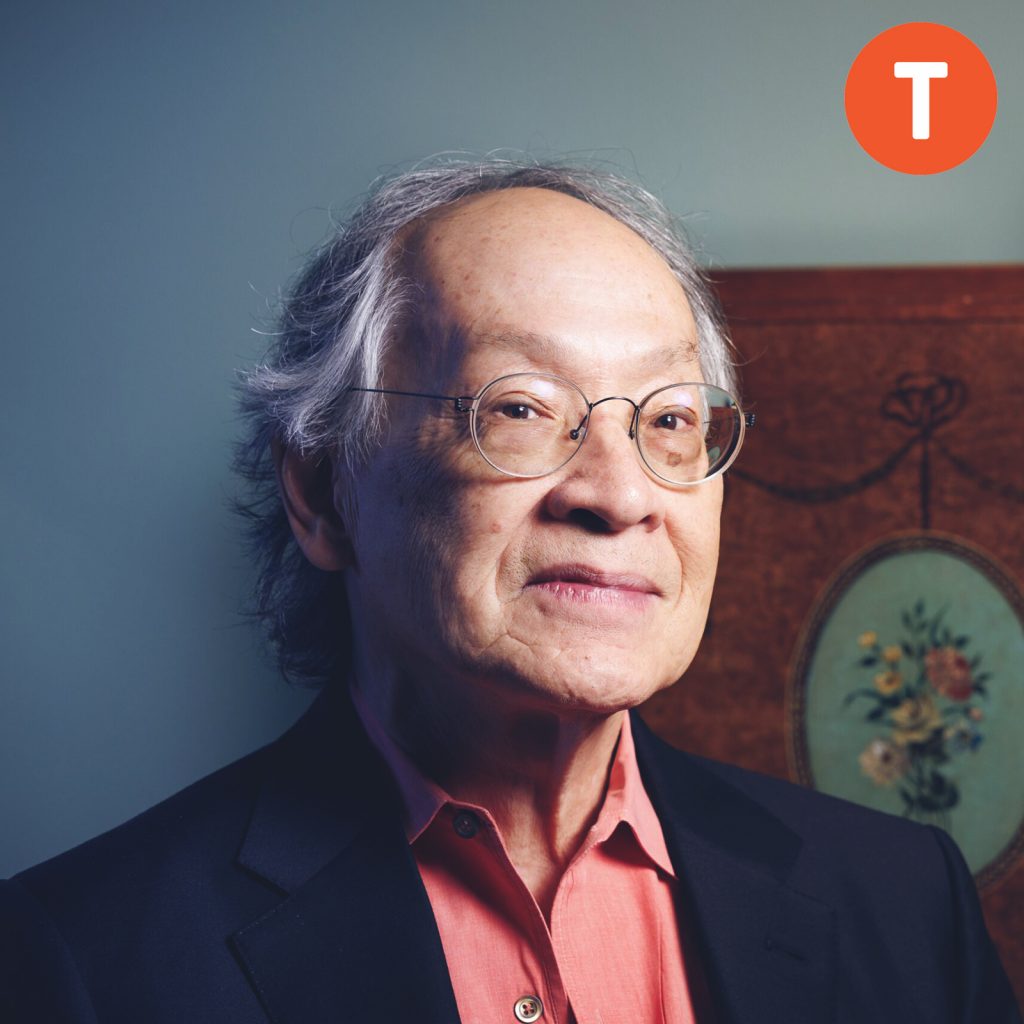
Arthur Sze is a poet and translator based in Sante Fe, New Mexico, and he is currently serving as the 25th Poet Laureate of the United States. His new book, Transient Worlds: On Translating Poetry, takes readers through nearly two millennia of poetry from across the world and explores how translation can deepen our understanding and appreciation of poetry.
In this episode of Tricycle Talks, Tricycle’s editor-in-chief, James Shaheen, sits down with Sze to discuss why he views translation as the deepest form of reading, how poetry can prompt us toward moral and spiritual transformation, what it means for translation to be an impossible task, and how poetry can build bridges and connections across languages and cultures. Plus, Sze reads a few poems from the new collection.
Tricycle Talks is a podcast series featuring leading voices in the contemporary Buddhist world. You can listen to more Tricycle Talks on Spotify, Apple Podcasts, and iHeartRadio.
♦
We’d love to hear your thoughts about our podcast. Write us at feedback@tricycle.org.
Arthur Sze: I built my house near where others live, James Shaheen: Hello, and welcome to Tricycle Talks. I’m James Shaheen, and you just heard Arthur Sze. Arthur is a poet and translator based in Sante Fe, New Mexico, and he is currently serving as the 25th Poet Laureate of the United States. His new book, Transient Worlds: On Translating Poetry, takes readers through nearly two millennia of poetry from across the world and explores how translation can deepen our understanding and appreciation of poetry. In my conversation with Arthur, we talk about why he views translation as the deepest form of reading, how poetry can prompt us toward moral and spiritual transformation, what it means for translation to be an impossible task, and why he believes we need translation now more than ever. Plus, Arthur reads a few poems from the collection. So here’s my conversation with Arthur Sze. James Shaheen: So I’m here with US Poet Laureate Arthur Sze. Hi Arthur. It’s great to see you again. Arthur Sze: Hi. Thank you for inviting me back to your program. James Shaheen: I think this is the third time, I’m not sure, but the first time as Poet Laureate. So since we last spoke you’ve been appointed the US Poet Laureate. First of all, congratulations on that achievement. It’s well deserved. Arthur Sze: Thank you. James Shaheen: So Arthur, in your role as Poet Laureate, you recently published a book, Transient Worlds: On Translating Poetry, which is tied to your signature project focused on poetry translation. So can you tell us a bit about the book and your signature project as Poet Laureate? Arthur Sze: Yes. Each poet laureate is asked to promote poetry in a way that they feel widens and deepens the appreciation of poetry, and I wanted to approach poetry and translation because that’s how I learned my craft, and I was also excited to realize this way of approaching poetry hadn’t been explored before. So I was able to put together a collection, Transient Worlds, that’s twenty-three poems from thirteen different languages, and my idea was rather than present a poem and then the translation in English, I wanted to present multiple translations to show a reader that there’s no such thing as a definitive translation, that you can learn something from each translation, and translators have to make decisions about how they carry over and convey the experience of a poem from another language into English. So it was a lot of fun to assemble. James Shaheen: You know, one of the things I found interesting is that if I speak a language, like if I read something in German, the Rilke poem, for instance, and then I look at the translations, I can have my own opinion about things. And when you see poetry translated from classical Chinese, you can look at both, but what’s really interesting to me is those languages I did not understand, like classical Greek, for instance, and so I would look at the different translations and have to sort of get a sense or a feel for the translation without really knowing the original language. I found that particularly interesting. Arthur Sze: Yes. And I think one of the things I’m trying to do is make the book a kind of source book so that a reader is actually encouraged to maybe make their own translation after looking at what’s been done and thinking, “Oh, well, I see something a little different here. I could try my hand at it.” For me, it’s a way to make poetry less intimidating, to bring reading, writing, translating poetry, and writing poetry all together into a kind of web. James Shaheen: Yeah. So, you describe translation as an act of devotion and the deepest form of reading, which I found very interesting. So can you say more about the role of devotion and attention here? Arthur Sze: Sure. You know, I learned my craft as a poet by translating Tang dynasty classical Chinese poems. And when I did that, I discovered if I just read the characters on the page, I was outside of the poem. But if I personalized the language and if I wrote out each character stroke by stroke and personalized it in my own hand, in my own body, I could step inside the poem and start to think about how the poems were created and experience the poem in a very deep way. And so I like to say that translating poetry is the deepest form of reading because you can’t speed-read a poem. This is about deepening, and deepening the experience and appreciating the power of imagination and emotion that’s there in a poem. So for me, that’s a really critical way to approach things. James Shaheen: Yeah. You know, just skipping back a little bit, you mentioned learning to write poetry through translation. How did that work? I mean, did you start writing poetry first and then begin your project of translation? Or did these two things come together? Arthur Sze: I did start writing my own poetry first, and as I was doing that, I thought as a Chinese American, I wanted to be able to draw on my heritage. I could read some Chinese, but not very well. And then when I read translations in English, I remember being shocked by some of the liberties or even cultural overlays that were put on the Chinese poems. Arthur Waley, who was the curator of the British Museum, who’s renowned as the translator of Chinese poetry into English, I remember reading a poem by Li Bai that he translated where the speaker is conversing with his shadow in the moon, and Arthur Waley turns it into a master-slave relationship. And I was like, wait a minute, what is going on here? And I thought, well, gee, I want to try my hand at translation first to see if I can bring the poems over in a voice that’s contemporary and, as a young poet, learning my craft to have some kind of immediacy and rigor to the language. And then once I started, I discovered, oh, I could really learn how to further my own poetry. But that came second. James Shaheen: Wow, OK. You also describe translation, I mean, you’re fascinated with translation, obviously, but you also describe it as an impossible task. Yet it’s this very impossibility that can yield discovery. Could you say more about that? Arthur Sze: Well, I love what you say about how it can yield discovery. I mean, on the one hand, if you know another language, say Chinese and English, you are immediately aware that Chinese is a tonal language and you lose all of that when you start to translate into English. You lose the sounds that are there, and I don’t know German, but I assume, again, the sounds are very, very different. And so there’s an immediate sense of loss and there’s a sense of, oh, this is impossible. And yet, ironically, paradoxically, I believe we need translation more than ever. Translation builds bridges; it makes communities; it brings people together; it affirms our shared humanity. And so translation has a huge role to play. As one gets over the idea of OK, this is impossible, but I’m gonna do what I can, all sorts of discoveries happen. James Shaheen: Yeah. You know, I remember the last time we spoke, you deployed the Italian phrase traduttore, traditore. Do you want to say something about that? Arthur Sze: Sure, and that phrase means translator, traitor, which I’ve never forgotten, and it’s always there in my mind when I’m translating, like, “Oh, am I betraying the original text? How am I being faithful?” What is it to be faithful to the text? It can’t just be literal, meaning you can take a poem and try and literally bring it word by word over, and it’s totally flat in English. So you have to think about what that sense of fidelity is, and if you are betraying it, at what cost does your translation take effect. James Shaheen: Yeah. I mean, and also we contemporize these poems like the one by Sappho that you include a translation of. We make them contemporary, but it would be impossible not to, wouldn’t it? Arthur Sze: Yes, I think one of the tasks actually is to make the translation contemporary. A good translation has a voice that’s contemporary because our language is always changing. The vocabulary and the syntax are always shifting. Translations are by nature ephemeral. I remember again when I was first starting out reading some translations of Chinese poetry into English, and they felt like the speaker lived in England 150 years earlier, and I thought, this doesn’t work very well for an American reader. So yes, there is the special urgency to make it contemporary. James Shaheen: I have to say, if you know a language and you see an English translation from that language, often the impulse is to say, “Wait a second. That’s not what it means.” But then you realize these are great translators, and maybe it is also what it means. So it made me a little less rigid because it’s impossible, really. Maybe the starting point is to admit that you’re a traitor. Arthur Sze: Yes, yes. James Shaheen: So you emphasize that in a good translation, the language has to come alive. So can you say more about how you try to keep this freshness in translation? Arthur Sze: I think it involves a voice, and by voice, it’s not just the sound of the words but the shapes of the language, that they feel apropos and of the time in a rigorous way. And so that’s kind of crucial. James Shaheen: So turning to the translations in this book, you structure the book in zones, which I really appreciated. Maybe you can say something about that. And the very first zone is built around a poem by the 4th-century poet Tao Qian. So would you be willing to tell us a bit about that poem and read us your translation? Arthur Sze: I’d be happy to. Let me start just by saying that instead of chapters, I did organize this book into zones, because for me if you look at, say, chapter nine in a book, I think there’s an assumption that, oh, well, it builds on what’s come before, and the structure to this book is unusual. It’s nonlinear because it’s drawing poems from so many different languages. You can read the book straight through from beginning to end, but if you know a particular language, you can start in that section, that zone, and I like to call it zones because they’re really arenas of interaction. So, for instance, if you like Rilke and read German, you actually can start in zone fifteen, and if you know Chinese, you can start with zone one. I wanted to start with zone one by following Tao Qian because, again, that’s where I learned my craft. Tao Qian is a really important poet in the Chinese tradition. His dates are 365 to 427 CE. He’s a dropout. He woke up one morning and quit his job. He bought some land in a rural area. He built his house, planted chrysanthemums, drank wine, and wrote poetry. And the image of the chrysanthemum in Chinese painting comes from Tao Qian, and it’s a symbol of being true to your own spirit. This is a poem written about 418 CE. So for me, it was exciting to start the book with this thinking about, Can I make this in a fresh, contemporary voice? And here’s my translation. Drinking Wine I built my house near where others live, James Shaheen: Thank you so much, Arthur. You know, what’s interesting is that you include other translations that you admire as well, and yet they’re so different. But I have to say, they convey the same feeling, I think. How do you feel about those other translations? What might you have differed with in particular that you included that they did not? Arthur Sze: Well, I’m glad you feel that they also include the poem, the experience of the poem, and obviously in putting this collection together, I wanted to choose poems that I love from around the world and translations that I admire. And so there’s a translation by Stephen Owen and a translation by David Hinton, and they made very different choices. So I mentioned in my discussion that Stephen Owen starts each stanza pretty much with the word “I.” And that’s a word that in Chinese poetry is frequently omitted. It feels egocentric if you say, “I’m planting chrysanthemums”; you know, it’s just like “planted chrysanthemums.” But Stephen Owen writing in English obviously chooses that. So “I built a cottage,” “I ask you,” “I pick chrysanthemums,” and that’s a really interesting choice because it made me think about how the relationship between self and nature is so different between the East and the West. And then in David Hinton’s translation, he has this phrase, “all that racket horses and carts stir up.” And I love the word racket because it has this sound in it that is magical and creates that experience of the noise of horses and carts. So, again, I wanted to pick different translations to show a reader that there are many different ways of enjoying poetry and facing the challenge, rising to the challenge of making a translation. And after I discuss the poems, I actually invite the reader to make their own translation. James Shaheen: Yeah, so talk about that, because I haven’t yet tried it. Sarah Fleming, our producer, I don’t know whether she’s tried it yet, but it was something I was going to ask her about. But I haven’t tried it. I’m a little bit afraid to try it with these great translators, but maybe I’ll do it. Say something about that, your invitation to try this. Arthur Sze: Yeah. I think one of the ways I want this book to be useful is that it’s inviting and it’s not just, oh, I’m reading someone else’s translations and put it aside, but it’s inviting a reader to become active and try writing and then to experience what it’s like to translate and by extension to even write a poem. I received a wonderful email from Sonnet Coggins, who’s the director of the Merwin Conservancy, and she told me, “Oh, I just carried your book on the airplane from Maui to Seattle, and I was just sitting in my chair and I thought, ‘Oh, I’ll open it.’” And she read the first zone and said, “What the hell? I’m sitting here. I’ve got nothing to do. I’ll try making a translation.” And she said she was really, really excited, and it was the first translation she had ever done of a poem into English. And she was just really, really thrilled. James Shaheen: And she does or does not speak Chinese? Arthur Sze: She does not, but I provide a crib. James Shaheen: Right, right, you provide the literal translations of each of the characters. Yeah. You know, it’s funny though, because there are people who translate ancient texts looking through compilations of translations. So Ursula Le Guin is someone like that who translated the Dao De Jing, and I get something out of reading that, but she’s not translating it from the original, so I thought maybe if she can do that, I can give it a go. But I haven’t yet. I’ll let you know the results. Arthur Sze: Great. I hope you try. James Shaheen: So in another zone, you include three haikus by the 18th-century poet Kobayashi Issa, translated by Nanao Sakaki, who you have a personal connection to. So could you tell us about your encounter with Sakaki and how he came to translate Issa? Arthur Sze: Yes, I met Nanao Sakaki through John Brandi, who published my first two books of poetry, and John is an old friend of Gary Snyder’s. So there’s a connection there. And when Nanao Sakaki came to New Mexico, I think it was John Brandi who introduced me to Nanao, and we saw each other in various group settings. We didn’t really have a chance to talk personally. And then to my surprise, one day he called me and said, “I’m coming to Santa Fe. I’ve been living in Taos. How about having lunch?” And so we got together and he showed me these haikus by Kobayashi Issa he was working on. But what really struck me was also his personal story, which I found very moving. During the Second World War, he was drafted and worked as a radar specialist, and in August, 1945, he looked out the window, and he saw this gigantic explosion and he thought Mount Fuji had erupted, and it turned out to be that a bomb dropped on Hiroshima, and it changed his life. He became an environmentalist. He was very active translating Japanese poetry. And when he showed me the Issa translations, I was really struck by how fresh they were and the humble sensibility. James Shaheen: Could you read the three haiku that you’re talking about? Arthur Sze: Sure. Upon the blooming plum twig Inch by inch— The daikon picker Very simple but extraordinary haiku, I think. James Shaheen: Yeah, really wonderful. You know, one thing that occurred to me is that when you talk about how Apollinaire talks about the visual structure of the poem, how it looks on the page, here, we’ve got a carnation, yet with haiku in Japanese. It’s written in one long line, and we’ve broken it up into three. I’m wondering what you can say about that. Why one line, why three lines? Does it make a difference? Because you alerted me to the visuals of the physical poem itself in print. Arthur Sze: Right. I think there’s a tendency in America to think haiku, oh, that means 5-7-5, and to think that it has that structure, and I think the danger is to be a little dogmatic about that. Hiroaki Saito says that when you look at the haikus in Japanese, they’re printed in one continuous motion. And I like that sense that haiku is maybe just continually unfolding, and then there it is, whereas if we think 5-7-5, then we’re segmenting the poem and thinking of it in sections or even blocks, and that can impede the flow, the natural motion toward some kind visual insight that haiku often has. James Shaheen: You also include some commentary on the third haiku here on the daikon. Could you tell us about that one? I found that one particularly interesting. Arthur Sze: So, again, Nanao’s translation is “The daikon picker points the way with his daikon.” Now, a daikon is a Japanese radish, but the word “way” is a really interesting one because Nanao told me that Issa in the story is lost. He’s looking for the way to a village, and he sees someone in the field pulling out daikons, and he asked, “How far is it to such and such a village?” And the daikon picker first doesn’t use language. He doesn’t stop what he’s doing, but he just stays in the motion of what he’s doing, and he pulls the daikon out of the earth and he uses it to point the way to the village, and the word “way” is also the Chinese character of Dao, as in Daoism. So from that philosophical perspective, it’s about living in harmony, working with mind and body together in unison. So that’s an exemplification for the daikon picker to not use words and just continue in his motion, pull out a daikon, and point the way, and he’s pointing the way not just to the village but also how to live. And in my discussion, I try to say that when a haiku has layers, then it creates a lot of power because there are different ways of viewing what’s going on. And it’s not like one is better than another, but these different ways of experiencing the haiku are all valid and they’re simultaneous. James Shaheen: Yeah, that’s really nice. James Shaheen: I think we can move on to ancient Greece, that zone. You also discuss how translation can become a vehicle for carrying forth and reimagining history, as is the case with Alice Oswald’s creative translation or adaptation of the Iliad. Can you talk about this, because she does travel far from a literal translation, right? Arthur Sze: Yes. So in this zone, I start by quoting one of my favorite passages from the Iliad to show an example of a Homeric simile where you take a comparison and you don’t just say this is like that, but you extend it and extend it. In the Homeric passage, it takes place the evening before the battle in the morning between the Trojans and the Greeks, and the fires on the plane are compared to stars up in the sky. So there’s this fantastic shift of perspective in the Homeric simile where you look up at the sky and then you’re looking down at the earth. And then instead of presenting three different translations, I thought, well, I’ve done this before, let’s expand the notion or idea of what translation can be. So I quoted the opening of Alice Oswald’s book Memorial, and she takes the names of Greek warriors who are killed in battle, and the opening to her book is just a list, a catalog of warriors who die, and then she invents backstories about them, and she uses Homeric techniques. The expanded Homeric simile, the repetition, the sense of oral tradition is beautifully accomplished in her book of original poetry. So for me, this was an example of how translation becomes a source you can excavate, you can, like food, digest and inspire to create your own work and pursue your own vision in poetry. James Shaheen: You know, you point out that this is one example of how translation is so much more than carrying over the text and producing a sort of mechanical translation, which at this point can be done very easily by AI, the mechanical translation, that is. I know, for instance, a lot of dharma texts are being translated with the use of AI. As I spoke with one scholar, he wanted to remind me that scholars do go over these translations to humanize them. But what gets lost in that process of AI translation is often the spirit of the poem, and you note that genuine translation is a human and humanizing act. So can you say more about this? Arthur Sze: Yes. Basically I’m going to reinforce what you just said, that AI technically can make a machine translation, and it can, for instance, if there’s a certain literary illusion, it can do something you and I would have difficulty doing. It can immediately call up that this phrase has been used fifteen times in fifteen ancient Chinese sources, and here they are, but it is still a machine translation. It doesn’t have the spirit. And I say translation is a humanizing act because you can have that machine translation, but for me that’s like what I used to do is my dictionary transposition, where I would write a set of English words under each Chinese character. That didn’t give me a humanized translation. That was an important and helpful first foundational step, but it couldn’t stop there. And so for me, I think the translator still needs that human emotional, imaginative, and spiritual touch that brings the language alive. And for that, we have to do that. James Shaheen: Yeah, I get the sense that AI can mimic cognition, but it can’t feel. Arthur Sze: Right. James Shaheen: I mean, without feeling, what is there? You know, I was just interviewing a Pali scholar who begins with the four noble truths are for one who feels, and that’s such an essential component, obviously, I guess. You also talk about translation’s role in building bridges and connections across languages and cultures. You mentioned that a little bit earlier. So can you say a bit more about this dimension of translation, because I love traveling between the zones and finding similarities among them and very human sort of universal feelings and perceptions of the world. So can you talk about sometimes we don’t know or forget how related we are and the bridges that translation can build? Arthur Sze: Yeah, I mean, this is great. There are so many ideas that come to mind. I don’t know where to start, but as the new Poet Laureate, my poetry translation project I’m calling And I say that because the idea that you raised about translation bringing people together, and I guess I would want to point to the zone from Russian poetry where Carol Moldaw, who doesn’t know any Russian, sits down with a friend here in Santa Fe who’s fluent in Russian, and Irina Ross records the poem in Russian. They go through the poem through the Cyrillic alphabet, and Carol eventually creates her own translation without knowing another language, but I think she’s going to probably start learning a little Russian, and it’s brought her together with someone she wouldn’t otherwise have really known other than just, you know, “Hello, goodbye,” and suddenly they’re in a coffee shop now talking about Marina Tsvetaeva’s Russian poem and they’re really excited about it. To me, that’s a wonderful way of bringing people together. And I often think, you know, when I was growing up, I knew a little Chinese, and my parents actually stopped speaking Chinese because, this was the 1950s, the school actually called my parents and said, “Oh, it’s great you want Arthur to learn Chinese, but he’s falling behind in English.” And my parents were immigrants, this was the 1950s. It wouldn’t happen today, but they panicked and they’re like, “OK, forget Chinese. We’re only speaking English now.” So I felt like that loss, like I had an initial access very young, and then it was severed. And so even when I work on my Chinese poems, I feel like there’s always someone who knows it better than I do. I always have more to learn. There’s a sense of humility. If you love these poems, it’s like you are writing in the service of these poems because you love what is happening in them. And so it’s a way of dissolving boundaries between people, between languages, between cultures and affirming our shared humanity. James Shaheen: Arthur, you’ve also been teaching poetry for decades, and I was wondering if you could talk about your class at the Institute of American Indian Arts called “The Poetic Image,” where you teach students to translate ancient Chinese poetry into English and sometimes into their own native languages. This seems like a good example of that. Arthur Sze: Absolutely. The seed for this book came out of my experience teaching for twenty-two years at the Institute of American Indian Arts, and during my time there, I noticed that when Native students came into poetry class, I could just see they were bodily tense. They’re like, “Oh my God, a poem, it’s going to be difficult. It’s going to be challenging.” And they would write very stiffly, and I thought, this is not going to work. I need to figure out a way where they understand poetry is about musicality of language, it’s about personal vision, and to not think it has to be esoteric or it has to be difficult. It can be difficult, but that’s difficulty because you’re writing from a really deep place. So I tried to think of different ways to make poetry accessible, and with Native students speaking many different Native languages, I thought, What the hell? I’ll try giving them a poem from Chinese and I’ll lay out a crib and I’ll ask them to translate it into English, and then we’ll talk about all twenty different versions of the same poem, and if a student knows a Native language, I thought, wouldn’t that be interesting for then the student, say, a Diné student to take their translation in English and make a translation into Diné? Are they drawing from the English into the Diné? Are they going from Chinese directly into Diné? There are all these mind-boggling possibilities. Well, the students got really excited, so then one class led to another and another, and I thought I should just do a whole class that does this and really frees them up and gives them permission to play with language, to use the Native languages they know, to take pride in knowing those languages, and also to use that knowledge when they write poems entirely in English, that that could become part of their signature. James Shaheen: You know, your predecessor, Ada Limón, and you both seem to share the conviction that poetry is really for everybody, and you mentioned a stiffness or an initial fear or reluctance to participate. Where do you think that comes from? You’ve dealt with it beautifully, obviously, in that class, but you’re trying or you do bring poetry to far more people who might not have even otherwise known that they could relate to this and benefit from this and grow and open their lives to this. What do you think the big reluctance is among people, among our contemporaries who eschew poetry or feel a certain reluctance or fear? Arthur Sze: Yeah, it’s really a great question and I’m not sure I have a very good answer, but I definitely have a very personal answer, which is that when I was growing up on Long Island in Garden City, I remember in junior high school, and at that time I never thought I would become a poet, but I remember being terrified sitting in class because we read Coleridge’s “Rime of the Ancient Mariner,” and the teacher asked everyone to analyze the symbolism of the albatross in like 1500 words, and suddenly it was like, “Oh, this is going to be difficult, it’s symbolic, there are gonna be meanings I can’t think of.” And I could feel the teacher being slightly uptight about poetry, like her whole demeanor changed, like this was an area she wasn’t quite comfortable with, but she was going to pass on what she knew about it, basically. So I feel like there’s this implicit sense that poetry, again, has to be difficult or is not for everyone, that you need to have a certain knowledge to be able to fully appreciate it. And I like to point to China and Japan as a counterpoint. There may be, what, 10 million people who write haikus who aren’t intimidated by just writing down what comes to them. In China, it’s actually very common to meet a Chinese scientist or a social worker and ask them about a Chinese poem, and they’ll recite it from memory. This astonishes me. I was once on a bus with a group of Chinese scientists, and they started reciting by memory poems by Li Bai, and I thought, wow, this would not happen in America. James Shaheen: No. You know, I just wanted to ask you about going back to the Greeks, the several translations of Sappho’s poem. The name of the poem eludes me right now. But what I found really interesting about this is that you’ve written before about absence and presence, but there’s a real absence here, a literal absence. I mean, the poem just dead stops. Part of it is lost. I don’t know how much of it’s lost, but something’s really lost. It ends with the adjective “poor” depending on how you translate it. But what did that do for you? I mean, I was just thinking, “Wow, what a loss.” And then I began to think we fill that in somehow. So can you say something about that? Arthur Sze: Sure. And I’m not a Greek scholar here, so I’m approaching this as a poet and with what I know best. As I understand it, many of Sappho’s poems were written on papyrus, and they were actually used to be wrapped around mummies in Egypt, and so some of the earliest Sappho texts were when they discovered her poems written around these coffins, but they tore the paper to open up the coffins. So in doing that, the poems were fragmented. And I also think that we live in an age that highlights fragmentation, and so it speaks in a very strong way to our experience of the world. So in this particular very famous poem, “Poem 31” of Sappho’s, there’s a beautiful triangle that’s evoked between a woman watching a woman speak to another man, and then the poem almost gets an ending and it’s sort of torn off. And that sense of incompletion is tantalizing but also very powerful because we don’t know what’s there. We might want to try and fill in what’s there, but we really can’t. James Shaheen: Yeah, I wonder if readers would be invited to complete it, to imagine. Arthur Sze: Yes, yes. James Shaheen: I also wanted to ask you about the final zone in the book, which focuses on Rilke’s “Archaic Torso of Apollo.” So would you be willing to read that poem for us and tell us a bit about it? You can choose either of the two translations you include. Arthur Sze: Thank you. I think I’ll choose the last translation in the book, the Stephen Mitchell translation of Rilke’s poem, “Archaic Torso of Apollo.” We cannot know his legendary head gleams in all its power. Otherwise Otherwise this stone would seem defaced would not, from all the borders of itself, James Shaheen: You know, that last line has been repeated by so many people. I mean, it’s such a powerful punch at the end of it. But before I get to that, I know from reading your commentary that while you appreciate the first translation, this one brings it home to you more, if I’m correct. Can you say a little bit about why this one in particular was closer to you or how you felt about it? Arthur Sze: Sure. Just for reference, let me say the earlier translation that’s in this book is by M. D. Herter Norton, and one of the things I said earlier is that a good translation needs to have a voice and shape that is of its time. And for me, the Herter Norton translation has certain phrases where the diction feels dated or antiquated or a little stiff. And there’s also the difficulty of this image where the light, the sense of life and vitality inside of the statue is turned low and then at the end it gets turned up. And in the German, as I understand it, it’s a candelabrum. And to me it’s a mystery. How do you turn a candelabrum low? So if it’s a bunch of candles and you just blow them out, maybe there’s that glow of the candle, of the light. But if that’s true, you can’t really relight them all and turn it back up. And so Mitchell does take a liberty with the German, as I understand it, by using the image of a lamp, “like a lamp, in which his gaze, now turned to low, gleams in all its power.” But by using the image of a lamp, it’s easy for us to visualize how the light can be turned back up at the end. And I think that’s an important and interesting decision that makes this translation more successful for me. James Shaheen: You know, the poem builds to this, this is a lifeless statue, of course, but it builds to this explosive vitality at the end, and then we’re hit with the line, “You must change your life.” I wonder about how you see that final line, particularly in relation to the task of poetry or of good translation, where a work of art has a capacity to somehow look back at us and provide a sense of urgency, prompting us toward a sense of moral or spiritual transformation. Arthur Sze: Yeah, I think transformation is the key. And I guess I want to start by saying one of the things I love about this poem is the idea that there’s a torso of Apollo, so you don’t have the head, you just have the torso. You have a fragment, and you might walk into a museum and look at it, but in fact, what the poem does is the spirit of Apollo enters the sculpture and then comes out and looks at the viewer and tells the viewer, “You must change your life.” I mean, what a shock, what a transformation, and what a reversal we’re used to. I’m used to going into a museum, looking at a statue, a lifeless statue, saying, “Oh, that’s beautiful,” and going on. But if the statue were to come to life and make me the object and reverse and transform the role, saying, “Wait a minute, you, Arthur, you need to change your life.” It’s like, wait a minute, wow, what is going on here? So for me, that’s a really powerful moment, as you say, and I think the way it connects to poetry, and to Rilke per se, Rilke is always in his Letters to a Young Poet telling the young poet, don’t worry about if your poems are popular or not, or if editors want to publish them. Forget all that. You need to think about how important writing and poetry is, and if it’s given to you to write, if it means a lot to you, build your life according to that necessity. He says that a work of art is good if it is sprung from necessity. I think one of the values of a poem like this in its reminder and attention is so often we’re just, in a way, sleepwalking through our lives. We’re going from one thing to the next, to the next, and this poem has a way of suddenly confronting a reader saying, “Wait a minute, think about this.” And that shock is where I want to end the book because poetry can do that. It seems slight. It’s fourteen lines of words on a page. And yet if you read and reread it and the poem speaks to you, it really can change your life. And I guess I want to personalize it and say I was a student at MIT supposedly going into a career in math and science, and I for some reason felt really bored by what was happening in the lecture, and I turned to the back and my notebook and started writing. And when I wrote that first poem, I was just, it was just like, oh, this is so exciting. This is what I want to be doing with my life. James Shaheen: So what do you make of everywhere we’re seen, or we are always seen? What did you make of that? Arthur Sze: I guess my sense was that in a work of art, from the perspective, there is no limit. There’s no escape. You can’t run from yourself, you can’t hide everything. All places and all times are here and here now. James Shaheen: And once we realize that, then we must change our lives. Arthur Sze: Yes. James Shaheen: Yeah. That was a really great way to end the collection. I mean, I was talking to Marie, you mentioned reading and rereading and rereading a poem. I mean, I think all of us do that who actually enjoy reading poetry. But it does require a certain state of mind. When I asked you earlier why you think adults, not students, just everyday adults with work life, don’t turn to poetry, because it requires a certain kind of relaxed state of mind to take it in, because it’s so dense and rich in meaning, and we’re used to language. We’re very loose with language, but this is very disciplined and packed and meaningful. And I’ve noticed, and I wrote a quick short Substack introduction to my interview with Marie Howe, that in a way, sometimes when I am restless, if I sit down and read a poem and hear none of it, and then I read it again and hear some of it and then keep reading it, I sink into that meditative state of mind that is so absent otherwise in a very busy day. Can you say something about the state of mind with which we read a poem when we allow that poem really to sink in and change our lives? Arthur Sze: Yeah, I guess I want to say that I said earlier you can’t speed-read a poem. I want to say that a poem communicates fundamentally through sound and rhythm, and you feel it in your body before you can intellectually maybe make sense of it. But a good poem communicates viscerally. You feel it. It connects to you. To say the words out loud, to feel the rhythm, the sounds, the silences, and to read and reread, it’s like deepening the experience to really get to that vital core of energy. And that’s so essential to have as part of our life, I think, and too often, we’re in such a fast-paced world, we have speed and we sacrifice depth. We give up the depth that poetry and great art can give us, but we have to be willing to slow down. And I want to say just last week as poet laureate, I’m traveling some, and I was at Arts Orange County reading some poetry and talking about my journey as a poet, and at the end, a lawyer came up to me, and she said, and this made my day. She said, “You know, I’m here with a group of lawyers. We work in high-powered international law, and we’re just writing contracts and so busy all day, and we saw your coming and we read online just a little snippet at the Library of Congress,” where I said that poetry has a vital role to play, and it helps us slow down and live more deeply, and this woman said, “You know, I turned to my colleagues at work and I said, ‘We should go hear Arthur.’ And they all said, ‘OK, let’s take the whole morning off from work. Let’s go listen to some poetry.’” They had never done that before, and they just seemed thrilled. And I was thrilled that they had done that. It seemed like, wow, this is great. James Shaheen: Yeah. I mean, it certainly is something I do. I’ve gotten into the habit of when I’m restless and I can’t even sit because it’s been a particularly hectic day, I’ll take, well, a few days ago it was Wordsworth. I don’t know, I just wanted to go back to poems I read when I was very young, and I just read it until my body relaxed, and then I could read it and then I didn’t want to leave it. But then again, I also needed to sit or wanted to sit. Arthur Sze: Right, right. James Shaheen: It was a similar state of mind, and it’s really wonderful. And that’s also, I’ve done that with your poetry too, so thank you for that. So we’re getting near the end of our conversation, but before we close, I also want to mention another book you have coming out, which I have an uncorrected proof of, which is a volume called Best Literary Translations 2026 from Deep Vellum. It features thirty-two works of poetry, fiction, and nonfiction translated into English from twenty-two languages. Again, you’re going broad. So briefly, could you tell us about this project and the process of selecting these works? Arthur Sze: So, I’m the third editor in the series, and as I understand it, they invite literary journal editors around the country to nominate works they’ve published, not just poetry but poetry, fiction, nonfiction in their journals. There are four younger editors who sift through all of the nominated works, and they sent me a box of finalist manuscripts to read, and I read through them, and it was just really a pleasure. I was sort of reading by my nerves. I don’t know how else to say it, because I would have something from Swahili and something from Chinese and something from Italian and just so many different languages, so many different forms. And I read and reread and picked out the works that really interested me, and then as an editor, I think I can say this, I got to the stage where I contacted one of the four editors and I said, “I really like what you’ve got here, but I think, and because I know poetry going on in China, Taiwan, and Hong Kong, poets who have left China, there really isn’t a sense of that complexity and diversity. Do I, as the editor in chief, get to say, ‘Oh, here’s a translation you missed that I think is really beautiful, like tanka from Japan?’” and they said, “Sure, you can do that.” So I winnowed what they gave me, and then I rounded out the pool, so to speak. Yeah. James Shaheen: Was this, you know, I did interview you some time ago about Silk Dragon II. It was a collection of translations of Chinese poems, and that was a collaborative effort, which I found really interesting. You worked together in groups, is that right? Arthur Sze: Well, with the poems from contemporary Chinese poets, I sat down with each poet, and that was a lot of fun because I was used to working in classical Chinese, which is very concise, and the vernacular, the contemporary Chinese is very different. And there were idioms I didn’t understand, and I don’t read the simplified characters very well or barely, and so for me to be able to sit down and talk to a contemporary Chinese poet and say, “I don’t understand this passage. What’s going on here?” That was invaluable. It was great to have those conversations. James Shaheen: So was Best Literary Translations 2026 at all collaborative, or was it just you got to do what you wanted? Arthur Sze: I got to do what I wanted, but I got to add and shape it. Yeah. James Shaheen: Yeah, that’s great. So you always seem to have so many projects in the works, so what are you working on now? Are you working on your own poetry, or are you still focused on translation, which I suppose will always be a pursuit? But when can we expect a new collection of poems from you? Not to put pressure, but it’s something I always look forward to. Arthur Sze: Just writing one poem at a time. And I have maybe about twenty pages of poetry that I really like, but it’s too soon for me to say. I don’t have a sense of how the poems are in conversation with each other. I don’t really have a sense of how this might or might not look like a book. I’m just trying to write one poem at a time. James Shaheen: One poem at a time. I mean, you were describing Rilke as somebody who all of a sudden was triggered and ended up writing everything all at once. Does that happen to you, or do you just do this sort of one poem at a time? Arthur Sze: What a wonderful, wonderful question about creative process, because if I try and emulate Rilke, I think he wrote the 55 sonnets to Orpheus in a few weeks. James Shaheen: Yeah. Arthur Sze: I once tried to write a poem a day for like a month, and by the end of the third week, I just realized I was writing bad poem after bad poem. What’s the point of trying to write twenty-eight poems in twenty-eight days? That’s a disaster. I’d rather write one good poem in twenty-eight days than twenty-eight mediocre or bad poems in that time. James Shaheen: Well, as I remember, you get up very, very early to write. Is that right? Do you still? Arthur Sze: Yes, I’m up before sunrise. That’s my best writing rhythm: when I’m not fully awake, when I can’t quite control the language, I’m slightly hungry, slightly in a dream state. It’s really fertile, it’s my best creative time. James Shaheen: Oh, great. So Arthur, anything else before we close? Arthur Sze: I just want to thank you for inviting me back to your program. It’s such a pleasure to be here. James Shaheen: It’s a great pleasure talking to you, so thank you so much for joining us. For our listeners, be sure to pick up a copy of Transient Worlds, available now from our great Poet Laureate. Thanks again, Arthur. Arthur Sze: Thank you. James Shaheen: You’ve been listening to Tricycle Talks with Arthur Sze. Tricycle is a nonprofit educational organization dedicated to making Buddhist teachings and practices broadly available. We are pleased to offer our podcasts freely. If you would like to support the podcast, please consider subscribing to Tricycle or making a donation at tricycle.org/donate. We’d love to hear your thoughts about the podcast, so write us at feedback@tricycle.org to let us know what you think. If you enjoyed this episode, please consider leaving a review on Apple Podcasts. To keep up with the show, you can follow Tricycle Talks wherever you listen to podcasts. Tricycle Talks is produced by Sarah Fleming and the Podglomerate. I’m James Shaheen, editor-in-chief of Tricycle: The Buddhist Review. Thanks for listening!
and yet without noise of horse or carriage.
You ask, how can this be?
A distant mind leaves the earth around it.
I pick chrysanthemums below the eastern fence,
then gaze at mountains to the south.
The mountain air is fine at sunset;
flying birds go back in flocks.
In this there is a truth—
I wish to tell you, but lose the words.
and yet without noise of horse or carriage.
You ask, how can this be?
A distant mind leaves the earth around it.
I pick chrysanthemums below the eastern fence,
then gaze at mountains to the south.
The mountain air is fine at sunset;
flying birds go back in flocks.
In this there is a truth—
I wish to tell you, but lose the words.
a warbler
wipes his muddy feet.
Little snail
Creep up and up Mt. Fuji
points the way
with his daikon
“Words Bridging Worlds,” and I’m going to take this book and do poetry translation workshops. I’ve already done a few with students at Queens College in New York City where eighty different languages are spoken on campus. I’ve done a workshop with Native American students and a workshop with people in the community in Santa Fe, but I’m going to train four MFA translation graduates from Queens College, and they’re going to take this book and do their own translation workshops in different cities around the country. So I am excited about setting something in motion.
with eyes like ripening fruit. And yet his torso
is still suffused with brilliance from inside,
like a lamp, in which his gaze, now turned to low,
the curved breast could not dazzle you so, nor could
a smile run through the placid hips and thighs
to that dark center where procreation flared.
beneath the translucent cascade of the shoulders
and would not glisten like a wild beast’s fur:
burst like a star: for here there is no place
that does not see you. You must change your life.

Thank you for subscribing to Tricycle! As a nonprofit, we depend on readers like you to keep Buddhist teachings and practices widely available.