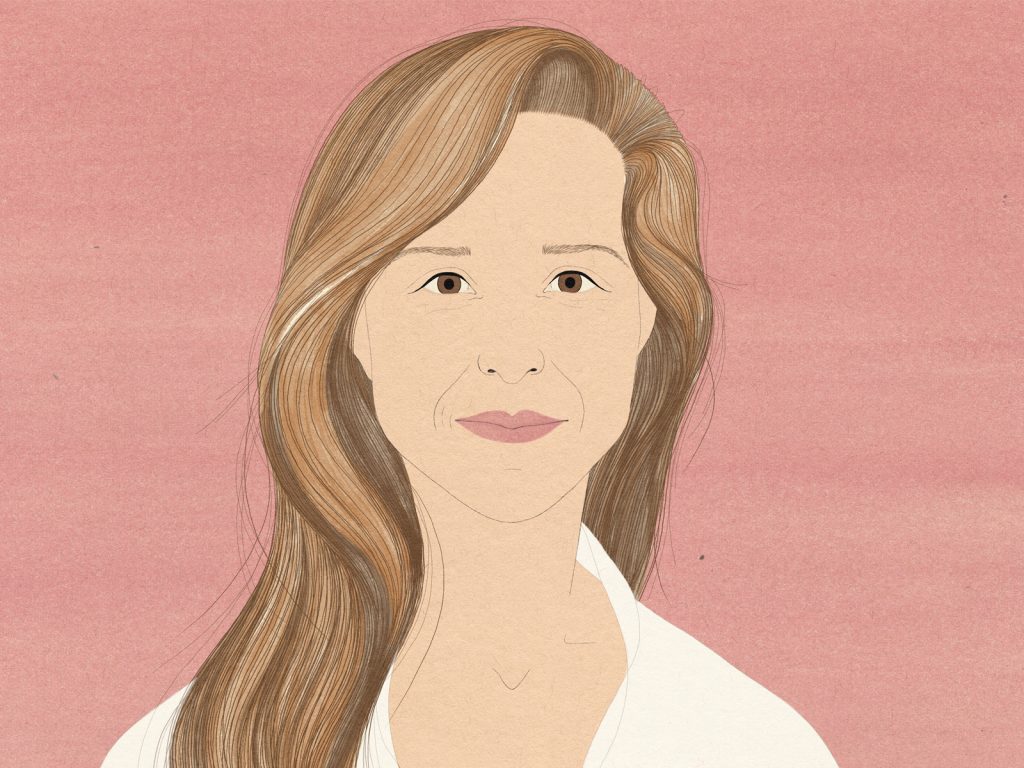
Between-States: Conversations About Bardo and Life
In Tibetan Buddhism, “bardo” is a between-state. The passage from death to rebirth is a bardo, as well as the journey from birth to death. The conversations in “Between-States” explore bardo concepts like acceptance, interconnectedness, and impermanence in relation to children and parents, marriage and friendship, and work and creativity, illuminating the possibilities for discovering new ways of seeing and finding lasting happiness as we travel through life.
***
“One of the things art can do is engage with pain and suffering, whether it’s our own or others’, and turn it into a portal,” says Lauren Groff. “A portal to making something beautiful out of something that’s really rough and hard.” The stories in Groff’s new collection, Brawler, are just such a portal, exploring with insight and compassion the traumas that life brings. Groff says the stories are about “the ways we hurt one another, often without meaning to, and the ways violence persists through generations.” At the same time, they show our “beautiful willingness to make things good, and to be good, and to push toward goodness in other people.”
Born in 1978 in Cooperstown, New York, Groff is the author of five novels, including Fates and Furies (2016) and Matrix (2021), and three short story collections. Her awards include The Story Prize and the Joyce Carol Oates Prize, and she has been a finalist three times for the National Book Award; she is the recipient of a Guggenheim Fellowship and was named to Time magazine’s 100 Most Influential People list in 2024. Groff lives in Gainesville, Florida, where she and her husband own a bookstore, The Lynx, which they opened in response to mounting book bans in the state. The store displays banned titles, and its motto is “Watch Us Bite Back.”
I talked with Groff about letting go of ambition, living between regret and repair, and how swimming set her mind free.
*
You visited Kyoto last year because of your love for The Tale of Genji, an 11th-century Japanese novel you’ve described as “patterned with recurring images and ideas: swiftly fading cherry blossoms, clouds moving through the sky, autumn leaves, the aching transience of life on this planet.” Did you feel an awareness of impermanence when you were in Kyoto? Oh, yes. That was one of the great lessons from the trip. I remember watching somebody make tea with incredible care and, as I was watching, thinking that tea is meant to be drunk. It’s not meant to stay around forever. Seeing the attention that was paid to all the sensory and aesthetic details of an ephemeral moment like that had a big impact on me. In Kyoto, I fell in love with the Japanese culture of craft, which is about loving what you’re doing as deeply as you can in the moment rather than achievement and being better than other people.
Do you feel the drive to achieve, to write the next big thing? I do, because it’s hard to grow up here in the US and not feel ambitious, especially as an artist. I really want to become more like Japanese craftspeople. That’s the ideal, but it goes against everything that I was taught, especially because I was a competitive swimmer for a long time. What is athleticism but pitting yourself against other people?
That said, now that I’m getting older, I’m starting to feel the grace of aging as an artist, of being able to turn my back on a lot of the heavy ambition that drove me for a long time. I don’t think I’ll ever be able to completely push that ambition to the side. But I’ll try, with my new understanding of craft and impermanence, of fleeting beauty. How nothing that we’re doing now is going to last. The sun will explode. Everything will be gone.
One of the things that struck me about your new book, Brawler, is its melancholy. What did you have in mind as you selected the stories? When I sat down with about eighteen stories I’d written over the years, I didn’t have a particular theme in mind, but I think the melancholy is from being here in the United States of America at this time and watching it all fall apart and crumble, and having two boys who could be drafted. And loving having had children, but now seeing them about to leave home. And having older parents. There’s just a profound melancholy right now in life.
The bardo teachings encourage us to accept reality but not give up. In your story “Between the Shadow and the Soul,” the protagonist experiences an awakening when she meets someone new. She recognizes, though, that she doesn’t want to leave her husband, and the part of her that woke up goes dormant again. She accepts reality but seems to be giving up. I don’t see it at all as giving up. I think she comes to an understanding of the inchoate things that are happening inside her. She accepts—surrenders to—reality. She sees what’s going on for her emotionally and then makes a choice to be with her husband, this wounded person whom she loves deeply.
Surrendering to reality, which has a connotation of giving up, can mean living with the difficulty instead of running away from it. It’s about accepting dark parts of yourself and loving them, even if you haven’t ever loved them before. It’s part of being a human on this planet. It’s very easy to not surrender. To turn on Netflix or take a nap—I love doing both of those things, I’m not judging anyone. But instead, we can sit with the discomfort, knowing it’s a necessary coming to understanding.
In the bardo between birth and death, we’re the artists of our lives, shaping our trajectory with our choices. Do you feel like the artist of your life? That’s the most fascinating question, because the answer is obviously no and yes. I mean, I was given a lot. My parents are the best parents on the planet. They allowed me to read as much as I wanted, they gave me education. And I was raised in a time and a place when there wasn’t this urgent feeling that everything was going to fall apart. It was a graceful moment in the United States, in my hometown in upstate New York. So I was authored by that. At the same time, I’ve made choices that have shaped my path.
Surrendering to reality, which has a connotation of giving up, can mean living with the difficulty instead of running away from it. It’s about accepting dark parts of yourself and loving them, even if you haven’t ever loved them before.
There’s also the situation where we’re authored by a troubled childhood, by instability. This was true for a friend of mine who ended up in prison and had this come-to-Jesus moment where he said, “Even though I’m stuck here, and everything’s awful—the food’s bad, there’s noise, I’m afraid for my life all the time—I’m going to use this to make myself a better person.” He did it through meditation, and when he got out of prison, he became an activist. He was authored by a harsh environment yet shifted that into a beautiful sense of, “I’m taking control of my choices.”
I love the idea of transforming how we’re authored, like, OK, I’m taking over the narrative here. Sometimes we do this because we realize life is short and we don’t want to have regrets. Do you have regrets, or feel like you will? I’m trying to live in a way in which I will not have regrets. It doesn’t mean I won’t have them, but it does mean I’m doing my best to mend relationships with people I’ve wounded. Part of that is forgiving other people and myself. And even forgiving people who are doing terrible things in this country, although they probably don’t deserve it. If I don’t forgive, I carry that with me, which doesn’t help anyone.
One thing that’s helping me get away from regret is opening our bookstore, The Lynx, which I’d dreamed of doing for a long time. I did it in order to take a stand and be political because Florida is a very right-wing state. Every day we make choices at the bookstore to shore up the community. A lot that I had regrets about hasn’t been ameliorated, but I’m working all the time to make things better.
What you’re describing is a kind of between-ness—between regret and repair, between what’s been done and what can be done now, between individual and collective responsibility. Do you also experience between-ness in your writing? For me, it’s the understanding that nothing I make is finished. What I create is given to other people to do as they will.
I live within the acceptance state of my work being its own living thing, which is changing and moving and living underneath the surface, whether I can see it or not. That’s allowed me to welcome the fact that it will always be between. It’s always in the process of being completed by another person. Each new reader is changing it, and moving it, and making it a different thing than what I had foreseen. It’s beautiful that art is infinitely malleable, never static.
You’ve said that you became a writer because you were a swimmer. What’s the relationship between swimming and writing? When I trained as a competitive swimmer, it was like formal poetry in that I was given a rigid structure, which allowed the liberation of my mind. The structure was the going back and forth, back and forth, for hours, and forcing my body to do its work, and the liberation was that this pushed my brain to do something radically different in my writing.
During between-states—and swimming is a great example, a time when we’re literally in a state of suspension—we have a chance to see things in new ways. It sounds like this was very true for you. Absolutely. Swimming was active dreaming into whatever I was writing at the time, a moment when my brain was set loose and allowed to float off in any direction. I genuinely feel like I wrote a bunch of novels under the water.
Is swimming still part of your life? When I was pregnant, it was the only thing I could do, because it was really hot in Florida and I was burning up. I would go swim in these outdoor pools like a giant manatee. I don’t swim anymore, though.
We have a little pond, which is full of newts, and the water is really dark. In the summer, I lie in there like a newt, very still, floating. I go to the pond as much as I can to fill myself with the magic in it. There’s some sort of spirit there that I love, that speaks to me.
Your competitive swimming days must feel very distant. They do, especially because, as with my writing, I want to move away from all that.
Toward the newt pond. That’s right. Toward the joy and the beauty.

Thank you for subscribing to Tricycle! As a nonprofit, we depend on readers like you to keep Buddhist teachings and practices widely available.