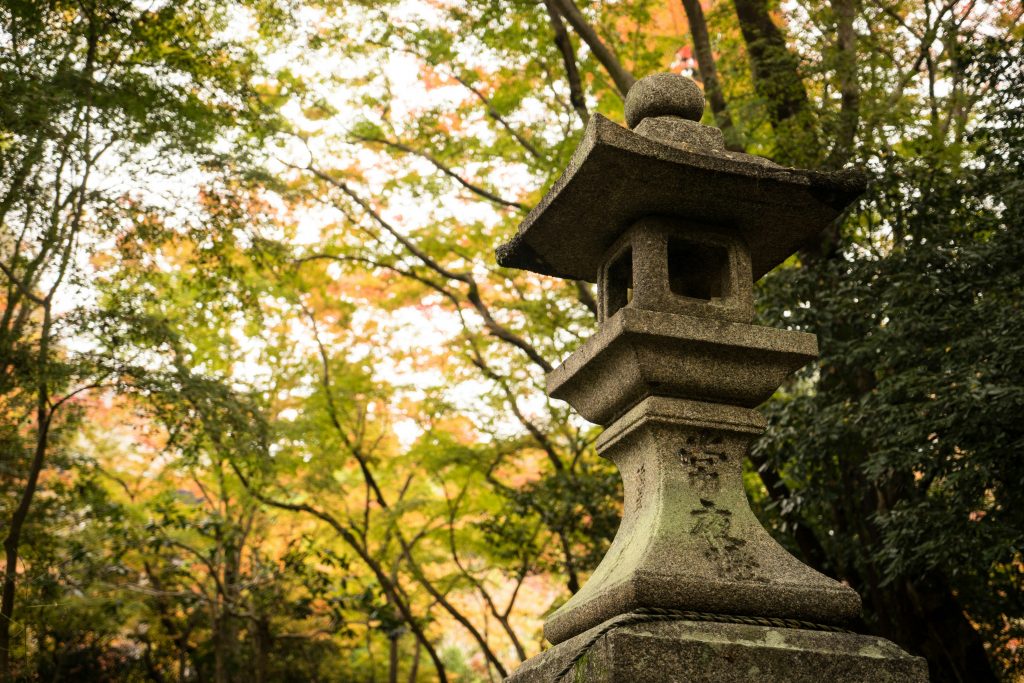
Daitoku-ji, a temple of the Rinzai Zen school in Kyoto, is renowned for its tranquil subtemples. Among these is Juko-in, celebrated for the beauty of its main hall, its tea pavilion, and a particular stone lantern in its garden. According to tradition, this lantern marks the grave of the legendary tea master Sen no Rikyu (1522–1591). It is said that Rikyu’s spirit resides within the lantern, and by placing an ear against its stone, one may hear the faint sound of him practicing tea ceremony.
Nearly four centuries ago, there lived a boy named Sen no Yoshiro, the son of a merchant from the prosperous town of Sakai. Yoshiro did not follow in his father’s footsteps. Instead, he entered Daitoku-ji in Kyoto and became a monk, taking the name Sen no Rikyu. While studying sacred scriptures, Rikyu became fascinated by the art of tea ceremony, which was immensely popular at the time. His dedication to the craft elevated him to the status of a master, and he became the tea instructor to none other than Toyotomi Hideyoshi, the most powerful man in Japan.
Yet Rikyu and Hideyoshi clashed over their differing philosophies of tea ceremony. Their first dispute occurred when Hideyoshi, seeking to display his wealth, built a gilded tearoom in his castle and asked Rikyu to host a ceremony there. Rikyu refused, declaring that such opulence was antithetical to the refined simplicity that defined his art.
After leaving Hideyoshi’s castle, Rikyu sought solace on the slopes of Mount Funaoka, accompanied by his closest disciples. Though he concealed it well, Rikyu was deeply troubled. Defying Hideyoshi could have dire consequences, and he feared the repercussions. As he walked, lost in thought, his gaze fell upon a weathered stone lantern. Perhaps it had stood there for centuries, unnoticed amid the wilderness, waiting for this very moment. Struck by its presence, Rikyu admired the lantern for a long time before turning to his disciples and saying, “Look carefully at this lantern. Remember it well, for when I die, I want it to serve as my tombstone.”
His disciples, alarmed by their master’s ominous words, promised to honor his wishes. Little did they know how soon they would be called upon to fulfill that promise. Tragedy struck a few months later when the abbot of Daitoku-ji commissioned a statue of Rikyu and installed it above the temple gate to honor him. When Hideyoshi learned of this, he was outraged. “The abbot knows I visit Daitoku-ji regularly!” Hideyoshi bellowed. “Does he expect me to pass beneath the statue of a man who is beneath me in rank? This is an insult! Rikyu must pay with his life!”
A messenger was dispatched to deliver the grim verdict. On the twenty-eighth day of the second month in the nineteenth year of Tensho (1591), Rikyu obeyed the order, performing the ritual suicide of seppuku. His severed head was displayed on the First Avenue Bridge, a chilling reminder of Hideyoshi’s authority. Rikyu’s body, however, was entrusted to his disciples, who buried him in the garden of Jukoin. Remembering their promise, the disciples retrieved the lantern from Mount Funaoka and placed it atop Rikyu’s grave as his tombstone. It was then that they heard it:
Shaka, shaka.
Startled, they searched for the source of the sound but found nothing.
Shaka, shaka.
The faint noise continued. It resembled the sound of a whisk stirring matcha in a tea bowl.
Shaka, shaka.
“It’s coming from the grave!” exclaimed one of the disciples.
Placing his ear against the stone, he confirmed it. The sound of Rikyu’s tea whisk echoed faintly from within the lantern. Even in death, Sen no Rikyu continued to practice his beloved tea ceremony!
♦
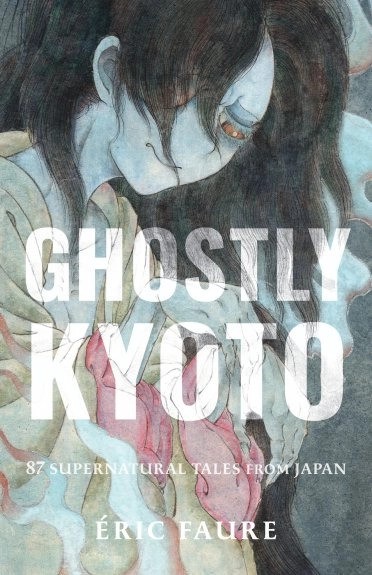
From Ghostly Kyoto © 2026 by Éric Faure. Reprinted in arrangement with Shambhala Publications, Inc. Boulder, CO. www.shambhala.com.

Thank you for subscribing to Tricycle! As a nonprofit, we depend on readers like you to keep Buddhist teachings and practices widely available.