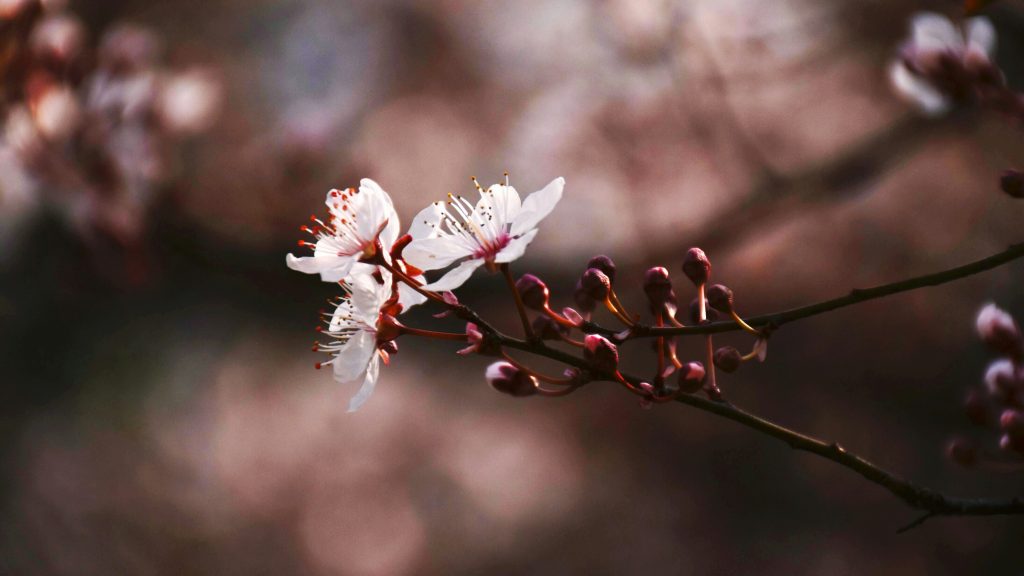
“The rhythm of poetry is like that of a mourner’s,” writes the acclaimed South Korean poet Lee Seong-bok in Indeterminate Inflorescence. “Two steps forward, one step back . . . the fluttering funereal banners and the colorful paper flowers . . . listening to the sad singing and the sound of ghosts.”
In his newly translated collection of poetry, That Summer’s End, Seong-bok carries the rhythm of mourning into his deep engagement with the natural world. In his odes to mountains, rivers, trees, and falling blossoms, Seong-bok pulls from his study of French symbolism and Seon Buddhism to craft searching reflections on sorrow, impermanence, and letting go. Returning to each subject again and again, sometimes through extended sequences, Seong-bok lingers in spaces of silence and unknowing, raising fundamental questions of how to live through despair and find a way through the “pathless forest” of existence.
Perhaps it is these silences and pauses that lend the poems their power—as he writes in Indeterminate Inflorescence, poems “are nothing more and nothing less than making gaps. We can breathe as much air as these gaps allow. These gaps are the truest human place.” Through their gaps and caesuras, Seong-bok’s verses offer readers a chance to rest in the mystery of each moment and to dwell in that “truest human place” that silence makes possible.
–Sarah Fleming, senior editor
Feeling
How do feelings come
a bough first blossoms
Is that how feelings come
a bough first drops its blossoms
Is that how feelings fall
A droplet on a page
lingers long before
drying to a blot
a warp on paper
an indelible trace
Sea
Sorrow called to me
I didn’t answer
Sorrow followed me
I didn’t flee
together we went on a long trek
Pine forests obscured my view
in them sorrow hid
after a moment’s wait
I glimpsed it stepping forth
Its back a dark blue bend
in the river and white froth in its mouth sorrow, O
sorrow rushed toward me
Even in turns and shattering, it waved
Mountain Path 2
On a path barely wide enough for one the acacia grew thick and
the sunlight dappled The path looked blocked Thinking my way lost,
I continued step by step into the pathless forest
Many times have I made it trembling back down that hard
mountain path Every time I thought the path was at an end it began
again
Memories of a Very Overcast Day
Birds flock by as they cover this place with graves
With the force of pushing a coffin lid I stare up at the sky
That Summer’s End
That summer the crape myrtle survived After the storm and the
storm after that it hung on and poured out a hail of red flowers
That summer I stood in the centers of storms That summer my
despair burst out into crimson but still I weathered the wind and rain
The crape myrtle heaves but burns bright, breathing fire When its
blossoms ruffled my narrow yard with blood, my despair came to an end
♦
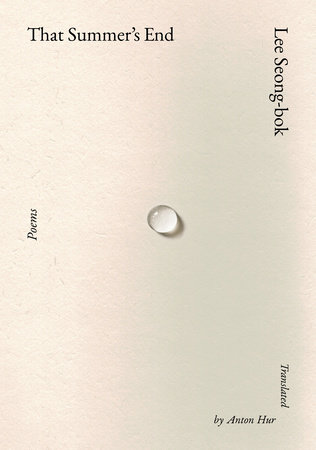
From That Summer’s End: Poems by Lee Seong-bok, translated by Anton Hur. Reprinted by permission of Alfred A. Knopf, an imprint of The Knopf Doubleday Publishing Group, a division of Penguin Random House LLC. Copyright © 1994 by Lee Seong-bok. English language translation copyright © 2026 by Anton Hur.

Thank you for subscribing to Tricycle! As a nonprofit, we depend on readers like you to keep Buddhist teachings and practices widely available.