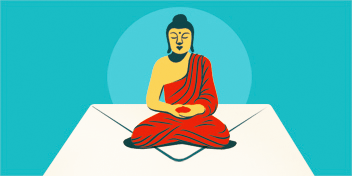
Amitabha, meaning “Limitless Light,” is a central buddha of Mahayana Buddhism. He presides over Sukhavati, the Western Pure Land. Practitioners also call him Amitayus, meaning “Infinite Life,” or Amida in Japanese. Amitabha anchors devotional practice in Pure Land traditions. Practitioners believe that calling on his name leads to rebirth in his pure land and eventual awakening.
According to Mahayana scripture, Amitabha began as a bodhisattva named Dharmakara. He took forty-eight vows, promising rebirth in his future pure land to anyone who called on him with sincere faith. This origin story roots Pure Land devotion in a deliberate vow to make liberation accessible to all beings.
Pure Land teachings hold that Amitabha freely transfers his vast accumulated merit to those who trust him. Devotees traditionally recite his name to invoke his merit. Chinese Buddhists call this practice nianfo; Japanese Buddhists call it nenbutsu.
Artists commonly depict Amitabha in monastic robes, seated on a lotus throne with hands in the meditation or teaching mudra. The bodhisattvas Avalokiteshvara and Mahasthamaprapta often flank him. Together, the three form the Amitabha Triad.