
Pure Land Buddhism
Pure Land Buddhism is among the most widely practiced Buddhist traditions in the world. Rooted in the teachings of the Mahayana and centered on devotion to the buddha Amitabha, it offers a path to awakening grounded in humility, interdependence, and faith. This page introduces the central teachings, figures, and practices of this tradition, addressing some common misunderstandings.
Table of Contents
What Is Pure Land Buddhism?
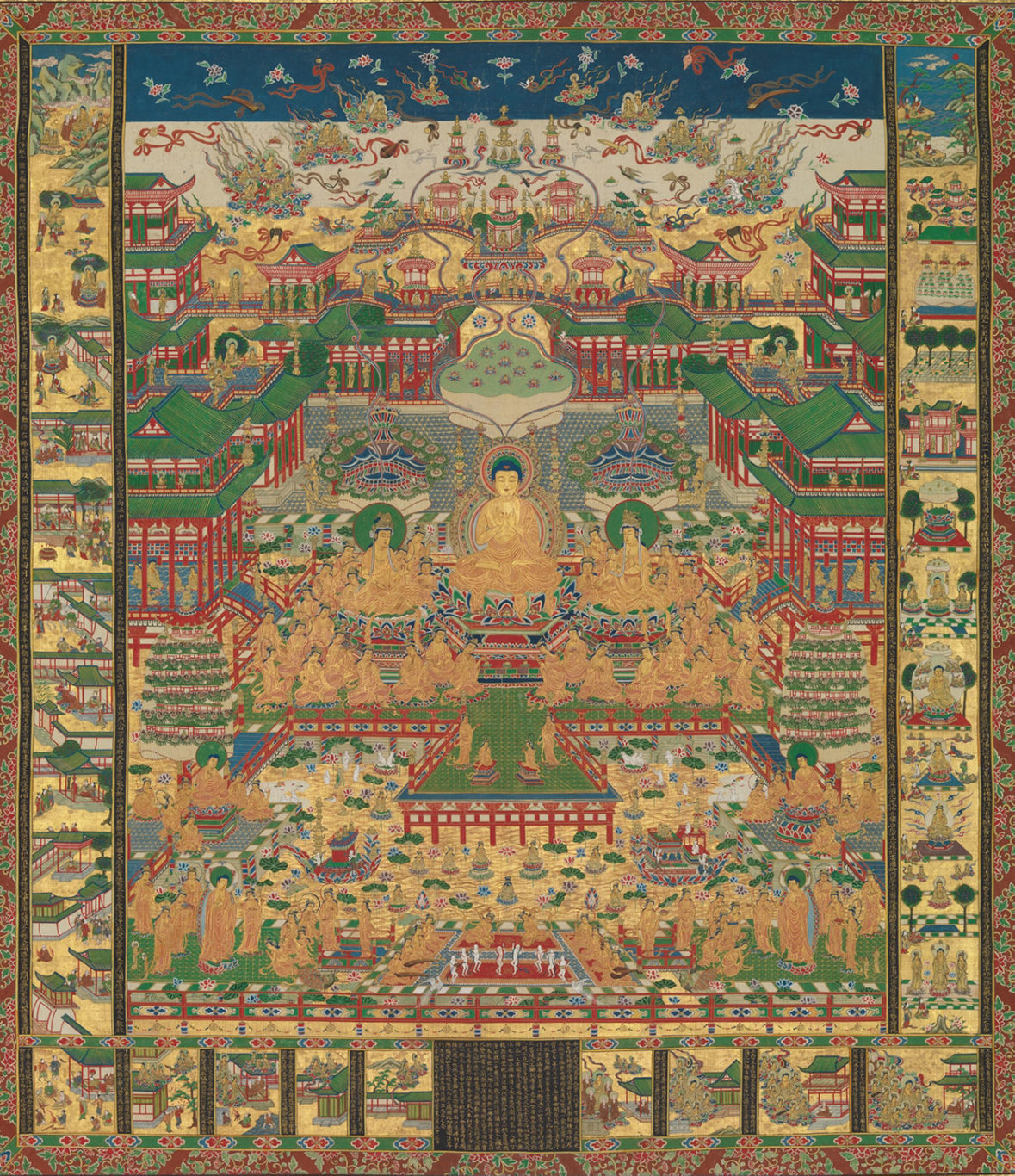
Widely practiced in China, Korea, Vietnam, and Japan, Pure Land Buddhism centers on devotion to the buddha Amitabha. His unlimited compassion guides beings toward liberation. Practitioners seek rebirth in Sukhavati, Amitabha’s pure land, a realm where conditions are ideal for progressing on the path toward enlightenment.
Pure Land (capitalized) refers to a diverse set of traditions organized around these teachings. Pure land (uncapitalized), by contrast, more broadly describes various otherworldly realms established by different buddhas found throughout Mahayana teachings.
Why do we need Amitabha’s help? Pure Land Buddhism emphasizes the challenges of practicing in our current age of decline. Mahayana texts describe this a degenerate era in which human capacities are limited, immorality is rampant, and awakened teachers are scarce. Rather than relying solely on one’s effort or self-power across countless lifetimes, Pure Land teachings encourage the acceptance of our limitations and reliance on other-power—the compassionate vows of Amitabha. He helps all who turn to him with faith and the aspiration for awakening.
The core practice of Pure Land involves reciting Amitabha’s name silently or aloud, either alone or during a ritual. There are many names for this practice, but the essence is cultivating a sincere connection to Amitabha. Some schools also incorporate contemplation and visualization practices derived from key Pure Land texts.
Pure Land Buddhism is a path of humility, gratitude, and trust. It is open to everyone, including monastics and laypeople, regardless of their level of learning or training. No matter one’s past karma, rebirth in Sukhavati is possible. The tradition offers hope to those who might otherwise feel excluded from spiritual attainment. It affirms that enlightenment is not reserved for elite practitioners but made accessible through Amitabha’s vow and the supporting conditions of his pure land.
Notably, a wide variety of schools also include Pure Land teachings. East Asian traditions such as Tiantai (Jp.: Tendai), Chan, Zen, and Tibetan Buddhism have long incorporated Pure Land elements into their practices. Far from being a fringe school, Pure Land thought shaped the development of Mahayana Buddhism in lasting ways.
Origins and Development

Pure Land Buddhism developed from early Indian Mahayana teachings. These teachings first circulated during the few centuries before and after the Common Era. Mahayana scriptures from this period sometimes describe numerous buddhas and their purified lands. There, followers can be reborn under favorable conditions to hear the dharma and become enlightened in the presence of a living buddha. Among them, the teachings about Amitabha and his pure land, Sukhavati, quickly stood out. They eventually formed the foundation of a widespread devotional tradition in Asia.
By the 3rd and 4th centuries, Buddhists brought these texts to Central and East Asia. One of the earliest figures associated with Pure Land practice in China was the monk Huiyuan (334–416). He formed a community dedicated to Amitabha on Mount Lu. His followers recited Amitabha’s name and vowed to help one another be reborn in his pure land. Scholars question this legendary origin narrative. Even so, this group is likely one of the earliest examples of an organized Pure Land school in East Asia.
Over the next several centuries, Chinese teachers further developed Pure Land thought and practice. They emphasized the importance of faith and chanting Amitabha’s name. Both were a response to the challenges of practicing Buddhism in an era with no living buddha. These teachings made the path more accessible to people who felt that they could not succeed through meditation or study alone.
Pure Land ideas continued to spread throughout East Asia, taking root in Korea, Vietnam, and eventually Japan. There, they they gave rise to new schools of thought and lay-oriented movements. In Japan, the Pure Land tradition emerged as a distinct movement in the 12th century. It developed its own institutions, texts, and interpretations.
Despite these developments and great popularity, Pure Land Buddhism did not always function as a separate school. In many regions, monastics and laypeople integrated Pure Land beliefs and practices into existing Buddhist traditions. They combined chanting, for example, with other forms of meditation, ritual, and ethical discipline.
As it became more established, Pure Land Buddhism became a subject of scholarly commentary, artistic representation, and liturgical development. Inscriptions, paintings, and temple architecture reflected Amitabha’s growing importance and his radiant pure land in visual and ritual culture. Biographies of practitioners who experienced the salvific power of Amitabha circulated widely, creating a shared lineage and devotional ideal. This material culture shaped how the tradition was understood, practiced, and transmitted.
Amitabha
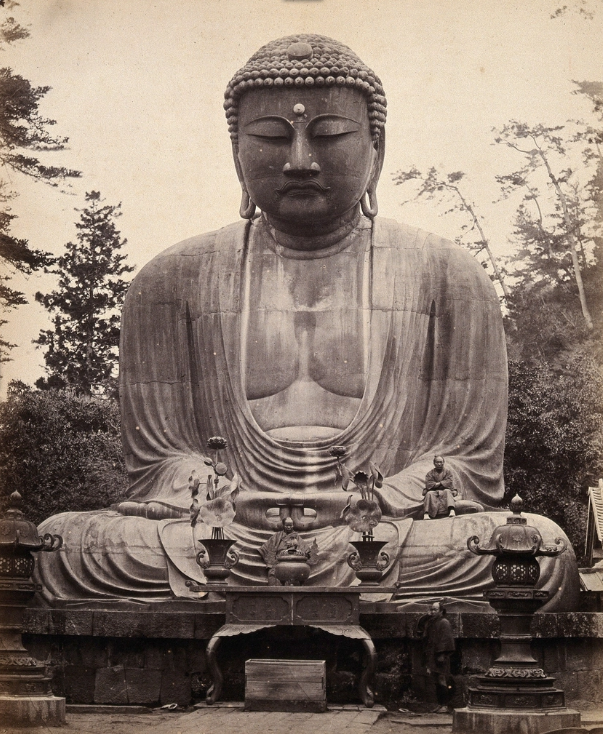
Amitabha, the central figure of Pure Land devotion, is a Mahayana buddha. His Sanskrit name means “immeasurable light” or “infinite radiance.” This light is said to shine without limit in all directions, symbolizing his boundless wisdom and compassion. Some also call him Amitayus, meaning “immeasurable life.” The two names are used interchangeably, but they emphasize slightly different qualities: the light of wisdom and infinite life. In Japan, practitioners usually call him Amida, a shortened form of his original name. Many Mahayana traditions focus on bodhisattvas or historical figures like Shakyamuni Buddha. Pure Land practice, by contrast, centers on Amitabha as the one who made liberation possible for all beings, regardless of their limitations.
According to the Larger Pure Land Sutra, Amitabha’s story begins many eons in the past. He was then a bodhisattva named Dharmakara. After meeting the buddha Lokesvararaja, Dharmakara vowed to become a buddha. He resolved to create a realm where anyone who called his name in faith could be reborn. He made forty-eight vows, each one expressing his aspiration to save all beings. The most famous of these vows promises a place for anyone who sincerely turns toward him. This palce would become Sukhavati, Amitabha’s pure land.
Unlike other buddhas who may embody Buddhist cosmological principles or meditative insight, Amitabha is approachable and relational. Pure Land teachings describe his compassion as all-accepting, and he embraces beings just as they are. He does not demand perfection or enlightenment. Instead, he responds to the sincere wish to awaken, especially from those who feel unworthy, lost, rejected, or incapable of following the Buddhist path. Amitabha offers hope in times of trouble, making him one of the most beloved figures in East Asian Buddhism.
Pure Land teachings refer to Amitabha’s merit—the vast positive karmic power he generated through countless lifetimes of practice. He freely shares and transmits this merit to others. This idea of transferred merit is central to the tradition. Instead of relying on one’s limited capacities, practitioners depend on Amitabha’s store of merit and vows. The emphasis is not on achieving enlightenment through individual effort. It rests, intead, on being sustained by this buddha’s compassion and power, commonly referred to as “other-power.”
Followers of Pure Land Buddhism seek a connection with Amitabha. They do this through chanting his name, visualizing his presence and qualities, or simply calling to him with a sincere trust and faith. He is a living presence who listens, responds, and makes the path to awakening possible, regardless of the practitioner’s circumstance.
Pure Lands and the Western Paradise

In Mahayana Buddhist cosmology, a pure land is an actual realm created by a buddha through their vows and accumulated merit. It is a space where the conditions for Buddhist practice are free from distraction, suffering, or delusion. In these buddha-fields (Skt.: buddhaksetra), a living buddha’s presence supports practitioners, guaranteeing progress toward awakening without the obstacles found in ordinary worlds. It’s through the Chinese translation of buddha-field that we get the English pure land.
Among the many pure lands described in Buddhist texts, four are especially well-known. Each is associated with a buddha in one of the cardinal directions. To the east, Akshobhya presides over Abhirati, a land of delight and steadiness. To the south, Ratnasambhava is associated with Srimat, a realm of beauty and generosity. In the north, Amoghasiddhi manifests Prakuta, a realm of accomplishment and fearlessness. And in the west, Amitabha rules over Sukhavati, the Land of Bliss, often referred to as the Western Paradise. The future buddha Maitreya also has a notable pure land situated in the deva realm of Tusita.
Sukhavati is the most widely revered pure land. In this pure land, even birdsongs and the wind heard through the trees teach the dharma. Jeweled trees shimmer with leaves made of precious gems. Each jewel reflects the countless buddha-lands of the ten directions, each with its own adornments and buddhas, all radiantly visible within every facet. Time in a pure land flows differently. Those reborn in pure lands live for vast stretches of time, free from illness and death. Amitabha’s compassionate presence steadily guides beings in Sukhavati toward enlightenment and nirvana.
Over time, the idea of pure lands inspired more than individual religious aspirations. East Asian history records many religious millenarian movements. These movements employed the concept of a promised land of liberation to promote social reform and, in some cases, political rebellion. Not all of these groups were tied to a Pure Land lineage. Still, the imagery and promise of a transformed world on the horizon provided a powerful inspiration far beyond monastic or ritual settings.
Other-Power and the Human Condition

A clear-eyed view of the human condition is the starting point for Pure Land teachings. We are ordinary, fallible people, foolish beings (popularly known as bombu in Japanese) prone to error, confusion, and desire. Rather than deny this, Pure Land embraces it as the starting point. The idea that one can achieve spiritual perfection through personal cultivation is a form of pride—and a significant obstacle on the path.
The recognition of human limitations is closely tied to the teaching that we live in an age of decline. In this era, understanding and practicing the dharma has become increasingly difficult, enlightened teachers are rare, and no buddha is present in the world. In response, Pure Land Buddhism relies on other-power—the reliance on the vow and compassion of Amitabha—over self power or reliance. Rather than trying to purify the mind through intense discipline or meditation, the practitioner entrusts themselves to Amitabha’s promise of rebirth in his pure land.
Pure Land traditions often call this act of entrusting faith. It’s not a rigid or unquestioning belief but rather a settled confidence, a quieting of the heart and mind. In Pure Land traditions, faith is something lived and felt, not dictated by doctrines; it’s cultivated through relationship and reflection. This can be difficult to grasp in Western contexts. There, faith is often defined in contrast to knowledge, especially for those who’ve moved away from theistic traditions. As a result, many have sometimes misunderstood Pure Land Buddhism as naive, irrational, and unphilosophical. But here, faith is not a refusal to think; it’s a letting go of ego and self-mastery. Simple acts, repeated over time, affirm and deepen this trust.
Practitioners express that practice by recalling Amitabha’s name. In return, Amitabha is said to offer the vast store of merit he accumulated over countless lifetimes, which he transfers to all who turn to him in faith. Rather than striving to accumulate personal karmic merit, the practitioner receives it as a gift and passes it on, dedicating any goodness to others.
Stories in Pure Land traditions often recount the experiences of ordinary people—farmers, children, and merchants—who found peace, fearlessness, and clarity through their complete trust in Amitabha. These individuals may not have had formal training, but their lives reflected the core of Pure Land teachings: humility, gratitude, and a strong and meaningful connection with others.
Practicing Pure Land Buddhism
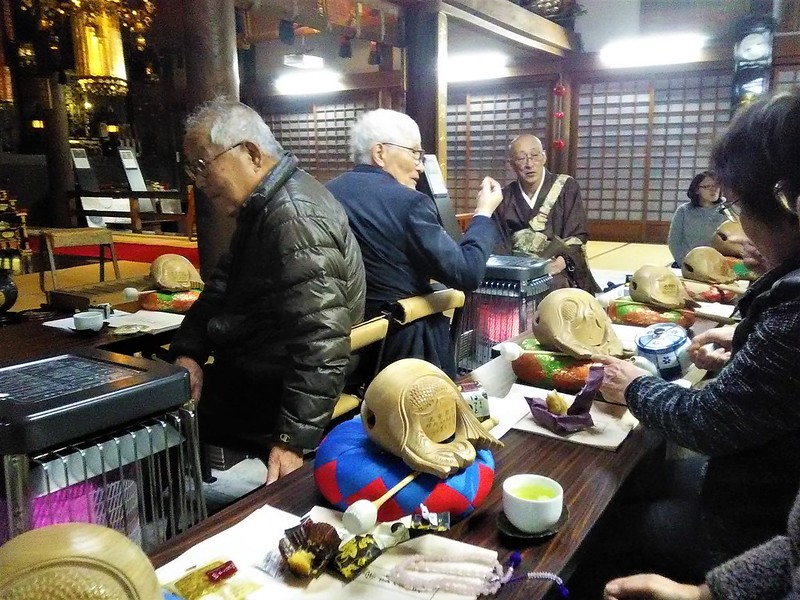
The central practice of Pure Land Buddhism is recalling the name of Amitabha. Various traditions call this practice nianfo (Chinese), yeombul (Korean), niem Phat (Vietnamese), and nenbutsu (Japanese, alt. nembutsu), all involving calling Amitabha’s name. The pronunciation of the phrase also varies by language: Namo Amituofo (Chinese), Namu Amitabul (Korean), Namo Amida Butsu (Japanese), Namo A Di Da Phat (Vietnamese). But, the intention behind it is more important than the pronunciation. Chanting or silently invoking Amitabha’s name, in formal settings or during everyday actions, is a way of expressing faith, gratitude, and the aspiration for rebirth in his pure land.
This practice is accessible to all. It does not require advanced training, esoteric knowledge, or meditation skills. Practitioners bring the recollection of Amitabha into daily life, while walking, working, or resting. In many traditions, dying with Amitabha’s name on one’s lips or mind ensures birth in Sukhavati. Daily practice strengthens this connection, making that final moment of recollection feel natural and assured. In many monastic settings, monastics integrate this practice with traditional Buddhist ethics and discipline. This includes the Vinaya and lay or monastic precepts. Even lay-centered traditions encourage ethical conduct as an expression of gratitude and trust in Amitabha’s vow.
But chanting and ethical conduct are not the only forms of Pure Land practice. India’s earliest teachings also instructed practitioners to visualize Amitabha and his realm. The Contemplation Sutra, for example, describes thirteen visualizations, including radiant lotus ponds, jeweled trees, and characteristics of Amitabha himself. Prostration is another common form of Pure Land practice. All of these practices generate mental clarity, devotion, and faith, and were especially important in Chinese and Korean monastic contexts.
The teaching of the three minds, found in the Contemplation Sutra, supports these practices. Pure Land thinkers later developed it further. These three minds are:
- A sincere mind, free from pretense or self-deception
- A deep mind, grounded in humility and trust
- A mind of aspiration, focused on rebirth in Sukhavati
These minds arise through practice and faith, not personal achievement. They are attitudes shaped over time by sincere repetition of the practices, reflection, and the compassionate influence of Amitabha.
Pure Land practice also emphasizes a trust in merit transference. Practitioners dedicate their limited karmic merit generated by these practices toward rebirth in Sukhavati. In return, they receive Amitabha’s immeasurable merit. This spirit of giving and receiving cultivates humility, gratitude, and trust—all hallmarks of the Pure Land path.
The Moment of Death

For much of history, Buddhists have considered the moment of death a powerful and vulnerable transition. Mahayana teachings describe an intermediate state between death and rebirth, a liminal period lasting forty-nine days. During this time, the consciousness of the deceased encounters visions shaped by past karma. In Tibetan Buddhism, this is known as the bardo. It is said to involve both peaceful and wrathful appearances that reflect the mind’s habitual tendencies. For advanced practitioners, this moment is an opportunity to recognize reality, awaken, and even direct one’s rebirth in the next life. For others, confusion or fear will most likely lead to an uncontrolled rebirth.
Various traditions prepare for this moment in different ways. Some emphasize meditation and mindfulness practices that can help focus the mind at the time of death. Others employ chanting, visualization, or ritual support from the living. In all cases, what one brings into the final moments—intention, awareness, and faith—can shape what follows. Many traditions follow extended periods of prayer and ritual through the forty-nine-day liminal state. Such efforts can help guide the deceased through this critical time.
Pure Land Buddhism offers a distinct approach. Rather than navigating visions or relying on advanced meditative insight, practitioners entrust themselves to Amitabha. The moment of death is not a test of meditative skill but an opportunity for rebirth in his pure land. Amitabha’s compassionate vow ensures that all who turn to him with sincere aspiration, regardless of past karma or meditative accomplishments, will be welcomed into his awakened realm and be firmly set on the path to enlightenment.
Because of this, Pure Land traditions often emphasize recollection of the Buddha’s name at the time of death. Chanting Amitabha’s name in one’s final moments, or even hearing others chant on one’s behalf, can secure birth in the Pure Land. In some interpretations, this bypasses the intermediate state altogether: The practitioner is directly reborn into Sukhavati.
Some schools teach that Amitabha never forsakes those he embraces. Even in this life, their rebirth in the Pure Land is assured. From that point onward, the path to awakening is considered irreversible. This gives Pure Land practice a sense of reassurance: Rather than being an end, Death is a moment of connection, when practitioners meet Amitabha and begin a new phase of their path to nirvana.
Texts and Scriptures

The doctrinal foundation of Pure Land traditions rests on a core group of Indian Mahayana scriptures. Collectively, these are known as the three Pure Land sutras. Some were translated into Chinese by the 3rd century CE. These texts, along with several commentaries, form the doctrinal and philosophical foundation of Pure Land thought and practice.
The most important scripture is the Larger Sutra of Immeasurable Life (Skt.: Sukhavativyuha Sutra; Ch.: Wuliangshou Jing), also known as the Larger Pure Land Sutra. It tells the story of the bodhisattva Dharmakara, who becomes the buddha Amitabha. His forty-eight vows culminate in the creation of Sukhavati, a pure land where the dharma continuously resounds and beings can quickly progress toward awakening.
The Smaller Sutra of Immeasurable Life (Amitabha Sutra; Amituo Jing) is also known as the Smaller Pure Land Sutra. It provides a concise and vivid description of Sukhavati as a world situated far to the west. This sutra portrays the western Pure Land as a radiant realm filled with jeweled trees, lotus ponds, and unceasing dharma teachings—even the birds and animals teach the dharma. Those born here spend their time making offerings to Amitabha and buddhas in other pure lands. The sutra’s striking imagery made it a key source for Pure Land art and devotional practices.
The Contemplation Sutra (Amitayurdhyana Sutra; Guan Wuliangshou Jing) centers on the devoted Buddhist supporter Queen Vaidehi’s vision of multiple buddha-lands. It also follows her choice of Sukhavati for rebirth. Shakyamuni then teaches a series of thirteen visualizations designed to generate Queen Vaidehi’s vision. The text also presents nine grades of rebirth, a classification later reinterpreted in significant ways by Pure Land teachers.
Two commentaries became especially influential. In India, Vasubandhu’s Treatise on the Sutra of Immeasurable Life outlines five integrated practices to aid rebirth in Sukhavati: prostration, reciting Amitabha’s name, aspiring for rebirth, visualization, and transferring merit for the benefit of all. These became popular forms of Buddhist practice, not limited to Pure Land traditions. In China, Shandao’s Commentary on the Contemplation Sutra helped shape East Asian Pure Land orthodoxy. It emphasized the accessibility of the path, the primacy of reciting Amitabha’s name, and the inclusive nature of his compassion, even for those with the gravest karmic burdens.
Pure Land Traditions

Far from being a monolithic school, Pure Land encompasses a wide range of teachings, practices, and institutions. All centered on devotion to Amitabha and rebirth in Sukhavati. These traditions have been enormously influential throughout Asia, adapting to different cultures. Yet, they maintain core commitments to faith, humility, and a reliance on other-power.
In China, Pure Land developed in tandem with Tiantai and Huayan thought, and practitioners often paired it with Chan meditation. Huiyuan (334–416) formed one of the earliest lay-monastic Amitabha societies on Mount Lu. Later figures, such as Tanluan (476–542/3), Daochuo (562–645), and Shandao (613–681), systematized the teachings. They mphasized the chanting of Amitabha’s name and trusting in his vows. These teachings have inspired ritual forms, art, repentance ceremonies, and funeral rites, and continue to shape modern Pure Land thought.
In Japan, Pure Land developed into several schools beginning in the 12th century. Honen (1133–1212), a former Tendai monk, founded Jodo-shu, the first independent Pure Land school. Drawing on the views the Chinese teacher Shandao promoted, Honen taught that even ordinary people could find salvation by chanting Amitabha’s name. His disciple Shinran (1173–1262) established Jodo Shinshu, or “True Pure Land School,” now Japan’s largest Buddhist school. Shinran rejected monastic celibacy, married, and taught that even ordinary people could attain rebirth in Sukhavati through sincere faith alone. Later, teachers like Ippen (1239–1289) and Rennyo (1415–1499) continued to spread and further institutionalize Pure Land teachings. Some founded new schools; others worked within established ones.
Elsewhere, existing Buddhist schools absorbed Pure Land ideas. Korean yeombul (reciting Amitabha’s name) became a widespread lay practice, often practiced alongside Seon meditation. Vietnamese chanting of Amitabha’s name is a core devotional activity, frequently combined with meditation and more esoteric forms of Buddhist practice. Tibet has no separate Pure Land school, though Amitabha plays a role there in phowa, the transference of consciousness at the time of death.
Pure Land Buddhism arrived in the West through both immigrant communities and new interest among practitioners seeking a devotional path. Often misunderstood as simplistic because of its emphasis on trust, humility, and universal accessibility, it appeals to those who find value in letting go of ego and resting in a relationship with a buddha. In its many forms, Pure Land continues to offer one of the most enduring and inclusive Buddhist practices.
Misunderstandings About Pure Land
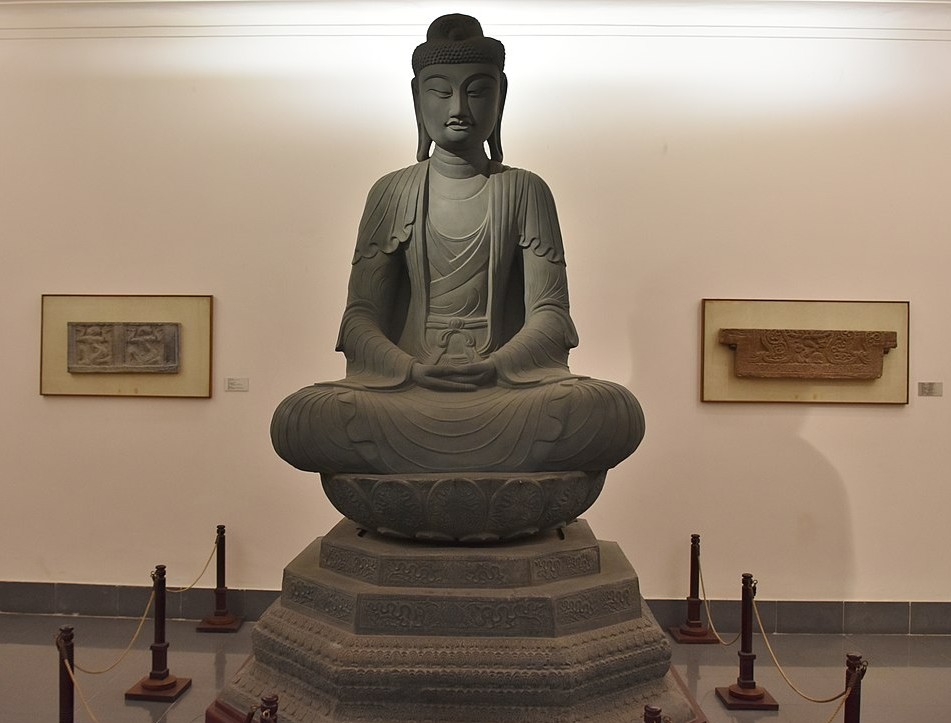
Across Buddhist contexts, critics have often misunderstood Pure Land Buddhism as a simplistic or unsophisticated path. Dismissed as “Buddhism for beginners,” or a “Buddhist heaven,” it’s been viewed as lacking the meditative depth or philosophical rigor of other schools. However, these impressions reveal more about the biases of critics than about the tradition itself.
One reason for these misconceptions lies in the history of modern scholarship. In the 19th and 20th centuries, colonialist scholars interpreted Buddhism through a Protestant lens that emphasized rationality and individualism. They privileged early texts and monastic ideals while devaluing devotional practices, ritual, and cosmology. Contemporary Buddhist scholars in Asia, in response to colonial pressures and nationalist reforms, often worked to recast Buddhism as a rational and ethical system free from superstition. They sidelined popular practices, such as Pure Land devotion, as antimodern or backward. Japanese scholarship, in particular, shaped the categories used by Western academics, reinforcing sectarian boundaries and elevating doctrinal systems over lived religion. The result was a distorted image of the Pure Land traditions as derivative. Even today, some assume that “real” Buddhism is about meditation and detachment, not chanting and faith.
The Pure Land tradition has a long history of philosophical thought. Many of its central thinkers were highly educated monastics steeped in Buddhist doctrine. Their writings grapple with complex questions about the nature of karma, rebirth, and enlightenment, topics that Buddhist philosophy has long discussed and debated. Rather than abandoning core Buddhist ideas, Pure Land teachings offer a reinterpretation of them: What does liberation look like for those unable to attain it through meditation alone? How can a buddha’s compassion transform a person’s karmic limitations? These are not simple questions, nor are the answers always easy.
Another source of misunderstanding is the assumption that Pure Land belief is merely about hoping for a better afterlife. While some critics have likened it to other religious ideas of an otherworldly heaven, this misses the mark. The Pure Land is not an eternal paradise but a space of practice where conditions are so favorable that awakening becomes possible. Some see it as a literal realm, others as a meditation vision, and still others as an expression of enlightened activity in the world. These varied interpretations, which appear in the tradition’s texts, suggest a much more complex view than is often assumed.
Ultimately, Pure Land Buddhism challenges assumptions about Buddhist practice and self-reliant effort, instead centering on trust, interdependence, and the relational nature of awakening. For those who look into the intricacies of the tradition, it can open up a path to a profoundly inclusive vision of Buddhist liberation.
Pure Land and Meditation
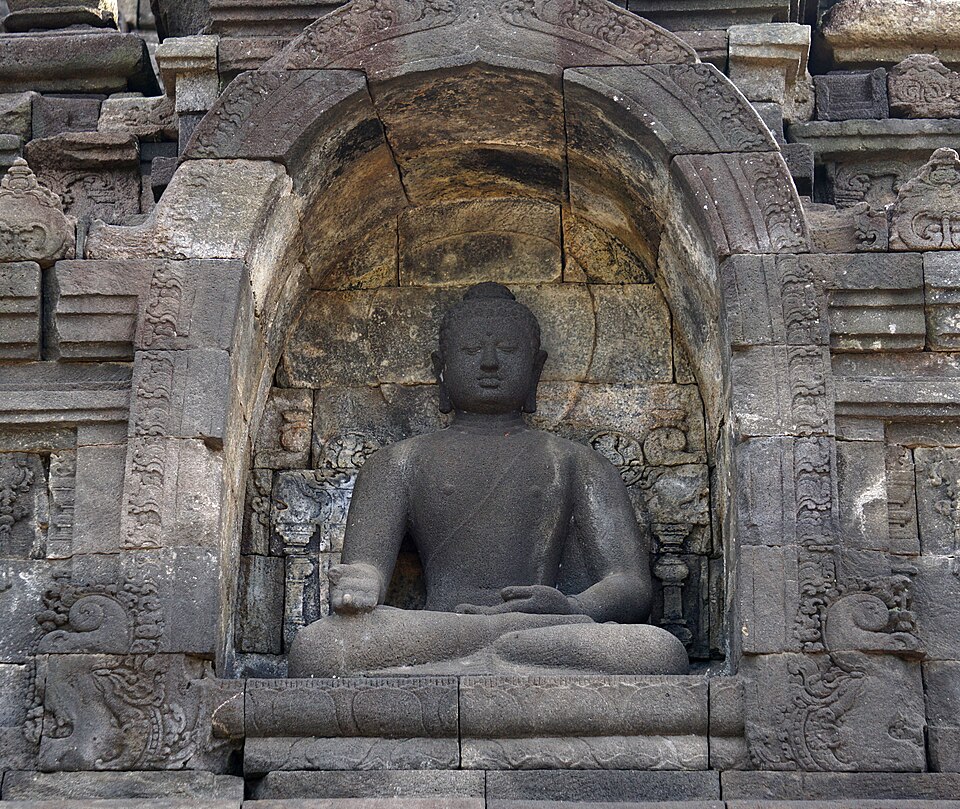
Many portray Pure Land Buddhism as a path of faith and chanting rather than meditation. But this sharp divide is more a modern construct than a historical reality. Meditative practices, particularly visualization, have been integral to Pure Land practice since its earliest textual sources.
The Contemplation Sutra, one of the foundational scriptures of the Pure Land tradition, outlines a detailed meditation practice on Amitabha and Sukhavati. These contemplations begin with visualizing the setting sun and gradually progress to increasingly subtle mental images of Sukhavati and its features: the lotus throne, jeweled trees, and ultimately Amitabha himself. These practices deepen one’s karmic connection to Amitabha and prepare the practitioner for rebirth in his pure land.
Historically, practitioners integrated these contemplations into more complex meditative practices. Early Chinese monks incorporated seated meditation and chanting. Even the Japanese Pure Land tradition, while critical of overreliance on “self-power,” did not reject meditative practice outright. Instead, they sought to make the path accessible to those for whom intense monastic training was not possible. In doing so, they recentered the nenbutsu, chanting the name of Amitabha, as a complete expression of mindfulness and devotion.
Today, some Pure Land communities continue to include meditation in various forms. In the Vietnamese Thien tradition, for example, practitioners often coordinate breath with chanting, and in the Thien-Pure Land Dual Cultivation lineages, they recite Amitabha’s name alongside meditation. Even when a tradition does not emphasize formal sitting, the repetition of the Buddha’s name can serve a concentrative function, much like a mantra or breath practice.
The perceived gap between Pure Land and meditation reflects modern categories more than lived tradition. Pure Land teachings affirm that awakening is possible for all, regardless of meditative capacity. But they don’t reject meditation. Instead, they offer a different orientation toward it, not as self-cultivation but as entrusting oneself to the light of Amitabha’s wisdom.
Buddhism for Beginners is a free resource from the Tricycle Foundation, made possible by the generous support of the Tricycle community. It reflects our mission to make the Buddha’s teachings widely available. We welcome your feedback at feedback@tricycle.org.