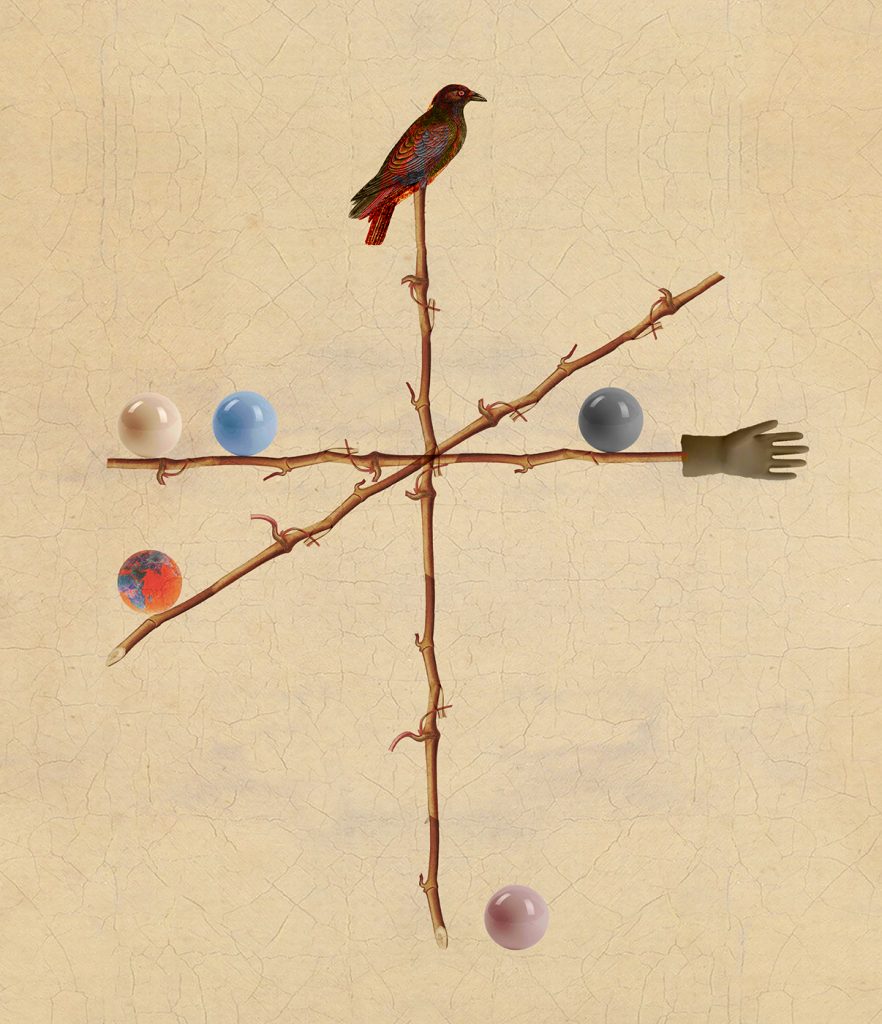
this world we live in
ten thousand scarecrows on guard
and only one bird
–Gregory Tullock
Of all forms of poetry, haiku is at once the easiest to identify and the hardest to define. Most people think of “haiku” when they see a poem of seventeen syllables. If its subject is some aspect of nature, that usually seals the deal. But ask them what makes a haiku “tick,” and no one can say for sure.
The reason is simple. There is no secret handshake. No fixed set of tricks or techniques that makes a poem a haiku. Haiku is forever dancing ahead of itself as a form of literature. Forever experimenting. Forever exploring new poetic territory.
Tricycle’s Best of Season haiku for Fall 2026 throws the conventions of classical haiku out the window, detaching the season word “scarecrow” from its usual symbolic meaning in literature, and from its literal meaning as an observable phenomenon. The word is still there, informing the meaning of the poem. But its effect is surreal and disturbing. For there are “ten thousand scarecrows on guard / and only one bird.”
What could this mean? Is the poem about ecocide? Is this the future that Philip K. Dick imagined in his novel Do Androids Dream of Electric Sheep?—a future where the main character searches the globe for a living animal but finds only robot-animals everywhere he looks?
Is it about modern surveillance society? Government regulation? The prison industrial complex? Factory farming? Fascism? Is it about AI?
After we have sat with the poem for a while, the obvious question comes to mind. Why has the poet chosen to reverse the usual ratio of one scarecrow to ten thousand birds? The feelings produced by the sight of a single scarecrow range from amusement to melancholy. Ten thousand scarecrows is an army. The image can evoke nothing but dread.
That dread is the meaning of this eerie postmodern haiku, whatever its cause might be. The poem brings us face-to-face with our worst fears for the coming century. It’s one against ten thousand. And we are the bird.
Is that an image we have seen in haiku poetry before? Probably not. But it makes good on the promise of its opening line to describe “the world we live in now.”
What can be done about that world? The poet doesn’t say. But we are not allowed to look away from it. Whichever way we turn, there are scarecrows on every side.
♦
The Tricycle Haiku Challenge asks readers to submit original works inspired by a season word. Moderator Clark Strand selects the top poems to be published in Tricycle with his commentary. To see past winners and submit your haiku, visit tricycle.org/haiku.

Thank you for subscribing to Tricycle! As a nonprofit, we depend on readers like you to keep Buddhist teachings and practices widely available.