We can have experiences of non-grasping, of non-reactivity, and they can take many forms. I think that’s why when we are on retreat—and I’m not saying that it only happens on retreat—the conditions are such that we don’t have any external distraction. Generally, we are in silence for a week or more, and we can really put all our energy into it. We can dedicate ourselves to it. As we do that, we can have experiences.
Among the first states we experience are quietness and clarity. You sit in meditation and you are really quiet and clear, and suddenly there is this pull of, ‘I want to go deeper, I want more of this,’ and then the stillness goes. Being with that state is a practice in itself, to actually just be with the quietness, just experience the non-reactive state and to realize that it’s actually a possibility. I, too, can experience quietness. I, too, can experience clarity. This is really important in terms of really feeling it, so it’s not just a mind thing. Experiencing this organism being quiet and clear in the whole body, but like all things it passes. It lasts a little while, and then it passes.
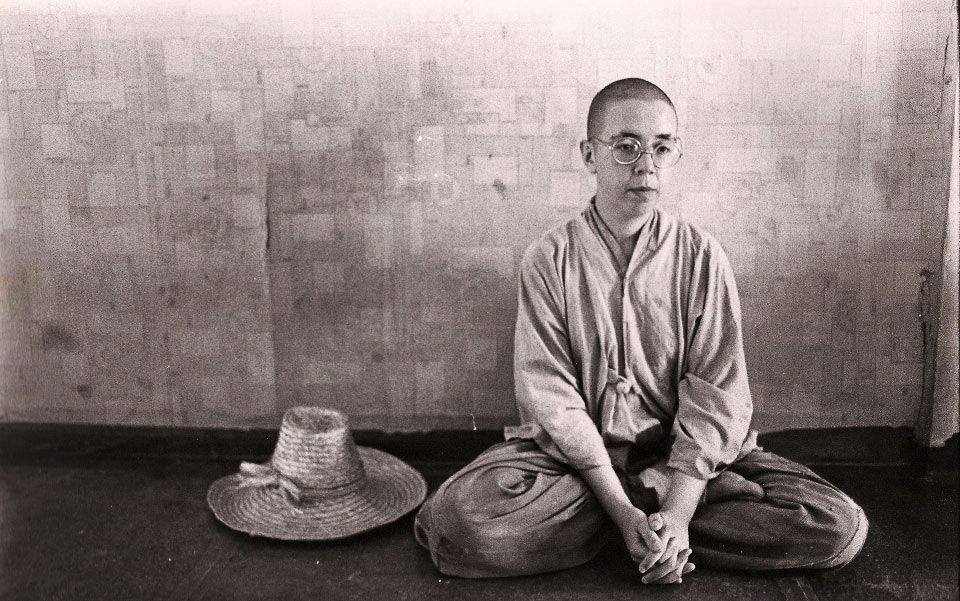
After sitting ten hours on retreat in Korea, I was in a lot of pain, and I mean really, lots of pain. One day I just directed my mind to it, and then I experienced emptiness. It was interesting to experience this so differently, but it didn’t happen every time. Sometimes, I could experience it that way, but a lot of the time I would wonder when the meditation session and the pain were going to end.
An insight is not something we experience all the time. It helps us see that we can experience things differently. Often, this doesn’t last because of conditions. However, it does start to illuminate.
When we have an insight and see something very clearly, this can also occur in daily life. We can be thinking of something that we have an aversion to, and then suddenly we can look at it and realize that this is just a thought, and that we don’t need to be averse to it. We can experience non-reactivity, but later go walking in the garden and see a dead rat, and suddenly we become reactive again.
An insight is not something we experience all the time. It helps us see that we can experience things differently. Often, this doesn’t last because of conditions. However, it does start to illuminate. We have more clarity around it.
Open Heart
We can also experience what I call an open heart. You sit in meditation and suddenly you have no trouble with anybody, although often we have a little niggle with somebody or something somewhere.
There are some categories we exclude, and this is useful to experience. You’re sitting there and everybody is included, nobody is out, and it feels very different. Again this passes. Your neighbor might do something, but you can think ‘not today, we’re not going there today’.
Mystical Experiences
Another experience we can have, we could perhaps call mystical. You can feel great joy and at the same time equanimity towards everything. One does not feel separate. There can be many manifestations, experiences, in terms of this state of non-reactivity. It can take many different forms.
Some Quotes and Poems
A 12th century CE Chinese master who had a great connection with people who were working received a letter from one of the officials who was working in the government at the time. This official was having a hard time with his practice. This is the master’s reply:
Your letter informs me that your root nature is dim and dull. The
one who can recognize dim and dull is definitely not dim and dull.
The official is basically saying that he is hopeless, that his practice is hopeless, and he can’t do it. But the master responds that the person who can recognize that he is dim and dull is not dim and dull, that there is wisdom and clarity.
I wrote a book called Women in Korean Zen, which is my biography alongside the biography of a great nun, Sŏn’gyŏng Sunim. I wrote my biography so that I could do hers, and she contributed some poems. She was greatly accomplished and everybody said she had had amazing experiences. However, she always thought that she was inadequate because she was raised in a poor family and did not receive any instruction.
Sŏn’gyŏng Sunim joined a nunnery in the 1920s or 1930s. When the other nuns saw her, they felt she was this little woman who was scrawny and not interesting, so they made her work in the kitchen. They accepted her as a nun, but thought that she couldn’t experience anything. She decided to stay however, continued to practice, and then she had some experiences.
After that, she practiced meditation for her whole life and everybody wanted to come to her Seon hall so they could practice with her. I sat with her for a month, and went to see her regularly because I loved her. She was such a wonderful example of practice, of life, and of the practice of non-reactivity. And she was very humble. This is what she wrote:
Buddha cannot see Buddha, sees Buddha
I cannot see I, sees I
I saw the nature, awaken to the way
What rubbish.
The idea she is expressing is this: Can you experience awakening without grasping at it? So often we are grasping at experience, so the poem says, ‘Yes, experience it but don’t grasp at it.’
The clear water flows over white rocks.
The autumn moon shines bright.
So clear, is the original face.
Who does say it is or is not.
This poem is telling us to be careful of affirming anything, be careful of fixing anything. Here’s a poem by Dogen, a Japanese Soto Zen master:
The way of the Buddha is to know the self
To know the self is to forget the self
To forget the self is to be enlightened by all things
♦
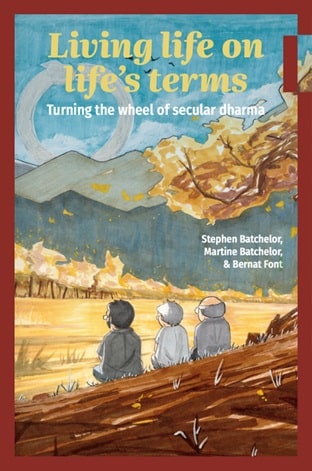
From Living Life on Life’s Terms: Turning the Wheel of Secular Dharma by Stephen Batchelor, Martine Batchelor and Bernat Font (Tuwhiri, 2026)

Thank you for subscribing to Tricycle! As a nonprofit, we depend on readers like you to keep Buddhist teachings and practices widely available.