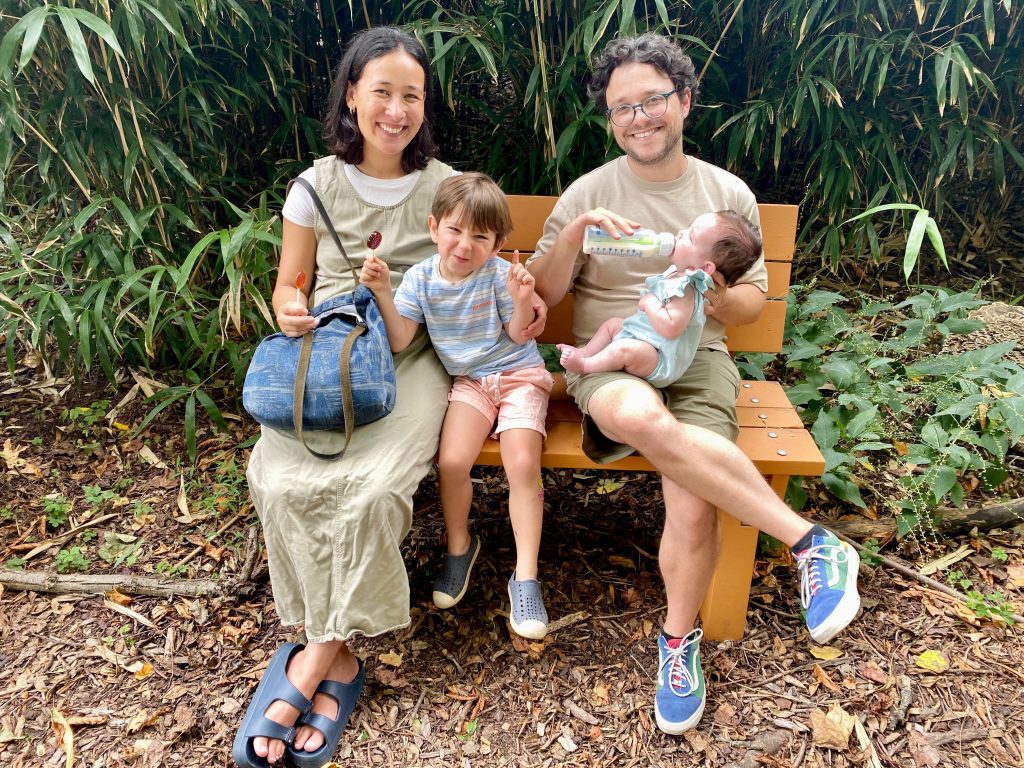
A dharma friend recently texted me, “Will you tell me about what it’s like to be a mom and practice the dharma?”
I was exhausted after a night of broken sleep, side-lying and nursing Uma, but I was surprised to realize how different my answer would be from the one I might have given five years ago.
I haven’t felt ready to explicitly write about this topic until recently, because if I’m being honest, so much of my relationship to this question during my first couple years of parenting was informed by grief and shame.
I discovered I was pregnant with my first child, Bo, when I was 27 years old. I had just finished my first year of graduate school—clear-eyed and enthusiastic about my future. Finding out I was eleven weeks pregnant was devastating. I was unprepared to have a child in every possible way, and yet I couldn’t bring myself to have an abortion.
I spent the next six months smiling through clenched teeth and held back tears whenever someone congratulated me on my pregnancy. I felt like my dharma path, my life was over. And still—the hardest parts were yet to come. Bo could never be placed down without crying and only fell asleep while attached to me and nursing. No one could soothe him but me. Even when Dylan tried to put him down, he would simply cry for hours.

I remember my therapist asking me if I thought I had postpartum depression. I simply responded, no, I think I have the same type of depression anyone would develop if they only showered once a week, and spent their days in a dark room with an inconsolable infant attached to their nipple.
I continued to study Buddhism academically, but I slowly started to lose faith in the dharma. Formal Buddhist training, specifically in the form of seated meditation practice, felt so irrelevant and out of touch with reality. Any type of “mindful mama” advice felt like either a cliche or a mean joke, catered to a certain type of mom with a specific type of easygoing baby.
At the time, I was doing an independent study on the sacred feminine in Tibetan Buddhism. Part of the studies was reading Yeshe Tsogyal’s autobiography. Instead of feeling empowered by the story of this female bodhisattva, it sunk me deeper into grief and resentment. Comically, she repeats throughout the text that she doesn’t want to be tied down to children and marriage, and that these things will prevent her from awakening. I remember asking the female dharma teacher I was studying with at the time how she reconciled her dharma practice when she had young children. She told me she went to Nepal for a month and left her 2-year-old behind because her practice was so important to her. I thought about my own almost-2-year-old, whom I could barely leave for one night, and felt like a failure.
Some might reference female bodhisattvas like Machig Labdron who did have children as evidence that one can be a mother and also a serious practitioner. Some might think that having examples of these figures would make a mom feel better. But for me, they represented mothers that were more dedicated or disciplined or prioritized their spiritual practice.
Parenting, and trying to incorporate elements of my former dharma practice into it, simply revealed to me how much the kind of formal Buddhist training that had shaped me relied on having a very specific set of conditions and circumstances.
A parent whose child does not call for them throughout the night and is therefore able to wake up at 5 a.m. to sit before the rest of the house wakes up is having a radically different experience than a parent who is tending to a child multiple times a night and can barely function.
I recognize that I am defining Buddhist training within a very specific and limited scope—seated meditation is one way convert Buddhism in the West has adapted monastic forms of training for a lay audience. Families can incorporate children into Buddhist practice in age-appropriate ways, and do throughout the world—through ritual offerings, stories, chanting, and devotional practices. At a monastery I used to attend, children would even sit in the meditation hall, crawling and fidgeting.
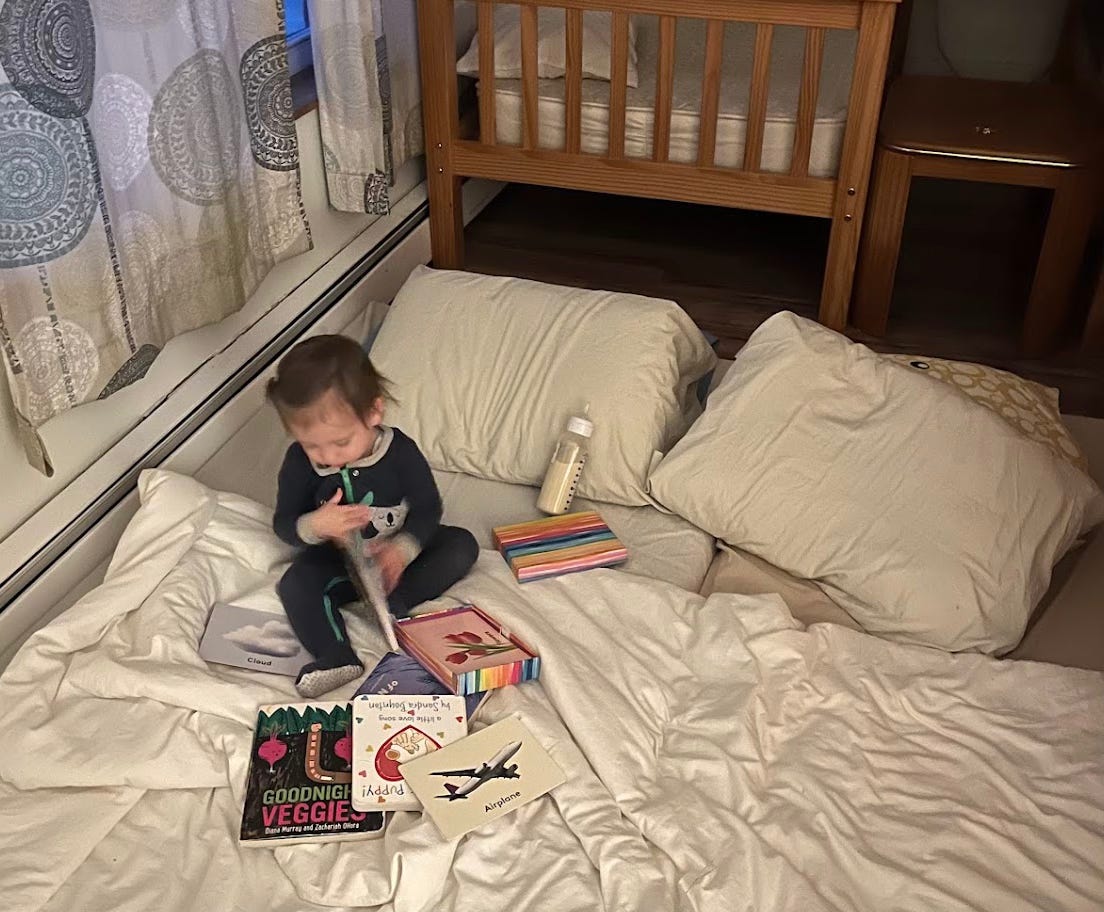
I also don’t mean to suggest that nothing spiritually significant happens in caring for a child. Parenting has simultaneously blasted my heart wide open and demanded a bodhisattva level of patience. It has forced me to relinquish many of my ego-driven preferences. Giving birth to both my children at home revealed to me how powerful I am.
And yet it does a disservice to ourselves as parents to pretend like working with one’s mind in an intentional and systematic way—the kind of training that helps us become less controlled by our habitual reactions—doesn’t require a specific set of circumstances. Whatever form training takes, it requires a certain combination of time, energy, repetition. There is a difference between life giving us opportunities to exercise the fruits of practice and having the conditions to systematically train in them.
I also understand the compassionate impulse in suggesting a parent do a five-minute mindfulness exercise, like paying attention to their hot cup of coffee or washing the dishes. But in my experience, these short exercises are only meaningfully supportive when buoyed by a foundation of sustained formal practice, rather than offered as an interchangeable substitute. Moreover, they can be insufferable suggestions when you have a kid crawling on you or screaming when you’re already overstimulated.
For a long time, part of my grief came from feeling that I had to wait until my children were older to practice as I had before, or that my life as a practitioner needed to maintain some kind of continuity through becoming a parent. I kept trying to figure out how to preserve the practitioner I had been before Bo—to find a new schedule, some way of weaving parenting into the path, so that I could feel like I hadn’t lost anything.
Five years later, having an infant again alongside an older, more independent kiddo, I responded to my friend’s text by saying that I had come to peace with not trying to make parenting fit into my understanding or practice of Buddhism. The dharma is related to everything, sure—but I finally don’t need to combine parenting and Buddhist training, or have them make sense to each other, in order to appreciate their independent value and meaning.
♦
Originally published on Adriana DiFazio’s Substack, Radical Change. Reprinted with permission.

Thank you for subscribing to Tricycle! As a nonprofit, we depend on readers like you to keep Buddhist teachings and practices widely available.