
Misunderstandings About Buddhism
In today’s digital world, information about Buddhism is everywhere—on social media, blogs, podcasts, YouTube, online journals, and mainstream media outlets, with an endless flow of opinion pieces. It’s only natural that, along with this explosion of information, comes a fair share of misunderstandings. Many of these ideas make their way into popular conversation, shaped by personal experiences, cultural assumptions, or well-meaning oversimplifications.
This article looks at some common misconceptions about Buddhism. Whether you arrived here with one of these misconceptions or are simply curious to learn more, we invite you to explore these topics with an open mind. You might discover that what you thought you knew about Buddhism isn’t quite the whole story.
Table of contents
- Do All Buddhists Meditate?
- Is Mindfulness the Primary Form of Buddhist Practice?
- Do Buddhists Believe That There Is No Self?
- Is the Dalai Lama the Leader of Buddhism?
- Are All Buddhists Vegetarians?
- Are All Buddhists Pacifists?
- Does Buddhism Teach to Rid Ourselves of Emotions?
- Is Buddhism a Philosophy or Way of Life, and Not a Religion?
- Was the Buddha a god?
- Does Zen Reject Traditional Buddhist Rules and Norms?
- Do Buddhists Believe We Are All One?
- Do All Spiritual and Religious Traditions have the Same Goal?
Do All Buddhists Meditate?

People nowadays often associate Buddhism with meditation, but not all Buddhists practice meditation. The image of the Buddha sitting in meditation reflects its key role in his awakening, but Buddhism encompasses much more than this single practice.
Historically, and across traditions, seated meditation wasn’t always as important for most Buddhist practitioners as focusing instead on ethical conduct, generosity, and devotional acts to generate merit for a favorable rebirth. Even today, one can lead a meaningful Buddhist life without engaging in meditation.
The strong link between Buddhism and meditation emerged as the tradition spread to the West, where meditation, especially sitting meditation, became the primary practice for beginners. Even traditions that emphasize meditation as a core method, such as Zen, cultivate mindfulness and insight through a wide range of practices, including chanting, walking meditation, visualizing buddhas and bodhisattvas, and creating sacred art.
In Tibetan Buddhism, seated meditation plays a crucial role, but practices such as prostrations, visualizations, and guru devotion are also essential. These diverse methods serve the same ultimate purpose: to help practitioners awaken to their true nature.
Some of the most widespread forms of Buddhism today do not focus on sitting meditation at all. Nichiren Buddhism, originating in 13th-century Japan, centers on chanting the title of the Lotus Sutra, Namu Myoho Renge Kyo. Similarly, Pure Land Buddhists express devotion to Amida Buddha through reciting Namu Amida Butsu as a practice of faith and aspiration for rebirth in Amida’s pure land.
Throughout history, what unites all Buddhists is not a particular technique but taking refuge in the three jewels: the Buddha, the dharma (his teachings), and the sangha (the community of practitioners). Rather than being defined solely by meditation, Buddhist practice can be seen as “a matter of attitude” and lived experience.
In short, while meditation is an essential and visible aspect of Buddhist practice, it is far from universal. Buddhist traditions offer diverse practices and paths that cater to individuals in various ways, all aiming toward the goal of awakening.
Is Mindfulness the Primary Form of Buddhist Practice?
In traditional Buddhism, mindfulness (Skt.: smrti; Pali: sati) is integrated with other elements of the path. But in the West today, it’s often presented on its own for stress reduction and self-help. Mindfulness is taught in gyms, hospitals, schools, and workplaces as a remedy for conditions like high blood pressure, depression, overeating, and even poor workplace performance.
That’s a lot to ask of mindfulness! While many have found it beneficial, its widespread use reflects not only its adaptability but also a misunderstanding of its relationship to other practices in a traditional Buddhist context. Mindfulness in Buddhism is more than just a technique for stress relief; it is an integral part of a comprehensive path toward awakening.
If you’ve encountered mindfulness outside of a Buddhist context, it was likely defined as “moment-to-moment, nonjudgmental awareness” or “bare attention.” While this is a popular interpretation, it doesn’t fully capture the traditional meaning of mindfulness, which signifies “to remember” or “to recollect” the dharma and whether we are acting skillfully or unskillfully in a given moment.
Mindfulness is not a standalone practice but a quality of mind applied to many Buddhist practices. As Thai forest monk Thānissaro Bhikkhu puts it, “Right mindfulness is not just a matter of having the right place to focus your attention; it’s also a matter of bringing the right attitude.” Right mindfulness is one of the eight facets of the noble eightfold path. Together with right effort and right concentration, it forms the meditation section in Buddhist training. Rather than passive observation, mindfulness is an active skill for directing attention in ways that reduce suffering and cultivate wisdom.
The Buddha’s Satipatthana Sutta (Discourse on the Foundations of Mindfulness) is often cited as his most important teaching on mental development. It outlines the four foundations of mindfulness: awareness of the body, feelings, mind, and mental objects, in both meditation and daily life. Among these, mindfulness of the breath is central to cultivating awareness.
Over time, as Buddhism spread, mindfulness practices evolved to meet the needs of different communities. Though historically focused on monastics, mindfulness gained popularity among Western lay practitioners. In its secular forms today, mindfulness often stands alone. But in Buddhism, it remains just one element of a larger path that includes ethics, concentration, wisdom, and numerous meditation practices—all essential for liberation from suffering.
Do Buddhists Believe That There Is No Self?

The idea that Buddhists don’t believe in a self originates from the Buddha’s teachings on anatman (Skt.; Pali: anatta), often translated as “not-self,” “nonself,” or “no-self.” It is one of Buddhism’s three marks of existence, alongside suffering and impermanence, and is the subject of numerous scriptures and commentaries. Like many religious teachings, this concept is complex and nuanced, causing confusion and debate since the time of the Buddha. And since the Buddhist term is often translated as “no-self,” this has led to the misunderstanding that Buddhists deny the existence of a self entirely.
The Buddha avoided answering whether or not there is a self, saying such existential quagmires lead to confusion, a “thicket of views,” and distract from the path to liberation.
Buddhists interpret no-self to mean that there is no fixed, inherent, unchanging self. In Mahayana Buddhist teachings, this extends to all phenomena: Everything is empty of an independent, lasting essence. What we call “self”—and by extension, our world—is a collection of physical sensations, mental impressions, and habitual reactions, all in constant flux. No-self is inseparable from impermanence and interdependence. All things, including us, arise from countless causes and conditions, continually changing and dissolving.
But if nothing is permanent, who is the “me” that I identify with? The Buddha didn’t claim that nothing exists. On a conventional level, we experience things as real. But on the ultimate level, there is no unchanging core.
Our attachment to a fixed identity is a significant source of suffering. We may fear aging or resist change because it threatens the image of who we think we are—youthful, healthy, and enduring—rather than recognizing change as a natural part of life.
For the Buddha, understanding the concept of no-self was crucial to comprehending suffering and its cessation. When we notice ourselves clinging to identities, or “I-making,” we can remind ourselves to let go, loosening the grip of suffering caused by clinging to what is ultimately insubstantial.
Is the Dalai Lama the Leader of Buddhism?
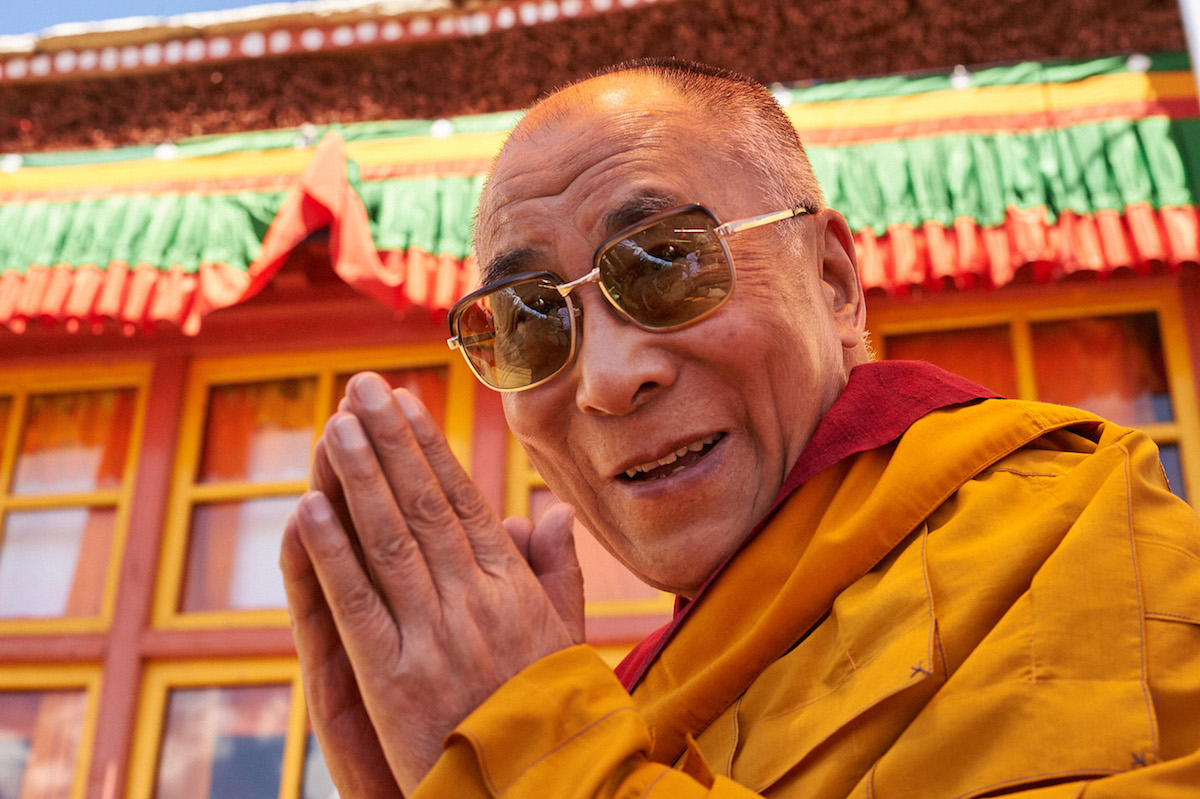
Though the Dalai Lama is revered by millions of Buddhists and non-Buddhists alike, he is not the leader of all Buddhists. Buddhism is a family of traditions with countless doctrinal variations. Just as the Pope is not the leader of all Christians, there is no single leader of Buddhism.
The Dalai Lama’s followers regard him as the embodiment of Avalokiteshvara, the bodhisattva of compassion. The title Dalai Lama, meaning “ocean of wisdom,” refers to a lineage of reincarnated lamas. The current Dalai Lama, Tenzin Gyatso, is the Fourteenth to hold this title. He is the most prominent figure in the Gelug school of Tibetan Buddhism, though he is not even its official head.
In other Buddhist traditions, such as Theravada and Zen, the Dalai Lama is generally respected but holds no authority. His global prominence stems mainly from his position as the spiritual and former political leader of the Tibetan community in exile. The Chinese People’s Liberation Army invaded Tibet in the 1950s, devastating the region’s religious institutions and culture. The Dalai Lama fled to India in 1959, establishing a government-in-exile in Dharamsala, India.
A renowned scholar and spiritual teacher, the Dalai Lama holds a geshe degree, the Tibetan Buddhism equivalent of a PhD. Beyond his religious role, he has been a global advocate for Tibetan culture, nonviolence, and environmental stewardship. In 1989, he was awarded the Nobel Peace Prize for his commitment to peace and his philosophy of universal responsibility for all living beings.
In 2011, the Dalai Lama stepped down as the political leader of the Tibetan government-in-exile, advocating for democratic leadership among the Tibetan people. Nonetheless, he remains an influential leader among Tibetan Buddhists, although each branch has its own leader. In recent decades, he has also gained recognition for his dialogues with Western scientists on the nature of the mind and consciousness.
While other Buddhist teachers have achieved prominence, none has garnered the same level of international recognition as the Dalai Lama. His unique combination of spiritual authority, political leadership, and global advocacy has made him the face of Buddhism for many around the world.
Are All Buddhists Vegetarians?

The first precept of Buddhism is to refrain from taking life, and many Buddhist traditions encourage a vegetarian diet. However, vegetarianism is not universally required.
Buddhist scriptures tell us that the Buddha’s disciples were not strict vegetarians: Early Buddhist monastics ate whatever they were given as alms. Villagers offered what they could spare, including meat. Giving (dana) to monastics was a key way for laypeople to accumulate merit. Monastics could pick and choose among the foods put in their begging bowls, and the Buddha outlined conditions about meat: They could not consume animals killed specifically for them, and meat from certain animals, such as dogs, elephants, and tigers, was prohibited. These rules applied only to monastics.
The Buddha also resisted efforts to mandate a vegetarian diet. His cousin Devadatta, an ascetic who advocated stricter practices, urged him to impose a vegetarian rule, but the Buddha declined, emphasizing that extreme austerities do not lead to awakening, and that limiting what laypeople could offer would reduce their chances of accumulating merit.
As Buddhism spread to Central Asia, China, Korea, and beyond, monastic communities became more settled. They grew their food or purchased supplies, and because buying meat necessitated slaughter, vegetarian meals became more common. Mahayana sutras like the Lankavatara Sutra strongly promote vegetarianism, calling meat-eating “the root of great suffering.” Many lay followers also adopted vegetarian diets by choice.
In Tibet, geography and climate made year-round vegetarianism difficult. Tibetan medicine even regards meat as beneficial in some instances. Throughout Tibetan history, some lamas have refrained from eating meat, but most have not. The current Dalai Lama generally follows a vegetarian diet but eats meat occasionally on medical advice.
Buddhist scriptures diverge on the issue. Some suggest that the Buddha allowed meat-eating under specific conditions. While others, like the Mahaparinirvana Sutra, frame meat-eating as incompatible with compassion: “Eating meat destroys the attitude of great compassion.” And some tantric manuals even require the consumption of meat in ritual settings.
Nowadays, vegetarianism is a personal choice. Many monastics and laypeople in Theravada and Tibetan traditions eat meat, while others abstain. Vegetarianism is more common in Mahayana schools, particularly in Chinese, Korean, Vietnamese, and Western contexts.
Modern concerns have also influenced Buddhist views. Compassion for animals, environmental impact, and ethical objections to industrial farming practices have led many Buddhists to adopt vegetarian or vegan diets. Debates continue, but whether or not to eat meat remains a matter of personal practice rather than a universal rule.
Are All Buddhists Pacifists?
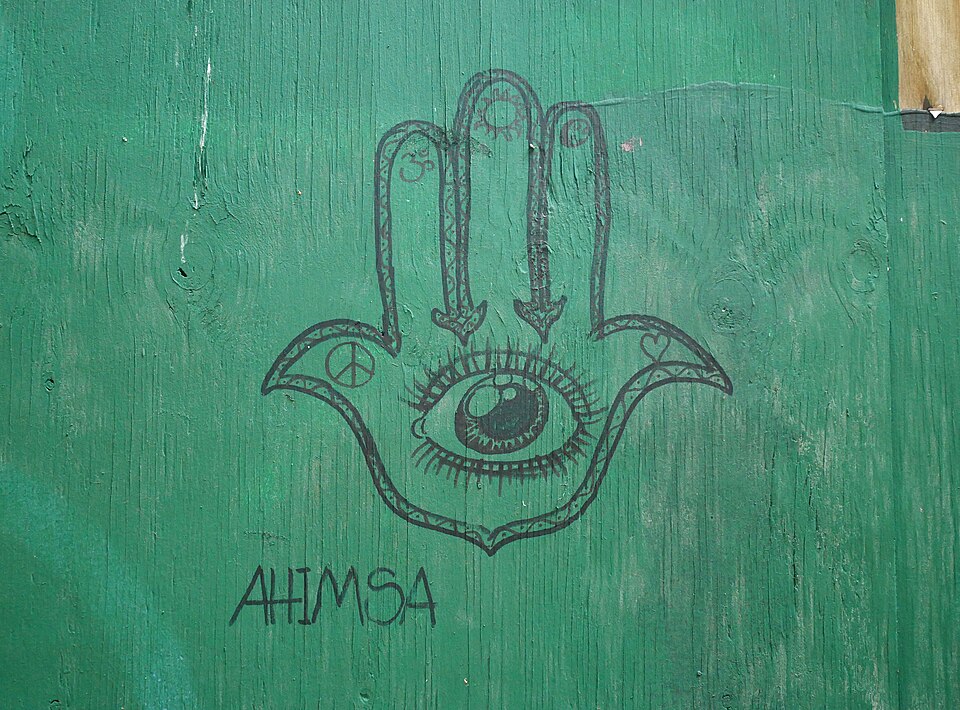
It’s understandable to think all Buddhists are pacifists, given Buddhism’s emphasis on nonviolence (ahimsa) and compassion for all beings. Nonviolence is indeed a core ethical principle enshrined in the first of the five precepts for monastics and lay followers. However, history and current events reveal a more complicated reality.
Some Buddhist traditions have a nuanced understanding of nonviolence, permitting defensive violence in certain situations. In medieval Japan, for instance, Zen Buddhist monks formed warrior groups to protect their temples and communities. Eihei Dogen, founder of the Soto Zen sect, taught that using force to stop wrongdoing could sometimes be the most compassionate action.
Buddhism has not always remained separate from political and military power. During Japan’s Muromachi era (14th–16th centuries), Zen-influenced samurai engaged in frequent warfare. During the colonial period (1900–1945), Buddhist monks in Japan supported the country’s military expansion. Some Korean Zen monks, meanwhile, resisted Japanese occupation. In Tibet, rival monasteries historically fought each other. Though the Dalai Lama promotes nonviolence in response to Chinese occupation, some Tibetans advocate armed resistance.
In more recent history, ethnic and religious conflicts have involved Buddhists as both perpetrators and victims. A 26-year civil war in Sri Lanka pitted Buddhist Sinhalese against Hindu Tamils. In Myanmar, some Buddhist monks have supported violence against the Muslim Rohingya minority. Like other religions, Buddhism has been entangled in violence for political and sectarian reasons.
The Buddha acknowledged that violence might be unavoidable in self-defense but warned of its karmic consequences. Even when justified, any act of violence contributes to the cycle of suffering.
While physical violence has at times been part of Buddhist history, much of the “violent” imagery in Buddhist art is symbolic, representing inner struggles rather than outward aggression. Tibetan thangkas, for instance, often depict wrathful figures holding swords or wearing garlands of severed heads. Manjushri, the bodhisattva of wisdom, wields a sword to cut through delusion, illustrating “compassionate aggression” aimed at freeing beings from ignorance.
In practice, Buddhism urges followers to minimize harm and cultivate compassion. Yet history shows that Buddhists, like adherents of other faiths, have struggled to fully embody these ideals in complex social and political contexts.
Does Buddhism Teach to Rid Ourselves of Emotions?

Buddhist practice won’t help us switch off unpleasant emotions. Emotions are part of being human. However, they don’t have to cause so much suffering, and they can teach us how awareness shapes our experience.
Pleasant, unpleasant, and even neutral emotions are usually reactions to something. We often want to cling to and indulge enjoyable feelings, suppress uncomfortable ones, or pretend they aren’t there. However, the Buddha taught that both indulging in and suppressing emotions are forms of craving that fuel suffering. Except for the enlightened few, we’re pulled this way and that by desire and aversion, with emotions tugging the heartstrings.
Though we can’t stop emotions from arising—they appear nanoseconds before we’re even cognizant of them—we can learn to loosen their grip. We can observe emotions with awareness and care. Labeling them—Fear. Anger. Regret. Desire.—helps us identify habitual reactions. This allows emotions to arise and pass naturally, freeing us from old patterns of behavior.
Some Buddhist teachings describe difficult emotions as obstacles to enlightenment that must be “extinguished.” Language around the “path of renunciation” may give the false impression that Buddhism teaches emotional suppression. In reality, Buddhism encourages letting go of entanglement with emotions, not eliminating the emotions themselves. Other teachings guide us to replace destructive emotions with positive qualities, such as compassion, joy, and equanimity, a process often referred to as “transforming destructive emotions.”
Many traditions emphasize working mindfully with all emotions, seeing them as teachers. For example, when anger flares after someone bruises your ego, Buddhist practice invites you to examine its true source. Rather than suppressing or justifying the anger, you might realize that it stems from your attachment to a fixed identity, the “wounded one.” This insight helps loosen the hold of emotion.
Advanced practices go further, encouraging full presence with raw emotion, not analyzing its source but opening to its energy in the body. By fully experiencing the emotion without resistance, it naturally loses its power and dissolves. This process brings us closer to awakening.
Difficult emotions, like grief and trauma, usually linger. Our instinct often is to distract or numb ourselves. But genuine healing begins when we dare to face these emotions directly, and with support, allow their transformative potential to unfold.
Is Buddhism a Philosophy or Way of Life, and Not a Religion?
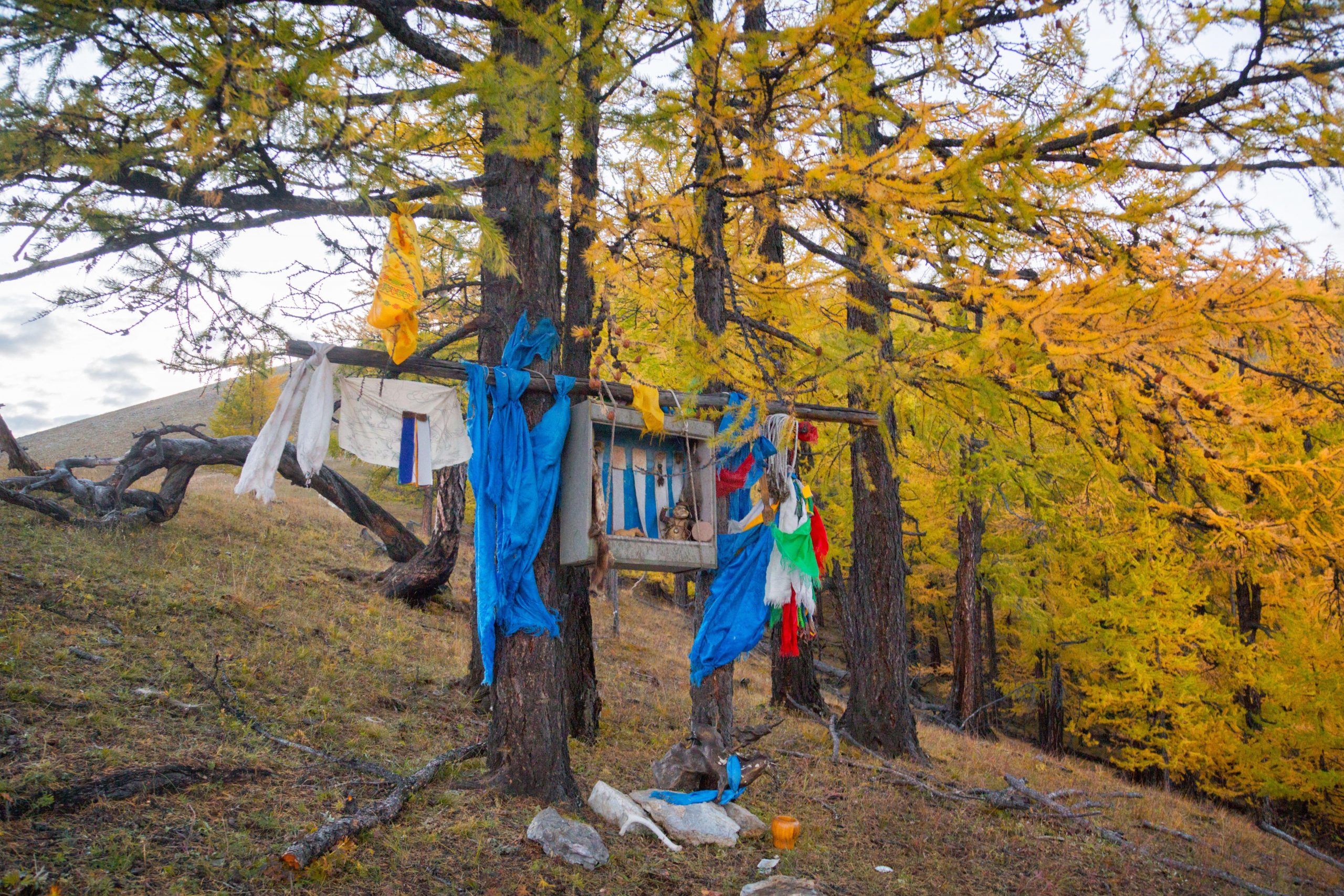
In the West, Buddhism often appeals to those seeking a nonreligious, nontheistic “spiritual” path distinct from Abrahamic traditions. Buddhism appears to be a philosophy for these seekers, as it emphasizes introspection, critical thinking, and inquiry into the nature of the mind and reality.
While Buddhism has a rich intellectual history, viewing it solely as a philosophy overlooks its religious dimensions. Despite lacking an omniscient creator god, Buddhism articulates views on salvation and the afterlife, like other world religions.
At its core, Buddhism offers a path to liberation from the suffering of samsara, the endless cycle of birth, death, and rebirth. This aim extends beyond intellectual reasoning and philosophical speculation, entering the realm of belief, trust, and lived experience. The goal is not just to think differently but to become different—to transform one’s entire being. In many traditions, this includes belief in celestial realms, karmic rebirth, and the salvific power of awakened beings. In this sense, Buddhism has long offered a metaphysical goal: not merely to understand suffering but to transcend it. For many scholars, this categorizes Buddhism as a religion.
Alongside this goal, Buddhists engage in practices often associated with religion, such as prayer, offering, and rituals involving a vast pantheon of buddhas, bodhisattvas, and other sacred beings. Temples and shrines mark life’s significant milestones, such as birth, marriage, illness, old age, and death, and serve as places of worship and community. This has been especially true in many Asian Buddhist communities in North America and Europe since the 19th century. At the same time, other Buddhists, particularly in the West, approach Buddhism differently, focusing on meditation, ethics, and philosophical inquiry without viewing it as a religion. For these practitioners, Buddhism may be a moral philosophy or personal discipline rather than a system of faith.
The modern tendency to frame Buddhism as a philosophy emerged in the 1800s, when Western intellectuals and spiritualists interpreted Buddhist ideas, such as karma, rebirth, and interdependence, through a scientific lens, stripping away elements they dismissed as “cultural baggage” and superstition. Simultaneously, Asian Buddhist leaders sought to modernize and present Buddhism as being compatible with science. Figures like Anagarika Dharmapala argued for Buddhism’s scientific merit, most notably at the 1893 Parliament of the World’s Religions in Chicago. This trend continues today, with the Dalai Lama famously describing Buddhism as a “mind science.”
While Buddhism can certainly be approached as a philosophy or way of life, for many it remains, at heart, a religion—one that has taken numerous forms across cultures and eras while staying focused on the fundamental human quest for meaning and liberation from suffering.
Was the Buddha a god?
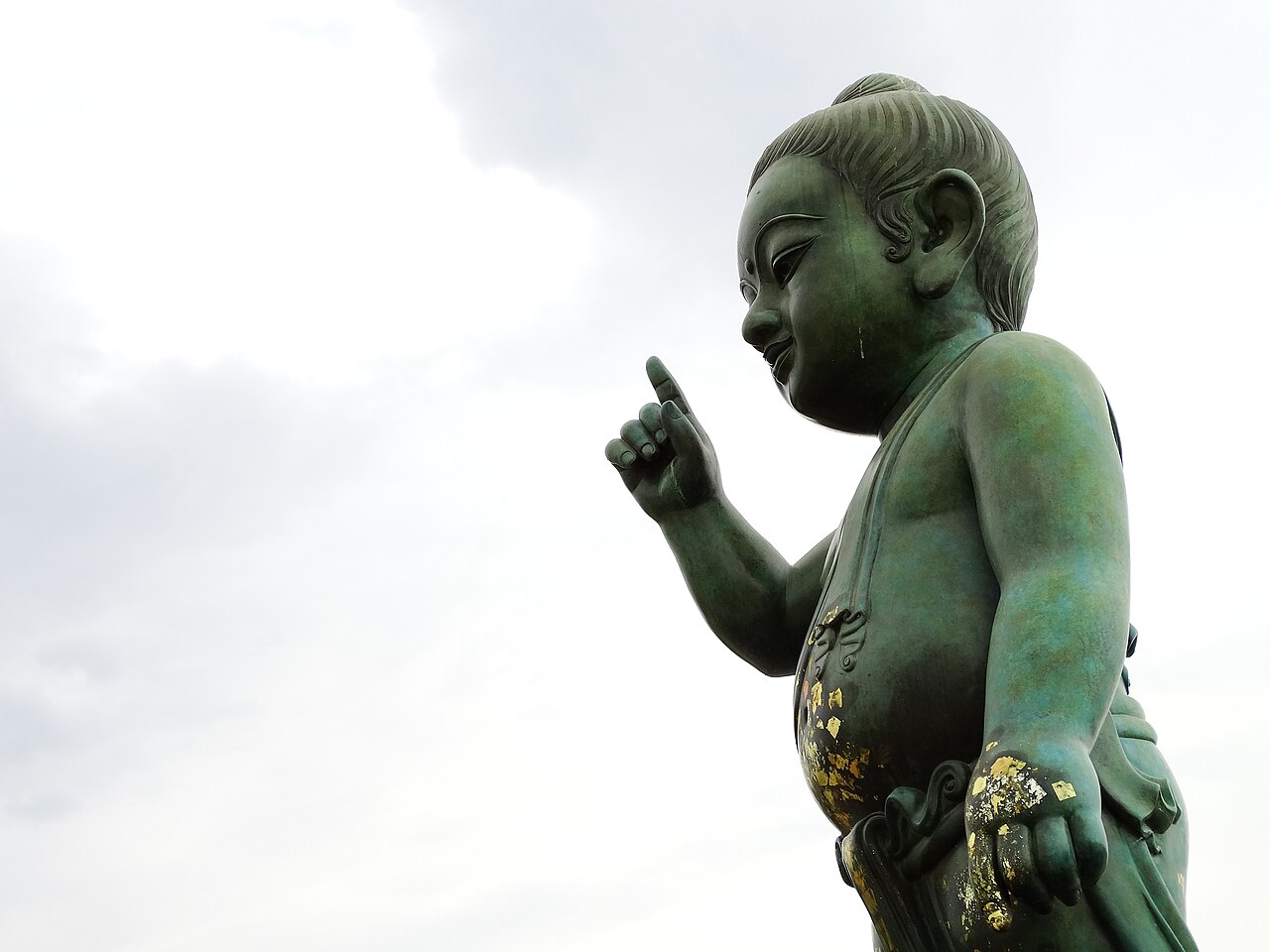
In an oft-told tale, a Brahmin named Droṇa encounters the newly enlightened Buddha and, sensing something special, asks, “Are you a god?” The Buddha replies, “No, I am awake.” Elsewhere, while denying he was a god, the Buddha also refused to identify as human. An awakened person, he explained, is beyond identification.
Many are drawn to Buddhism by the idea of Siddhartha Gautama as an ordinary man who did something extraordinary: achieving enlightenment through his efforts and teaching that we can do the same. While Buddhist tradition generally maintains that enlightenment is possible for ordinary humans, it has always portrayed the Buddha as more than just a man. Tales describe his footprints bearing thousand-spoked wheels, light streaming from his body, and the thirty-two marks of a great being distinguishing him from ordinary humans.
Buddhism has no creator god or omnipotent deity like Christianity, Judaism, or Islam. However, Buddhist texts describe the Buddha performing miracles and displaying siddhis, powers attained through practice, such as teleportation, mind reading, and the ability to appear in multiple places simultaneously. Stories also recount his previous lives in Tushita heaven, where Buddhas prepare to incarnate. In some texts, he can even move the heavens and earth.
The Buddha lived in a polytheist culture where deities were commonly acknowledged. He never denied their existence. Brahma, the Hindu creator god, is said to have persuaded him to teach. Yet for the Buddha, these gods remained trapped in samsara. Enlightenment surpassed godhood.
In Mahayana Buddhism, a vast pantheon of gods, devas, bodhisattvas, and celestial beings surrounds the Buddha, who is, in some contexts, also depicted in a godlike manner. Pure Land Buddhists pray to Amida Buddha for salvation, while many Western Buddhists focus on Siddhartha’s human example, setting aside devotional practices.
Before his death, the Buddha urged followers not to worship him but to follow his teachings. Zen priest Kurt Spellmeyer was initially reassured by the idea of a human Buddha rather than one “far removed from the human suffering that Siddhartha tried to alleviate,” but he saw the advantages of both. “I’m persuaded that we need two Buddhas, at the very least: Siddhartha, the 80-year-old man who died near the city of Kushinagar, and the cosmic Shakyamuni, radiating light, who is beyond our understanding in every way.”
Does Zen Reject Traditional Buddhist Rules and Norms?

Zen Buddhism is often seen as an enigmatic offshoot of the Buddhist family tree. But contrary to the belief that it rejects established doctrine and norms, Zen is deeply grounded in the Buddha’s teachings and practices.
Said to have been brought from India by the semilegendary monk Bodhidharma (5th–6th century CE), Chan—Zen’s original name in Chinese—spread through East Asia. Chan was transmitted to Vietnam in the 6th century as the Thien tradition, Korea in the 7th century as the Seon tradition, and Japan in the 7th century, later becoming the Zen tradition in the 12th century. These traditions all take their name from the Sanskrit word dhyana (Pali: jhana), meaning meditation, and all emphasize seated meditation as a central practice. As Chan developed and spread throughout these areas, it absorbed local cultural elements, resulting in diverse practices and schools of thought.
While differing in methods, all forms of Chan emphasize direct experiential realization over conceptual thinking. This emphasis is evident in two Japanese Zen schools prominent in the West: Rinzai, which focuses on sudden enlightenment through koans—paradoxical statements meant to disrupt habitual thinking—and Soto, which advocates a gradual path of awakening through “just sitting.”
Zen also incorporates walking meditation, chanting, ritualized eating, and artistic practices like ink painting, calligraphy, flower arranging, and martial arts. These are considered mindfulness practices, though not every practitioner engages in all of them.
Zen’s unconventional teaching methods—stories of slaps, burning Buddha images, or sayings like “If you meet the Buddha on the road, kill him”—may seem to reject Buddhist tradition. Yet these provocations aim to free students from attachment to forms and concepts, pointing to a fundamental Zen principle: The essence of Buddhism lies in direct experience, not in statues or scriptures. These unconventional methods are teaching aids, not a denial of the dharma or traditions.
Far from dismissing Buddhist teachings, renowned Zen masters were highly literate monastics, versed in scriptures, and adherents of the monastic code. They produced poetry, commentaries, and teaching texts. Koan study evolved into a distinct literary tradition that is deeply respected within Zen and all other Chan variations.
Zen’s development, from early Chan in China to its modern forms in the West, reflects both continuity with and creative response to traditional Buddhist teachings. While distinctive, Zen’s focus on direct experience through meditation and mindful practice remains firmly rooted in the Buddha’s core principles. The Zen path embodies the quintessential Buddhist search for enlightenment.
Do Buddhists Believe We Are All One?

It’s widely believed that the idea “all is one” or “we are all one” is a core Buddhist tenet; however, Buddhist teachings do not universally agree on this point. Buddhists today who believe that we are all one—the Vietnamese Zen master Thich Nhat Hanh called it “interbeing”—often cite it as the moral underpinning of the environmental and social justice movements. If every human and nonhuman life is inseparable from every other life, including our own, how can we not protect our fellow beings?
Confusion around Buddhist oneness often stems from interpretations of dependent origination, the teaching that all phenomena arise and cease due to specific causes and conditions. Buddhist scriptures describe it this way: “With the arising of this, that arises; with the cessation of this, that ceases.”
Dependent origination explains the workings of karma, the chain of cause and effect that shapes existence. While our lives depend on countless causes and conditions, this does not imply an overarching oneness. Each phenomenon arises from particular conditions, not from an undivided whole. The Buddha emphasized personal responsibility: By oneself is evil done; by oneself is one made pure.
Some Buddhist traditions describe interconnectedness differently. The Lotus Sutra, one of the most renowned sutras in the Buddhist world, teaches that all phenomena are interpenetrating and inseparable. Indra’s Net, a Vedic metaphor, illustrates this: an infinite net of jewels, each reflecting all others. This imagery expresses radical interdependence, but it does not erase individuality.
Still, does this interconnectedness mean “all is one”? Not quite. The Madhyamaka, or “middle way” school, founded by Nagarjuna (c. 150–250 CE), teaches the doctrine of the two truths. On a conventional level, phenomena are distinct. On an ultimate level, they lack inherent existence, and there is no distinction, no separation. Conventional and ultimate reality are both actual; they exist simultaneously as two sides of the same coin. But in the ordinary, conventional world where we live, all is not the same, all beings are not equal. The Buddha taught that “non-self” is not a state of oneness.
Buddhism encourages us to let go of self-centered views and cultivate empathy and compassion. Practices may invite us to “be one with” others to loosen attachment to ego, but this does not negate individual existence. We remain distinct beings in relationship with other distinct beings.
While interconnectedness is central to Buddhist thought, the idea that “we are all one” oversimplifies a more nuanced understanding of interdependence. Buddhism teaches that recognizing this complexity is essential to the path of awakening.
Do All Spiritual and Religious Traditions have the Same Goal?

Many of the world’s religious traditions have claimed to be the one true way. However, others argue the opposite: that all spiritual paths are essentially the same at their core, pointing to a shared unity beneath their sectarian differences. Even among those who acknowledge distinctions between institutionalized religions, some see common ground in their mystical traditions, including Sufism, Kabbalah, Christian mysticism, Hindu Vedanta, and others.
From this perspective, Buddhism, with its reputation for tolerance and nontheistic foundation, is often viewed as transcending sectarian boundaries and embracing kinship with other mystical traditions. Its focus on enlightenment, ethics, and meditative practice lends it an appearance of universalism. However, historically and doctrinally, Buddhism has maintained a distinct identity. Many of the Buddha’s early disciples converted from other traditions, drawn to the transformative quality of his teachings. Early texts frequently mention encounters with teachers of different faiths, highlighting the unique insights gained from the Buddha’s awakening.
A vision of universal oneness doesn’t align with the doctrinal history of most religions, including Buddhism. It is Buddhist doctrine that only the teaching of the Buddha leads to complete liberation: All other religious and philosophical teachings fall short of that goal.
Prominent Buddhist figures have reinforced this distinction. The 13th-century Zen master Dogen rejected comparisons between Buddhism, Daoism, and Confucianism. Kukai, a 9th-century esoteric Buddhist, ranked Buddhism above Daoism and Hinduism. Even today, Tibetan Buddhists often regard their tradition as more complete or efficient than earlier forms, while some Theravada Buddhists dismiss Mahayana teachings as elaborate fictions. Sectarian superiority has also been visually represented, with Buddhist art depicting the Buddha towering over figures from other traditions, symbolizing a hierarchy of insight. Likewise, in other paintings, Buddhist tantric deities trample upon their counterparts from different traditions.
In the 19th century, as world cultures came into greater contact, figures such as Ramakrishna and Swami Vivekananda promoted a Hindu-based vision of spiritual unity that appealed to many Western seekers. Theosophists, such as Helena Blavatsky and Henry Steel Olcott, blended various religious teachings, histories, and philosophies, implying an esoteric core of oneness among the world religions. In the 20th century, popularizers such as Aldous Huxley, D. T. Suzuki, and Alan Watts helped spread a more homogenized view of religion in the West, especially among those interested in mysticism and meditation.
Today’s longing for unity reflects disillusionment with religious conflict and divisiveness. But while well-meaning, it risks erasing diverse religious histories and teachings. Buddhism offers its own distinctive understanding of suffering, the mind, and the path to liberation.
Aspirations for unity and oneness are not unreasonable. Whose heart isn’t touched when listening to John Lennon’s timeless classic “Imagine”? Within this vision of oneness, though, appreciating the uniqueness of each religious tradition, including Buddhism, is the starting point for genuine and productive interfaith dialogue and respect. Embracing religious diversity enriches our understanding of the all-too-human quest for meaning in a chaotic and often confusing universe.
Buddhism for Beginners is a free resource from the Tricycle Foundation, made possible by the generous support of the Tricycle community. It reflects our mission to make the Buddha’s teachings widely available. We welcome your feedback at feedback@tricycle.org.


