Tricycle is pleased to offer the Life As It Is podcast for free. If you would like to support this offering, please consider donating. Thank you!
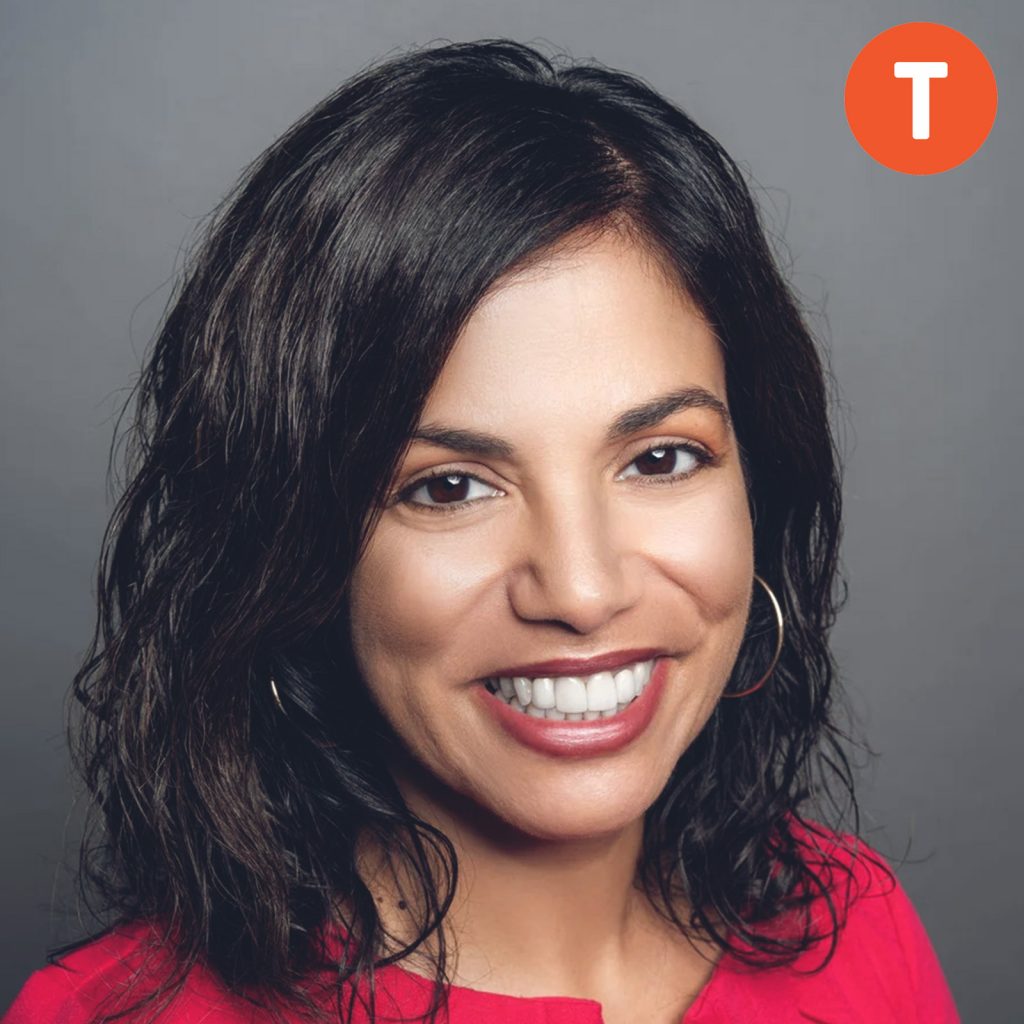
Daisy Hernández is an associate professor at Northwestern University and a Tricycle contributing editor. Her new book, Citizenship: Notes on an American Myth, blends memoir and political analysis to examine the shifting narratives around citizenship and what it means to be an American. This episode is a little different from our usual focus, but we wanted to talk with Hernández about how she brings her Buddhist practice to bear on this timely topic.
In this episode of Life As It Is, Tricycle’s editor-in-chief, James Shaheen, and meditation teacher Sharon Salzberg sit down with Hernández to discuss her own family’s immigration stories, why she views citizenship as a story or a myth, how she works with feelings of political despair, and what she’s learned from revisiting Thich Nhat Hanh’s writings on the Vietnam War in our current moment.
Life As It Is is a podcast series that features Buddhist practitioners speaking about their everyday lives. You can listen to more of Life As It Is on Spotify, Apple Podcasts, and iHeartRadio.
♦
We’d love to hear your thoughts about our podcast. Write us at feedback@tricycle.org.
Daisy Hernández: With my Buddhist practice, I think probably like everyone else, I am very grateful to have moments where I can come back to the breath and get recentered. This is such a time of needing to be recentered. And I remembered a Buddhist teacher just pointing out that, you know, I’m not the only one going through something. In my worst moments, I can connect with compassion and with the fact that somewhere else, someone is going through something. And it really allowed me to tap into this much larger experience beyond myself and into compassion and of course loving-kindness. And so connecting with the fact that there is so much suffering around the world, and my job is not to slide into it, right? We are not here to slide into despair. Political despair is not useful. We have to acknowledge it, but not hang out in it. James Shaheen: Hello, I’m James Shaheen and this is Life As It Is. I’m here with my co-host Sharon Salzberg and you just heard Daisy Hernández. Daisy is an associate professor at Northwestern University and a Tricycle contributing editor. Her new book, Citizenship: Notes on an American Myth, blends memoir and political analysis to examine the shifting narratives around citizenship and what it means to be an American. This episode is a little different from our usual focus, but we wanted to talk with Daisy about how she brings her Buddhist practice to bear on this timely topic. In our conversation with Daisy, we talk about her own family’s immigration stories, why she views citizenship as a story or myth, how her Buddhist practice influences her approach to journalism, and what she’s learned from revisiting Thich Nhat Hanh’s writings on the Vietnam War in our current moment. So here’s our conversation with Daisy Hernandez. James Shaheen: So I’m here with Daisy Hernández and my co-host Sharon Salzberg. Hi Daisy. Hi Sharon. It’s great to be with you both. Daisy Hernández: Hello, James. Hello, Sharon. Sharon Salzberg: Hi. James Shaheen: So Daisy, we’re here to talk about your new book, Citizenship: Notes on an American Myth. So to start, can you tell us a bit about the book and what inspired you to write it? Daisy Hernández: Yeah, I grew up in an immigrant family. My dad is a political refugee from Cuba, my mother came from Colombia, I have uncles from Peru and Puerto Rico, we had friends and neighbors from Mexico, Argentina, Guatemala. So I like to say I grew up in the United Nations of Latinos in New Jersey, located in New Jersey. So citizenship was really always at the center of my life from a very young age. I was in middle school when 1986 legislation passed granting pathway to citizenship for 3 million people, mostly from Mexico. And it’s incredible now, four decades later, to be in a situation where immigrants are being persecuted by the federal government with help from different local authorities. And so the book was really a journey for me to try to understand how we’ve gotten to this point by looking back at where we’ve been as well. James Shaheen: So that’s a good segue into your own story. You say that you learned as a child that citizenship was a private story, one told in the dark. So say more about that. Daisy Hernández: Yeah, my mother would often talk about her immigration journey and her citizenship journey right before bed. So maybe other children were hearing fairy tales or children’s books, and I was hearing about governments and legal situations and where she had to be located when she married my father because she did not have a green card at the time, and my father had a green card. And she did not use words like colonialism and empire, but my father’s ability to have citizenship was very contingent on the US being incredibly involved as an imperial power in the Caribbean and deciding in the early 1960s that we would open the door to the US to Cubans in the fight against communism. And so for decades the door was open primarily to people who were coming from white communities in Cuba, like my dad, while we were putting for the first time numerical limits on the number of people that could come from Mexico or Guatemala or Colombia. So my mother wasn’t telling me all of that, the logistical history and political science. She was more saying how anxious she had been about her own position in the US, how my father had not planned to become a citizen until they met, and so she taught me that. You know, she never mentioned who in our family had citizenship and who didn’t until I began asking questions. It was always treated as though it was a private story and a story for adults. But of course, as a child you hear a lot from the little corner of the rooms. So, of course, I would hear that there was somebody whose husband had been picked up at an immigration raid. My father and my mother both worked in factories in New Jersey. You know, I would hear that somebody was arreglando sus papeles, which I transliterated as like fixing your papers as though they were somehow broken but literally just meant getting their documents in order, in order to be able to go to a green card interview or whatever. So yeah, we were always treated as though, you know, you’re too young to know about this, this is a very serious topic. At the same time, she was telling me little bits every night about her own journey. James Shaheen: Right. So for her in her discussions with you, it’s about her personal journey. You say that your mother never spoke of the Cold War or the political backdrop against which your stories took place. So can you talk a bit about the political context a little bit more? that explains the rise in immigration, particularly the US government’s involvement in wars in Central America? How did this impact conceptions of citizenship? Daisy Hernández: Yeah, the United States has been incredibly involved throughout Latin America for many, many decades. And we don’t tend to think of the United States and we don’t tend to talk about the United States as an empire. But it has had that kind of influence in Latin America, primarily through both government policies toward the region and also toward what US corporations have been able to do. And Central America for me was very pivotal because I was a child in the 1980s, and that’s when you had civil wars raging in Central American countries, Nicaragua, El Salvador, et cetera, that the US was very involved in. And so when I was a child, I was a news junkie at like age 10. So I would watch the news in Spanish and I would watch it in English every night, and it was like watching the news coverage of two different countries. On the English language channel, they would very rarely say anything about Central America; on the Spanish language channel, you heard about murders, state executions, pretty much, you know, it felt like every night. And so to me it was not surprising when all of a sudden we turned around and a few years later we started to have more and more families coming from Guatemala, coming from El Salvador, coming from Honduras. There’s a famous saying among postcolonial scholars, “We are here because you were there.” And that is very true when it comes to Latin America, and the number of deaths in Central America during the seventies and eighties, I mean, far outnumbers, I call it the other Vietnam in terms of how many people died there. You know, we lost so many more people there than US soldiers, which is a lot of times how we framed the Vietnam War. But it was not televised on English language channels, right? So if you were watching Spanish language TV during those years, you would sometimes see some pretty stark images of people who had lost their lives. So it should not be a surprise that people began to come and continued coming. There’s an incredible legal scholar, Professor Achiume at UCLA, who talks about the fact that, in a way, people from these countries are already citizens of the US because they’ve been in a relationship with the US whether or not they wanted to be. If the US is determining, like Venezuela right now, the US is getting to pick the next president of Venezuela, right? So that kind of means the US has a very incredible role that it’s playing in the day-to-day lives of people in Venezuela. So are they citizens of Venezuela? Are they citizens of the US? We’re just determining so much about people’s lives in these other countries. Sharon Salzberg: So throughout the book, you discuss the shifting narratives around citizenship, and you point out that citizenship is in fact a social construct, which is such an interesting idea. It’s a story or even a fiction. I wonder if you can say more about how you think about citizenship as a story. Daisy Hernández: Yeah, it was actually really clear to me at a pretty young age that citizenship played such a huge role in our lives, very similar to race or gender, you know, that as a girl, as a young woman, and now as an older woman, that my gender determined, for example, where I felt safe, you know, what street I felt safe walking down. And citizenship does the same work actually. If I have US citizenship, and especially right now, there are certain parts of the city where I’m going to feel safe and other parts where I’m not. You know, I tell people, if you walk into a store and you don’t expect to be followed by security guards, you have a certain kind of privilege around race, usually both race and gender. And if you’re someone that never has to think about your citizenship, doesn’t have to think about carrying your passport, or what documents you have or don’t have, then that’s also a very similar kind of privilege. So for example, in my family, and this is so true for many families at different points in time and still true today for extended family members, there’s certain kinds of jobs that you’re never going to be able to have because you don’t have a work visa or work authorization. So for someone else, it might be that they had a felony conviction, and so they’re not entitled to certain kinds of jobs. Our relationship with the criminal justice system has so much to do with race experiences in the US. So just very, very similar. I spend a pretty lengthy amount of time in the book on healthcare, which is a place where you so intensely see this relationship between what citizenship means as a piece of paper and then how it actually plays out in our lives. So if you’re undocumented, your access to a doctor really depends on what state you live in in the United States. You probably have really good chances of getting to see a doctor if you live in California. Not so much in Tennessee. If you are someone who has a green card, your ability to see a doctor also really depends on the state in which you live because the federal government doesn’t want to, doesn’t want to and does not, use its Medicaid dollars to support people who have a green card and have been in the US for less than five years. So you really have to live in a state that has decided, hey, we care so much about the people who live here that we want to use our own Medicaid dollars for that purpose. So again, just your ability to see a doctor really depends on not just do I have insurance, but can I even access insurance based on how long I’ve been here, what documentation around citizenship I have. It’s enormous. And I think part of what’s been incredible this past year, I finished the book right around the 2024 election, and it’s just been incredible this past year to see how much has changed for so many people in terms of their own awareness of the role that citizenship has in our lives. You know, of course a lot has dramatically changed in terms of what this particular administration is doing with immigrant families, but there were some things that were already in play even before this administration came after families. Sharon Salzberg: Well, that’s something that I’ve really thought about a lot myself, that the stories that we tell, especially the ones that are repeated, not only reflect how we think about ourselves, but it becomes the story others tell about us—who we are, where we fit, if we don’t fit. So I’m really just fascinated by this idea of beginning to imagine a new story, both the ones we tell about ourselves and our kind of rightful place for dignity or self-expression, and the ways that stories are used about us to often limit us. So I wonder if you could say something more about this process of imagining new stories. Daisy Hernández: Yeah, I really want to remind people, and I hope the book reminds them, that it’s not only people in power who have the ability to change that story. It can feel that way in terms of the kind of big microphone that they have. But a lot that has changed around citizenship has been because of community efforts. So when we look at social justice movements of the 20th century, the civil rights movement, gay liberation movement, women’s rights, all of that really expanded what sociologists will sometimes call our social citizenship, the parameters of what we can do with our citizenship. So we forget that, you know, not that long ago a woman could not have a credit card in her own name or was forced to leave a job when she got pregnant, or that gay people could not marry. Many of us now take that for granted. But that was a fight we had. That was an expansion of our citizenship, and that’s citizenship of people who were born in the United States. So for me, it’s a good reminder that we are the authors of this story. And even more recently, not that long ago, we had undocumented youth who were organizing in their colleges, who were organizing in their communities, among their family members to push back right on really what was going to be some very punitive legislation out of Congress. That was an incredible emergence of young people who said, we’re going to take this story and make it our own and tell a different kind of story. It’s been really painful for me to hear so many people, once again, using phrases like “illegal aliens,” because young people, young organizers and activists, work so hard to push back against that and to remind people that no one is illegal and someone might not have the documents that you want them to have, but they oftentimes have other documents as well. But these young people have been the authors of this story, of this kind of new story of citizenship. And the same is true for our transgender communities, right? When I was growing up, there was so little visibility, and in the last twenty, thirty years, this kind of incredible work that has happened to increase the visibility of the trans community is incredible and is an expansion of citizenship, is an enormous expansion of citizenship. And part of what we’re seeing right now, there’s the backlash that we’re seeing this persecution of immigrant families, and it’s being framed as having to do with geographical borders, but a lot of the persecution that’s happening is not about people who came from another country. The incredible persecution of transgender people right now at state levels with the support of the US government, of the federal government, is these are people who are protected by the 14th Amendment. These are people who were born here. So it’s incredible to me that it’s also being used against people who would have rights in another kind of administration. Sharon Salzberg: I’ve also noticed with awe actually how often in Minneapolis, for example, the division or the acknowledgement of others is not like citizenship or non-citizenship. It’s neighbors, you know, these are our neighbors, which is a whole other feeling of inclusion. It’s like everybody has a kind of belonging. And I’m wondering how your own Buddhist meditation practice factors in and how you might think about changing the narrative. Daisy Hernández: Yeah, actually I do want to speak to the neighbors because I think that when it’s such a time of despair and when we want to think of something that we can do right in this moment, I would actually say we can stop using the word citizen. Even though I just published a book that has the word in the title, we can stop using the word and instead use words like neighbors, my friends, the lady next door, you know, my child’s teacher, daycare worker. I mean, there’s just, the guy who runs the store down the street from me. There’s very much, we can take back just at the level of language, we can take back that language in such a straightforward way. And with my Buddhist practice, I think probably like everyone else, I am very grateful to have moments where I can come back to the breath and get recentered. This is such a time of needing to be recentered many, many times throughout the day. But something that I was thinking about is how, for me, because I have family members who voted for Trump in 2024 and the other times as well, you know, pretty early on I was really concerned that he was going to have a second administration. And I remembered a Buddhist teacher just pointing out that, you know, I’m not the only one going through something. In my worst moments, I can connect with compassion and with the fact that somewhere else, someone is going through something. I think when I first heard this, I was probably heartbroken or something. Maybe I had been dumped or a relationship had ended and I was like, OK, let me embrace that. I am not the only person who is heartbroken right now. Somewhere else someone else has been dumped as well. And it really allowed me to tap into this much larger experience beyond myself and into compassion and of course loving-kindness. And so there was this moment months before the election when I thought, I think he’s going to possibly have a second administration and that we could have a very quick slide into fascism. I was having a lot of anxiety. I was having actually pretty severe anxiety. And the thought came to me, which is, Why should we be any different? Why should the United States not go through dictatorship or fascism? Many, many, many countries all around the world have gone through it. Why do I think we are exceptional? And it might sound a little perverse, but it actually lifted the anxiety because it really connected me with the fact that so many, many people around the globe now and in the past have lived under dictatorships and under fascist governments. And we would not be the first, we would not be the last. And so it actually gave me a sense of purpose and a sense of moral clarity in that moment. But I know that’s really depressing for some people. Sharon Salzberg: No, I found it rather inspiring actually. James Shaheen: Well, I won’t say it’s refreshing, but I get it, you know. Daisy Hernández: But I think the point is that, you know, just figuring out these moments, even right now, in these horrible, horrible weeks where, you know, I just remember turning on the news and seeing a federal official shoot Renée Good in the face, and seeing that was so unexpected. I didn’t turn on the news looking for the video or anything like that. I didn’t even know it had happened. And it was so shocking. But there’s something about the fact that this is not the only government that has publicly executed its people, and it’s not the only one that’s doing it now, and it won’t be the last. And so connecting with the fact that there is so much suffering around the world, and my job is not to slide into it, right? We are not here to slide into despair. Political despair is not useful. We have to acknowledge it, but not hang out in it. But I did need to remember that this isn’t US exceptionalism, because that’s another story, to go back to what you said, Sharon, that’s another story that we tell about ourselves is that we’re in a very exceptional place. And what we’re being reminded of is we’re not that exceptional. We’ve had a history of racist policies around citizenship, and it’s continuing and we’re kind of going back to it as well. James Shaheen: Yeah, I mean, it sounds to me like taking the historical view and in terms of the future, the very long view actually does help me and placing it in a certain context. And you also mentioned that there are people you love and have loved who look at this very differently from the way you do. And we’ll get to that because I think that’s really important because there is no absolute consensus among any community. But I’d like to just say, you know, you are a journalist and you have a Buddhist practice, so it doesn’t surprise me that the more you look at something, in this case citizenship, the more you see that there’s no there there, and you just said a moment ago that you would like to dispense with the word altogether. And yet citizenship and having papers has very real-life implications for people, as we see now. But citizenship is still no exception. When we look at it often, there’s no there there. So you point out that citizenship is an impossible story, a story of absurdities. So could you talk about the paradoxes and absurdities inherent in the story of citizenship? Daisy Hernández: Yeah, when we just look at the history here in the US in 1790, Congress said to naturalize, you have to be a white immigrant. A hundred years later, we were in a civil war to abolish slavery but also to determine the citizenship of Black Americans. At the same time, we passed an exclusion act, the Chinese Exclusion Act, which eventually ended up excluding pretty much everyone from all parts of Asia. In the early 1900s, a woman could lose her citizenship if she married a foreigner, and then the law was changed so a woman would lose her citizenship only if she married someone who is Chinese or from another part of Asia. In the 1930s we deported more than a million Mexicans. Half of them were Mexican Americans, were actually US citizens, usually with Mexican parents. I mean, the absurdities of how we have changed it to really match the political moment that we’re in is incredible. And then of course, right now I will tell you just about one absurdity of the moment, which is that Florida in 2023, I think it was, passed a state legislation that made it so that if you were Chinese and were not a citizen or didn’t have a green card, you could not buy property in the state of Florida. And you were not described as being Chinese. You were described as having a domicile, having a home in China. So when they went to court to challenge it, the judge said, well, this is not racist. You can’t challenge this on the basis of racism because it applies to anyone who can have a home in China, not just Chinese. OK, that’s a little perverse, but it continued on through the court system, and of course this legislation hearkens back to legislation in the 1800s and specifically in California where Chinese and Japanese families were barred from owning land, from owning property. So this is not our first time going through this. So they continued, you know, plaintiffs, people in Florida, Chinese Americans continued challenging this law. And where they’ve now ended up, they ended up in the most interesting court decision, which basically looked at the three plaintiffs and asked the question of like, is this really your home? Is Florida and the United States really your home? And the judges basically said, yes, you have a job here, and you’ve had a job for quite a while, and you tell us that you want to stay. So we think this is your home. You are seeking, you have an asylum case, and you never plan to return to China. OK, we think this is your home. That is so similar to me to legislation that we had in the early 1900s when there were all these court cases where people, basically immigrants went to court saying, I am white. Please allow me to become a citizen. Because you can only become a citizen if you were white. So, OK, I know that I’m Syrian, but please allow me to naturalize because I am a white man. Here’s why. Oh, I’m from India. But I am a white man. I mean, basically judge after judge had to determine whether the person in front of them was white enough to become a citizen. And now in this case, it’s whether this Chinese American person has enough of a sense of a home in the United States in order to be able to purchase a property. I just think this really underscores the absurdity of the situation that we’re living in right now. James Shaheen: Well, race itself, then, as you just alluded to, is something that changed. I mean, Irish people were not considered white at one point. Italians were not considered white. And so as a matter of convenience, people are determined to be one thing or the other depending on what the agenda of a particular administration is. But one of the dominant stories you discuss is the story of criminality, where immigrants are viewed as a problem. And we see this again today. And you say that in this narrative citizenship often becomes a proxy for race. So can you tell me about this dynamic? Daisy Hernández: Yeah, I think it’s really important to remember that in the wake of the Civil War when you could no longer technically designate Black Americans as slaves, institutions and the officials who run them began to designate Black Americans as criminals, and what we’ve seen, as so many scholars have documented extensively, is the rise of mass incarceration, but starting back in the wake, in the aftermath of the Civil War. And so there’s been such a long history of trying to essentially diminish the little bit of citizenship that Black Americans have had. And I think you see this with immigrants now. With immigrants it’s called the detention center, where for Black Americans it’s called the prison system, right? And so you know, what’s revealing to me is that if we look at the way that we’ve been talking about citizenship over the decades, you had, in the sixties and seventies, this expansion of citizenship to include finally actual voting rights for Black Americans, housing, you know, everything that the civil rights movement was able to accomplish in terms of battling discrimination, so many areas of the lives of Black Americans. And then when you get to Nixon and also to Ronald Reagan, you see suddenly this emphasis on this invention of a citizen who is this hardworking person who follows the rules and is anti-criminal essentially at precisely a time when the economy is also souring. And there’s also financial difficulties, right? It becomes convenient now to have someone to blame for what’s happening, but also to figure out another way to kind of curb some of those expansions of citizenship rights that people were beginning to have thanks to those social justice movements. And so what you see by the time you get to 1996, 1996 is a very pivotal year. There are these scholars that refer to this legislation, this one piece of legislation, as the Latino Exclusion Act because it led to the deportation of primarily Latinos, where you literally see in the congressional debates and in the proposals that were put forward, where it was saying, you know, we don’t want these people to have access to the safety net, and “these people” refers to criminals and illegal aliens and and then also legal aliens. So now all of a sudden you’re starting to conflate people who are technically not criminals according to the criminal code, but overstayed a tourist visa, et cetera, you’re now describing them as being criminals of some kind. So it makes it easier to target them just as once upon a time it made it very easy to start targeting Black communities and Black families. Sharon Salzberg: You know, one of the absurdities, I think, in the story is the disparity between the kind of hopes and dreams often of the immigrant person and the response that they get in return. Like I’ve been thinking lately, now that I am quite a bit older, I’ve been thinking a lot about my grandparents and what it took to get on a boat from Poland and go to this completely unknown land with no security, no stability, and how much they must have hoped for their children. My father was born in Poland and was with them, you know. And so I want to go back in the light of that disparity to something you were talking about earlier, which was social citizenship and access to things like the healthcare system. I know this connects to your previous work on Chagas disease, and personally as a consumer of the healthcare system, I know how difficult it is anyway when you don’t have all these other fears or anxieties attendant as well. And so I’m wondering if you could say a little bit more about how citizenship mediates access to care. Daisy Hernández: Yeah, I mean, what we know right now is that there are so many people in the US who are not going to their doctor’s appointments, who are not going even to a local community clinic for a check-in because the fear of being detained by ICE or by border patrol is so high. And so there was such a moving press conference out of Minneapolis with doctors, including pediatricians and nurses who were saying, you know, we literally are seeing children come in when they are already so advanced with an ear infection, for example, that never had to get to this point. I mean, we’ve heard all these stories. There was a person here in Chicago who was shot at by DHS agents and ended up, I think, with five or seven bullets in her body. They tracked her down at a hospital and stayed there watching her. And she was prematurely released because of the pressure that they were putting on medical care officials. So they were telling doctors and nurses like, we need to take her, we need to take her. That was the kind of language and the pressure that they were putting. And of course, they ended up releasing her. She testified recently about this in Washington, D.C., that she ended up in another hospital because of course she wasn’t ready to be released and she was still bleeding. So we are just seeing everything from people who are being directly attacked to people who are just out of preventative care and not seeking healthcare or just waiting until they can’t wait anymore. And it’s incredibly cruel. It’s incredibly heartbreaking that we’ve reached this point. Sharon Salzberg: It is so sad. And I remember the last time we were interviewing you for this podcast, and I don’t remember if it was on the podcast or just when we were chatting, we talked about the irony of how long it takes to write a book and get it published. And so you’ve been thinking about these things for years, clearly. You know, it didn’t just happen three weeks ago, and now the book is gonna come out. And I wonder if you could talk some about the process of writing the book, because that last time we did speak, it was about an article you wrote for Tricycle called “The Buddhist Journalist,” where you discussed how you bring equanimity and compassion into your work as a journalist. And I’m wondering if you can talk about how this factored into your prior thinking and your decision to write this book and then the writing of it. Daisy Hernández: Yeah. You know, with this book, I feel like I had an opportunity to practice a different layer of equanimity. It might be because I was digging into such painful and difficult histories. You know, until I started working on this book, I didn’t know the extent to which Mexican Americans had also been lynched in this country, and how much that has been hidden and silenced, and that there have been scholars and activists who’ve been trying to raise awareness about that part of our US history. And so I found myself in a lot of moments reading through material where I had to really pause and get myself grounded again because it was really easy to just slide into anger and despair. Like it was really easy to get ungrounded. I write in the book about a mom crossing the Mexico-Texas border, and it was such an intense situation. She was crossing the border and began drowning. She was crossing with her sister and her nephew as well. So it was these two mothers, two sisters, with their children crossing, and she ended up dying in the river. It sounded like there was a standoff between state police in Texas and federal officials at that time. This was before the Trump administration came in, and there was just so much cruelty from the governor of Texas, just his language, you know, and that was just also one of those times where I had to really stop, I had to pause a lot and gather myself again. Because part of being a writer for a book like this, for a narrative nonfiction book as opposed to reporting the news on a day-to-day basis, is that I did have to do some research into what happens to the body when you drown so that I could describe some of what she may have experienced in the last moments of her life and that her son and daughter probably experienced as well. So it was hard. That was really hard. And I’ve heard novelists talk about this experience. In the past I had the incredible opportunity to talk, not to talk but to listen, to Octavia Butler talk about producing these amazing novels, science fiction and dystopian novels that were really rooted in the Black experience in the US. And she said she always had to, like after she wrote Kindred, for example, she really had to take some time to take care of herself in the aftermath of that. But I will say that I didn’t do a lot of new reporting or the kind of reporting that I would do in the past that meant many interviews, long extended interviews. But I did interview someone here, a neighbor, someone in my community who was forced to leave Gaza. And that was such an incredible experience for me, and we’ve talked about this when I’ve talked about journalism and Buddhism, but just the practice of sitting with this person as he recounted both his decision to leave, and he has what we call a mixed-status family where he has two sons who are US citizens, three other children who are not US citizens and don’t have a green card, and he himself does. And just the horrific decisions that he had to make about whether to leave with his children, which child to leave behind. That’s an interview that I don’t know how other people can do interviews like that without having a Buddhist practice, because I have a father in front of me who’s talking about fleeing genocide. And so that is where I lean on my Buddhist practice in terms of being really present to him, practicing, you know, just doing my own breathing practices while we’re having this conversation and doing for him, I guess, what Buddhist teachers have done for me, which is creating that space to fall apart in this moment. James Shaheen: You know, Daisy, you devote a chapter to your conversations with your cousin, in Spanish, primo, you know, you refer to him therefore as Primo with a capital P, who is a gay Latino man without US citizenship and whose politics are very much at odds with your own. I’m sure many people out there have experienced this, and certainly Buddhist practice helps here too. So can you talk to us about this story with your cousin? Daisy Hernández: Yeah, he did not want me to write about him, so I went to great pains to disguise him. Besides the fact that he’s my cousin, I left a lot of other identifying details out of the story. But yeah, my cousin very much supported the Trump administration, very much wanted him to win the 2024 election as well as the previous elections. And I did not. I have the opposite politics. But I became really curious with my cousin about this idea that we needed to have political engagement, that we needed to have civil conversations. And partly because I work at a college and I go and I speak at other colleges, everyone was talking to me about this, like, how can we speak across our political differences? We’re in such a moment of divide, how can we do this? And so I too had the same question: How can we do this? Let me do it with my cousin. And so I started a series of conversations with him about what was happening politically. This is before the 2024 election. And we talked about our differences. He’s somebody who was imprisoned in Cuba in the early 1980s for being gay. He spent about four years in prison and he very much associates and identifies every leftist government as being authoritarian in the way that he understands Cuba to be. And even though he does not himself have US citizenship, he felt that Trump was the candidate that was vowing to keep the United States also free of socialism and of leftist politics, which could potentially harm him. And he’s been in the country for over twenty years. In those twenty years, he still hasn’t been able to naturalize or to go through that process because of the bureaucracy and how he fell into the bureaucracy. But for me it was a very illuminating series of conversations because I think I began from the place that many of us began, on both sides, which is, “Oh, you need more information. I just need to give you more information,” and I think he felt the same, like, “Daisy, you need more information.” So he gave me his information and I gave him my information, and then at the end, after so many conversations, you know, I really came to appreciate that neither of us needed more information. We were clear. We were clear about the country in which we wanted to live. So my cousin and I reached a point in a conversation where he shared with me that he had understood the government of Pinochet in Chile during the eighties, where that regime led to the murder of more than 3,000 people in Chile, and my cousin says to me that yes, he did this horrible thing, but he saved his country from communism and that’s what matters. And that was such a breaking point for me because I came to appreciate, oh, OK, he has the information. Like he knows that this regime, this government, murdered thousands, and he thinks that that is legitimate, that that could be a political necessity, that perhaps in the United States, the government may need to execute more than 3,000 Americans, and that would be OK if it would save the country from whether it’s communism or something else. And here’s where my Buddhist practice came in, because I realized, oh, this is devastating to me, and this is grief and I don’t want to feel my grief. I would like to do anything else except to feel my grief. There’s nothing here to negotiate. We don’t want to live in the same kind of country or in the same country. And it was hard. It was really hard to leave that conversation and to sit with my own pain about it, and also my clarity, which was that he and I didn’t have the kind of relationship that could bear the weight of those differences. There are other members of my family where the connections that we have can bear the weight of that difference, and so the grief is a little different. But in this case I realized, oh, I actually don’t need to continue this relationship with him anymore, which probably was a relief to him as well, because I think it was painful for him as well that I think so differently. But it helped me to appreciate that I don’t think we are in a time of political division in the same way that I don’t think it was a political division when we were questioning whether or not to continue with Jim Crow laws or whether or not to continue with slavery. These were moral decisions that we had to make, and people were wrong and people were right. I mentioned this in the book because I think we oftentimes don’t frame it this way, but we went into a civil war. We literally killed thousands of one another to make this decision about abolishing slavery and the citizenship of Black Americans. So again, I feel like in Buddhism we talk about delusions, and I think it’s a delusion right now to think that we’re just having some political differences. Political difference might be, “Hey, I think $5 million should go toward the new city school,” and “No, I think it should be a million dollars and that the $4 million should go to this other reason, other purpose.” That’s not what we’re talking about here, and I’m just talking about within the confines of the US, but obviously the genocide of Palestinians has been a huge point around which people also feel like, oh, we just have differences. We have differences. And I point them to that incredible book where the title is One Day Everyone Will Have Always Been Against This, because now everyone, in air quotes, is against the enslavement of Black people, and now everyone, in air quotes, is against Jim Crow. But that was not always the case. James Shaheen: Right. Just to be clear, the grief comes out of the realization that reconciliation is probably not possible. So you raise an interesting question, which is whether calls for building bridges across political divides is just another way of avoiding grief, and I wonder if you’d be willing to read that paragraph. It’s on page 201. It begins, “I began.” Daisy Hernández: Yes. I began to wonder if public calls for civic engagement, for building bridges across political divides, were another way to avoid grief. I myself had found a certain comfort in the notion that this democracy could be fixed if only we spoke plainly to one another, if only we listened to one another. It had soothed me to think that my cousin and I, in our little corner of the world, could do our part to find consensus. But since this was not true, what else was there to do but to sit with this grief? To stare it in the face and to keep protesting and writing toward a better world for all of us? Leaving my cousin’s home, I drove slowly. It was after dark, and when I waited at a stop sign, I wondered: If a civil war broke out in this country, the kind with different flags and militia and machine guns, would my cousin hide me in his home? Would I shelter him in mine? Would we keep each other safe if the idea of citizenship collapsed? James Shaheen: Thank you, Daisy. So that leads me to ask this question. What has helped you to sit with this grief? Daisy Hernández: Hmm. This might be a strange answer, but I went back the last couple of months and read a book by Thich Nhat Hanh that I had not read before. And I’ll have to dig up the title, but it was actually about Vietnam and about the political situation of Vietnam and his historical accounting of what was happening in Vietnam when he was there, of the war and US involvement and all of that. And I have to say, you know, I think so many times, I’ll just speak for myself, I think of Thich Nhat Hanh as one of these teachers that has helped me so much in very deeply personal ways to work through so many issues and things in my own life, and I sort of think of him just helping me in this kind of very private, spiritual way. But I realized I needed to kind of hear his voice as this, well, now Buddhist ancestor, I still think of him as being alive, but I needed to think of him as this Buddhist teacher who also stepped in and wrote with such clarity about his country as it was collapsing, as it was changing so dramatically. And so even though the situations are different and it wasn’t this kind of Western Buddhism book of like, you know, let me now put an interpretation on it, there was something about hearing his voice and his approach and his clarity about the pain that people were going through. There was an incredible quote in that book. He was quoting somebody who lived in a village that he was there to provide help to, where the person said, “What good is democracy to me if I don’t have anything to eat?” And there were just these powerful moments in that book that it just really helped me to connect with him in terms of how I know him and his work, but in this really different context. And I wish I had the title of the book with me, but I know you will find it and add it somewhere. James Shaheen: We will find it. We will. James Shaheen: Yeah. Sharon? Sharon Salzberg: So I’m wondering if before we close, if you’d be willing to read the last couple of paragraphs of your book. Daisy Hernández: Oh, sure. Citizenship has become a political dog whistle, a proxy for race, a way to talk about white supremacy while avoiding accusations of racism—or of xenophobia, sexism, or transphobia. It is presented to us as a neutral term, when in fact citizenship has been and continues to be thoroughly immersed in our national ideas about race and gender, sexuality and economics. It is a story, and a story can be reconsidered, revised, and retold. I knew this because when I was a child, no one spoke of being undocumented. Now families and poets and entire organizations embrace the term. Churches that once offered sanctuary to those fleeing the wars in Central America provide sanctuary now to those fleeing deportation orders. College classrooms filled almost exclusively by white students when I was an undergraduate are now multiracial, and the white man’s literary canon is not dead but in its rightful place alongside the works of James Baldwin, Gloria Anzaldúa, and Piri Thomas. Reparations for Black America, an idea once openly mocked, are under way these days in some cities and institutions. Papers did not make any of this happen. People did. Everything I learned about being a member of a political community has come from people. There were the journalists documenting the deaths at the border; the Chicago neighbors organizing lawyers and interpreters; the girl in elementary school who showed me how to be an artist in defiance of authority. Over and over again, I have seen people change how we understand citizenship, and so whether or not I became a citizen of another country, I still wanted to be here in this country. I wanted to be part of a movement that would rewrite how we talked and thought about citizenship. James Shaheen: Well, Daisy Hernández, it’s been a great pleasure. Thanks so much for joining us. For our listeners, be sure to pick up a copy of Citizenship: Notes on an American Myth, available now. We like to close these podcasts with a short guided meditation, so I’ll hand it over to Sharon. Sharon Salzberg: Thank you, and thank you Daisy so much. So why don’t we sit together for a few minutes, and since I will forever think of Daisy as the equanimity lady, which is how I first encountered her reading her article, that quality of balance, of presence in mind as we settle our attention on something like the feeling of the breath, experiencing it however it is, however it’s changing and its thoughts and feelings and sensations, eyes. Using that same lens, allowing them to be there, recognizing what’s happening, not getting engulfed or reactive, but just recognizing this is what’s happening right now. There’s joy, there’s sorrow, whatever it might be. Recognize what’s happening. See if you can let it go. Just return your attention to the feeling of the breath. The meditative process isn’t really about what we’re looking at, it’s about how we’re looking. So whatever may arise, our effort is to be present, to be as balanced as possible, to recognize, oh, this is what’s happening right now, and then to let it go. So thank you. James Shaheen: Thank you Sharon, and thank you Daisy. Daisy Hernández: Thank you both. I really appreciate your time. James Shaheen: You’ve been listening to Life As It Is with Daisy Hernández. Tricycle is a nonprofit educational organization dedicated to making Buddhist teachings and practices broadly available. We are pleased to offer our podcasts freely. If you would like to support the podcast, please consider subscribing to Tricycle or making a donation at tricycle.org/donate. We’d love to hear your thoughts about the podcast, so write us at feedback@tricycle.org to let us know what you think. If you enjoyed this episode, please consider leaving a review on Apple Podcasts. To keep up with the show, you can follow Tricycle Talks wherever you listen to podcasts. Tricycle Talks and Life As It Is are produced by Sarah Fleming and the Podglomerate. I’m James Shaheen, editor-in-chief of Tricycle: The Buddhist Review. Thanks for listening!

Thank you for subscribing to Tricycle! As a nonprofit, we depend on readers like you to keep Buddhist teachings and practices widely available.