Tricycle is pleased to offer the Life As It Is podcast for free. If you would like to support this offering, please consider donating. Thank you!
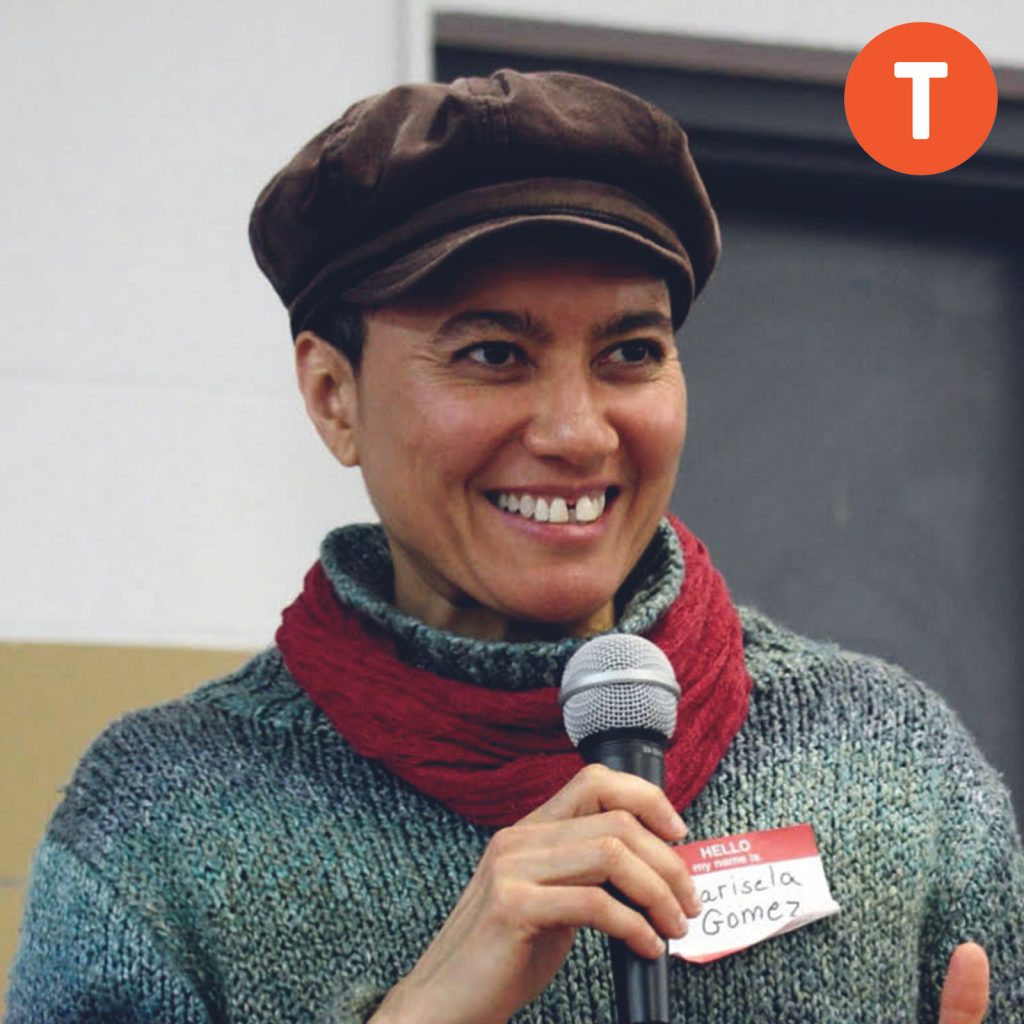
Marisela B. Gomez is a dharma teacher, physician-scientist, and public health scholar. She recently cowrote a book with Valerie Brown called Love Is Liberation: Five Contemplations for Daily Ethical Living. Drawing from Thich Nhat Hanh’s five mindfulness trainings, the book presents ethical guidelines aimed to help us transform suffering in ourselves, our communities, and our world, particularly in the context of injustice and oppression.
In this episode of Life As It Is, Tricycle’s editor-in-chief, James Shaheen, and meditation teacher Sharon Salzberg sit down with Gomez to discuss how she was first introduced to the five mindfulness trainings, why the mindfulness trainings are like spiritual friends, and how contemplating the trainings can offer us a path back to our values. Plus, Gomez leads a guided meditation.
Life As It Is is a podcast series that features Buddhist practitioners speaking about their everyday lives. You can listen to more of Life As It Is on Spotify, Apple Podcasts, and iHeartRadio.
♦
We’d love to hear your thoughts about our podcast. Write us at feedback@tricycle.org.
Marisela Gomez: The more we become close to the dharma in our daily life, the more we become the dharma. It just automatically becomes that. We become like everything we hear and we see and we do. We start seeing how the dharma is right there, right then. It’s nothing fabulous or, I mean, it is fabulous. And it’s also fabulous in every way that we open the door and close the door and say hello to the neighbor and step aside or help someone across the street. Here’s the dharma right here, right now. James Shaheen: Hello, I’m James Shaheen, and this is Life As It Is. I’m here with my co-host Sharon Salzberg, and you just heard Marisela Gomez. Marisela is a dharma teacher, physician-scientist, and public health scholar. She recently cowrote a book with Valerie Brown called Love Is Liberation: Five Contemplations for Daily Ethical Living. Drawing from Thich Nhat Hanh’s five mindfulness trainings, the book presents ethical guidelines aimed to help us transform suffering in ourselves, our communities, and our world, particularly in the context of injustice and oppression. In our conversation with Marisela, we talk about how she was first introduced to the five mindfulness trainings, why the mindfulness trainings are like spiritual friends, and how contemplating the trainings can offer us a path back to our values. Plus, Marisela leads us in a guided meditation. So here’s my conversation with Marisela Gomez. James Shaheen: Okay, so I’m here with Marisela Gomez and my cohost Sharon Salzberg. Hi, Marisela. Hi, Sharon. It’s great to be with you both. Marisela Gomez: Good afternoon. Good to be with both of you. Thank you for inviting me. James Shaheen: So Marisela, we’re here to talk about your new book, Love Is Liberation: Five Contemplations for Daily Ethical Living, which you coauthored with Valerie Brown. To start, can you tell us a bit about the book and how it came together? Marisela Gomez: Sure, so, in our tradition, the Plum Village tradition that I practice with, we have the five mindfulness trainings. We call them mindfulness trainings in our tradition. This is similar to the five precepts in other traditions. And we all study and practice them. We call it we receive them. They’re transmitted to us as we practice and want to go further. We start with receiving them. Then during Covid, and then there was the killing of George Floyd, Valerie and I, who are friends, listened together to each other, really just processing what was happening, and we didn’t hear a lot in the communities, in our practice centers and our communities, around the killing of this Black man. And this kind of not turning toward it to take care of it, especially in practitioners of color, really broke our hearts, actually. Because we bring our whole selves into practice, and so sometimes when you do, sometimes especially as BIPOC bodies, there might not be space for that. And that was happening in different sangha spaces that we were in. We weren’t hearing about it. Just how to take care of that suffering that was happening in us. In this process of thinking and reflecting we said, “Let’s write some commentary, or contemplations, on the existing five mindfulness trainings in our community that takes those precepts and brings it out into what a BIPOC body or a person in a different marginalized group might feel, especially during times of crisis, during times when things are more apparent things are maybe activated.” So that’s the impetus for the writing. We wrote the five contemplations on the five mindfulness trainings, these five contemplations, and we would recite them just like you would recite the five mindfulness trainings or as you would recite the precepts. And that then led to the book. Parallax Press, the publisher in our tradition, in the Plum Village Community of Engaged Buddhism tradition, in discussion, there was, “Oh, how about a little manifesto that pairs the five mindfulness trainings and the contemplations together?” And then voila, here we are, a little handbook that we can refer to, pull on at our leisure, in moments when we’re thinking about engaging in the world in an ethical way. James Shaheen: So you note that the book emerged as a way of reflecting on how to connect with the five mindfulness trainings and access the love and liberation they offer. So first, to back up a bit, I’d just like to hear a little bit about what first introduced you to the mindfulness trainings. Marisela Gomez: Well, what first introduced me to the mindfulness trainings was my grandma as a child. That’s really where I first came into contact with this kind of “Here’s how you live your life.” Fast-forward, at Plum Village in France, at a retreat there back in maybe 2002, 2003, the five mindfulness trainings are presented often on retreats, especially big retreats, to participants and retreatants. And I hear this, and there’s a study. It’s brought into the dharma sharing group. There’s a study, and then at the end of the retreat, toward the end, you’re invited, “Would you like to receive the five trainings?” So this is where I first came into contact, and the reason it was so easy to receive them was this is exactly what my grandmother taught. And it’s not cliché or anything. It simply felt very at home. It felt very familiar. It actually felt very comforting to know that this way of living was something embraced and endorsed by communities with intentionality to hear that. And so it was just like taking a breath, a regular breath, a regular step. It was like something very familiar to receive into my heart and to attempt to practice and strive with. James Shaheen: You know, we can go into each of them in depth later, but in case our listeners aren’t familiar with them, can you briefly walk us through the five mindfulness trainings? Marisela Gomez: Sure. I will share them in the very brief way that I think most of us in different traditions are familiar with, the five precepts, perhaps, as it may be known. The first is no killing, the second is no stealing, the third is no sexual misconduct, the fourth is no lying, and the fifth is no intoxicants. That’s what I say is the two-word version of each of the precepts. Now, in our tradition, because our teacher, the Venerable Thich Nhat Hanh, or we affectionately refer to him as Thay, depending on the region of Vietnam, the mindfulness trainings are an elaboration of each of those very short precepts. It’s about a paragraph each. And Thay was a poet, so the rendering or the translation of these very succinct and short precepts as we may be familiar with them in other traditions became very beautiful and always started with “Aware of the result of killing,” or “Aware of the effect of stealing,” or “Aware of . . .” and then it would elaborate into more. So this is in our tradition, in the Plum Village tradition, the way they’re presented as the five mindfulness trainings. Sharon Salzberg: So you say that the trainings are like good friends who remind us what we value and how we want to live. So how have the mindfulness trainings been like spiritual friends for you, and what does that look like in practice? Marisela Gomez: They remind me of where I want to head. Much like we understand spiritual friends, when we forget, we’re reminded, hey, maybe we want to think about what we’re about to say, right? Maybe you’re with a friend and something is coming up, and you’re moving toward impatience, and something angrier might come out, something you might regret later might come out. And so the mindfulness trainings, they’re there, and it’s a bit like right effort, right? It’s like right effort in a way because you’re reminded like, “Okay, I can see I’m about to say something,” and kind words, right speech, not using speech that might cause harm or become violent. So there’s your friend saying, “Remember you said you took these trainings, and you said you want to . . .” We talk about the trainings as aspirational, as guiding lights, as a signpost, not something where if you don’t follow them, you’re going to all of a sudden drop dead or something like that, or lightning’s going to strike you, and something terrible will happen to you. No, they’re really this reminder, this continuous reminder of, hey, this is how I want to live my life. Hey, this is the direction I’m heading in. So this is how it’s a friend. I feel like friends are like that. You know, they remind you when you said, “Remember you said you don’t want to do this,” or, “Remember you said you want to go to bed by this time, so if you do this, you’re not going to get back home until this time.” So it’s like that. They’re friends on the path. They keep you coming back, keep you coming back again and again. Sharon Salzberg: You know, I was cohosting a totally different podcast once, and for some reason, I started telling this story about a monk who was asked, “What do I do if I break a precept or I don’t live up to that aspiration, if I make a mistake?” And the monk looked at the person asking and said, “Well, you take it again.” And the person who was the guest on the podcast said to me in an almost accusatory way, like, “Oh, I can tell you’re a glass-half-full kind of person,” like, that’s too optimistic a vision of an ethical life since it doesn’t involve punishment. And I said, you know, “No one in my entire life has ever said that about me,” that I’m an optimist about things. And of course, when you think of Buddhism, you don’t necessarily think of wild optimism, although it’s very realistic and it’s the most truthful thing we can have. So I’m just wondering, when one undertakes the five mindfulness trainings, as you say, it offers us a path back to our values and toward liberation, and how do we relate to ourselves when we don’t quite live up to that? Marisela Gomez: Yeah. I think that’s a really common question, and when we’re with the new retreatants and participants, I just came back from a retreat from our monastery here on the East Coast, Blue Cliff Monastery in Pine Bush, New York. And usually during our retreats we present, there’s a panel of people who have received the trainings, and they present the trainings, like “This is how I live with the first one, and this is how I live with the second.” So it’s always very personal, practical way. So people are sitting there in their very real lives sharing, “This is how I try,” and it’s always, “This is how I try.” And it’s often also, “This is how I didn’t manage to do that, and then with continued practice, this is how I then saw what I was doing.” And so the sharings from people who have received the trainings and are trying to practice with them, they’re so beautiful. From the very beginning, someone who is invited into receiving these five trainings, they have already heard other practitioners share about how they’ve actually not been able to keep them. And so there is already this very space, a beautiful spaciousness that people are being invited into. Again, we actually say these are not things we live or die for. These are things that guide us on our path, the light that shines to illuminate where we might want to go and where we might not want to go. So we’re very clear on that. I know, for example, when I took the trainings, I used to drink alcohol quite regularly, actually more regularly than I’d like to admit, kind of like it was my stress relief. At least that’s what I told myself. I came back that time I told you where I first received it. I came back from that retreat and I moved all the alcohol out the house, and I never drank alcohol again. And now this is someone who has drank alcohol since she was 15. I got in trouble in high school for sneaking beer in my backpack. I was one of these kids. In my family, there’s a lot of challenges with alcoholism. So I grew up very much connected to alcohol. Then I took the trainings, and it was so transformative for me that I didn’t have the desire anymore because what I understood with that fifth training was, the intoxicants are what are going to not allow my mind to be clear so I can practice with the other four. It was very, very clear. All of a sudden I could see what all this alcohol did to my mind. Now, when I understood that, it made it really easy. It was like, “Oh, okay, well, I want to be clear in order to do these other four, so that means I need to stop this.” But that’s me, and I often share this story because I also know many people who won’t do that. They will come back from receiving the training, and maybe they’ll practice with it for a few months, maybe weeks, and then they’ll maybe have a glass of wine to relax. Is there anything wrong with that? No, actually. No, there isn’t. Some of us step into the path very differently, and everyone can step as they like. When we offer the five trainings, people share about the five trainings and what they are, we also offer, and I think other traditions do this as well, that you can take just one of the trainings, and we invite people to do just that. And we have practitioners, students that we practice with, who will take one training and they’ll practice with it for a year, and they’ll say, “I’m going to practice with this for a year and then I’ll see if I’m ready to take others.” And some people may practice with it for a couple years. And that’s beautiful because they’re all interconnected, quite frankly. They’re not separate, right? It’s a path, and it’s just these different guidelines that keep bringing us back. And once you start practicing with one, it makes you aware of the others. James Shaheen: Marisela, you point out that the mindfulness trainings are framed in positive language: “I vow to” rather than “I vow not to.” So can you talk about the significance of this choice and how it demonstrates how we can take responsibility for our own thoughts and actions? Marisela Gomez: Well, I think you know that often a lot of our, well, I won’t say a lot, but many of our teachings are framed as no: no greed, no hatred, no delusion. It’s the no, no, no, no, no. And sometimes it’s nice to say to welcome in. What are we welcoming in as opposed to what are we trying to release or get rid of push away? And sometimes I think we’re all so different. We all have different personalities. Sometimes we might like the inviting in something that will fill us up. Again, our tradition, some people call the Plum Village tradition a very gentle tradition. I don’t know if you’ve ever been to a Plum Village retreat, but we sing and we do hand movements, and it’s just wonderful to see people who come to one of our retreats the first time. And I hear this as a teacher. You’re sitting there, “I like the roses, I like the daffodils, I like the mountains, I like the rolling hills, I like the twinkling stars when the sun comes out.” We do this, and we sing before working meditation, and we sing before walking meditation. So you might say we’re living often in more of the bringing in the positive, watering the positive seeds. And so it’s not surprising that the five mindfulness trainings as interpreted by Thay and our community brings that same aspect of the positive spin that we’re looking for. And the “Don’t take life” is in there too. So it’s not that we’re running away from what we need to not do, the consumption of alcohol, of media, of books that keep us up at night and bring violent dreams. So, we’re also there, but we start with this commitment to water and nourish the seeds that can help us maybe have the spaciousness to see more easily what happens when there’s that watered and allows us to maybe see the difference. It’s kind of the difference between weeding. You know, you have a garden. Do you take the weeds out first, or do you plant the flowers first? What do you do? And I don’t think one’s better than the other, and I don’t think in our tradition we think one’s better than the other. I also think that our tradition comes out of war. Plum Village tradition came out of the Vietnam War. Our teacher was quite an activist during the Vietnam War, building community during the war, rebuilding villages that were being bombed, sitting in meditation halls listening to bombs fall, and then saying, “We can’t sit here anymore. We want to go out and do something.” I think a tradition that comes out of war seeks to bring in something positive. So Thay was working with many social workers, lay social workers, who were being trained to go out and help farmers rebuild their villages. And in the midst of all that work, making sure that there were days of mindfulness to practice and to keep nourishing the spaciousness so we can go and do this hard work in a war region. And I do believe generational trauma, the results and the legacy of war in our tradition with the Vietnamese people, has something to do with why we really focus on watering the positive seeds in order to be able to invite in the suffering, to look at the suffering, and to transform it. James Shaheen: Marisela, I want to get into each of the trainings, especially how you’re looking at them in the context of injustice and oppression. But I first wanted to ask you about your own background here and how it informs your perspective, as you’ve dedicated much of your life to working as a community organizer, a public health scholar, and a physician. So can you talk a bit about your activist work and how this has shaped your relationship to the mindfulness trainings? Marisela Gomez: Yes. So I think in the work of activists and people who especially organizing, doing community organizing, organizing people if there’s difficulty in their community, if there’s challenges, if someone’s about to take a house knock it down while someone lives right next door and there’s lead paint in the one being knocked down, which spreads lead dust, which a child can inhale and get lead poisoning—these are the types of communities that I’ve been doing work in. So this work of activism is really about bringing about something more wholesome, isn’t it? So, even before meeting the trainings or meeting the practice as detailed in the dharma or what we call the dharma, the way I lived my life has always been to be of service and to address things that I feel are harmful. So community organizing is, as I said, about organizing for justice, organizing for things to be better. Dr. King said justice is really love—I’m interpreting—love trying to reassert itself, right? That’s what justice is. It’s love trying to come back into that space. And so I think even as a younger person, this has really been my aspiration, wanting to be a physician, wanting to be in public health. Public health addresses the people who don’t have the ability to have, say, more specific private insurance. So it’s the public’s health. The people who are left out is public health. Public health does the population’s broader health. So I think when I look at my trajectory of how I’ve lived my life, it’s always been to try to serve and to bring something more beautiful into people’s lives. So the mindfulness trainings do just that. They actually invite you into how you’re going to do that. Are you going to come to it from a space carrying all the suffering? A lot of us who go into organizing and activism, we want to do that because we know injustice very personally. We know some form of injustice personally. Racism, as a person of color, I certainly know that in my bones. I’ve seen my mother be the victim of it, my grandmother, like that. So we know it very well. You know, if you’re female gendered, we know the hierarchy of the binary male, female. So we know it in our bones. And I’m naming the more power/non-power social constructs. But there’s all kinds of suffering. So I think people who go into activism and organizing are people who know suffering in some way deep inside, and they want to do something about it. Maybe they weren’t able to do something about it in their own lives. I know certainly that was my case. So you want to do something about it. The mindfulness trainings, what they did as I continued my work of activism and organizing and these other ways of serving is they’re really the spiritual friends to remind me, like, “Do you want to do it that way?” So I would be in a meeting where there are developers who are going to take land from low-income Black people to build a biotech park without any warning, just because they can, because that’s the nature of power, or we call it gentrification, akin to urban renewal in the ’50s and ’60s. And I would not hesitate to just let the developer know exactly what they were doing. You know, everything’s off, like, if you’re doing it to us, we can do it to you, right? Just give what you get, right? Then I step into this world of the dharma and these very profound teachings, and somehow it really shifts me. It goes deep. Like I said, I came back from receiving the five trainings, and it just was like, “Okay, we’re going to do this now.” And that really invited me into really looking at all the ways I was doing my work of activism, really just engaging. It’s not even the work of activism or the work of this or the work of that. It’s in the mundane, everyday daily tasks. How do you speak to someone? Like, what’s your tone? Is it kind? And it doesn’t mean that you don’t have to bring your sword of Manjushri at some point, so it’s not like rose-colored glasses and everything. I’m not saying that either because at times you do need to be very direct in your speech. But it just invited me into looking in these very toxic spaces, because in spaces of injustice, there are a lot of toxicities. That’s why they’re unjust, right? They’re unjust, and they’ve been unjust for a while, and often the injustice continues because we haven’t been able to address the root causes and to change them. So these places are very toxic. And so going into those places often as activists and organizers, we can get pulled into also being toxic in the name of justice. And so the mindfulness trainings really invited me into looking at myself. How are you, Marisela, doing this work? Are you just spitting out the verbiage because they do that, because there’s this way that people are treated so you think it’s okay to treat them like that? So the mindfulness trainings really brought me very very clearly to look at myself and to look at just using the speech, just look at how I was speaking. After I took some time to go and spend more time in the temple, I took a couple years, actually more like three and a half years, four years, and went and lived in Plum Village and then in Blue Cliff in upstate New York, and then did some solo retreat. My mom, I asked her when I came back from the monastery, because she wasn’t so thrilled about me going off to a monastery. And I said, “Do you notice anything different about me?” And she said, “Yeah, you don’t act like you have the whole world to save on your shoulder anymore.” And I said, “Yeah.” I said, “And wow, that is such a relief.” So this looking into this mirror I find in mindfulness training, that’s why I say for me it’s a friend, because who else is going to tell you, “Hey,” over and over again, right? Because that’s what we do. We do it over and over again. The habit energy is strong. So the friend who has to keep tapping you and say, “Hey, you see what you’re doing here?” or at least give you the invitation to receive. And then, depending on where you are, how your day’s been, how hectic things are, sometimes we can step into the invitation, and sometimes we are like, “No, not right now, y’all. It’s been a rough one.” Sharon Salzberg: So let’s turn to the contemplations that you and Valerie developed. Tell us about the first one, acknowledging beauty as reverence for life. Can you say how you’ve practiced and worked with this contemplation? Marisela Gomez: Yeah. You know, one of the ways I came to understand and really start to remove some of this negative self-work around being a Black, Brown female person, Afro-Latina, and all the messages of the unworthiness of who I am and the different constructed and nonconstructed identities that we all walk around with and having a real perception of though our worth. As people of color, often our worth is always relative to whiteness, right? And so really living that life as a person is always relative. We’re always relative to what a white person’s life is. The value of our lives is always subjugated. And the reverence, beauty as reverence for life, was actually acknowledging that this continued depreciation of myself was a killing of myself. That’s how I felt it when I came to this realization. It was slowly killing me, slowly killing my vital energy, my life force, killing my ability to see myself as this whole person, this beautiful person. I used to always think I was very ugly. When you look in the mirror and the images that come to you of what beauty is, it’s not this face right here. Not at all. And still today, it’s not this face. But you know what? Somehow I feel I’m very beautiful. And it’s not beautiful in the way that is relative to the social construction of humans and the whole colonization and imperialism and the way that we’ve been subjugated to believe and internalize. We internalize it. So even when I don’t see the image, I have internalized it so deeply that I believe it. And so this ability to really feel not ugly, so the negative is the not ugly, right? Like I acknowledge I’m not ugly. But to acknowledge I’m beautiful, that’s a whole other level. And to believe it, to believe it, not just to say it, but to believe it. And it feels like it’s a waking up of this life form, of the life force. Now, this isn’t a beauty that is physical and mandated by Vogue, whatever magazines, all respect to them. It’s a beauty that allows one to walk and feel purpose in the world, to feel they belong in the world, to feel like a flower, right? That just by being, a flower is beautiful. It doesn’t need to say anything. The flower, all it does is sit there and offer you themselves in their full beauty. So to take up a life perception that just being who we are, what makes us beautiful is our wholesome actions. That’s what makes us beautiful, and bringing joy and bringing kindness and looking at how we might bring in negativity and not reprimand ourselves and punish ourselves for that, simply acknowledging, “Hey, that’s here right now, and let me look at why that’s here.” So this beauty is a very deep beauty, to be able to feel alive and to feel that it’s okay. Like, I could be who I am. I used to not smile a lot because I have these open teeth, and people with teeth like me, we’re ugly. We’re presumed ugly. And so I would never smile real big. Now you can’t stop me from smiling. You know, I could smile because I don’t have these preconceived notions anymore that I don’t have teeth that are acceptable. I don’t have a nose or lips or skin tone that’s okay. I don’t have all these attributes. And so this is a reverence for life, right? This is allowing someone to live in and be fully present and not feel that they’re a mistake or they don’t measure up. Because when we have that energy, then we can do wonders. And we don’t have to keep striving to achieve something or become something else other than who we are already. It’s a comfort and a contentment. It’s a relaxation into who we are right here, right now. There’s nothing else needed. It’s very, very deep, for me, in my own life, to be able to have moved from this place and moved from all the way we consume things to make ourselves believe that it’s okay. The alcohol, the drugs, whatever it is that we take up to make ourselves feel like we’re worthy, it’s a taking of life, right? It’s a taking of our life force so that we can fit in enough. So this first contemplation is just saying what makes us beautiful is we need to really rethink this whole social norm and construction of what beauty is. And then the reverence is being able to live this full life. Now I don’t need to think I’m better than others or I’m more pretty than you or beautiful. All that falls away, and the beauty is simply just this offering, offering something that isn’t feeling dejected. Because when we feel dead inside, nothing can grow from that. James Shaheen: So, Marisela, I don’t know if we’ll get through all five of the contemplations. But the second one is belonging and connecting as true happiness. So can you talk to us about this contemplation? You describe it specifically as an antidote to othering, so I wanted to get to that one definitely. Marisela Gomez: Yeah. And I mean, that’s what I mentioned earlier, they’re all kind of interconnected. In our tradition we say when you practice one, you’re practicing them all. So just naming that they are all interrelated, and also how to share about each one. So this belonging and othering is very real. It’s one of the big difficulties and challenges of our times, isn’t it? That everybody feels they don’t belong. So this second contemplation is really an invitation to think through for our own selves, what is it that makes us feel othered? And then what is it that makes us feel belonging? If we take away the things that make us feel othered and it sort of dissipates, the only thing that’s left is feeling that you do belong, that you’re not anymore this person on the outside or ostracized. So this belonging is actually really critical, I think, in our times, especially for young people who somehow have gone down a very, very isolating path, I think. How do they feel like they belong? And that belonging for me in the US, even as a naturalized citizen, is something I still work with because it’s very hard in this country to feel a part of it if you’re not born here, especially in the last couple of years. So this othering is something that this particular contemplation keeps coming back for me in how to really step into belonging in the most gross externalized context where you may not feel like you belong or you should be here. Sharon Salzberg: Well, we can certainly see the connections between all these different trainings, and maybe we can move on to the fifth contemplation, which feels very related to this sense of belonging. It’s welcoming as true nourishing and healing. So I wonder if you can say something about the practice of welcoming. This feels somehow central to all the other contemplations in some way, welcoming ourselves and others back to the path of liberation. Marisela Gomez: Yes, so welcoming is really being able to welcome everyone—everyone on the external and then in the practice, in this form that we’re in, everything. So welcoming everything, all parts, and that includes the parts that we’d rather not acknowledge. Just welcoming all of it. In that contemplation we talk about this inadequate history that we’ve all learned from, this inappropriate history that we’ve consumed. We’ve been consuming things that have not allowed us to know the truth of who we are. And that’s who we are in this form, this material form, the whole social constructions. And I kind of talked about that, right? Ugly. You know, I’ve consumed information that has told me I’m ugly, and I believed it. I ate it up. In school they give you lessons on inaccurate histories, and it continues consuming that. So this training is about how do we look at what we’re consuming to not gobble up the things that make us feel that we don’t belong, again, coming back to the second one, right? And very importantly, it’s the consuming of things that make us feel inside that we can’t turn toward the parts of us, the traumas in us that need healing. What’s the root of our afflictions that keep coming up, that make us then act out in certain ways, say certain things? So this ability to invite in and welcome and not be stuck in this rigid sense of a self, this sense of I, me, that I’m solid as this individual. There’s nothing, you know, that’s it. I’m done. So it’s an invitation to really go a little deeper and go beyond the sense of a solid self. And that just blows it all open, right? Because then we get into the emptiness, and then we get into the interbeing, and then it becomes more diffuse. And then as we become more diffuse, then it’s less hard to hold onto it because it’s really just so beautifully open. Sharon Salzberg: So you also invite readers to write their own contemplations, either alone or with a friend or a group, and I wonder if you can tell us a little bit about this invitation. Marisela Gomez: Absolutely. You know, this is Valerie’s and I, this is how we interpret them. And again, it’s a bit about the rigidity of sometimes the teachings. So the contemplations are a bit of a commentary on the five mindfulness trainings. The five mindfulness trainings are a commentary or elaboration of the precepts. So this is what we do. This isn’t anything new here or unique. And so the invitation is for people to do the same thing, to look at this in the way they’re living their life in the 21st century in modern times, especially in the times that we’re in, inviting people to practice with taking the basis of the trainings and interpreting it into their lives, for someone can say, “This is my contemplation on this. This is how I’m living this. This is how I’m trying to practice with the third or the fourth or the fifth mindfulness training.” And just inviting people to be able to see that their life is practice, their everyday life. And this is the beautiful thing when I share about practitioners sharing on a panel about how they bring the practice into their lives with someone listening, and you can see people are nodding their heads like they have a similar experience. So the invitation to write your own contemplation is like that. It’s as if we’re saying “Would you like to share about how you, in your life, have been living or you may try to live,” or maybe you read the book and you reflect on it, and in the next few months you’re reflecting on this in contemplation. And then you can sit and write, “This is how I practice with this in my life.” And then we see that our entire lives are really we’re putting into practice the teachings. And our mundane everyday world becomes, this whole conventional world that we designate this and this, it can start to open up and we can see the dharma in every single thing we do. So it’s using words and phrases to point us in a direction, which I think I said earlier is the mindfulness trainings are really just friends that point us, remind us, and how do we bring them and allow them to help us to stay on this path? We’re all on this path. I don’t think anyone will pick up this book if they’re not interested in liberation. I mean, it’s really clear: Love Is Liberation is what we’re trying to get to. And so we’re inviting people into practicing in the way that it shows up in their life. Here’s some examples. This is how Valerie and I interpret and lived it within the context of who we are in this world today and last year and during Freddie Gray and this is what happened during Covid, and this is the things we were dealing with, and this is how these practices showed up for us. And you have a world too that you live daily, and how do you take these teachings and bring them into your life and name it? And the more we become close to the dharma in our daily life, the more we become the dharma. It just automatically becomes that. We become like everything we hear and we see and we do. We start seeing how the dharma is right there, right then. It’s nothing fabulous or, I mean, it is fabulous. And it’s also fabulous in every way that we open the door and close the door and say hello to the neighbor and step aside or help someone across the street. Here’s the dharma right here, right now. James Shaheen: Okay, Marisela Gomez, it’s been a pleasure. Thanks so much for joining us. For our listeners, please be sure to pick up a copy of Love Is Liberation, available now. We like to close these podcasts with a short guided meditation, so I’ll hand it over to you, Marisela. Marisela Gomez: Thank you, James. So I’ll invite three sounds of the bell if we want to begin to drop in, maybe take some breaths with each sound. Listen for the resonance, allow ourselves to drop in, letting the bell of mindfulness bring us back to our true home, body, speech, and mind as one. I send my heart with the sound of this bell. May all those who hear it awaken from forgetfulness and transcend the path of pain and suffering. The invitation is to come back to the breath with awareness. Breathing in, becoming aware that we are breathing in. Breathing out, becoming aware that we’re breathing out. In, out. Breathing in, noting the breaths may become deep. Breathing out, noting the breath may become slow. In, deep. Out, slow. Breathing in, feeling calm. Breathing out, feeling ease. In, calm. Out, ease. Breathing in, inviting a gentle smile on our face. Breathing out, feeling release in body and mind. In, smile. Out, release. Thank you. James Shaheen: Thank you. Sharon Salzberg: Thank you so much. James Shaheen: You’ve been listening to Life As It Is with Marisela B. Gomez. To read an excerpt from Marisela’s book, visit tricycle.org. Tricycle is a nonprofit educational organization dedicated to making Buddhist teachings and practices broadly available. We are pleased to offer our podcasts freely. If you would like to support the podcast, please consider subscribing to Tricycle or making a donation at tricycle.org/donate. We’d love to hear your thoughts about the podcast, so write us at feedback@tricycle.org to let us know what you think. If you enjoyed this episode, please consider leaving a review on Apple Podcasts. To keep up with the show, you can follow Tricycle Talks wherever you listen to podcasts. Tricycle Talks and Life As It Is are produced by Sarah Fleming and the Podglomerate. I’m James Shaheen, editor-in-chief of Tricycle: The Buddhist Review. Thanks for listening!

Thank you for subscribing to Tricycle! As a nonprofit, we depend on readers like you to keep Buddhist teachings and practices widely available.