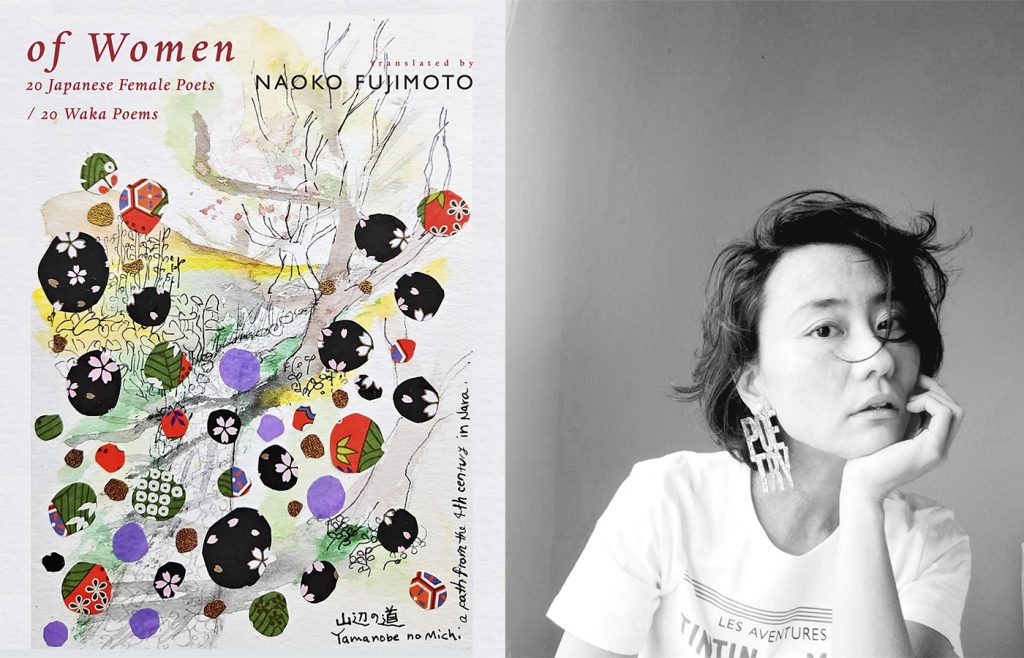
Between the 7th and 12th centuries, in the long morning of Japanese literature, women shaped one of the world’s most refined poetic traditions. The poems presented here are waka—thirty-one-syllable lyric vessels cast in the pattern of 5–7–5–7–7—forms small enough to fit in the palm, vast enough to hold grief, longing, weather, memory, politics, and desire. From this luminous tradition, I have selected the voices of twenty women poets, writing during a period when women stood at the very center of Japanese literary culture.
Some of these figures are celebrated—Sei Shonagon, whose Pillow Book still dazzles with its precision and wit; Murasaki Shikibu, author of The Tale of Genji, often called the world’s first novel. Others are far less known, their names surviving only in fragments, footnotes, or borrowed identities. Yet together, these women shaped not only the foundations of Japanese literature but also the very idea of lyric interiority that would echo across centuries and continents.
Many of their true names were never recorded. Women were frequently identified through relation rather than selfhood—someone’s daughter, someone’s mother—a linguistic practice rooted in the possessive particle no (の), which defines identity through attachment. Some of the names we now use were assigned only after death: Murasaki Shikibu, for instance, is a posthumous appellation, not a name she ever claimed in life. Even the most basic contours of these women’s lives often dissolve into silence. We do not know the death date of Sei Shonagon, for example, because she vanished from official record when the empress she served fell from political power. And yet—despite erasure, despite disappearance—their poems endure with exquisite clarity. The work survives even where the life dissolves.
Waka compresses worlds. Its brevity is deceptive: A single poem may contain layered meanings, seasonal codes, private allusions, courtly etiquette, political tensions, and emotional subterfuge. The poems were created within a dense cultural lattice that modern readers cannot simply intuit. A direct translation alone cannot carry the full burden of this compression. For that reason, this project unfolds through a threefold approach.
First, each poem is preceded by a short prose meditation written in the tradition of haibun, a form perfected by Basho in the 17th century. These prose passages are not translations but contextual illuminations—lyric bridges that position each poem within its emotional, historical, and symbolic field.
Second, my translations embrace a visual and spatial narrative. Waka was not fixed on the page in five rigid lines as it is so often presented in English. In its own time it functioned as decorative text, shaped by calligraphy, architecture, and intimate exchange. Lineation shifted freely. In restoring this mobility, I’m looking to transcend historical replication. What I’m after is formal liberation: to return the living breath that was taken from the poem when it was “standardized.”
Third, because the music of waka is inseparable from its meaning, I present each poem with its Romanized phonetic form alongside the original Japanese. These sounds—subtle, compressed, echo-filled—carry textures no translation can replace. Graphic and typographic elements also enter the work, shaped by what I call line-break hyperawareness, an approach explored more fully in my book GLYPH: Graphic Poetry = Trans. Sensory.
My wish is to place the pressure of one finger on the lifeline: that English-language readers might encounter these poems with something close to the intimacy, immediacy, and sensory charge experienced by Japanese readers. These are not relics. They are living instruments of perception. They register weather, breath, shadow, intimacy, impermanence. They listen.
What history has stripped from these poets—their biographies, their faces, even their names—the poems themselves restore in another form: as feeling, as attention, as radiant precision. Across a thousand years, they still speak.
–Naoko Fujimoto
Taikenmon’in no Horikawa (around 1142 CE)
I breathe. I soak my finger in porcelain. Camellia oil turns amber on my boxwood comb. I trace the flower engraving on it. I breathe. Mornings, I brush my hair. Last night, you came. My hair weighed on your shoulders. Now I forget to breathe and brush.
My long black hair tangles
so does my heart—kokoro is distressed
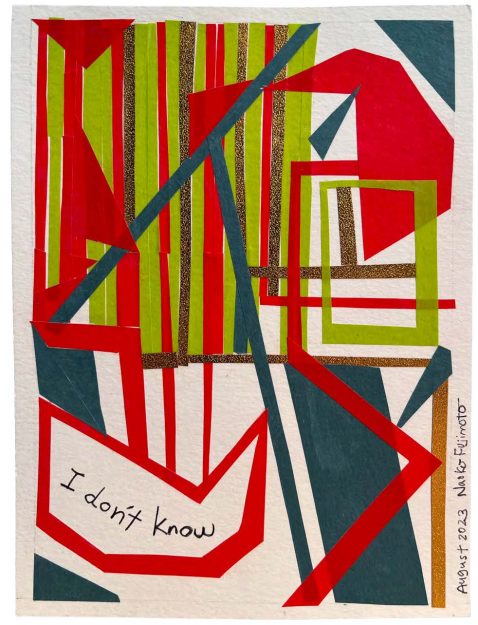
will you seek me forever and ever after this I don’t know
Taikenmon’in no Horikawa was a poet at the end of the Heian era, but her birth and death dates remain unknown. Her husband died early, so she raised their only son with her father’s support. She and Saigyō Hōshi (the Buddhist monk and poet) may have had a relationship. She wrote many love poems, but it is unknown whether they were fictional or based on lived experience.
Women in the Heian period typically kept their hair long, a symbol of their beauty and social status. Bathing had not become common in their everyday routine. The women washed their hair with rice water. When they went to bed, some put their hair in a box by their pillow to keep it neat.
Taikenmon’in no Horikawa wrote this waka after the theme of Koi no Kokoro. Koi is a feeling of affection toward an admirer, and Kokoro is the heart. It is the same feeling as Koishi—longing for someone. A woman will do anything for her lover during their first night; she will even forget her hair box. Taikenmon’in no Horikawa eventually became a nun, cutting off all her hair.
naga karamu / kokoro mo shirazu / kurokami no / midarete kesawa /
mono o koso omoe
ながからむ心もしらず黒髪の乱れて今朝はものをこそ思え
待賢門院堀川 / Taikenmon’in no Horikawa
Gidousanshi no Mother, Takako (unknown–996 CE)
To my husband’s graveyard, I am just a woman. His brothers ask if I need more flowers or prospects, but never provide. We are family. We support each other. But they are men. They ignore my daughter and call my son a criminal. Other men bring me flowers after sundown.
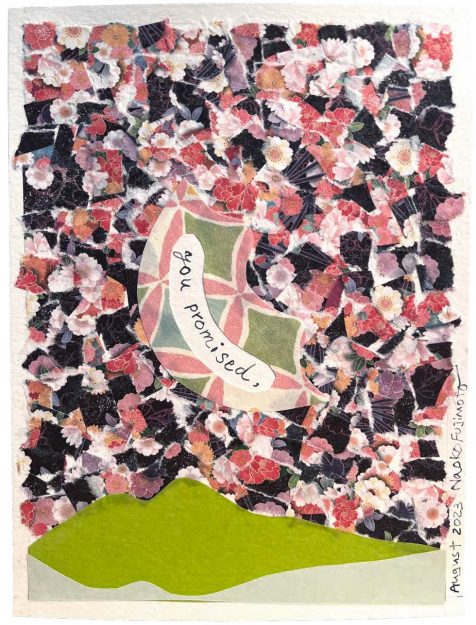
“I won’t forget you,”
you promised, but I don’t know how you stay this
optimistic.
How can I believe this certainty?
I long for my life to end today.
Takako was one of the most educated female poets of her time, but she lost her name when she gave birth to her children. She is often represented by scholars as an unfortunate mother. Her son was destined to rule Kyoto for the emperor, but he was usurped by Fujiwara no Michinaga’s political machinations. Eventually, in retaliation, her son was exiled from Kyoto.
Takako’s daughter, Empress Teishi, appeared to have a perfect palace life, but she voluntarily removed herself after her brother’s punishment. She cut her beautiful long hair, and she became a nun in a secret society.
When Empress Teishi was taken back to the palace by the emperor, she continued having a relationship with him despite the vows she had taken as a nun. She was not fully welcomed, especially by Fujiwara no Michinaga. To some, her weak appearance resembled the fictional character of Genji’s mother in The Tale of Genji. Empress Teishi’s son might add elements of Genji’s characteristics.
wasure ji no / yukusue made wa / katakere ba / kyou o kagiri no / inochi tomogana
忘れじのゆく末まではかたければ今日を限りの命ともがな
儀同三司母 / Gidousanshi no Mother, Takako
♦
“Translator’s Note,” “Taikenmon’in no Horikawa,” and “Gidousanshi no Mother, Takao” from of Women: 20 Japanese Female Poets / 20 Waka Poems translated by Naoko Fujimoto. Copyright © 2026 by Naoko Fujimoto. Reprinted with the permission of The Permissions Company, LLC on behalf of Tupelo Press, www.tupelopress.org.

Thank you for subscribing to Tricycle! As a nonprofit, we depend on readers like you to keep Buddhist teachings and practices widely available.