I contemplated Machig Labdrön’s (1055-1149) emphasis on “realizing rootlessness” for many days during a solitary retreat in a ramshackle little hut, tucked in a dip between hillsides, with a mucky pond of croaking frogs and a wild green meadow that was home to a small herd of deer.
Machig’s whole lineage of teaching is about severance (Tib.: chöd), cutting the root of suffering. She often uses the metaphor of a tree for the spiritual path. We can keep cutting the branches of all our particular forms of ignorance and confusion, but it’s an endless task until we’ve cut the root of self-clinging, the mistaken notion that we exist as a separate self in a dualistic world. That’s the rootlessness she is referring to here.
When we look at who or what we truly are—you or me—there’s nothing solid there. We don’t have a basic root that makes us some thing—solid, independent, immutable. This is the no-self that the Buddha taught. I only exist in relation to other relative things, which themselves have no permanence or independent existence. This is the truth of interdependent co-arising. It’s not that I don’t exist; it’s that “I” don’t exist in the way I normally think of myself, as fundamentally distinct and apart from others and the world around me. I’m far more permeable and ephemeral than I usually take myself to be. Just as the wave never exists apart from ocean but only ever as an arising of the ocean, so too the self is ultimately not an entity unto itself but only always a conglomeration of various patterns, conditions, and relationships, never separate from the ground of being.
To realize rootlessness is to let go of my continuous attempts at reaffirming my separate existence, at creating a defensible “territory” of identity. Who I am, what I do, what I believe, what I like, what I don’t like—these are the cornerstones of my identity and also the golden chains that bind me. To realize rootlessness is to open the tight clasp on me-ness, like a fist finally relaxing its vain attempts at grasping air.
Thus, Machig says, whatever you grasp, let it go, let it go, let it go. Realize that ultimately, you are rootless; all things are ultimately rootless. And that, believe it or not, is good news! Because in letting go of grasping our tiny bit of seemingly solid yet strikingly temporary territory, we open ourselves to the far more immense and empowered groundless ground of our being that is “without meeting and parting.”
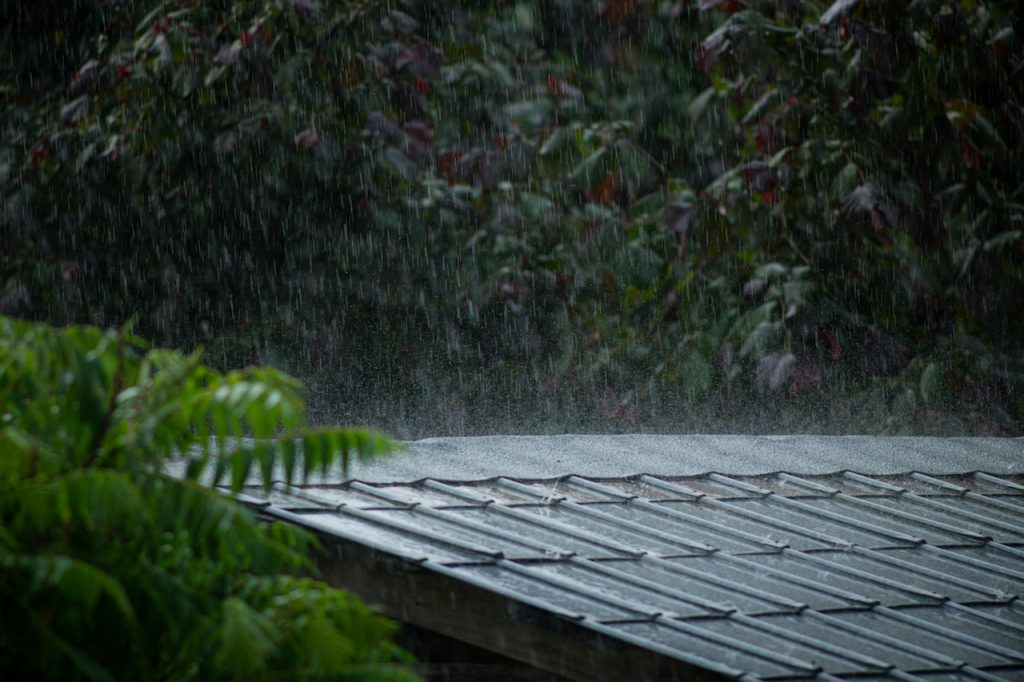
Listening to the spring rain drumming on my tiny roof, I realized that rootlessness awakens me more readily to the coo of the evening dove, the chirping of the crickets, the gentle gaze of the deer. I’m not trying to build a mini empire of my life. “I” am simply passing through just like all these beings. That’s the resting, not outside of the movement of things, but right within them, more present and awake.
To truly realize rootlessness is an ultimate view. At a relative level, we all have roots—our family, friends, animals, beloved places. Looking out at the tall ponderosas reaching high into the sky, I thought more about the very nature of roots themselves. Roots are like tentacles reaching into the very heart of the earth, drawing nurturance and sustenance from their connection to myriad forms of life. Rootlessness is to let go of the idea that our roots have an endpoint, that they are holding us firmly to a solid base. “This is mine, this is me.” The invitation to rootlessness is a call to keep reaching our roots so deep until they connect us with all beings, until roots open us to rootlessness. Until we realize there is no ground because we are the ground.
When we stop grasping to rooted solidity, when we release the grip on our territory, then what? Then “rest relaxed. Rest just so with everything.” Rest in this way—rootless in vast groundless ground, the source of all—at all times, with everything, everywhere. We begin to intimate that we are very much not alone. We are with all things; we are all things. Inextricably. Always.
EXERCISE
Rest in the Way of a Corpse
This contemplation is intended to give you an experiential taste of resting in the groundless ground we’ve been discussing. These are Machig’s instructions:
Rest the body in the way of a corpse.
Rest in the way of being ownerless.
Rest the mind in the way of the sky.
The practice is best done while lying down on a comfortable surface, in a way that allows you to most easily relax all parts of your body. You might set a timer for yourself so that you don’t need to worry about time (20–30 minutes is ideal). You may say the words silently to yourself or have someone guide you, taking appropriate pauses between instructions.
- Close your eyes and bring awareness to your breath.
Rest your body in the way of a corpse.
- Let your body release any and all tension. Scan your body, allowing every part to relax, surrendering into the support of the ground beneath you. Let your feet fall open, thigh muscles relax, belly sink into the spine. Arms roll open, hands at ease, releasing the tiny muscles in each finger. Limbs become heavy. Notice the weight of your head on the ground. Let go of any strain in your body, as though you were falling asleep at night. Whenever you notice any kind of tension, release it gently into the ground.
Rest in the way of being ownerless.
- Consider that nothing and no one owns you. No one is watching; no one is keeping score. Let go of whatever has its grip on you: concerns, hopes, fears. Become aware of what you’re currently trying to hold together in your life—elements of a relationship, work, health, money, spirituality. Let go of anything you think you have to hold. As though you were letting go of a handful of golden leaves, gently release all the things you are grasping, letting them ride out on the outbreath; see them drift away into the open space around you. Whenever you notice a point of stress or worry, see if you can simply drop it, just for now, like a fist opening, releasing its contents into the wind.
- Finally, see if you can let go of even the sense that “I” am resting, “I” am letting go. Let efforting go. Let “doing it right” go. Be like one who is owned by nothing and who owns nothing. That way, you become everything.
Rest your mind in the way of the sky.
- Become aware of your conscious mind. Let awareness expand as though it were vast, like a bright blue summer sky. There is no edge to this sky, so your awareness can simply open without any limit. At first, you might even imagine relaxing your brain, as though it were a muscle that you could release. Then let awareness itself relax. If thoughts arise, see them as clouds moving through the open sky of your awareness. Rest deep into that sky-like awareness.
- Allow yourself to feel absolutely held without doing anything. If you reach an edge of fear or contraction, bring a tender attitude of kindness to yourself. Accept any boundaries you encounter, and gently explore how you might compassionately relax just a bit more.
- Continue this contemplation as long as you like, relaxing your body, emotions, and mind at ever subtler levels.
- Now, gradually bring movement back into your hands, feet, and limbs. Make the aspiration that your contemplation may be of benefit to yourself and others.
♦
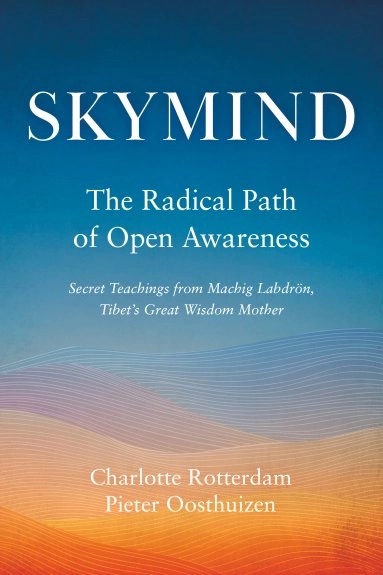
From Skymind: The Radical Path of Open Awareness, Secret Teachings from Machig Labdrön, Tibet’s Great Wisdom Mother. © 2026 by Charlotte Rotterdam and Pieter Oosthuizen. Reprinted with permission from Shambhala Publications.

Thank you for subscribing to Tricycle! As a nonprofit, we depend on readers like you to keep Buddhist teachings and practices widely available.