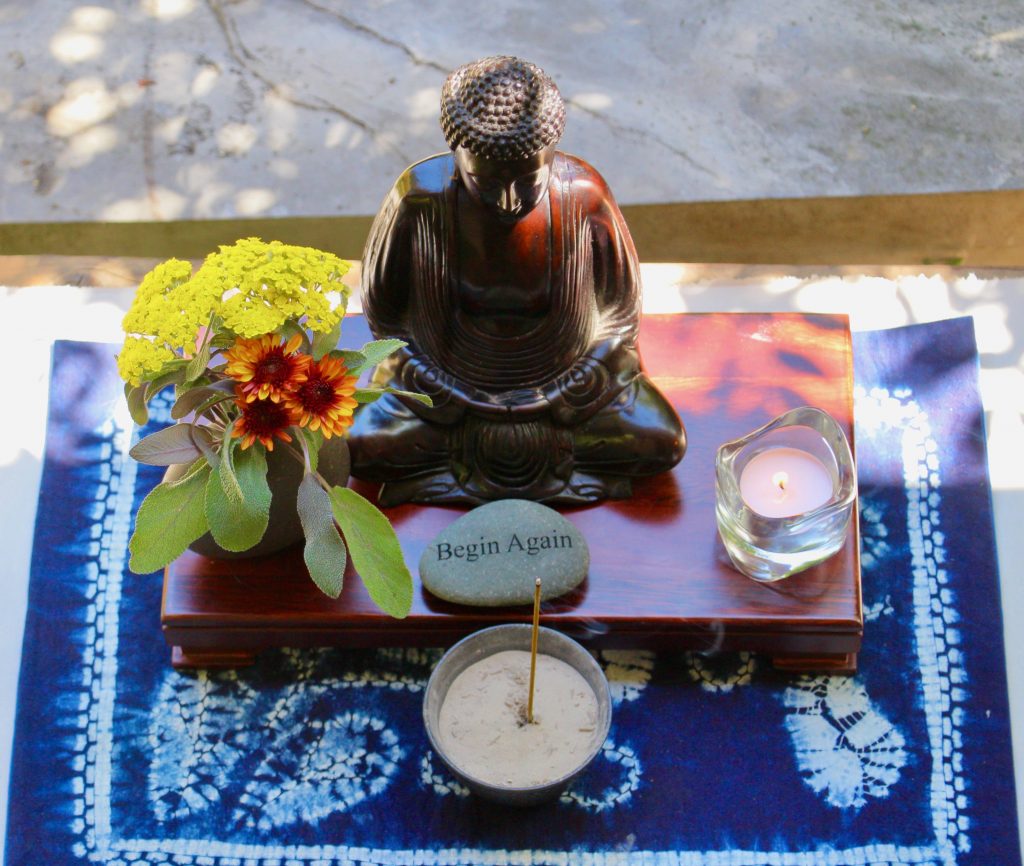
The greatest obstacles to spiritual practice are our expectations—our desire to gain something for ourselves from our effort. Trying to gain anything only hinders our practice, even if we believe that what we want is unselfish.
We come to practice because of some angst or confusion about life’s meaning. We have questions about how to live, about right effort and right livelihood. We start to practice because we’ve been feeling unsatisfied in our daily activities, troubled by various feelings and emotions. We want our practice to show us what direction our life should take, to resolve our confusion and bring us peace of mind. We begin to sit with that expectation. But if peace of mind is a goal—and if we pursue it—we cannot attain it. Our confusion will not be resolved.
Suzuki Roshi used to talk about candy. He warned us not to seek “candy” from Zen practice. He said that practice should be pure and natural, that it should not have what he called a “gaining idea.” We should practice without an idea of obtaining “candy” for our mind, even peace of mind. Pure, deep practice can only happen when we do not expect candy of any kind, in any form.
Suzuki Roshi said, “Enlightenment is just candy,” admitting that this may seem blasphemous. He added that the point of Zen practice is not to gain some experience and that true enlightenment is not some extraordinary incident. In contrast to the usual view of practice, he said that if we feel or understand something, that is not true enlightenment. True enlightenment, he said, is to go beyond ourselves, beyond ideas of who we are, beyond ideas of practice, and of what we feel we must have.
The point he tried to make is that we should practice without expecting anything special for ourselves, even enlightenment or peace of mind. Any expectation is a desire, and any desire is an obstacle to practice, even if it does not seem selfish or harmful. We might as well try to obtain fame, fortune, or magical powers. All are just different flavors of “candy.”
We should practice without expecting anything special for ourselves, even enlightenment or peace of mind. Any expectation is a desire, and any desire is an obstacle to practice.
How do we learn to practice without desire? We begin by devoting ourselves to our practice, developing continuous practice. We shouldn’t think, maybe I’ll continue, maybe I won’t; let’s see how I feel. Such an idea is about our self and is a form of candy. Our mind creates attractive wrappings for candy. We shouldn’t be fooled by fancy wrappings.
In his Treasury of the True Dharma Eye fascicle, “Gyoji, Continuous Practice,” Dogen describes how Huike, the second patriarch in China, underwent self-imposed hardships to be accepted as a disciple by Bodhidharma. When Bodhidharma entreated Huike after standing all night in the snow, Bodhidharma said, “The way of the Buddhas and patriarchs is based on patience. The most difficult practice is ceaseless practice. If you have only a small amount of virtue and wisdom and try to seek the true teaching, you will feel only suffering and the results will be useless.”
“The most difficult practice is ceaseless practice” means that our mind is easily distracted by ideas of candy and caught by desire. In our practice, we are determined to have practice continuously, and we acknowledge our desires. In other words, we are aware when we’re looking in the window of the candy store. The practice is to keep walking one step at a time, past many exciting candy stores on both sides of the street. It’s not that we never visit exciting stores and enjoy things we find exciting. But we avoid ideas like “I want excitement” or “I’m not enjoying this.” We simply engage ourselves in whatever we are doing.
To have pure practice is to have no ideas about practice. Before notions of “pure” and “impure,” “enjoying” or “not enjoying,” even before ideas about life or the purpose of practice, we practice. Especially, we should have no idea about “what I will get if I practice.”
Zazen helps us see how much we like candy. Zen practice invites us, instead, to taste the deliciousness of ordinary life.
♦
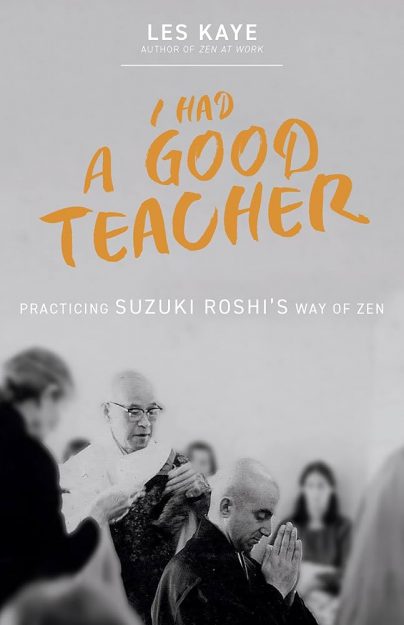
From I Had a Good Teacher: Practicing Suzuki Roshi’s Way of Zen © 2025 by Les Kaye. Reprinted with permission from Monkfish Book Publishing Company.

Thank you for subscribing to Tricycle! As a nonprofit, we depend on readers like you to keep Buddhist teachings and practices widely available.