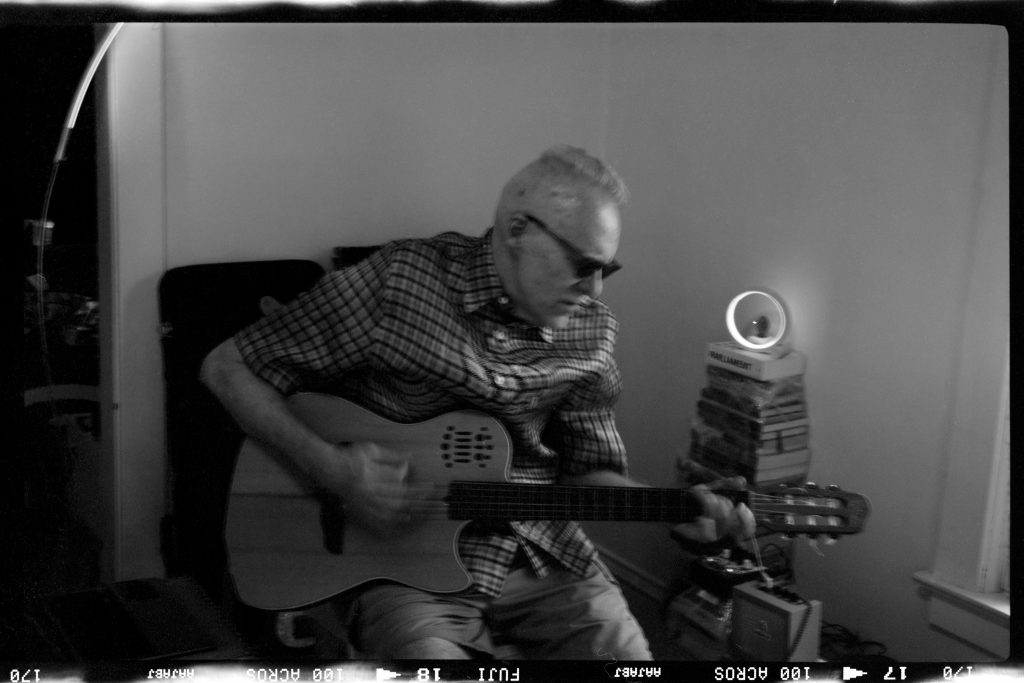
Steven Hall, aka Nirosta Steel, has been making ambitious experimental music for more than forty years, though most of it has gone unreleased. This summer, the Indiana label ULYSSA dug through decades of Hall’s archives to put together his first album in years, MY SKYSCRAPER, which quickly rose to critical acclaim. Drawing from his longtime collaboration with Arthur Russell and building on their notion of “Buddhist pop,” the album presents four decades of Hall’s work, spanning folk, disco, and experimental synth-pop.
In a recent episode of Tricycle Talks, Tricycle’s editor-in-chief, James Shaheen, sits down with Hall to talk about his winding path to music, what he learned from his time with Allen Ginsberg and Larry Fagin, his friendship with Arthur Russell and Russell’s notion of “Buddhist bubblegum,” and why he never feels like a work is complete.
Your latest album, MY SKYSCRAPER, was released this summer and quickly rose to critical acclaim. So what’s it been like becoming an overnight sensation at 69? Above all, I’m the person who’s the most surprised that this has happened. It’s been a tremendous ride, which has been like being on a log rolling on top of a snowball as it gets bigger and bigger and faster and faster. So I think the main thing I try to do is just to maintain my sense of humor about it, because at times it seems rather silly, but I get constantly reminded that it’s quite serious in its scope and that I have to take responsibility for the reaction to my work, because I have to consider this is what I was trying to do in the first place for many years. But I never expected it to happen on this scale.
So I love the aspect of chance, which still very much influences my own work, the idea of being in the moment as much as possible. And if there’s something that’s definitely adjacent to my Buddhist practice, it would be the idea of being in the moment. I think that’s an aspect of my work that people are responding to: that they feel somewhat that they’re in the moment with me, because some of the recordings seem to be sort of unfinished and intimate, as if you’re actually hearing the process itself. And that’s something that, if anything, I’m most proud of—that people have this idea of the unfolding quality of the process, because in my work, I value the process almost as much as or even more than the product itself. When I write a song, I always think of another way I could do it, and it’s not a sense of dissatisfaction. It’s just a rolling sense of restlessness and unfolding, that maybe I can find a different way of doing it.
Yeah, it sounds like your curiosity and your interest in the process sustained you during a long period during which you did your work and did not receive the sort of recognition you’re receiving now. Yes, and also I don’t regard what I do too highly. I see what I do as a craft, in the old sense of being an artisan or being in a guild, where I’m one of a group of musicians that share this passion. And if I do have a practice—I don’t meditate, so that’s something I haven’t continued with—maybe my daily practice is my rehearsing and singing. And that has kept me afresh in some kind of way.
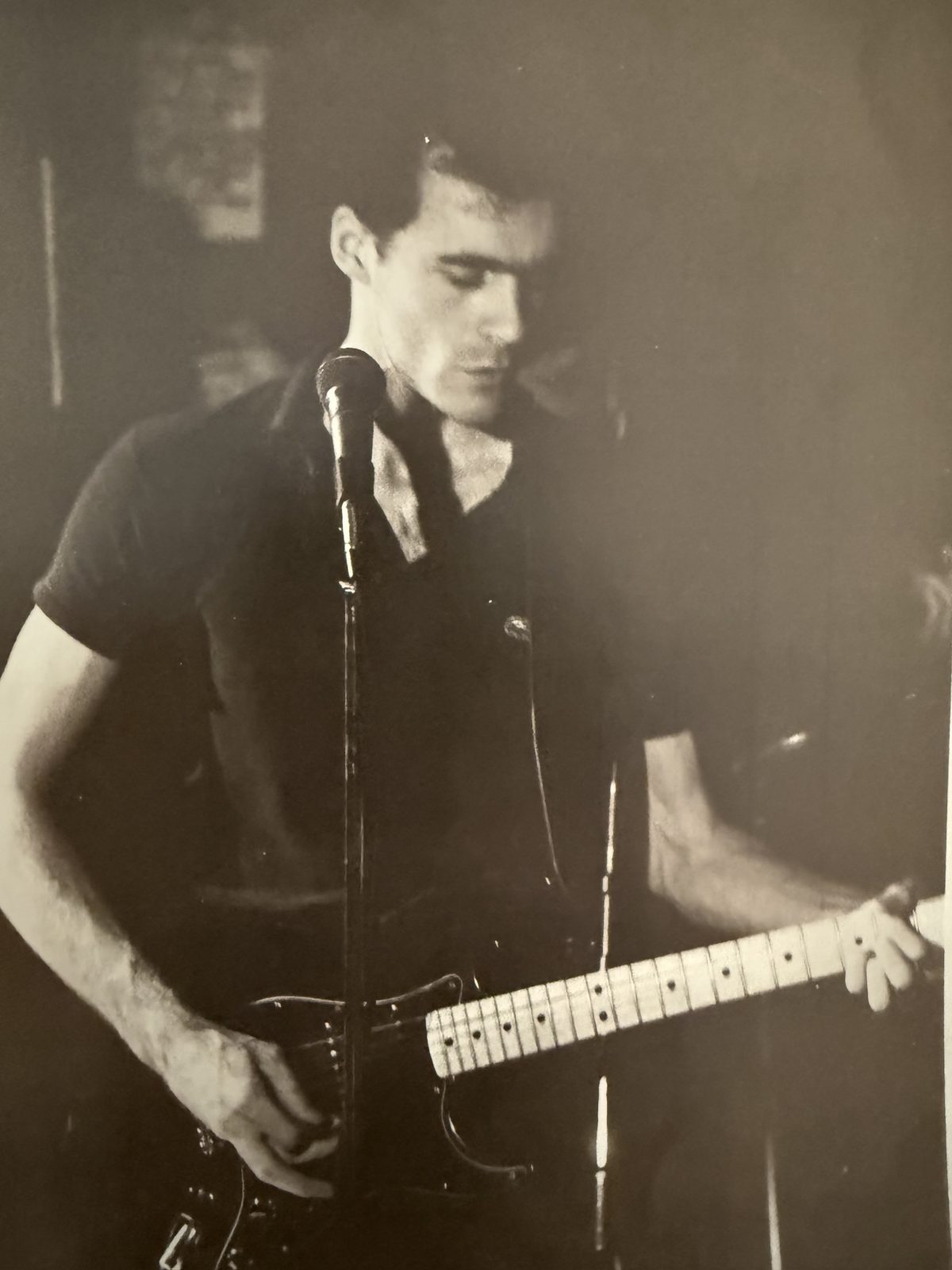
In many ways, your new album takes us through your own biography and the stages of your career, so I wanted to start off at the beginning. What first drew you to music? Growing up in Scotland, I had a really good music education. I was involved in the Presbyterian church, where there was traditional choir singing and also more modern choral music. We did Joseph and the Amazing Technicolor Dreamcoat, and I sang the lead in that. I also played the bagpipes, and I had very good classical music education in school. I played in the school orchestra. They couldn’t afford the French horn, so I played the tenor flat E horn, which is [in] the same range but a much cheaper version. So I was very used to performing, and that morphed into getting interested in pop music. The Beatles are maybe the largest single influence on me, particularly John Lennon’s very unusual approach to harmony singing where he would find a certain interval in the harmony and then he would follow Paul up and down on that interval. So I developed that same kind of thing. When I was singing in the church, I would be the one doing the weird harmonies, and the choral director would be like, “What’s that?” But I was sort of searching for another way of approaching the harmonies.
And then I was studying Chinese poetry in school and also looking at art happenings in New York in the art world, dance world, architecture, just yearning to be in America, yearning to be in a kind of Hollywood idea of what was going on in America, which was illustrated by the fact when I arrived in America at 15, I had a crew cut, and everyone in my high school had hair down to their shoulders. So I thought everyone had a crew cut in America, because I was watching Hollywood movies from the fifties and sixties. And then when I arrived, I got shot into the wild scene in New York, going up there to visit in high school and then becoming a member of that community.
Right, you ended up in the New York poetry scene, where you studied with Larry Fagin and Allen Ginsberg. So how did you come to know Fagin and Ginsberg, and how did this then introduce you to Arthur Russell? Yeah, this was an interesting twist of fate. There was a very forward-looking head of the education department in Wilmington, Delaware, who had read the poets in New York and was very keyed into what was happening in New York. He got a grant to bring writers down from New York to give readings and to teach workshops in creative writing. So the poet Kenneth Koch was the one who came down. I had read his books and was very interested in what he was doing, so I met the administrator, and he got me involved in the creative writing workshop and meeting all these poets.
So I was in this creative writing workshop, which was to train established writers in Delaware to teach creative writing as a way of making extra income. I was the only high school student. The others were already professional writers. And then I was teaching creative writing to elementary and high school kids. The poets that came down to visit included Anne Waldman and Larry Fagin, and Larry Fagin was the one that I really connected with. I would go up on the weekends, take the train up to New York, and stay with him in the now-famous poet building. At that time, it was just a place where it was very inexpensive to live.
So going up to visit in high school, I became much more immersed in the scene there around St. Mark’s Church, the Poetry Project, which was only a couple of blocks from the poets building. And in that building, Arthur Russell was on the top floor with the poet John Godfrey. Then there was Richard Hell from the band Television; Rene Ricard, the Andy Warhol superstar and art critic, who I dated briefly; Bob Rosenthal, the poet, and his wife, Shelley Kraut, the poetess; and Allen Ginsberg and Larry Fagin. Allen was on the floor above where I was staying with Larry Fagin. So this was my group of friends.
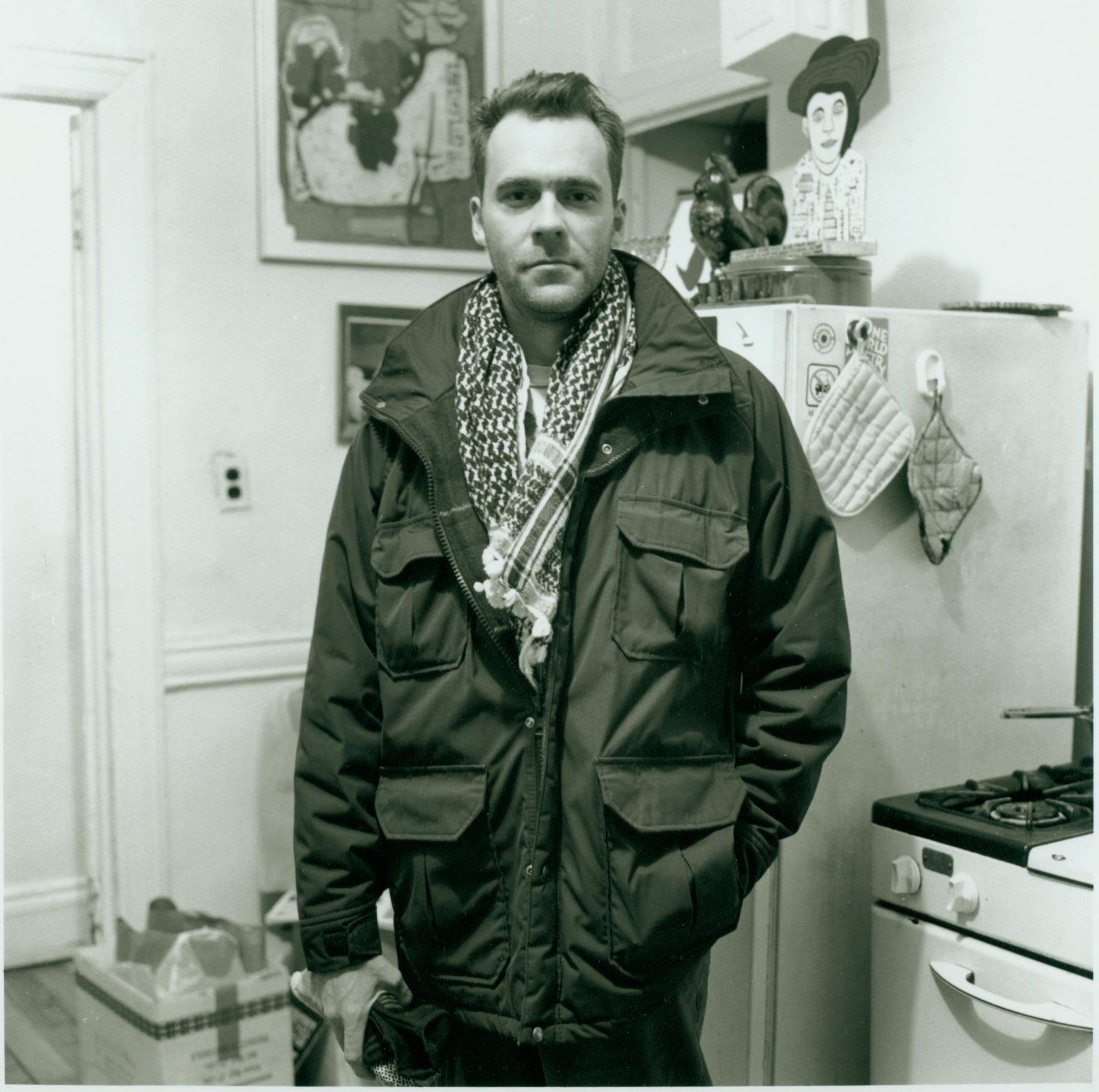
So you became a close collaborator of Arthur Russell, and Arthur was a devout Buddhist practitioner, and you say that he actually taught Allen Ginsberg a lot of what he knew about Buddhism. So can you tell us about Arthur’s Buddhism and how it influenced your own practice, as well as the work you created together? I think of all the teachers I’ve met, and I include my friend Arthur as a teacher, Arthur was the most fully realized in terms of his practice. We were very conscious of incorporating these ideas in our work, but not in any way to preach, not even to be overtly political in the way that Allen was, although we respected that, but to be more subtle in our approach so that it would be manifest in our process as much as our product.
Arthur would sit every day and discuss these matters with Allen. He was maybe the most realized person I’ve seen in terms of the way that he would treat people. He was a bit of a taskmaster sometimes in the studio in terms of what he wanted, but that was only because he had a very particular vision of what he was looking for, and the parameters of the freedom he afforded were not infinite because he picked people who he knew could focus in a certain area that he was interested in musically and also were compatible with his beliefs. So there was a general feeling of being respectful of the privilege we had in terms of what we were doing, the freedom we had, and also the fellowship that we were experiencing while doing that as well.
Together you developed the genre of Buddhist pop. So can you talk about the genesis of Buddhist pop? How were you thinking about it as a genre, if you were? I don’t think we were really thinking in those terms. I think we were doing, but not really thinking. I think those attributes came afterward, and I don’t really know where the phrase came from. It sounds like the kind of thing that Allen would’ve said.
Well, Arthur used the term “Buddhist bubblegum.” Yeah, bubblegum means silly and fun. It’s like really silly music that’s just fun to listen to and easy to remember and easy to sing. So there’s that aspect in my music particularly, which Arthur encouraged. We only wrote two songs together, and the one that he finished, “Lost in Thought,” for the first part of it I was saying “broken” over and over again, and then I was saying “lost in thought” over and over again, and I said, “This is boring. I don’t think I’ll finish this.” And Arthur said, “No, it’s really pretty.” I said, “That’s why I don’t want to finish it. I want to do something that has more weight.” And he said, “No, you’re good at that. So just do it.”
So this idea of just giving permission as a teaching tool and then applying that in the studio when you’re with a group of people who don’t necessarily know what’s going on or are kind of lost. But here was Arthur giving permission, saying that’s okay, let’s explore that, and then giving musical parameters for that. But then it’s just having a party and having fun with it, really exploring where it might go.
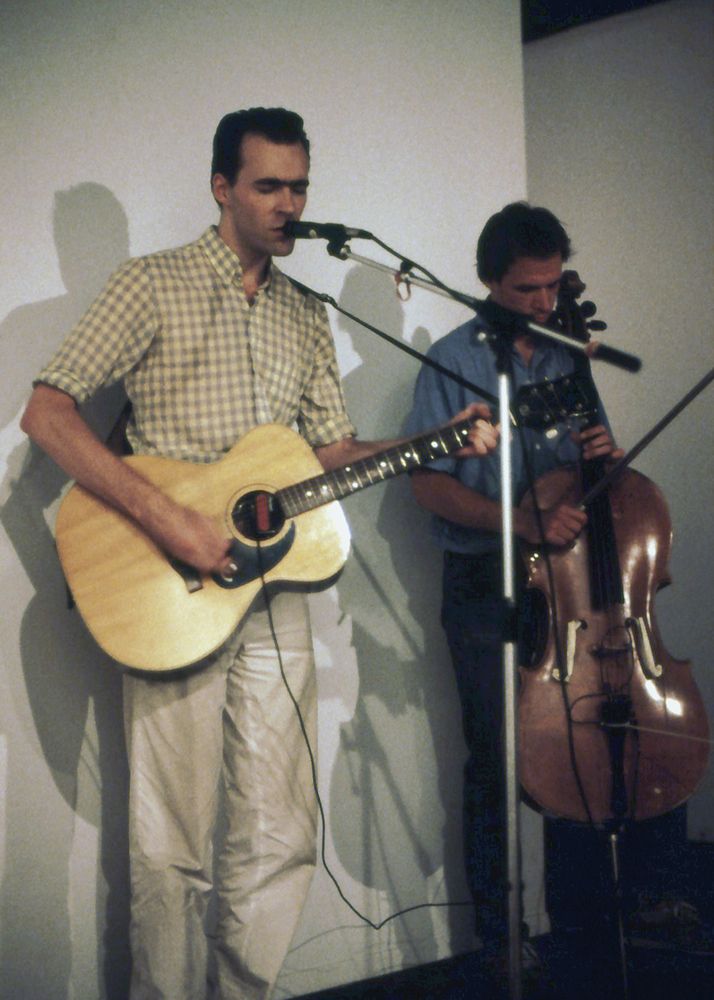
I wanted to ask you specifically about the two tracks at the center of My Skyscraper, “FRESH FEELING” and “SPECIAL WEAKNESS.” So what was the process of creating these tracks, and how did you and Arthur approach improvisation? That came basically out of our daily rehearsal because Arthur was trying to learn the drums and practicing a lot every day. So we would just get together and just play. At that time I was writing two-word poems on three-by-five cards. And I did a whole book, which Dennis Cooper was going to publish. It was alternating two-word poems with five lines. So I had these cards with phrases on them, and I was just shuffling them, literally shuffling them like a pack of cards.
So the idea was we were not going to do it on multi-track, because that meant we could not edit it. So we had to totally be there. And also once we started, we were not to stop once I got going. So we did a couple of false starts. I think maybe the engineer wasn’t ready. But once we got started, we were not to stop. And also he didn’t know what I was going to do next. So it’s just amazing when you listen to it that he is anticipating what I’m doing in like a microsecond, that if I make a sudden change in the cards he’s right behind me or almost right in front of me.
So the idea was there were certain sections I was going to sing, but I didn’t know what the order was. And of course if I didn’t know what I was going to do, he didn’t know either. And he was fine with that. So once we got a basic soundcheck, we only did it once. It was live to two-track and I just had it transferred from the two-track last year, because no one had basically heard it now since then. And that was it. There was nothing else. And when it was finished, we weren’t going to do it again. So it’s ironic to be performing these songs again after forty years, and the question comes up, is it a historical document of that time? Should I reproduce it? Should I sing it exactly as it was? How do I balance the two? So one idea is to write a completely new one based on how I feel today, which could be an interesting complement to the other ones.
So I was writing what I thought were so-called pop songs at that time, or dance songs, and I saw those as separate from the so-called poetry I was writing. So at that point, I would’ve made the distinction. I think now I wouldn’t make that distinction. I published a couple of books of poetry, and when I look at those now, I think, well, I could set that to music. At that time, I wouldn’t have thought about that. I thought the poetry was separate from the so-called lyrics. And also as I got older, I’ve garnered more respect for pop music as an idiom and also disco music, which used to be disparaged when it first appeared.
When I went to Hong Kong and I worked with some DJs and young musicians in Hong Kong, they treated me like royalty because I had worked with Arthur Russell. Steve D’Acquisto, who was one of the producers of Arthur’s disco hits, had this idea that Arthur was like Mozart or Beethoven and that we really had to think of it in those terms. So when I got to Hong Kong, these people were treating disco music as if it were 18th-century choral music or some other type of classical music. And that was a revelation to me because I thought it was dance music, but they had collected different versions of mixes. They had studied the history of who was working with whom. And they really saw it as a very serious form of music, which I hadn’t really considered at that point. So it’s interesting to think about that now.
This excerpt has been edited for length and clarity.

Thank you for subscribing to Tricycle! As a nonprofit, we depend on readers like you to keep Buddhist teachings and practices widely available.