In 12th-century Korea, Buddhist monks who passed the state examinations could expect appointment to a high monastic office, with royal patronage, political clout, and control of considerable wealth and resources. For the young monk Jinul (1158–1210, also spelled Chinul), watching his peers jostle for these perks, the situation was clear: This wasn’t the Way.
Rather than reform the system, Jinul disappeared into the mountains of southern Korea. He devoted himself to meditation and study, developing a model of practice—sudden awakening followed by gradual cultivation—that would set Korean Buddhism on a new trajectory. Combining the doctrinal rigor of the Huayan tradition with the meditative focus of Chan, he insisted that intellectual understanding and lived realization were a single path. This synthesis of study and practice has remained central to Korean monastic training, a balance not always reflected in Western presentations of the tradition.
Jinul’s influence continues at Songgwang-sa, the monastery he founded. Robert E. Buswell, Jr., who arrived there as a young American monk in the 1970s, encountered Jinul’s living presence, which shaped daily monastic life. After being ordained in Thailand and studying in Hong Kong, Buswell made his way to Korea, a decision that shaped his life’s work. In this conversation, Buswell—a distinguished professor emeritus of Buddhist studies at UCLA—explains why Jinul matters, what he was trying to recover, and what his long view of practice might teach us today.
You were ordained in Asia and had already studied Buddhism. How did you end up in Korea? I knew nothing about Korea or the Korean language. Fortunately, there was a dharma circuit in Asia at the time, and people from all over were traveling around to study Buddhism. I learned that a Seon (Zen) master, Kusan Suryeon (1909–1983), was willing to host Westerners. So I traveled to Korea and arrived just before the winter retreat.
Did Kusan speak English? No, but he could write classical Chinese, and I could too. We had what are called brush conversations, where you write back and forth in Chinese characters. A couple of Westerners had arrived before me who could speak a little Korean. So we had some modicum of communication.
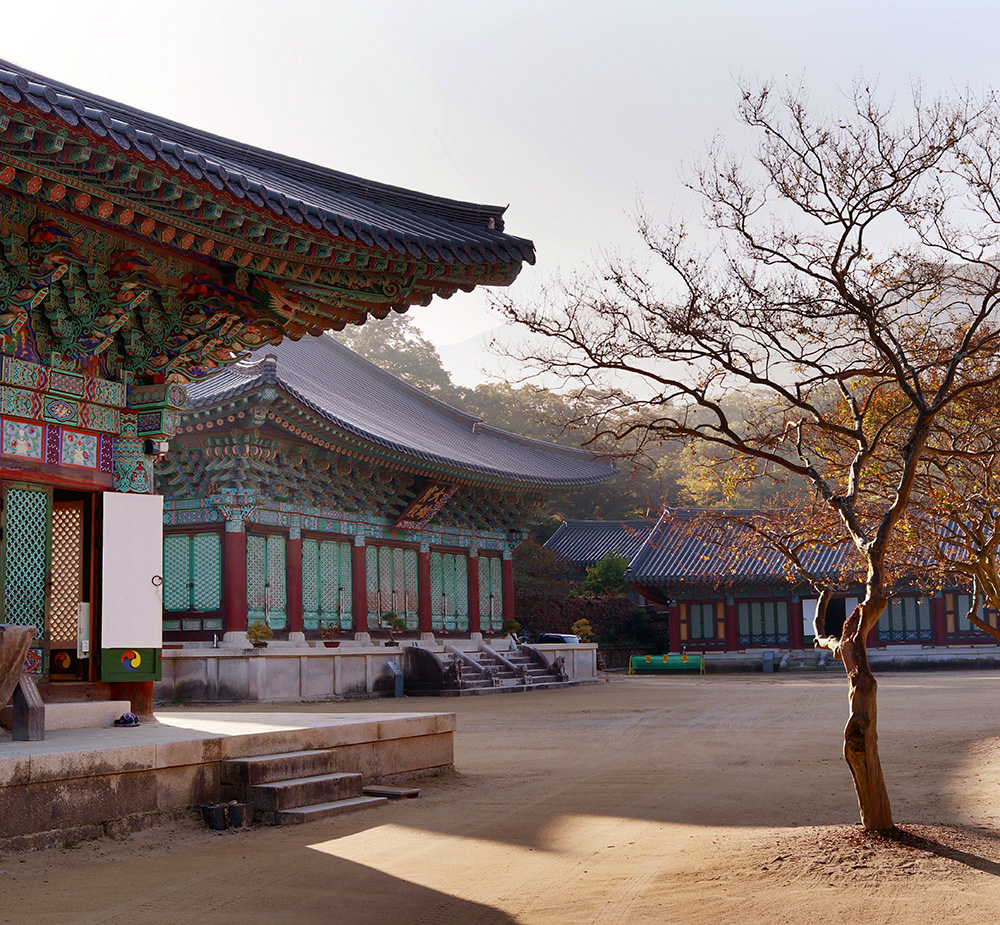
After the three-month winter retreat, I decided to stay. I could read Korean Buddhist texts written in classical Chinese, and I began studying Korean. And lo and behold, the monastery where I ended up, Songgwang-sa, was one of Korea’s most famous monasteries, founded by Jinul at the end of the 12th century.
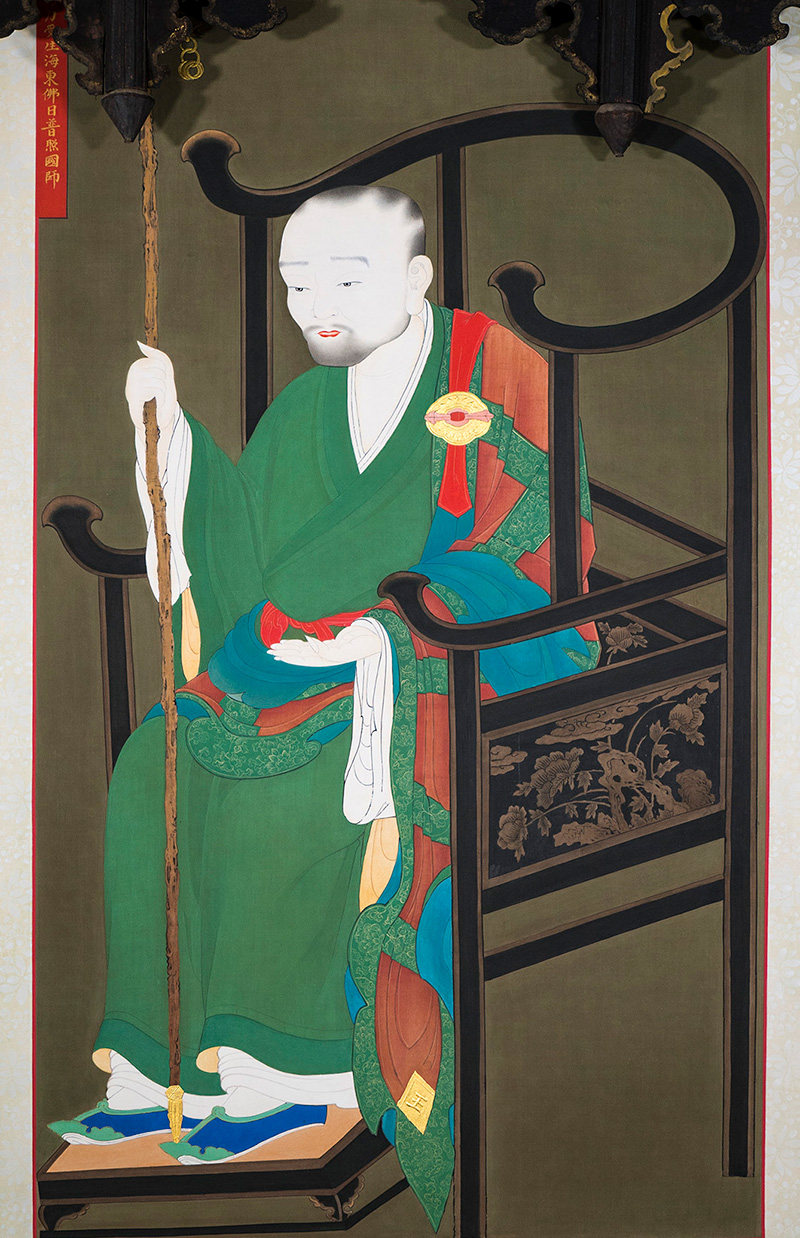
Jinul is a palpable presence there. His funerary stupa, reliquary, and biographical stele are on a knoll above the monastery, overlooking the grounds. His portrait hangs in the state preceptors’ hall, next to the main meditation hall, and the teacher always referred to him in dharma talks. So I started reading Jinul.
Before we talk more about Jinul, why is Korea important within East Asian Buddhism? Korea is centrally located between Japan and China, and Koreans were well-known for their seafaring. In one of my books, I refer to them as the Phoenicians of East Asia. They were the main conduit for the transmission of goods and information across the region.
When Buddhism reached China, Koreans were involved very early on. By at least the 4th century, Buddhism had been officially introduced through state-to-state transmission from China. But there were already Buddhists in Korea around the same time Buddhism was entering China.
I would say that Jinul was the most important figure in the history of Korean Buddhism, not just one of the most important.
During the Japanese colonial period, when Japan occupied Korea from 1910 to 1945, Japanese scholars dismissively described Korea as a cultural bridge between China and Japan, without creative value of its own. But Korea was not just a bridge—it was central in developing a shared East Asian tradition. And Koreans were involved in Japanese and Chinese traditions from their inception.
Many Korean monks were early leaders in the Chinese Buddhist schools, including Chan and Huayan, an early scholastic tradition founded on the Avatamsaka Sutra. Korean monks were also the first Buddhist advisors to the Japanese court, serving an important political role and bringing the full panoply of Sinitic and Korean knowledge, including classical Chinese, spiritual technologies, and material culture. They weren’t just transmitting these to Japan. They were shaping how culture and Buddhism would develop there.
At the same time, Korean Buddhists were forming their own tradition. When you think about this region, it isn’t that you have Chinese Buddhism here, Korean Buddhism here, and Japanese Buddhism over there; you have one broader tradition of Buddhists talking to each other, which creates something more than the sum of its parts. Jinul addressed many issues of his time relevant across this broader tradition.
In the context of Korean Buddhism, why do you regard Jinul as one of the most important figures? I would say that Jinul was the most important figure in the history of Korean Buddhism, not just one of the most important. It’s his vision for how to think about and practice Buddhism that sets the stage for everything that follows.
Before Jinul, Korean Buddhism had a sharp demarcation between the Gyo, or doctrinal, schools and the Seon, or meditation, schools. The Gyo schools—such as Hwaeom (Huayan) and Beopsang (Yogacara)—emphasized scriptural study, philosophy, and ethics. The Seon schools, known as the Nine Mountain Schools, emphasized direct realization through meditation and Chan transmission lineages. Both traditions and a state fiat rigidly demarcated these. Monks were ordained in either Gyo or Seon and had to take separate examinations in the capital to advance.
Jinul explicitly states early in his career that the Buddha’s mind and words shouldn’t be two different things—that the mind-to-mind transmission, which the meditation schools claim to offer, goes back to the Buddha himself and is identical to his experience of enlightenment described in the scriptures.
In which tradition did Jinul ordain? He was ordained into one of the Seon lineages, but he never seems to have been close to a teacher. Chan and Seon imagine themselves as a tradition of transmission from teacher to student across generations, but Jinul never benefited from that. So where does he get his understanding? He gets it from reading texts.
The first text that catalyzes Jinul’s understanding is the Platform Sutra of Chan’s Sixth Patriarch. He reads a passage about the self-nature of suchness, which gives rise to thoughts yet remains untainted by the things that arise. This prompts his first awakening.
Later, Jinul becomes increasingly concerned with the split between the Seon and Gyo schools. He is certain the Seon approach can be confirmed in the sutras. After consulting with Hwaeom exegetes and studying the canon for three years, he discovers a passage in the Avatamsaka Sutra that states the wisdom of the tathagatas is complete in all beings. He then reads a commentary by the eccentric lay exegete Li Tongxuan (635–730), which shows him that the Buddha’s mind and words are not two different things—that the way the Buddha describes enlightenment in scripture and the way Seon seeks to catalyze it are identical. This is his second major awakening.
Jinul’s third experience comes later in life from reading newly composed materials brought from China—likely at his own request, as monks often contracted to import major new texts. Reading the writings of Chan teacher Dahui Zonggao (1089–1163), Jinul says, “I felt like there had been a weight crushing my chest all this time. It’s finally been lifted.” Dahui developed a new meditation practice called kanhua Chan, or investigating meditative topics, which is similar to koan practice in Japan but focuses on a koan’s critical issue. Again, this awakening came through reading.
Jinul’s vision of practice is formed through these three experiences. He envisions rigorous doctrinal study grounded in intellectual understanding, driven especially by the Hwaeom vision of the complete and perfect interpenetration of all things, which becomes the doctrinal basis of Korean Buddhism. With this grounding, he focuses on meditation practice, especially Dahui’s kanhua technique. Jinul was the first in Korea to recognize its value, which thereafter became the foundation of Korean Buddhist practice. Jinul initiates a continued focus on doctrine and practice—Gyo and Seon.
Many Koreans would argue that the 7th-century scholar-monk Wonhyo, with his unique enlightenment story, was the most critical figure in Korean Buddhism. It’s hard not to find intriguing a monk who supposedly gets enlightened by drinking water from a ladle one night, only to discover the next morning he actually drank offal rotting in a skull! Wonhyo’s iconoclasm and antinomianism always attract attention. He was a great scholar and prolific commentator who wrote on almost every Buddhist text being brought into Korea, and he played a seminal role in embedding Buddhism in the Korean worldview. But if you look at what he writes, he’s all over the map. He isn’t trying to set an agenda for what Korean Buddhism would become. He’s appreciated for attempting to harmonize the disparate elements of Buddhism, and this ecumenical approach has become an important characteristic of the Korean tradition. But Jinul builds on this harmonization to shape the doctrines and practices we find in Korea today.
Is Jinul’s model of training the reason prominent Korean monastics have always been so learned? Exactly. Before they enter the meditation hall, monks are expected to undertake seminary work and study literary Sinitic, the lingua franca of Korea well into the modern era. After you finish postulancy and serve in a monastery for a few years, you go to a seminary. Before they begin their Seon training, monks are grounded in the theory underlying the practice, potential obstacles, techniques for overcoming them, and how the practice will unfold. Their practices are first framed by training in Buddhist doctrine. Only after that do they start intensive meditation.
We have this image of iconoclastic masters burning buddha images and beating students. But throughout history, Zen masters have often been the most learned men in the tradition. This is why, among the different schools of East Asian Buddhism, the meditation schools have the largest body of literature. That doesn’t come from illiterate country bumpkins spouting antinomian nonsense. These are extremely erudite men, trained in a specific literary style, who communicate across time and borders through a shared literary language. The image we have of Zen masters doesn’t always reflect reality on the ground.
Jinul may not have been antinomian, but he was critical of the state of Korean Buddhism. At that time, Korea was a solidly Buddhist kingdom, and Buddhism was at the core of intellectual life. When Jinul goes to the capital to take his monastic examinations, he realizes the monks are all pursuing wealth and fame. They want royal support and monastic clout, which means political clout. The court would appoint senior monks who passed the examinations to higher offices, including royal and state preceptors. Jinul looks at the situation and realizes this is not what he signed up for. He didn’t become a monk to gain a higher office or to accumulate wealth, prestige, and connections. He became a monk to become enlightened.
Jinul and a few like-minded friends drafted the Compact of the Samadhi and Prajna Society, an agreement to establish a retreat society devoted to developing concentration and wisdom, and leave the capital. Jinul doesn’t stay to reform the institution. Instead, he seeks to restore what he believes is a more authentic form of Buddhist life. He walks away and goes to a remote area of the southern Korean peninsula. He goes into the mountains and begins to practice, built around two pillars: reading scriptures and practicing Seon.
Eventually, Jinul relocates to a small dilapidated monastery that he builds into Songgwang-sa, where he spends the rest of his life.
Is his disillusionment with the sangha why he didn’t have a teacher? I hadn’t thought about that. There’s no evidence that’s the case, but it wouldn’t surprise me. At this time, the Nine Mountain Schools of Seon, the vestiges of the original Chan schools that came to Korea in the 8th and 9th centuries, are in decline. They’re surviving, but not much is going on. That’s why Jinul is so important: He rebuilds the Seon tradition, but on a very different foundation. We don’t know exactly why he didn’t have much contact with a teacher, but he seems to have been something of a recluse. After leaving the capital and before moving to Songgwang-sa, he spent most of his time in small, extremely isolated mountain hermitages.
I visited one of these hermitages, Sangmuju-am, where he had his third awakening. Man, what a place to get to. You follow a path of loose granite at what seemed like an eighty-degree angle straight up a mountain. It’s a grind to get up there, and it’s so isolated. Jinul was definitely not interested in being at the center of court life.
So Jinul walks away rather than trying to reform the sangha. What was he trying to build instead? He wanted to build from the bottom up and develop a new way of life that wouldn’t be just for monks. The retreat society he and his dharma friends founded also included laypeople. It wasn’t just for monastics, and it wasn’t just Seon. Jinul essentially stepped out of the institution and let it go its own way. If people wanted to pursue that way, fine—but he wanted something different, far from the capital. Songgwang-sa was about as far away as you could get.
Jinul doesn’t stay to reform the institution. Instead, he seeks to restore what he believes is a more authentic form of Buddhist life.
Jinul is known for teaching sudden awakening and gradual cultivation. Is this primarily a doctrinal position, or does it respond to practical concerns about how people practice? It’s both. His model of religious development is grounded in an initial sudden awakening to the true nature of the mind, or buddha-nature. That must be the foundation of practice. But just because you now know you’re inherently a buddha doesn’t mean you can act like a buddha. You still have habitual tendencies, created over many lifetimes, that occasionally intrude. You have to learn not just to be a buddha but to act like a buddha. And this requires gradual cultivation, perhaps even over many lifetimes. As you perfect that cultivation, you have a final realization in which your understanding that you’re a buddha and your practice of acting like a buddha have become one.
The Avatamsaka Sutra presents a similar model: initial awakening followed by cultivation across fifty-two stages. The sutra follows a boy named Sudhana on his pilgrimage to visit fifty-three teachers—the first and last are the same. His spiritual journey ends exactly where it begins, suggesting that the moment you begin to practice by activating the aspiration for enlightenment is also the moment you complete it.
Jinul recognizes there are other valid approaches to Buddhist training, but he is convinced this model is best suited to the vast majority of practitioners. It helps bring together the two discrete monastic strands, Gyo and Seon.
There’s an urgency to bring intellectual understanding into lived reality to reach complete awakening. It does seem that way. We in the West have a narrow way of thinking about awakening. The term—wu in Chinese, satori in Japanese—is polysemic. It can mean a simple Aha, I get it! or a knock-your-socks-off Zen moment, and everything in between. This expansive vision of awakening has a long pedigree in Chan and dates to the earliest stratum of Buddhist scriptural materials. In Korean Buddhism, following Jinul, there are two distinct types: an initial “understanding-awakening,” where you clearly understand that you are, and always have been, a buddha; and a culminating “realization-awakening,” where knowledge and actions become seamless. The first can come from reading texts, hearing a dharma talk, or witnessing impermanence. Once you recognize these different valences, it changes how you read Zen texts—when a monk “heard what the master said and had a great awakening,” it often means the explanation clarified his understanding of Buddhism. Jinul’s awakenings all came from reading. In his schema, the initial sudden awakening means that you understand you’re a buddha, but you still have to learn how to put that understanding into practice in all your actions.
Jinul compares this to an infant born with all its faculties: It may be fully human at birth, but it takes time to mature and realize its potential. The same with knowing you’re a buddha. That understanding must be grounded in practice and brought into realization, and that’s a long road. There will be times when you get frustrated and lose hope. But knowing at the very beginning—“I’m a buddha right here, right now”—that faith means accepting that your true nature is already enlightened. You only need to let go of the mistaken belief that you’re a deluded sentient being and allow the enlightenment to be made manifest.
The knowledge you gain from studying can be helpful in framing your experience, so you know what to expect. You’ll know the pitfalls and obstacles, as well as how to overcome them. Such knowledge can help in difficult times. That’s why exposure to Buddhist materials, scriptures, and doctrine is important. It helps frame what you’re trying to do and what you hope to get from practice. Over the long term, the sangha is also critical. Your dharma friends help you stay grounded and support you through periods of spiritual crisis.
You’ve worked so closely with Jinul over the years. What have you learned about what it means to live a meaningful life? A question that animated my early exploration of Buddhism was, How do you live without exploiting other people? Buddhism offers many ways to look at this, including not only explanations about how to think about the question but also concrete steps you could take to put those explanations into practice. Early on, I was curious about how to reconcile study and practice to that end. When I got to Korea and learned that Jinul was trying to do just that, it was exactly what I’d been looking for. Someone once asked if I was Jinul’s reincarnation. If I am, he didn’t practice very well! [laughs] But I certainly have deep affinities with him.
The broader issue Buddhism—and Jinul—raises is self-reliance. Jinul never had a teacher to rely on. Instead, his understanding developed through studying and practicing with like-minded dharma friends in his retreat society. His message, I think, is that we need to find out for ourselves what Buddhism is, what the practice entails, and where it’s designed to lead us. We’ll find affinities with some approaches but not with others—genuine practice is a constant process of experimentation and being honest with ourselves. It’s important to have an open mind as we examine different accounts and see what works. What makes sense to some may not to others, but it may be what is most valuable for us as practitioners. You have to find your own way.
I received much the same lesson early on. When I was a young monk in Thailand, I was very impressionable and had a lot of faith. I just wanted to find someone to teach me what to do. I spent time at a Thai forest monastery, Wat Pa Baan Taad, led by the meditation master Phra Ajaan Maha Bua Nanasampanno (1913–2011). When I first arrived, I hadn’t had a chance to speak with the master even after a week, but I finally arranged an audience. I asked for guidance on what I should do—I promised I’d work hard to put what he told me into practice. He gave me this quizzical look and said, “How can you expect what works for me to work for you? You must find your own way by watching yourself.”
Sudden Awakening Must Be Followed by Gradual Cultivation
By Jinul, translated by Robert E Buswell, Jr.

There are many approaches to accessing the path, but they all fall under the twofold approach of sudden awakening followed by gradual cultivation. This twofold approach is the track followed by the thousands of sages. Hence, none of the sages of old did not first have an awakening, subsequently cultivate it, and, as a result of that cultivation, finally gain full realization.
Let us first consider “sudden awakening.” When the ordinary person is deluded, he assumes that the four great elements are his body, and that his deluded thoughts are his mind. He does not know that his own nature is the true dharma-body; he does not know that his own numinous awareness, his sentience, is the true Buddha. As he wanders hither and thither, looking for the Buddha outside his mind, a spiritual mentor might direct him to the entrance to the road leading to salvation. If in one moment of thought, he then follows back the light of his mind to its source and sees his own original nature, he will discover that the ground of this nature is innately free of afflictions, and that he himself is originally endowed with the nature of wisdom that is free from the contaminants, which is not a hair’s breadth different from that of all the buddhas. Hence, it is called sudden awakening.
Next, let us consider “gradual cultivation.” Although he has awakened to the fact that his original nature is no different from that of the buddhas, the beginningless proclivities of habit are extremely difficult to remove suddenly. For this reason, he must continue to cultivate while relying on this awakening. Through this gradual process of suffusion, his practice will be perfected. He constantly nurtures the embryo of sanctity, and after a long, long time, he becomes a sage. This is why it is called gradual cultivation. It is like the maturation of an infant: From the moment it is born, that child is endowed with all its faculties, just like any other human being, but its physical capacities are not yet fully developed; only after the passage of many months and years will it finally mature into an adult.
Adapted from Tracing Back the Radiance: Chinul’s Korean Way of Zen by Robert E. Buswell, Jr. © 1983/1991 by University of Hawai‘i Press. Reprinted with permission.

Thank you for subscribing to Tricycle! As a nonprofit, we depend on readers like you to keep Buddhist teachings and practices widely available.