As a novelist and Zen Buddhist priest, Ruth Ozeki has long looked to fiction as a way to investigate suffering and the nature of the self. Now, with The Typing Lady: And Other Fictions, she turns her attention to the form of the short story and the unique possibilities it opens up. With characteristic humor and grace, Ozeki presents eleven vividly imagined stories that examine thresholds, in-between states, and the fluidity of the self. In one story, a couple watches their fading ambitions roam the woods as ghosts; in another, an aging writer enlists her granddaughter to fake her death as a way of getting out of an upcoming book tour. Taken as a whole, the collection offers a poignant meditation on memory, longing, loss, and the clarity that comes with old age.
In a recent episode of Tricycle Talks, Tricycle’s editor-in-chief, James Shaheen, sat down with Ozeki to discuss what drew her to short fiction, how the Buddhist teaching of not-self informs her writing, how writing short stories can be an act of surrender, and the lessons she learned from caring for her mother in the final years of her life.
To start, can you tell us a bit about the book and what inspired you to write it? Sure, this is my first collection of short stories. Most people start their careers with short stories and then move on to greater things, but I seem to be diminishing, going in the opposite direction. The truth is that I’ve been writing short fiction for years and have had stories published here and there, but I’d never really concentrated on the form. It was just something I did when asked to contribute, say, to an anthology, or a journal or magazine. But when I started teaching creative writing, the focus was on short fiction, and I realized that if I was going to teach this form, I ought to try to master it, or at least learn more about it. I started writing more short stories, and, little by little, I started to appreciate the form. I tend to be quite verbose, and my novels are long, but over the years, my attention span has been decreasing, and I’ve noticed this in my friends and students as well. So it seemed timely to try to look at the way I write and see if there were a way of writing differently. I have to say, I loved it, and the collection grew from there. At this point in my career, it’s thrilling to have a debut of anything, although I am still writing novels.
You know, I find writing short more difficult. So how is the process different from your usual writing process when you write a novel? I find writing short challenging in some ways but more manageable in others. When I am working on a novel, I usually start with a character or a voice, some sense of a situation, and then I just write into the void. I never know exactly where I’m going. It’s often a multiyear process of not knowing, and that’s both exciting and nerve-racking. I never really plan too far in advance, and so, as a result, writing a novel is more exploratory.
When I’m writing a short story, I tend to get a better sense of where I’m heading more quickly. I have a sense of the scope or the scale of the story, and so the writing tends to be more compressed, more direct. Also, I love the editorial process. The first draft of anything is always so difficult, but once I get a draft done and can start to refine, that’s when I get excited, and the work gets fun. With short fiction, I can spend more time editing and refining the prose. I really like that.
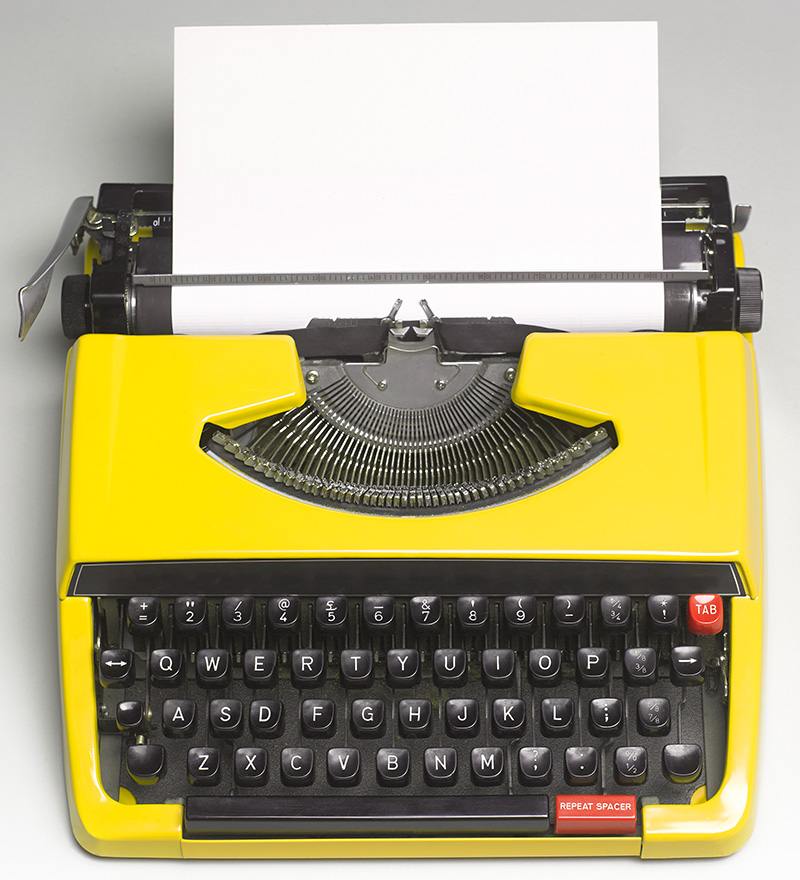
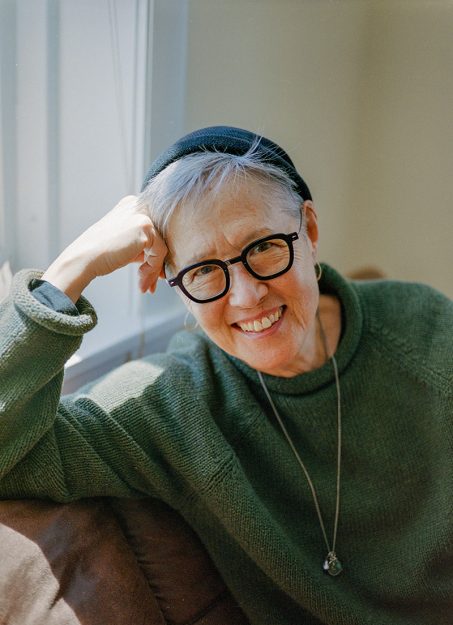
The book takes its title from a character in the first story called the typing lady, who also happens to be in your last book, The Book of Form and Emptiness. So can you tell us a bit about the typing lady? Sure. In The Book of Form and Emptiness, the typing lady is a minor character. She sits in a carrel in the library where the protagonist, Benny, hangs out. She’s always there, she always has her laptop and a big stack of books around her, and she’s always typing. That’s what she does: She observes what’s going on around her, and she types. She’s in her 60s, looks vaguely Asian, has gray-streaked hair and black-rimmed glasses. Astute readers have picked up on the fact that she resembles me, and of course this isn’t accidental. The typing lady is doing what I do: watching the characters, recording their movements, and trying very hard not to interfere in their lives. That’s pretty much the job of the writer too. I watch the characters, observe their quirks, write down what they do, and try very hard not to mess too much with their volition. When I was writing The Book of Form and Emptiness, this quasi-autobiographical typing lady amused me—like Hitchcock appearing in his films—and so when I started writing the collection, I thought it would be fun to resurrect her. In a way, all the stories in the collection are written by the semiautobiographical figure called the typing lady, and that was where the title came from.
Right, there’s a doubling that’s happening here, where the typing lady shares many characteristics with you. In fact, there’s a funny moment when the narrator of the first story asks a librarian if he’s seen the typing lady, and the librarian looks at her with some confusion, as she’s just described herself. So can you say more about this multiplicity and how you’re playing with the slipperiness of identity here? There’s a wonderful French term from theater and literature and painting, mise en abyme, which means “placed in the abyss.” It describes the recursive effect of a play within a play, or a painting containing identical, smaller replicas of itself, creating an infinitely repeating structure that you fall into and that never ends. I don’t know if you remember the Droste Cocoa box? It had a picture of a Dutch woman holding a tray with a box of Droste Cocoa on it, which had a picture of a Dutch woman holding a tray with a box of Droste Cocoa, which—
Right, an infinite mirror. Infinite regression, exactly. When I was a child, this just confounded me. I found it unfathomable and terribly mysterious. I’ve always been attracted to mirroring as a structure. It destabilizes the identity of the work by drawing attention to its own artifice. This is what the autofictional typing lady character is doing.
In Buddhism we talk about not-self, and this is a teaching that has always made a lot of intuitive sense to me. There are many reasons for this, and I certainly think being biracial has something to do with it. My mother is Japanese, my father is Caucasian American, and growing up, I never really understood which I was, because I wasn’t either. I wasn’t one or the other, and I always saw the world from these different points of view. This is why writing from a singular point of view never really made a lot of sense to me. All of my books are written from multiple points of view. I’ve never managed to master the omniscient third-person, godlike narrator of the great classical novels, and I always felt this to be a deficiency on my part. But then, once I started practicing Buddhism and fully embraced my nontheistic self, I was able to let go of that a little bit.
So this idea of not-self, of fluid self emerging in relationship to other, makes a kind of intuitive sense to me, and when I’m writing, I feel like all of my fictional characters are in some way or another aspects of this collection of experiences and relationships that I experience as self, this entity that I call “me.” There is no one fixed, abiding self; there are only these reflections that show up depending on the situation that is arising in the moment, be that a fictional situation or a real situation. Or maybe there’s no difference between a fictional and a real situation.
There is no one fixed, abiding self; there are only these reflections that show up depending on the situation that is arising in the moment, be that a fictional situation or a real situation. Or maybe there’s no difference between a fictional and a real situation.
You also address how stories take on new lives with each reading, and you describe stories as collaborations or cocreations. So how do you think about stories in this way? Language is a slippery thing, as we know, and as the Zen masters have been very careful to point out over the centuries. We think we’re saying one thing, and we assume our words will be understood as we intend them to be, but they rarely are. Dharma teachers know this. You think you’re teaching one thing, but it’s being received differently by every person who hears it.
When I’m writing, I think I know what my story is, and I write it and send it out into the world, assuming that readers will read the story I wrote. But they don’t. They’re reading something completely different, and the reason, of course, is that they’re bringing their own life experience to the page. What they’re reading is actually something that that reader and I cocreated, and it’s entirely unique and entirely original, and it’s different from anything that any other reader reads. And that’s why fiction works. That’s why stories work, because they engage readers in this cocreative process.
I remember in A Tale for the Time Being, I was playing with quantum theory, and I started to think of books as a kind of quantum metaphor: that books are like light; that light can exist simultaneously as a single particle or as a wave, and so can books. It’s not an either/or; it’s both/and. So, yes, there is this singular object called The Typing Lady, and it’s a book. But once it goes out into the world and it’s picked up and read by many readers, there will be as many The Typing Ladies as there are readers who pick it up and read it. And this is really exciting, this idea that I’m engaged in this creative process with a bunch of collaborators I don’t know, but hopefully they’ll be out there, and we’ll be making these stories together.
One thread that runs through some of the stories is the question of what it truly means to be compassionate, and in one story, aptly titled “Feelings,” a schoolteacher gives her class an assignment to do one compassionate act and write about it. Of course, the students get caught up in various forms of false or performative compassion. But I wonder how you think about compassion in relation to the acts of reading and writing. Do you think about the act of inhabiting different characters’ voices and perspectives as an act of compassion or empathy? That’s a great question. I would certainly say empathy. When I’m writing a fictional character, I’m trying to inhabit the body-mind of that character and to see and feel and understand the world from that perspective. It’s an imaginative challenge, and I approach it as an embodied practice in the same way that meditation is an embodied practice. When I meditate, I’m very aware of the position of my body in space, opening the five sense gates of the body and the sense gate of the mind and experiencing the world coming in and going out. I do something similar when I write, except that I do it with my imagination. I imagine the situation my character is in, close my eyes, and try to cast myself into the body-mind of the character, opening the sense gates and then observing—looking, listening, tasting—and just sensing the character’s physical and mental world.
This is a process of discovery, because very often I won’t know a lot about the character or the situation. But when I do this kind of exercise, I start to notice things. I start to hear what’s going on outside the room and see details inside the room and inside the character’s mind, sensing the interior life of the character but also their physical surroundings. And I suppose, is that empathy? I don’t know. It’s imagination—a precursor to empathy, perhaps.
Yeah, I think at the other end, the reader of fiction can also develop a capacity to cultivate empathy, and I’m wondering if that’s true on the creator’s side. Yes, but it’s open-ended. I approach writing as an exploration. I’m not going into a story with the intention of feeling empathy, or compassion, or anything else for my character. Nor am I trying, somehow, to cultivate the capacity for empathy in my reader. But if I do my job well, empathy is a natural outcome. We talk about characters being “relatable,” and as writers we sometimes make fun of that because it sounds so calculated. I don’t try to create relatable characters in order to sell more books (although I have nothing against selling books!). But I do want to invite readers into the body-mind of a character and enable them to experience the world immersively, from inside that character’s perspective. This is the pleasure of reading. And, as you say, literature—reading it and writing it—develops one’s innate empathetic capacity. This is why literature works, after all.
One of my favorite stories in the collection takes its title from Elizabeth Bishop’s famous poem “One Art,” which is also the epigraph for the collection. The poem circles around the theme of loss, which is a thread that runs throughout the book: loss of memory, relationships, loved ones, but also the smaller incremental losses that accumulate day to day. So could you talk about that poem and why you chose to open the book in this way? Well, that’s always been one of my favorite poems. I first encountered it when I was in college and was struck by how beautiful the language is. Later in life, when I was taking care of my parents as they were at the ends of their lives, the poem took on a completely different meaning. That poem becomes more and more significant the older I get and the more I lose.
In the story, the narrator receives a letterpress edition of the poem, and it winds up in a box in her basement and eventually is eaten by silverfish. The poem itself disintegrates into a lacelike filigree of holes and words, and this was something that actually did happen. I had a beautiful letterpress edition of the poem, which I tacked to my wall, unframed. This was on the island where I live in British Columbia, and the silverfish got to it, and made it even more beautiful. And it was so apt and so poignant that I felt it had to be included in a story. Loss happens in so many different ways. Loss changes us. It can make us wiser and more beautiful. In Japan, impermanence, ephemerality, and loss are very much built into the traditional aesthetic value of wabi-sabi, the idea that qualities like impermanence, aging, and imperfection are exactly what makes something even more beautiful. That aesthetic is one that I’ve grown up with and really appreciate.
I was particularly struck by the recurring theme of memory and forgetting, where a number of the narrators are trying to reconstruct their memories of what happened, sometimes from fragments or long-forgotten files in the basement, as in “One Art,” often with an acknowledgment of what’s been lost to time and can’t be recovered. So can you tell us about that choice? This is something that I’ve always been interested in: the intersection between history, memory, and the imagination, and the way they overlap and impact each other. History is sort of like that Elizabeth Bishop poem eaten by silverfish. It starts to develop holes and gets eaten away by various forces or factors—political, religious, cultural, economic. And so what do we do? How do we fill in the gaps? And, of course, that’s where imagination comes in.
That’s one context within which I understand this. Another is that my mother had Alzheimer’s, and so taking care of her was like watching history and memory erode. It was a very painful process, but there was also something beautiful about it in the sense that my mother never fought her condition. She accepted it with an enormous amount of humor and stoic grace and would comment on it and include me in it. Very often she would pretend to forget something, when she hadn’t, just to tease me or make me laugh. I mean, her way of dealing
with her condition was really admirable. She didn’t fight what was happening, and she helped me accept it too. As I get older and older, that particular lesson from my mom was probably one of the most precious I’ve ever received.
This theme of aging also comes up in “Where Ambition Goes to Die.” Sometimes age does what practice might fail to do, and the waning ambition of age can bring with it a contentment we can long for but not find in our youth. I can flatter myself and say it’s practice, but I just think I’m getting older. I agree. The older I get, the more I think, “Wait a minute, is this practice or just old age?”
Yeah, is there no choice but to surrender? Exactly. What a relief, right?
♦
This interview has been edited for length and clarity.

Thank you for subscribing to Tricycle! As a nonprofit, we depend on readers like you to keep Buddhist teachings and practices widely available.