
Sangha
The sangha is the Buddhist community: monks, nuns, laymen, and laywomen. Buddhist have always practiced together. From the time of the Buddha to the present, the sangha has preserved the teachings and guided daily practice. This page explores the sangha in all its forms. It covers the earliest monastics and legendary lay followers, along with modern rituals, ethical codes, and community life. Whether you’re curious about the world of a temple, precepts, or pilgrimage, the sangha shows how differently Buddhist live the dharma.
Table of contents
- What Does Sangha Mean?
- Taking Refuge in the Three Jewels
- The Fourfold Sangha
- Early Sangha Members: The Buddha’s Disciples
- The Buddhist Councils
- The Vinaya : Buddhist Monastic Rules
- Buddhist Monasteries
- Buddhist Monastic Life
- Buddhist Precepts
- Buddhist Ritual Life
- Merit in Buddhism
- Women and the Sangha
- Buddhist Pilgrimage
What Does Sangha Mean?
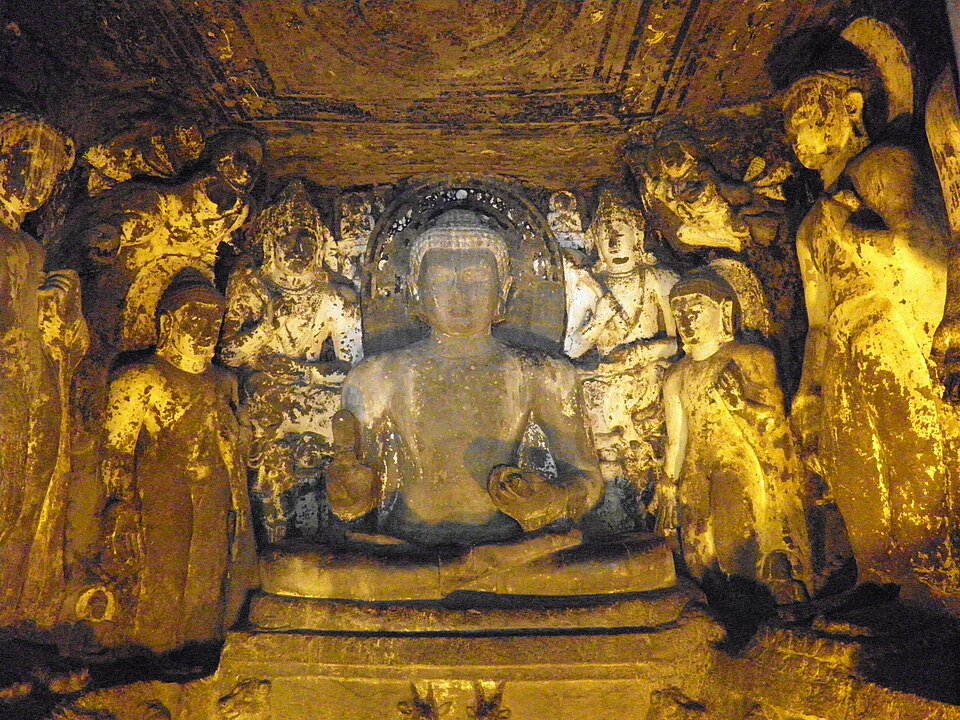
The sangha is one of Buddhism’s three objects of refuge, alongside the Buddha and the dharma. Buddhists call them the “three jewels” because they offer precious support for practice. Historically, the sangha has been central to preserving the teachings, guiding practice, and sustaining communal life.
The word sangha (sometimes spelled samgha) comes from Pali and classical Sanskrit, meaning that which is well struck together, or something strong and not easily separated. In English, sangha usually means community.
The sangha first took shape with the Buddha’s early disciples. As he traveled and taught, a community of monastics and lay followers grew around him. After the Buddha’s death, the monastic community continued following his established rules, eventually forming more settled and larger institutions. The monastic code (vinaya) continues to structure daily life and support ethical conduct today.
Early texts, such as the Ratana Sutta, praise the sangha for its profound understanding of the dharma. In its traditional sense, the term referred primarily to the ariya sangha, or “noble community”—those who had attained advanced stages of awakening. While most members were monastics, accomplished laypeople were sometimes recognized as part of this noble sangha.
As Buddhism spread, the meaning of sangha evolved. Today, it can refer to a broad spectrum of practitioners who seriously engage with the Buddha’s teachings, including monastics, laypeople, and even secular Buddhists.
Taking Refuge in the Three Jewels
What makes someone a Buddhist? Many people approach Buddhism as a mindful lifestyle or a philosophy. Traditionally, though, becoming a Buddhist involves taking refuge in the three jewels or the triple gem—Buddha, dharma, and sangha. Taking refuge represents a formal commitment to following the Buddhist path.
According to some accounts, shortly after his enlightenment, the Buddha met two merchants, Trapusa and Bhallika, on the road. They were struck by his glowing radiance and calm presence. They offered him gifts and became his first lay followers, declaring refuge in him and his teachings. As his community grew, the Buddha instructed monastics to teach this simple formula: I go for refuge to the Buddha, I go for refuge to the dharma, and I go for refuge in the sangha. This recitation has remained unchanged for over 2,000 years.
In the Buddha’s time, people often sought protection from deities, nature spirits, or powerful rulers. But the Buddha offered a different kind of refuge, not in supernatural forces but in commitment to his path of wisdom, compassion, and self-understanding. Taking refuge means aligning oneself with these qualities and the community supporting their cultivation.
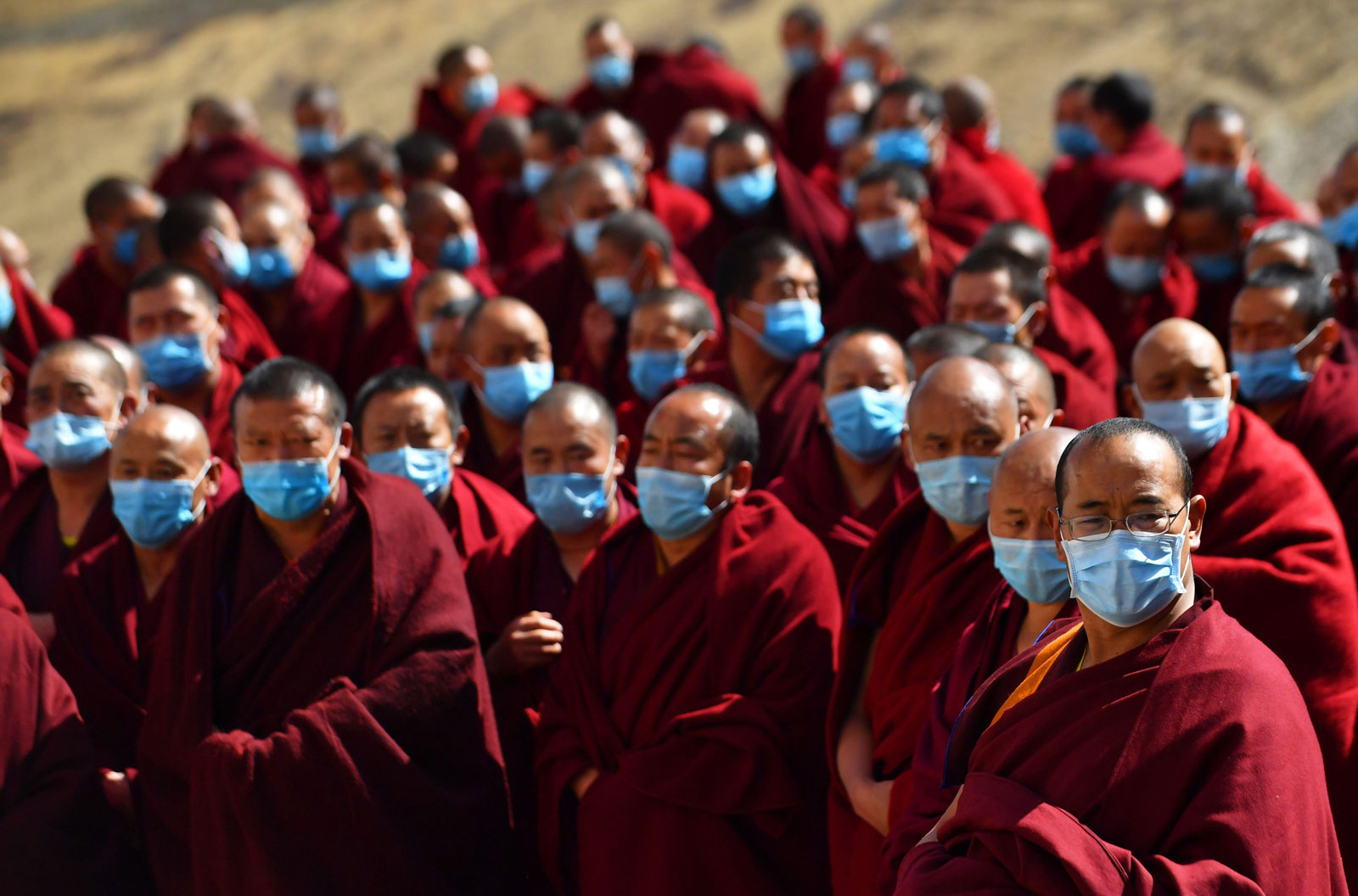
Taking refuge in the sangha meant looking to ordained monastics as the living examples of Buddhist values. For lay practitioners, the sangha provided inspiration and guidance in the dharma. Today, the sangha includes not only monks and nuns but also teachers, fellow practitioners, and dharma friends. Whether gathered in temples, meditation groups, or online communities, the sangha offers encouragement and support for those on the path.
Taking refuge marks formal entry into Buddhism. It is also a daily practice for many—a way to renew one’s commitment and restore clarity. In many traditions, bringing a child to take refuge with a respected teacher remains an important rite of passage. In all its forms, taking refuge grounds practitioners in a living tradition and connects them to a broader community of those who seek awakening.
The Fourfold Sangha

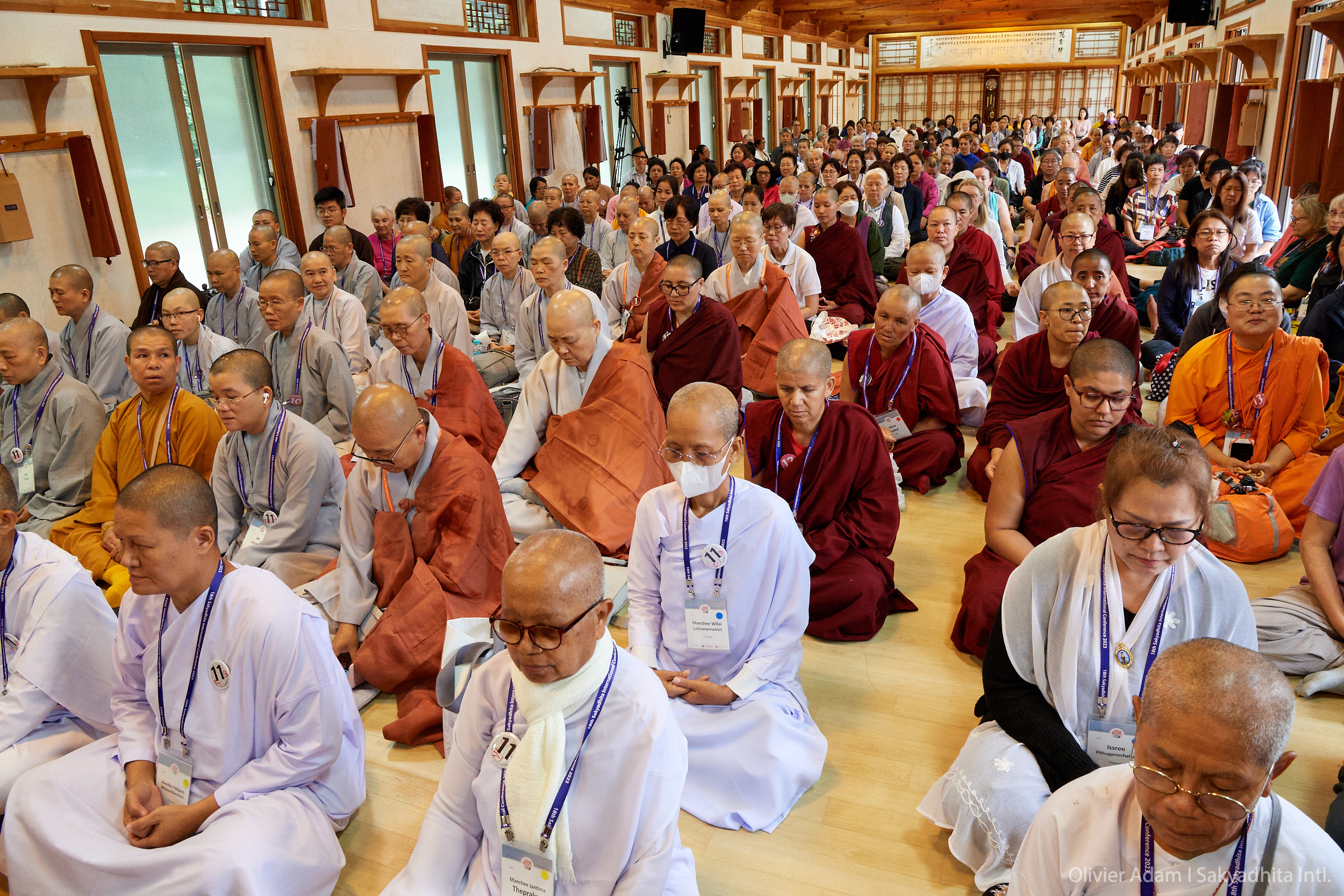
In early Buddhism, the term sangha referred to a small group of monks who had attained enlightenment. As the community grew, the term expanded to include all fully ordained monastics—male (Skt.: bhikshu; Pali: bhikkhu) and female (bhikshuni, bhikkhuni)—as well as all laymen (upasaka) and laywomen (upasika). Together, these four groups make up the fourfold sangha, or parisad (Skt.; Pali: parisa), meaning assembly or congregation.
While the Buddha initially focused on teaching renunciants, householders quickly became vital to the life of the sangha. Their donations of food, shelter, and other necessities made monastic life possible. In return, monastics upheld the precepts, performed rituals, and taught the dharma. This reciprocal relationship between laity and monastics formed the foundation of early Buddhist communities.
Buddhist texts tell many stories of lay followers whose devotion and understanding matched that of monastics. Some, like Trapusa and Bhallika, were among the Buddha’s earliest followers. Others, like Anathapindika and Visakha, were renowned for their generosity. Figures such as Citta and Vimalakirti earned respect for their deep insight into the dharma. Royal patrons like King Bimbisara and Queen Samavati offered both material support and public advocacy for the sangha. Throughout history, lay disciples have been essential links between the monastic community and the wider society.
Today, the relationship between monastic and laypeople remains strong around monasteries in many parts of Asia. Globally, however, nonmonastics make up the majority of Buddhist practitioners. Many lay Buddhists engage deeply in study and meditation, practices once reserved for monastics. Entirely lay-based movements, such as Soka Gakkai International, have become major religious organizations. The rise of lay practitioners at the center of Buddhist life has led to new visions of the sangha.
Changes within the fourfold sangha reflect Buddhism’s inclusivity: Awakening is not limited to monastics but is open to all who sincerely walk the path.
Early Sangha Members: The Buddha’s Disciples

The Buddha’s biographies indicate that he gave his first sermon to five ascetics with whom he had previously practiced yogic meditation and extreme austerities. Though these five became the first monks, they are not remembered as the most significant of his many disciples.
Over the following decades, the Buddha taught a wide range of people, from family members, beggars, kings, and former criminals. Many left their homes to become monastics. Ordination was a simple process at first. When someone expressed sincere interest, the Buddha invited them by saying, “Come, monk,” or “Ehi bhiksuka.” The early sangha grew quickly into a community of renunciants who taught and practiced the Buddha’s path.
Initially, the buddha admitted only men. But later, the Buddha also admitted women through the efforts of his cousin and attendant, Ananda, and his foster mother and aunt, Mahaprajapati. While some laypeople reached awakening, most of the Buddha’s closest disciples were monastics.
Prominent figures in the early sangha are still honored today. While Buddhism doesn’t have saints in the sense of Catholicism, many of these early disciples are revered as Buddhist saints—exemplary followers whose lives embody the Buddha’s teachings. Ananda had an exceptional memory and advocacy for women. Sariputra and Maudgalyayana were the Buddha’s two chief male disciples, well-known for their wisdom and supernatural powers. Mahakasyapa exceled in ascetic practice, and Chan and Zen traditions honor him as their first patriarch.
Several prominent female disciples also stood out. Khema, the former queen of Bimbisara, was praised for her insight. Mahaprajapati was the first ordained nun. Utpalavarna, known for her profound wisdom and great beauty, ranked foremost among nuns in supernatural abilities.
Other important disciples include Upali, originally a barber, who became an expert in monastic rules. Subhuti, stood out for his solitary practice and generosity. And Rahula, the Buddha’s son, became the first novice monk.
This diverse group helped establish the foundations of the Buddhist sangha, preserving the teachings and exemplifying the path to awakening for later generations.
The Buddhist Councils

Monastics have preserved and transmitted the Buddha’s teachings for over 2,000 years. They memorized his sermons, compiled the early Buddhist canon, and convened influential councils to discuss ethics, rules, and doctrine. Their work has been essential in maintaining the continuity of the teachings.
One sign of the oral tradition survives in the familiar phrase “Thus have I heard. . .” found at the beginning of many sutras. Tradition attributes these words to the Buddha’s attendant, Ananda, who reportedly remembered many of his teachings and recited them after his death.
At the heart of this transmission is the concept of buddhavacana, or the word of the Buddha, teachings believed to have been spoken or directly approved by him. Determining what counts as buddhavacana was a collective responsibility of the sangha. If a teaching aligned with core Buddhist principles and view of reality, councils of elders could formally recognize it as part of the canon. This collaborative approach reflects the evolving nature of Buddhist tradition, where the canon has remained open in principle, even if not always in practice.
The First Council of monastics, held shortly after the Buddha’s death, aimed to standardize his teachings and the monastic rules. Scholars debate the historical accuracy of the narratives surrounding this council and the Second Council at Vaisali. Most question whether the first council even occurred. Still, the stories underscore the sangha’s central role in preserving the dharma.
Later councils—accounts vary by tradition—addressed challenges that emerged hundreds of years after the Buddha’s life. The Third Council (c. 250 BCE), under Emperor Ashoka, sought to establish doctrinal orthodoxy among a proliferation of competing viewpoints. The Fourth Council (c. 25 BCE), held in Sri Lanka, marked a turning point. For the first time, monastics wrote the oral teachings down, protecting them during famine and schismatic turmoil within the sangha. Another council met around 100 CE in Gandhara, and again around 792 in Tibet.
Modern councils in Myanmar in 1868 and 1954 reaffirmed the sangha’s role in transmitting and carefully editing the scriptures. Today, monastics continue to uphold the doctrine through study, practice, and ritual recitation. As guardians, they ensure that the Buddha’s teachings remain a guiding light, passed from generation to generation.
The Vinaya: Buddhist Monastic Rules

As the Buddha’s monastic community grew, so did the need for clear rules. Some monastics misunderstood or broke the Buddha’s guidelines, prompting him to introduce new regulations in response to misconduct. Over time, these rules accumulated in the Vinaya Pitaka, or monastic code, one of the three classic divisions of the Buddhist teachings.
The various vinaya collections from different traditions contain hundreds of rules. They range from serious offenses to everyday concerns, like caring for monastic robes or relieving oneself. The gravest violations—killing, stealing, lying about meditative or supernatural attainment, or engaging in sexual activity—result in expulsion. Other transgressions may result in temporary suspension or require confession before the community. Monastics recite the rules, known as the pratimoksha (Skt.; Pali: patimokkha), on every new and full moon.
Many of the rules trace back to real-life incidents. In one story, a monk asks a nun to wash his robe. The proximity of the monk and nun in this situation leads to sexual contact, and because it happens in public, it leads to a scandal. The Buddha institutes a new rule forbidding monks from asking nuns to do this task. The Buddha’s concern was genuine: Misconduct affected individual monastics and the sangha’s public reputation. Many vinaya rules emphasize discipline to uphold trust with lay followers.
Rules for nuns are more numerous, typically more than 300, compared with more than 200 for monks. Among them are eight “heavy” rules that place women in a subordinate position, such as requiring even a senior nun to bow to a newly ordained monk. These reflect the patriarchal gender norms of ancient India and remain controversial today.
Historians are unsure about the exact development of the Vinaya Pitaka. Monastics transmitted the rules and their narrative explanations orally for centuries, and most likely date from well after the Buddha’s death. At multiple times, the monastic community fractured into different groups that developed their own set of vinaya collections. Today, different Buddhist traditions interpret the vinaya in ways that reflect their cultural contexts. For example, in Plum Village, the sangha founded by the Vietnamese teacher Thich Nhat Hanh, a modern set of fourteen precepts has taken on greater emphasis.
As Buddhism continues to evolve in the 21st century, interpretations of vinaya rules and the practice of monastic discipline will also change in ways that resonate with contemporary values.
Buddhist Monasteries

In the early days of Buddhism, the ideal was the wandering monk, someone who embraced homelessness and traveled to teach the Buddha’s path. However, as the community expanded, practical needs led to the creation of permanent monastic residences, especially during the rainy season. These first monasteries offered spaces for communal living, learning, and practice.
Monasteries became a place for monastics to study Buddhist doctrine and offer teachings to laypeople. Eventually, many evolved into powerful institutions that shaped Asia’s social and cultural landscape. They served as places of refuge and became hubs for learning, politics, and art.
Nalanda was a prominent Indian institution, founded in 5th-century Bihar, whose name derives from vihara, the word for monastery. Nalanda offered instructions in a wide range of subjects and attracted scholars from across Asia. It was one of the world’s most respected learning centers for over seven centuries.
Lay and royal patronage made the growth of monasteries possible. Individuals—lay and monastic—gave to monastic communities to generate good karmic merit for themselves and their families. One of the earliest and most significant examples is King Bimbisara of Magadha, who gifted the Venuvana Monastery to the Buddha and his disciples. This considerable gift marked a shift in how Buddhist communities interacted with lay society, establishing a model for future monastic endowments.
Monasteries received land, money, and other resources from donors and, in return, contributed to the community’s intellectual and spiritual life. As was customary in many cultures, some monasteries would also practice slavery and even receive enslaved people as gifts. Wealthy patrons lavished incredible wealth on their favored monasteries, while laypeople offered ongoing support through daily donations and service.
Building and sustaining monasteries has long been a meaningful Buddhist practice. Today, monasteries continue to serve as both religious sites and social and economic institutions. Ancient monasteries continue to serve as pilgrimage sites. The construction of new ones remains an important event, marked by celebration and ceremony. Such occasion link the lay and monastic worlds in a shared expression of devotion.
Buddhist Monastic Life
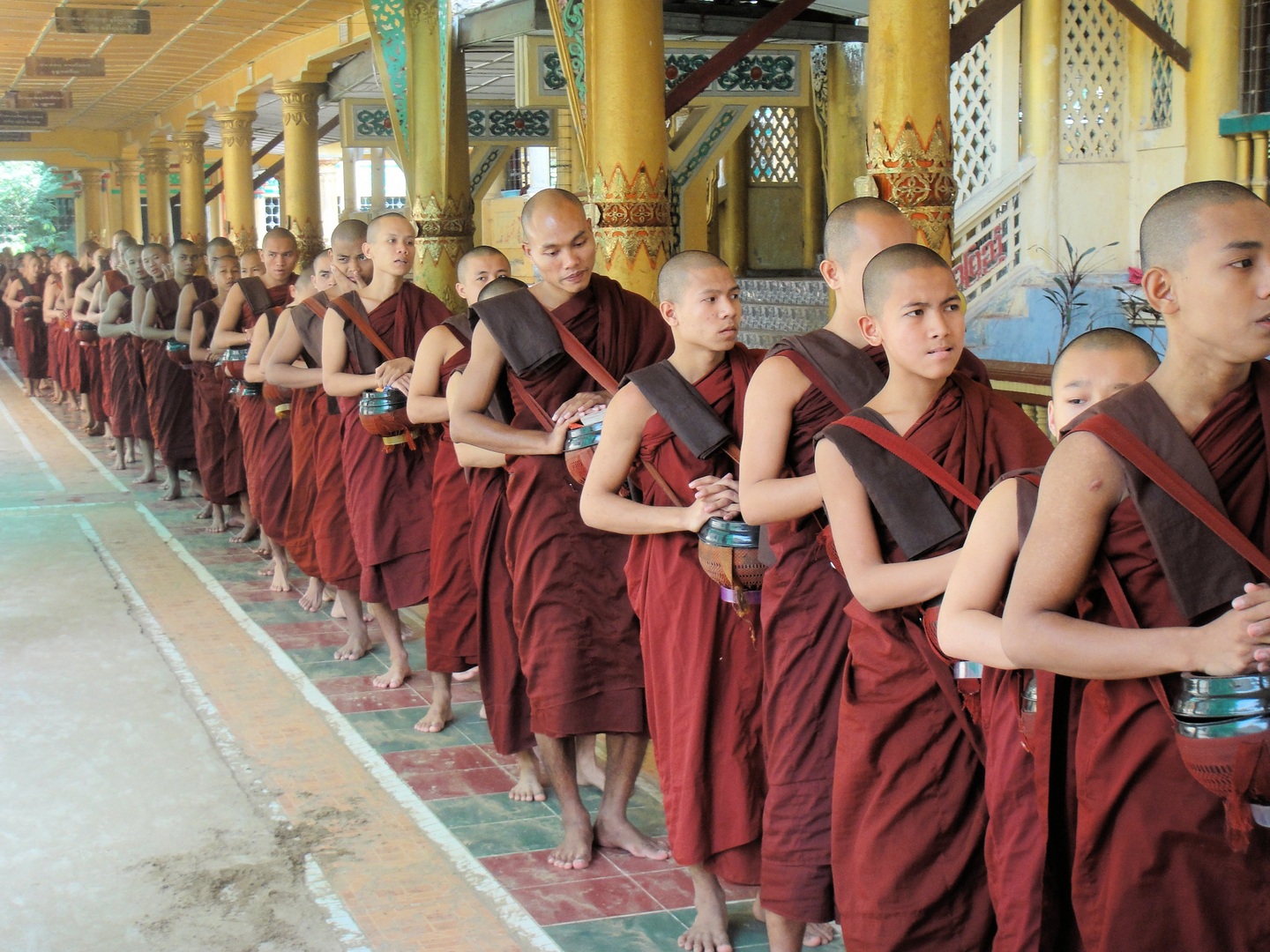
People often imagine Buddhist monasteries as serene sanctuaries for meditation, nestled in remote, peaceful settings. While some fit this image, most are lively centers of activity. As Buddhism spread to new areas, monasteries and temples became centers of ritual, practice, education, and community life. In some places, they became hubs of political power, money lending, and even war.
Buddhist institutions vary greatly, ranging from quiet neighborhood shrines to sprawling monastic complexes that include schools and hospitals. Daily life reflects this diversity. The morning often begins with the ringing of a bell, followed by prayers, chores, and communal work. Monastics and resident laypeople throughout the day engage in tasks that keep the temple running.
In Theravada countries such as Sri Lanka, Thailand, and Myanmar, monks and nuns go on alms rounds to receive food and offerings from laypeople. These acts of giving and receiving are a vital link between monastics and the public. Temples bustle with pilgrims, tourists, and community members who offer donations, food, and labor with devotion.
Alms rounds are less common in colder Mahayana regions, such as Tibet, China, Korea, and Japan. Instead, monastics may rent land, grow food, or rely on temple income. Whether in a city or the countryside, temples and monasteries buzz with activity. Kitchens stay busy feeding residents and guests, and temple calendars are full of rituals, festivals, and seasonal events that draw large crowds. There are moments of quiet and stillness, but typically the sounds of communal life carry on from morning until night.
Maintaining a monastery or temple is like running a community center. Some monastics manage finances, coordinate events, or handle administrative tasks. Though often overlooked, this work is an essential act of service, an offering that benefits the whole community.
And what about meditation? Most temples and monasteries have established meditation times, typically in the morning and evening. Some monastics participate regularly, while others focus on study or work. Everyday tasks are also integrated into a life of mindfulness. Depending on the tradition, special retreats offer extended periods of silence and contemplation, drawing both monastics and laypeople.
Anyone curious about Buddhist monastic life can benefit from visiting a temple. In the West, many diverse centers welcome guests. Joining in, even briefly, offers a glimpse into the shared work, devotion, and human connections that bring the dharma to life.
Buddhist Precepts

Buddhist precepts (Skt.: siksapada; Pali: sikkhapada) are rules that help shape the mind and guide behavior. The precepts take shape in right speech, action, and livelihood, supporting the development of morality (sila), a foundation of the eightfold path.
Like ethical rules in other religious traditions, Buddhist precepts aim to foster harmony in society and the individual. American Zen teacher Robert Aitken once warned that Buddhist practice could degenerate into a hobby without the precepts as guidelines. Precepts provide practical guidelines for practitioners who aim to achieve enlightenment, follow the bodhisattva path, or attain a favorable rebirth.
Different sets of precepts correspond to levels of commitment to the Buddhist path. Most laypeople follow the basic five precepts: to refrain from killing, stealing, sexual misconduct, lying or harmful speech, and intoxication. These may sound straightforward, but interpretations vary between traditions.
During retreats or special observance days, laypeople may take on the eight precepts. These add further observances, such as refraining from eating after noon and avoiding entertainment or luxurious beds. Novice monastics follow ten precepts, which add further rules on wearing jewelry and handling money. Depending on the monastic institution, there may be other novice rules. Fully ordained monastics follow hundreds of rules.
Mahayana traditions often focus on the ten bodhisattva precepts, beginning with the basic ones. They add rules against speaking ill of others, praising oneself, being stingy, harboring anger. Another precept forbids slandering the Buddha, the dharma, or the sangha. These guidelines encourage humility and compassion as core elements of practice. Vajrayana traditions offer a further set of tantric vows.
Interpretation of precepts can be narrow or broad. The first precept, for instance, is often cited as the reason many Buddhists avoid eating meat. Some teachers interpret “killing” in metaphorical terms, such as destroying someone’s hope. Still, there’s also a caution: Overly broad readings can dilute the precepts’ intent with clever language. As Bodhidharma said, “Not giving rise to thoughts of killing is called the Precept of Not Killing.” Keeping the spirit of the dharma in mind is key.
Buddhist Ritual Life

The image of a solitary monk meditating on a remote mountaintop may be iconic, but it doesn’t reflect the realities of Buddhist life. Ritual has long been central to Buddhist communities, offering ways to express devotion, connect with traditions, and strengthen the sangha. Monastics and laypeople alike participate in a diverse range of ritual activities.
Daily observances often begin in temples, monasteries, and family homes before sunrise. Practitioners chant scriptures, make offerings of incense, water, or candles. The also bow before altars to honor the Buddha, a bodhisattva, a lineage of teachers, or even a local deity. These rituals cultivate mindfulness and create shared sacred spaces, reinforcing community values more strongly than silent meditation alone.
Buddhists also participate in weekly, monthly, and annual ceremonies. Monastics gather to recite the monastic code on the new and full moon days. Other rituals include funerals, where monks and nuns chant scriptures beside the deceased, lead processions to cremation grounds, and offer advice to grieving families. Many such rites convey Buddhist teachings on impermanence and rebirth, and ancient inscriptions and textual sources tell us that monastics have long upheld these funerary roles.
Rituals serve protective and civic functions as well. Monastics perform blessings for safe travel, good health, or national stability. Some large state-sponsored ceremonies have drawn thousands of participants, reflecting the sangha’s public role. Laypeople finance these efforts and often participate directly, reinforcing their karmic tie to the community.
Ritual is also a space for innovation. In Thailand, Buddhist monks have wrapped orange robes around trees in a symbolic act of ordination to protect the forests. This adaptation demonstrates how Buddhists utilize traditional rituals to address contemporary environmental concerns.
Ultimately, rituals connect individuals to the sacred and one another. Whether performed in remote monasteries or suburban living rooms, they provide structure, reinforce shared moral values, and transmit Buddhist doctrine to new generations. Through ritual, the sangha expresses its shared devotion and keeps the dharma alive in everyday life.
Merit in Buddhism

Merit (Skt.: punya; Pali: punna) is a foundational Buddhist concept, often described as a karmic virtue or “spiritual currency” earned through good deeds. For many Buddhists, accumulating merit is a key motivation for practicing generosity, ethical conduct, and devotion. Buddhist believe these actions generate karmic benefits, bringing blessings, better rebirth, or progress toward awakening.
Merit is also transferable. Practitioners share it through ritual and intention, creating a “merit economy” that sustains Buddhist institutions. Merit is thus a powerful tool for building community and expressing compassion. A parent may dedicate merit to a deceased relative, or a layperson might offer it to the sangha. The transferability of merit helps explain the deep interdependence between laypeople and monastics.
Monastics also generate merit through disciplined ethical conduct, ritual practices, study, and selfless service. Laypeople earn merit by following the five precepts, practicing generosity (dana), and providing the sangha with food, clothing, shelter, money, and labor. In return, monastics offer the dharma, perform rituals, and serve as models of the Buddha’s path. This reciprocal relationship has sustained Buddhist communities for thousands of years.
In many Asian countries, this relationship is clearly visible. Monastics go on daily alms rounds, and laypeople line the streets to offer food and receive blessings. Buddhists regard monks and nuns as “fields of merit,” where laypeople cultivate good karma through donations. The sangha, in turn, relies on laypeople to carry out its work.
In Western Buddhist communities, these traditional structures are often missing. Monastics are fewer, and laypeople lead many sanghas. As a result, the role of merit is less familiar and sometimes viewed with skepticism, especially in cultures that emphasize individual practice and experience. Without strong lay-monastic ties, Western sanghas can struggle with sustainability and care for elder monastics and devoted lay members.
Still, the principle of merit speaks to core Buddhist values: ethical action, generosity, and interdependence. Supporting a sangha—financially, materially, or through service—is not just an act of kindness but also a way to participate in the living transmission of the dharma.
Women and the Sangha
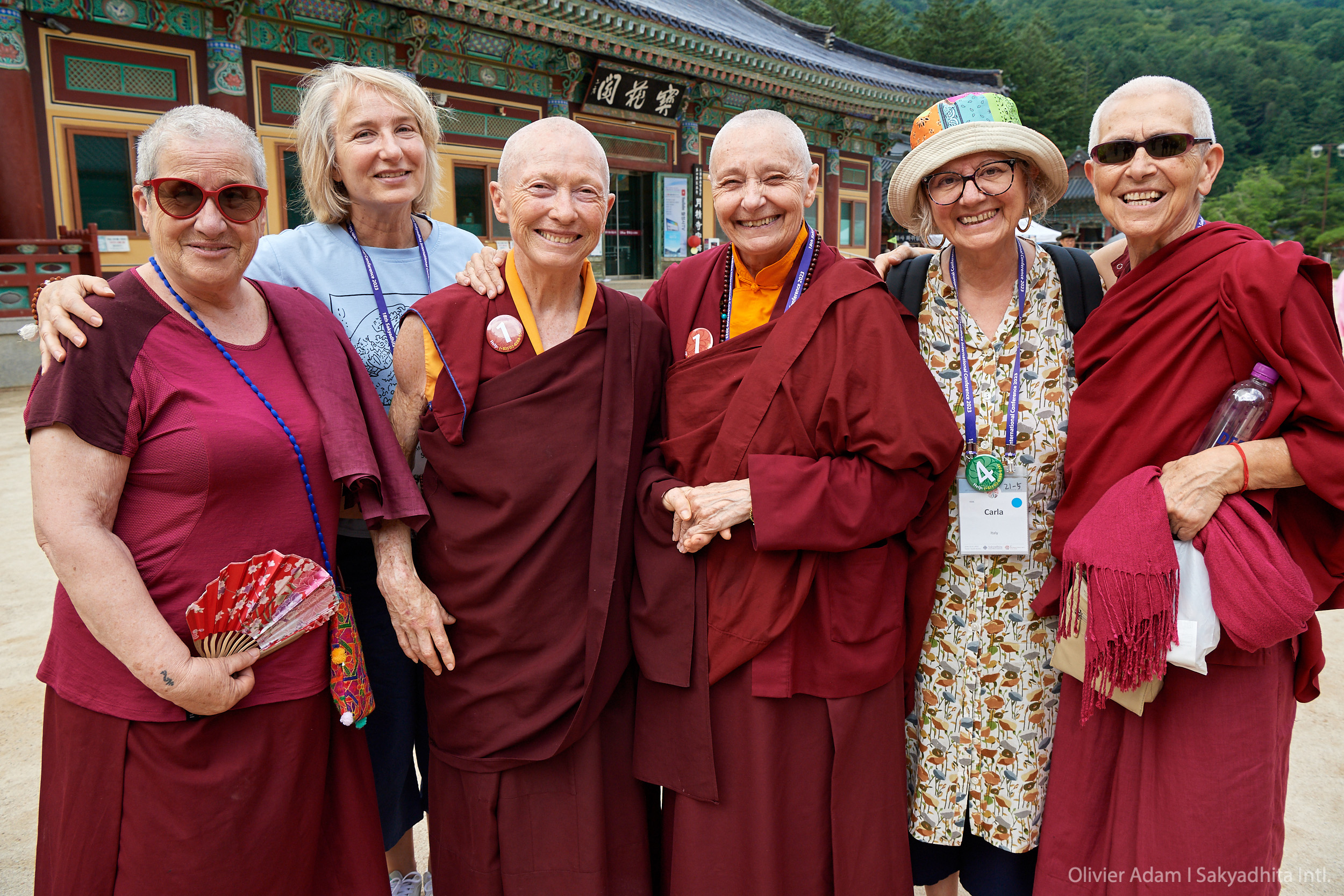
From the earliest days of Buddhism, women have played a vital role in maintaining the community and transmitting the teachings. Together with monks and laymen, nuns and laywomen form the fourfold sangha and observe the five precepts. On holy days and temple observances, women often take the lead—organizing offerings, preparing spaces, and guiding rituals.
Stories of women’s devotion appear throughout Buddhist history. Sujata, the farmer’s daughter who fed the Buddha-to-be before his enlightenment, is remembered as one of the tradition’s first lay supporters. Visakha, a wealthy disciple of the Buddha, earned praised for her generosity and built the Migaramatupasada monastery. The Therigatha, one of the oldest collections of Buddhist verse, records the voices of early Buddhist nuns as they reflect on their experiences, challenges, and awakenings. Empress Ling (d. 528 CE) constructed numerous temples and monasteries in the 6th century, thereby helping to establish Buddhism’s presence in China. Countless women—both named and unnamed—have uplifted Buddhist institutions through their donations, labor, and leadership.
Women also serve as preservers of the dharma in everyday life. In many Buddhist homes, mothers and grandmothers lead family rituals, teach children valuable lessons, and ensure the observance of holidays and practices. In Japan, the wives of temple priests, known as bomori, often oversee daily temple operations and offer care to community members, despite not being formally ordained.
Still, women have faced significant obstacles in Buddhist institutions. Although the Buddha permitted women to ordain, this came only after repeated appeals from his stepmother, Mahaprajapati. Even then, female monastics were subject to the eight heavy rules, subordinating them to monks. Today, full ordination for women is still unavailable in most Theravada communities, where female monastics are not allowed to call themselves bhikkhuni and have limited institutional resources.
In East Asian and some Himalayan Buddhist traditions, women have maintained or regained access to full ordination. Yet inequality persists in areas such as leadership and temple inheritance. In the West, where monasticism is less common, many women are respected teachers, authors, and founders of practice communities.
Despite many challenges, women have always been central to the life of the sangha. As more women assume visible leadership roles—as lay teachers, nuns, scholars, and patrons—their contributions will continue to shape Buddhism’s future.
Buddhist Pilgrimage

Buddhist pilgrimage is a deeply rooted tradition that connects practitioners to the life of the Buddha, sacred geography, and their journey on the path. Since the Buddha’s death, followers have visited sites associated with his life. These include his birthplace in Lumbini, his enlightenment in Bodhgaya, his first teaching at Sarnath, and his death near Kushinagar.
This impulse to visit holy places expanded across Asia. Devotees built stupas and temples enshrining relics, transforming these sites into centers of devotion that followers still travel to in large numbers. Pilgrims undertook long, treacherous journeys through deserts, mountains, and foreign lands. Many died along the way. Some, like the Chinese monks Faxian (4th–5th century CE) and Xuanzang (7th century), documented their arduous travels. Their accounts left later generations a rich view of Buddhist practice in India.
Pilgrimage also evolved to include places associated with later masters, miracles, or significant historical events. New sacred geographies emerged, such as Mount Kailash in Tibet, Mount Koya in Japan, or Borobudur in Indonesia. Pilgrims commonly circumambulate a mountain, offer incense at a stupa, or meditate in a remote hermitage. At Mount Hiei, Japan’s “marathon monks” vow, over a period of years, to complete numerous grueling pilgrimage circuits on foot upon pain of death.
Physically leaving home and going on pilgrimage creates space for reflection and purification, fostering personal transformation. But it also reinforces community, connecting practitioners to history and tradition. Rituals performed along the way generate merit, and shared hardship builds bonds among fellow travelers.
Pilgrimage has always had broader cultural and economic effects. Trade and commerce blossomed along pilgrimage routes, and local economies benefited from the presence of travelers. Monastics traveling with laypeople disseminated Buddhist teachings, while rulers often employed pilgrimage to affirm their political legitimacy and patronage.
Today, pilgrimage continues in both ancient and modern forms. Groups from around the world gather at Bodhgaya for international ceremonies. New sacred sites sometimes reflect Asian aesthetics, while others are rooted in Western culture, like the grave of the Beat poet Jack Kerouac. With modern means of travel, more people than ever can participate in pilgrimage.
Whether performed in silence or while chanting, whether alone or in groups, pilgrimage remains a vital expression of Buddhist faith and devotion. The journey itself becomes a form of practice—walking the path, both literally and metaphorically.
Buddhism for Beginners is a free resource from the Tricycle Foundation, made possible by the generous support of the Tricycle community. It reflects our mission to make the Buddha’s teachings widely available. We welcome your feedback at feedback@tricycle.org.