From the Academy is a monthly email newsletter for Premium subscribers, developed in collaboration with Tricycle’s resident Ho Family Foundation Buddhism Public Scholar. Each issue offers a scholarly take on a key topic in Buddhist thought and practice, with further readings and videos for exploration. Select issues are published here for the wider Tricycle community.
Shortly after the Buddha’s death, tradition holds that five hundred of his senior disciples gathered at Rajagriha to settle what he had taught. Ananda, his longtime attendant, recited the discourses from memory, opening each with the words “Thus have I heard.” These became the Buddhist sutras (Skt.; Pali: sutta, lit. “thread”), one of the three divisions of the Buddhist canon.
The category was never limited to Shakyamuni’s own words. Sutras also present the teachings of other buddhas, bodhisattvas, and enlightened disciples; while all sutras are scripture, not all scripture is a sutra. Their authority rests less on historical authorship than on recognition as buddhavacana, the “word of the Buddha,” a standard each community has defined in its own way.
Authenticity and Ambiguity
Buddhist sutras challenge modern notions of authorship. The earliest texts were orally transmitted for centuries before being written down around the 1st century BCE, as the story goes. Although there is considerable uncertainty about the language the Buddha spoke, all existing early sutras are, to some extent, translations. Mahayana sutras emerged around the same time, often through visions or rediscovery, and yet many communities still accepted them as buddhavacana. Disputes over which texts qualified helped shape canons and define sectarian boundaries.
Buddhist thought has long treated language with ambivalence. The Harvard professor Ryuichi Abé observes that Buddhist traditions rely on sacred words even as they question whether words can truly express truth. Language conveys the dharma but can also distort it. The Buddha initially hesitated to teach, fearing misunderstanding, but he chose speech over silence. Nagarjuna’s doctrine of two truths captures this tension: Conventional language must point beyond itself. Sutras are built on this paradox—revered as expressions of ultimate truth, and yet aware of language’s limits. This led many teachers, especially those in Chan lineages, to rhetorically reject reliance on scripture while drawing on the sutras on their path to realization.
Too Many Scriptures

The sheer number and diversity of Buddhist sutras and other scriptures steered many traditions to narrow their focus. Chinese schools, such as Tiantai and Huayan, developed doctrinal systems around just one or two key texts. Pure Land traditions centered on a few Sukhavati sutras. Nichiren Buddhism went further, asserting that chanting the title of the Lotus Sutra was itself sufficient for liberation. These developments reflected the recognition that no individual or school could fully encompass the immensity of the teachings in the Buddhist canons. Some modern movements have even created new scriptures in vernacular languages, setting aside classical sutras as inaccessible or less relevant to modern concerns.
Beyond Reading
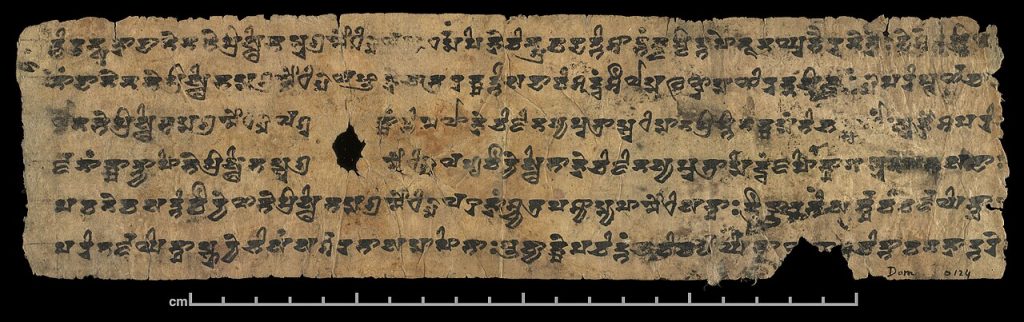
Buddhist sutras have long been more than texts for study: They’ve been chanted, memorized, copied, enshrined, and even consumed. Copying by hand or possessing a sutra was—and still is—believed to generate merit or offer protection. Discovered around 1900 in a Mogao cave near Dunhuang, numerous copies of Pure Land sutras attest to their ritual use. People have worn sutras as amulets, placed them inside statues, carried them on pilgrimages, installed them in temples, inscribed them on prayer wheels, and now played them on chanting devices. In these performative contexts, a sutra’s presence outweighs its meaning.
Buddhist Sutras Today
In today’s media-saturated world of dharma talks and curated teachings, people often encounter sutras secondhand, if at all. But for much of Buddhist history, they were a significant source of inspiration and inquiry. As author Karen Armstrong reminds us, scripture is not literal history or systematic philosophy but sacred art—a performative and interpretive medium meant to transform. Rather than passive consumption, traditional models emphasized recitation, listening, reflection, and meditation. But the easiest way to understand what a sutra is? Read one.
Additional Resources
- Websites offering reliable, free sutra translations: 84,000, SuttaCentral, BDK America
- Bhikkhu Sujato and Bhikkhu Brahmali, The Authenticity of the Early Buddhist Texts, 2015. This short book presents the traditional view that early sutras authentically preserve the Buddha’s words.
- “How to Read the Lotus Sutra,” on Tricycle Talks, 2019. Scholars Jacqueline Stone and Donald S. Lopez Jr. speak with Tricycle‘s editor-in-chief, James Shaheen, about the Lotus Sutra, one of the best-known Buddhist sutras.
- Eviatar Shulman, “The Goodman Lectures: On Creating the Early Discourses (Suttas) of the Buddha,” 2022. In this video presentation, Shulman examines some of the motivations and methods that shaped the early sutras.

Thank you for subscribing to Tricycle! As a nonprofit, we depend on readers like you to keep Buddhist teachings and practices widely available.