Buddhist Books: A Reading List
Newcomers to Buddhism often run into the same problem: an enormous number of Buddhist books covering traditions just as varied. Scholarly histories sit alongside translations of canonical texts, teachings from dozens of lineages, and popular books that borrow Buddhist vocabulary without much grounding in Buddhism itself. Because the tradition is both ancient and varied, being overwhelmed is normal.
The books gathered here offer a way through. Each presents Buddhism, or one of its traditions, from a balanced and informed perspective, written by scholars, translators, dharma teachers, and practitioners with a command of the material. While the lists are organized by subject matter, the titles within them appear alphabetically. Begin with the general introductions and work outward, or go straight to whichever tradition interests you.
Table of contents
- General Introductions to Buddhism
- Books on the Life of the Buddha
- Theravada Buddhist Books
- Mahayana Buddhist Books
- Vajrayana and Tibetan Buddhist Books
- Zen Buddhist Books: Chan, Thien, Seon, and Zen
- Books on Buddhism and Women
- Books on Buddhist Philosophy
- Books on Buddhism in the West
- Buddhist Reference Books and Primary Resources
General Introductions to Buddhism
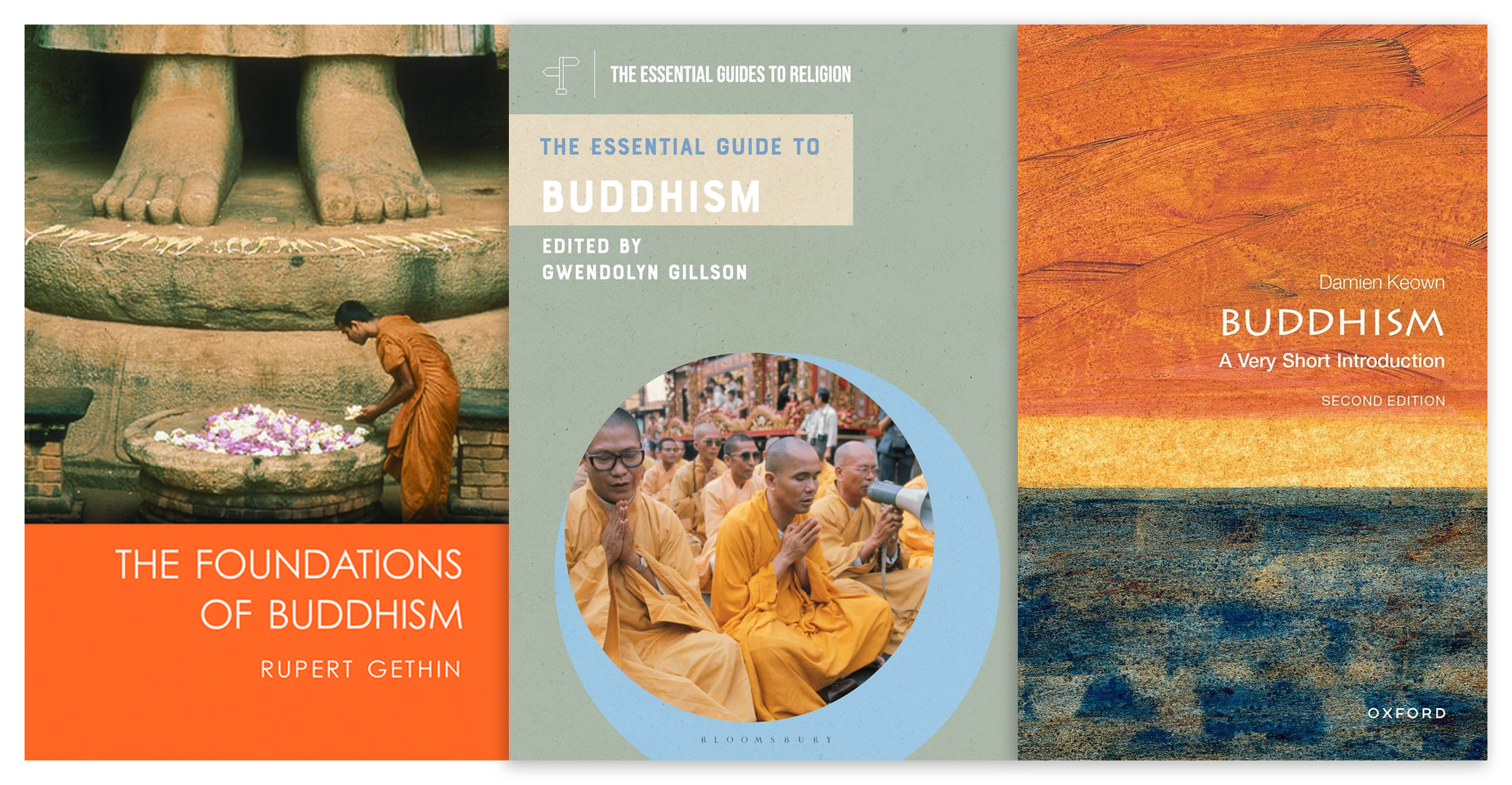
A good survey does two things: It lays out what Buddhists have believed and practiced, and it shows how much that has changed over time. Doing both in one volume is harder than it sounds, and the Buddhist books here differ in their approaches. Some emphasize doctrine; others, history or lived practice.
Start Here
- Rupert Gethin, The Foundations of Buddhism (1998)
- Gwendolyn Gillson, ed., The Essential Guide to Buddhism (2024)
- Damien Keown, Buddhism: A Very Short Introduction, 2nd ed. (2013)
Further Reading
- Dalai Lama and Thubten Chodron, Buddhism: One Teacher, Many Traditions (2014)
- Bernard Faure, Unmasking Buddhism (2009)
- Peter Harvey, An Introduction to Buddhism: Teachings, History and Practices, 2nd edition (2013)
- Donald S. Lopez, Jr., The Story of Buddhism: A Concise Guide to Its History and Teachings (2001)
- Donald W. Mitchell and Sarah H. Jacoby, Buddhism: Introducing the Buddhist Experience, 4th ed. (2024)
- Christopher S. Queen and Sallie B. King, eds., Engaged Buddhism: Buddhist Liberation Movements in Asia (1996)
- Andrew Skilton, A Concise History of Buddhism (1994)
- John S. Strong, Buddhisms: An Introduction (2015)
- Thich Nhat Hanh, The Heart of the Buddha’s Teaching (1998)
- Kevin Trainor, ed., Buddhism: The Illustrated Guide (2001/2004)
Books on the Life of the Buddha
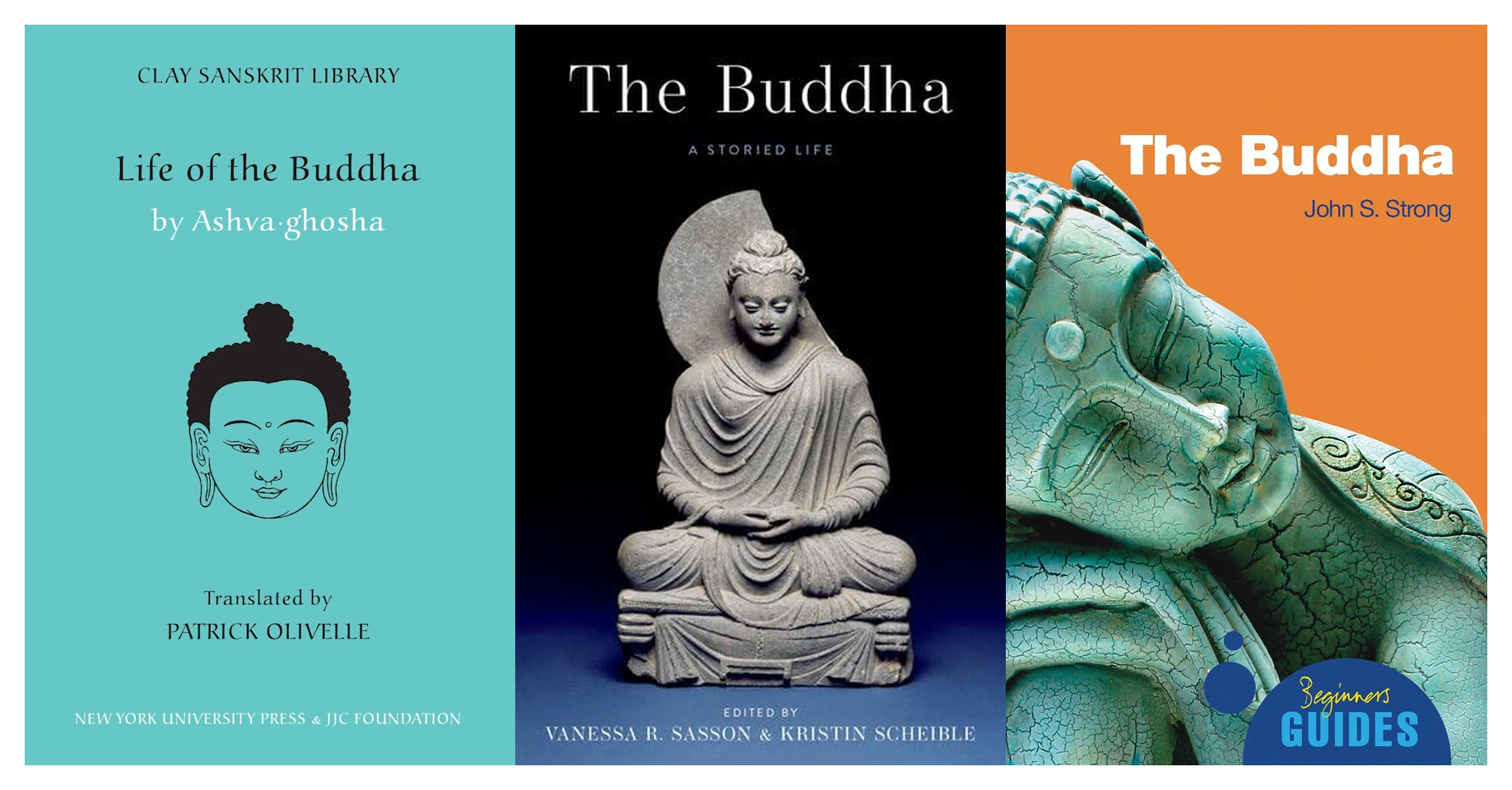
No one wrote a biography of the Buddha during his lifetime. The accounts that survive were composed centuries later, in several languages, by communities with their own reasons for telling the story. That variation makes this a complex subject, and the Buddhist books below approach that problem differently. Some retell what became the standard versions of the Buddha’s life; others ask how those accounts took shape.
Start Here
- Ashvaghosha, Life of the Buddha, trans. Patrick Olivelle (2008)
- Vanessa R. Sasson and Kristin Scheible, eds., The Buddha: A Storied Life (2023)
- John S. Strong, The Buddha: A Beginner’s Guide (2001/2009))
Further Reading
- Philip C. Almond, The Buddha: Life and Afterlife between East and West (2024)
- Karen Armstrong, Buddha (2001)
- Tenzin Chogyel, The Life of the Buddha, trans. Kurtis R. Schaeffer (2015)
- Bernard Faure, The Thousand and One Lives of the Buddha (2022)
- Wendy Garling, Stars at Dawn: Forgotten Stories of Women in the Buddha’s Life (2016)
- Donald S. Lopez, Jr., The Buddha: Biography of a Myth (2025)
- Bhikkhu Nanamoli, The Life of the Buddha According to the Pali Canon (1972)
- The Play in Full (Lalitavistara), trans. Dharmachakra Translation Committee, 84000 (2013)
- John S. Strong, Relics of the Buddha (2004)
- Thich Nhat Hanh, Old Path White Clouds (1991)
Theravada Buddhist Books

Theravada is the dominant tradition of Sri Lanka, Thailand, Myanmar, Cambodia, and Laos, and its canonical language is Pali. Buddhist books on the tradition tend to fall into three groups: translations of the Pali canon and commentaries, meditation teachings that shaped modern insight practices, and scholarship on Theravada as a social institution.
Start Here
- Bhikkhu Bodhi, In the Buddha’s Words: An Anthology of Discourses from the Pali Canon (2005)
- Walpola Rahula, What the Buddha Taught (1959/1974)
- Brooke Schedneck, Living Theravada: Demystifying the People, Places, and Practices of a Buddhist Tradition (2023)
Further Reading
- Erik Braun, The Birth of Insight: Meditation, Modern Buddhism, and the Burmese Monk Ledi Sayadaw (2013)
- Ajahn Chah, Food for the Heart (2002)
- Kate Crosby, Theravada Buddhism: Continuity, Diversity, and Identity (2013)
- Sanitsuda Ekachai, Keeping the Faith: Thai Buddhism at the Crossroads (2001)
- Sonia Faleiro, The Robe and the Sword: How Buddhist Extremism is Shaping Modern Asia (2025)
- Richard F. Gombrich, Theravada Buddhism: A Social History from Ancient Benares to Modern Colombo, 2nd edition (2006)
- Bhante Henepola Gunaratana, Mindfulness in Plain English (1991/2011)
- Bhikkhu P. A. Payutto, The Essential Buddhadhamma: The Teachings and Practice of Theravada Buddhism, trans. Bruce Evans (2024)
- Donald K. Swearer, The Buddhist World of Southeast Asia, 2nd ed. (2010)
- Thanissaro Bhikkhu, The Wings to Awakening (1996)
Mahayana Buddhist Books

Around the turn of the Common Era, new ideas began circulating in India that would eventually reshape Buddhism. Mahayana thought developed rapidly into a family of movements and schools, and no single book could cover it all. The selection below pairs broad surveys with individual texts in translation. More Buddhist books on its East Asian forms appear in the Zen section.
Start Here
- Taitetsu Unno, River of Fire, River of Water: An Introduction to the Pure Land Tradition of Shin Buddhism (1998)
- Paul Williams, Mahayana Buddhism: The Doctrinal Foundations, 2nd ed. (2008)
- Chun-fang Yu, Chinese Buddhism: A Thematic History (2020)
Further Reading
- The Awakening of Faith: Attributed to Asvaghosha, trans. Yoshito S. Hakeda (1967/2005)
- Charles B. Jones, Pure Land: History, Tradition, and Practice (2021)
- Sallie B. King, Buddha Nature (1991)
- Donald S. Lopez, Jr., and Jacqueline I. Stone, Two Buddhas Seated Side by Side: A Guide to the Lotus Sutra (2019)
- Jan Nattier, A Few Good Men: The Bodhisattva Path According to the Inquiry of Ugra (2003)
- Santideva, The Bodhicaryavatara, trans. Kate Crosby and Andrew Skilton (1996/2008)
- Jacqueline I. Stone, Original Enlightenment and the Transformation of Medieval Japanese Buddhism (1999)
- Kazuaki Tanahashi, The Heart Sutra: A Comprehensive Guide to the Classic of Mahayana Buddhism (2016)
- The Threefold Lotus Sutra, trans. Bunno Kato, Yoshiro Tamura, and Kojiro Miyasaka (1975/2003)
- The Vimalakirti Sutra, trans. Burton Watson (1997)
Vajrayana and Tibetan Buddhist Books

Vajrayana, or tantric Buddhism, developed in India and spread to East Asia, Tibet, Nepal, and Mongolia. Tibetan Buddhism is its best-known form, but it’s not the only one. Tantric traditions also survive among the Newars of Nepal and within Japanese Shingon and Tendai. The Buddhist books below cover Vajrayana’s Indian origins, its Himalayan, Mongolian, and Japanese forms, and the history of Tibet.
Start Here
- Matthew T. Kapstein, Tibetan Buddhism: A Very Short Introduction (2013)
- Richard K. Payne, Tantra Across the Buddhist Cosmopolis (2026)
- Lama Thubten Yeshe, Introduction to Tantra: The Transformation of Desire (1987)
Further Reading
- Ryuichi Abe, The Weaving of Mantra: Kukai and the Construction of Esoteric Buddhist Discourse (1999)
- Gampopa, The Jewel Ornament of Liberation: The Wish-Fulfilling Gem of the Noble Teachings, trans. Khenpo Konchog Gyaltsen (1998)
- David N. Gellner, Monk, Householder, and Tantric Priest: Newar Buddhism and its Hierarchy of Ritual (1992)
- Anne C. Klein, Meeting the Great Bliss Queen (1995)
- Patrul Rinpoche, The Words of My Perfect Teacher, trans. Padmakara Translation Group (1994/2010)
- Kurtis R. Schaeffer, Matthew T. Kapstein, and Gray Tuttle, eds., Sources of Tibetan Tradition (2013)
- Sam van Schaik, Tibet: A History (2011)
- Vesna A. Wallace, ed., Buddhism in Mongolian History, Culture, and Society (2015)
- Christian K. Wedemeyer, Making Sense of Tantric Buddhism (2013)
- Taiko Yamasaki, Shingon: Japanese Esoteric Buddhism (1988))
Zen Buddhist Books: Chan, Thien, Seon, and Zen
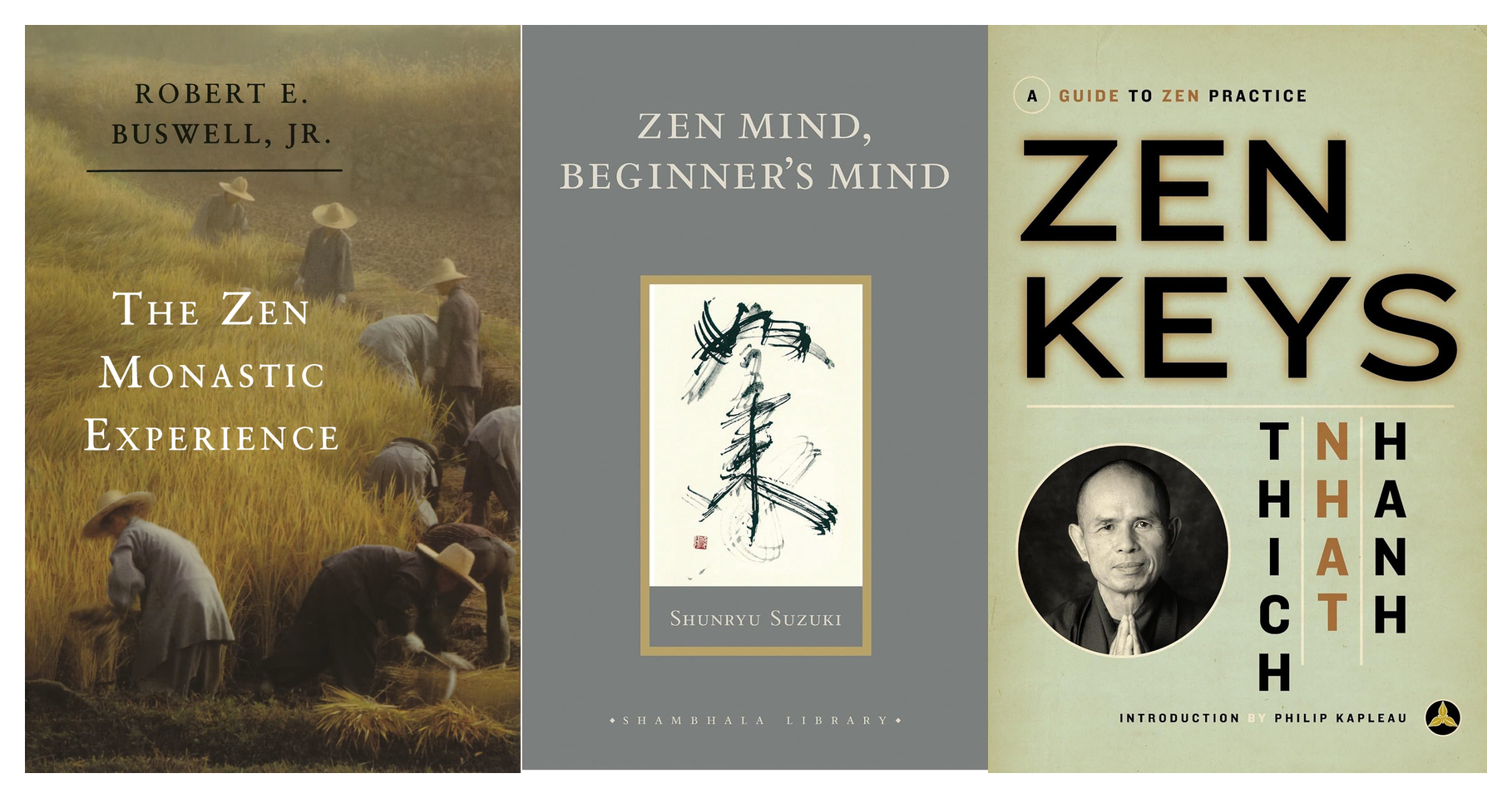
Chan began in China, then took root in Vietnam as Thien, in Korea as Seon, and finally in Japan as Zen, changing with each transmission. English-language coverage of these meditation schools has long tilted toward Japan, and Buddhist books on the Chinese and Korean traditions remain comparatively scarce. The selections here work against that, bringing together classic records with contemporary teachers and scholarship on how those records were written.
Start Here
- Robert E. Buswell, Jr., The Zen Monastic Experience: Buddhist Practice in Contemporary Korea (1992)
- Shunryu Suzuki, Zen Mind, Beginner’s Mind (1970/2006)
- Thich Nhat Hanh, Zen Keys (1974/1994)
Further Reading
- Huineng, The Sixth Patriarch’s Dharma Jewel Platform Sutra, trans. The Buddhist Text Translation Society (2014)
- Philip Kapleau, The Three Pillars of Zen (1965)
- Hee-Jin Kim, Eihei Dogen: Mystical Realist (1975/2004)
- John R. McRae, Seeing Through Zen: Encounter, Transformation, and Genealogy in Chinese Chan Buddhism (2003)
- Cuong Tu Nguyen, Zen in Medieval Vietnam: A Study and Translation of the Thien Uyen Tap Anh (1997)
- Shohaku Okumura, Realizing Genjokoan: The Key to Dogen’s Shobogenzo (2010)
- Grace Schireson, Zen Women: Beyond Tea Ladies, Iron Maidens, and Macho Masters (2009)
- Seung Sahn, The Compass of Zen (1997)
- Burton Watson, The Zen Teachings of Master Lin-chi: A Translation of the Lin-chi lu (1993/1999)
- Jimmy Yu, ed., Readings of the Gateless Barrier (2025))
Books on Buddhism and Women
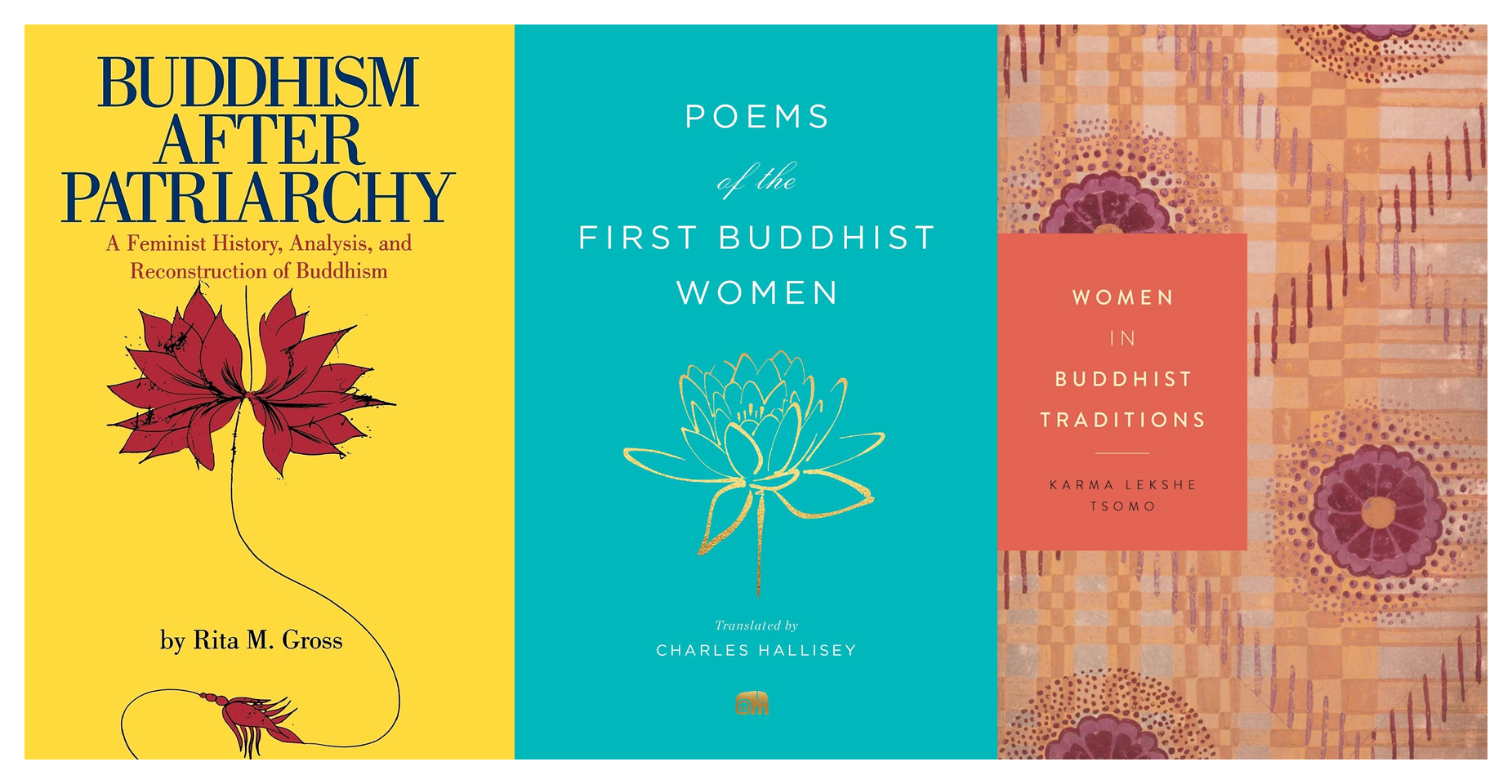
Women have been part of Buddhism from the beginning, though the historical record often obscures them. The recovery of their stories has been one of the liveliest areas of Buddhist studies over the past thirty years. The Buddhist books in this section range from poems by nuns of the Buddha’s generation to firsthand accounts by practitioners today.
Start Here
- Rita M. Gross, Buddhism after Patriarchy: A Feminist History, Analysis, and Reconstruction of Buddhism (1992)
- Charles Hallisey, trans., Poems of the First Buddhist Women: A Translation of the Therigatha (2015/2021)
- Karma Lekshe Tsomo, Women in Buddhist Traditions (2020)
Further Reading
- Bhikkhu Analayo, The Foundation History of the Nuns’ Order (2016)
- Eun-su Cho, ed., Korean Buddhist Nuns and Laywomen: Hidden Histories, Enduring Vitality (2011)
- Wendy Garling, The Woman Who Raised the Buddha: The Extraordinary Life of Mahaprajapati (2021)
- Beata Grant, Eminent Nuns: Women Chan Masters of Seventeenth-Century China (2009)
- Sarah H. Jacoby, Love and Liberation: Autobiographical Writings of the Tibetan Buddhist Visionary Sera Khandro (2014)
- Ayya Khema, I Give You My Life: The Autobiography of a Western Buddhist Nun (1998)
- Zenju Earthlyn Manuel, The Way of Tenderness: Awakening Through Race, Sexuality, and Gender (2015)
- Lori R. Meeks, Hokkeji and the Reemergence of Female Monastic Orders in Premodern Japan (2010)
- Vanessa R. Sasson, Yasodhara and the Buddha (2021), historical fiction with scholarly introduction
- Karma Lekshe Tsomo, ed., Buddhism Through American Women’s Eyes (1995)
Books on Buddhist Philosophy
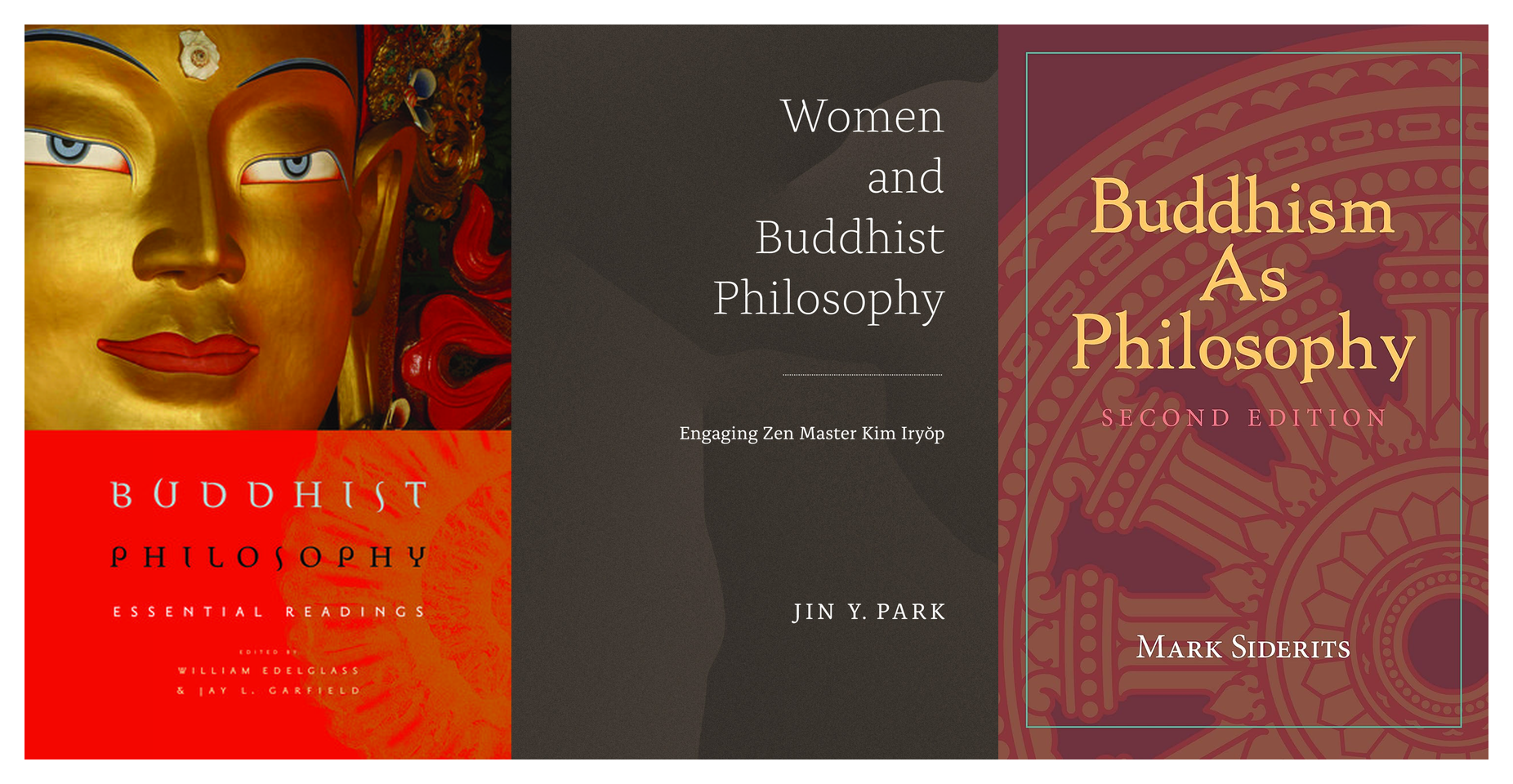
Buddhist thinkers have debated the nature of the mind, self, causation, language, and reality for over two millennia. Those arguments were meant to be tested, and the best Buddhist books treat them that way. This section covers debates among Indian schools, philosophical developments in East Asia and Tibet, and contemporary scholars’ interpretations of them.
Start Here
- William Edelglass and Jay L. Garfield, eds., Buddhist Philosophy: Essential Readings (2009)
- Jin Y. Park, Women and Buddhist Philosophy: Engaging Zen Master Kim Iryop (2017)
- Mark Siderits, Buddhism as Philosophy, 2nd ed. (2021)
Further Reading
- Jay L. Garfield, trans., The Fundamental Wisdom of the Middle Way: Nagarjuna’s Mulamadhyamakakarika (1995)
- Maria Heim, Buddhist Ethics (2020)
- Sonam Kachru, Other Lives: Mind and World in Indian Buddhism (2021)
- David J. Kalupahana, A History of Buddhist Philosophy: Continuities and Discontinuities (1992)
- Guy Newland, Introduction to Emptiness (2008)
- Noa Ronkin, Early Buddhist Metaphysics (2005)
- Evan Thompson, Why I Am Not a Buddhist (2020)
- William S. Waldron, Making Sense of Mind Only: Why Yogacara Buddhism Matters (2023)
- Jan Westerhoff, The Golden Age of Indian Buddhist Philosophy (2018)
- Brook Ziporyn, Emptiness and Omnipresence: An Essential Introduction to Tiantai Buddhism (2016)
Books on Buddhism in the West
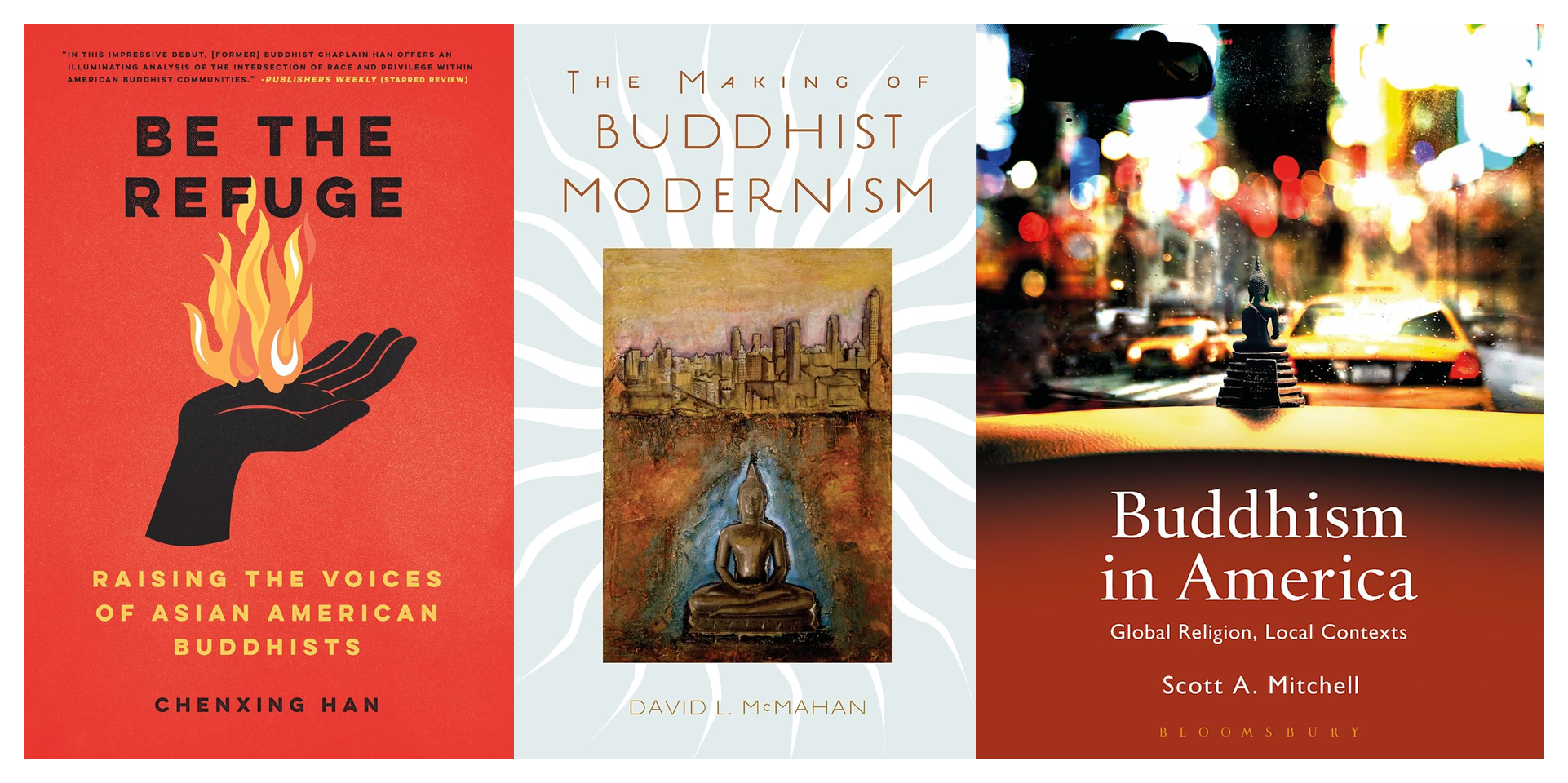
Buddhism reached Europe and the Americas by three routes: scholarship, immigration, and conversion. The Buddhist books on this list trace all three, including the early Asian American communities usually left out of the story. Several also examine Buddhist Modernism, the reshaping of traditional teachings and practices to fit Western assumptions about what religion should be.
Start Here
- Chenxing Han, Be the Refuge: Raising the Voices of Asian American Buddhists (2021)
- David L. McMahan, The Making of Buddhist Modernism (2009)
- Scott A. Mitchell, Buddhism in America: Global Religion, Local Contexts (2016)
Further Reading
- Rick Fields, How the Swans Came to the Lake: A Narrative History of Buddhism in America (1981/1992)
- Ann Gleig, American Dharma: Buddhism Beyond Modernity (2019)
- Wakoh Shannon Hickey, Mind Cure: How Meditation Became Medicine (2019)
- Donald S. Lopez, Jr., Prisoners of Shangri-La: Tibetan Buddhism and the West (1998/2018)
- Jarvis Jay Masters, Finding Freedom: How Death Row Broke and Opened My Heart (1997/2020)
- Charles S. Prebish and Martin Baumann, eds., Westward Dharma: Buddhism Beyond Asia (2002)
- Thomas A. Tweed, The American Encounter with Buddhism, 1844–-1912 (1992)
- Duncan Ryuken Williams, American Sutra: A Story of Faith and Freedom in the Second World War (2019)
- Jan Willis, Dreaming Me: Black, Baptist, and Buddhist; One Woman’s Spiritual Journey (2008)
- Jeff Wilson, Mindful America: The Mutual Transformation of Buddhist Meditation and American Culture (2014)
Buddhist Reference Books and Primary Resources
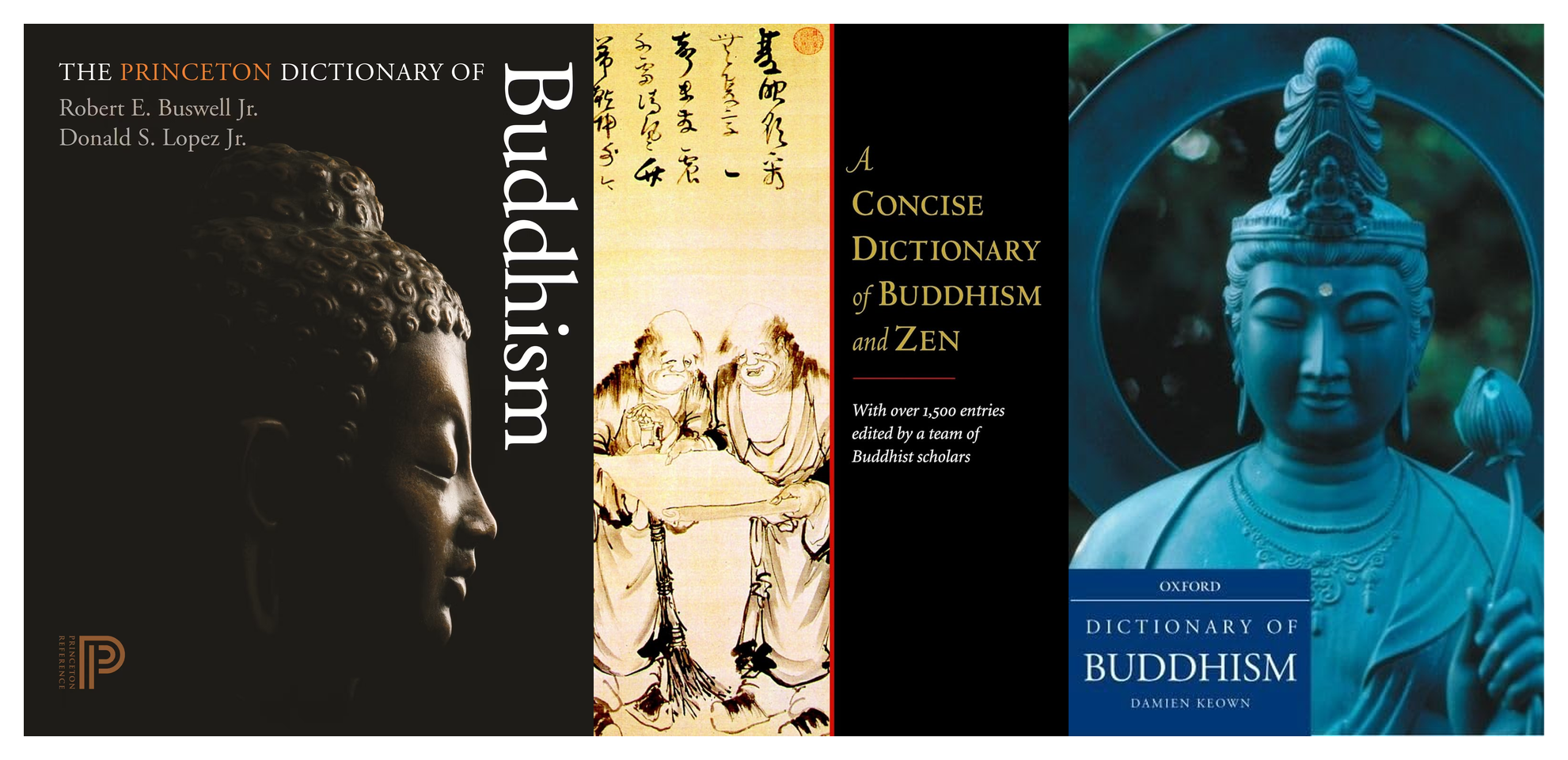
More Buddhist scripture is freely available online in English than at any point in history, and much of it has been translated in the past twenty years. The sites below give direct access to those primary sources, along with reference tools for looking things up. The dictionaries that follow are worth keeping nearby, since even good introductions assume terms that newcomers, and sometimes seasoned readers, will want to check. For a balanced approach, consult several translations or commentaries on individual Buddhist scripture.
Free Online Resources
- 84000—Tibetan Buddhist canon in translation, updated continuously
- Access to Insight and dhammatalks.org—Pali suttas in English
- BDK America—the Japanese Buddhist canon in English
- Collected Works of Korean Buddhism—thirteen volumes of Korean Buddhist writing in English, free to download
- Digital Dictionary of Buddhism—terms and figures from East Asian Buddhism
- Lotsawa House—Tibetan teachings and commentaries, mostly Nyingma
- Nyanatiloka’s Buddhist Dictionary—Pali doctrinal terms
- SuttaCentral—early Buddhist texts in Pali, Chinese, Sanskrit, and Tibetan
- Treasury of Lives—biographies of figures from Tibet, the Himalayas, and Inner Asia
Dictionaries and Encyclopedias
- Robert E. Buswell, Jr., ed., Encyclopedia of Buddhism (2003)
- Robert E. Buswell, Jr., and Donald S. Lopez, Jr., The Princeton Dictionary of Buddhism (2014)
- Fischer-Schreiber et al., A Concise Dictionary of Buddhism and Zen, trans. Michael H. Kohn (2010)
- Damien Keown, A Dictionary of Buddhism (2003)
- Damien Keown and Charles S. Prebish, eds., Encyclopedia of Buddhism (2007)
- Gert Woerner and Stephan Schuhmacher, eds., The Encyclopedia of Eastern Philosophy and Religion: Buddhism, Hinduism, Taoism, Zen (1994)
Buddhism for Beginners is a free resource from the Tricycle Foundation, made possible by the generous support of the Tricycle community. It reflects our mission to make the Buddha’s teachings widely available. We welcome your feedback at feedback@tricycle.org.