
Buddhist Holidays
Buddhist holidays are celebrated around the world in a variety of forms and traditions. Some honor important events in the life of the Buddha—his birth, enlightenment, and death—while others mark days in the monastic calendar, honor ancestors, or ring in the new year. These occasions bring monastics and laypeople together for ceremonies, offerings, communal practice, and no small amount of festive food. This page introduces some of the most widely observed Buddhist holidays and the stories behind them.
Table of contents
What are Buddhist Holidays?
Buddhist holidays serve many functions. They mark key moments in the Buddhist year—the Buddha’s birth and awakening, monastic retreats, and the honoring of ancestral spirits. They also provide opportunities for merit-making through giving, ethical practices, and community rituals, and holidays are often occasions to clean one’s home and prepare special foods. Specific narratives and historical events give many holidays their meaning, such as the anniversary of a monastery’s founding, the passing of a revered master, or a story from the scriptures. Although monastics and laypeople observe many holidays together, they often do so in different ways. Monks and nuns may recite the monastic code or engage in special practices, while laypeople visit temples, prepare offerings, and take on additional precepts. The interplay between these two roles shapes much of the Buddhist religious calendar.
The structure of that calendar is worth understanding, because most Buddhist traditions follow lunisolar calendars. There are several—Indian, Chinese, and Tibetan being the most influential—along with regional variations in Thailand, Korea, Japan, Mongolia, and elsewhere. As a result, the same holiday can fall on different dates in different locations, and the same occasion may take very different forms. For instance, Vesak falls on the full moon of the second month of the Indian lunar calendar, while the Chinese calendar places equivalent observances at different points in the year. This page gives dates according to the relevant tradition’s calendar.
Buddhist holidays also reflect the long history of Buddhism’s movement across Asia. As the tradition spread, it absorbed and adapted preexisting local observances—harvest festivals, ancestral rites, and New Year customs—giving them Buddhist meanings while retaining their cultural flavor. The same is true of many holidays in other religions. For example, Losar customs have roots in the pre-Buddhist rituals of Tibet, and Ohigan derives partly from agricultural traditions in Japan. Such adaptation is central to how Buddhism has functioned as a living tradition in diverse cultures. Since Buddhism has spread beyond Asia, diaspora communities and Western sanghas have continued this pattern and, in some cases, developed their own observances—marking occasions such as Earth Day or Black History Month as expressions of Buddhist values within their adopted cultures.
This page groups holidays by type: commemorations of the Buddha’s life, monastic observances, ancestral festivals, and New Year celebrations, among others. Even within these categories, significant variation exists. That diversity is part of Buddhism’s story.
Remembering the Buddha
Popular Buddhist holidays recall the Buddha, whose life events rank among the most widely celebrated events in the Buddhist world. In temples and homes, practitioners chant scriptures, meditate, and listen to sermons recounting various episodes from the Buddha’s life. These days are also occasions for merit-making—donations to monasteries and charities, the release of captive animals, and the renewal of vows. The Buddhist holidays that follow take different forms across traditions, although some overlap significantly.
Vesak/Wesak

- India and Nepal: Buddha Purnima, full moon, 2nd lunar month
- Sri Lanka: Vesak Poya, full moon, 2nd lunar month
- Myanmar: Kason, full moon, 2nd lunar month
- Thailand: Visakha Puja, full moon, 6th lunar month
- Kalmykia: Urs Sar, full moon, 5th lunar month
- Tibet: Saga Dawa, full moon, 4th lunar month
- Buryatia: Donchod Khural, full moon, 4th lunar month
- Vietnam: Phat Dan, full moon, 4th lunar month
- International Holiday: full moon in May
For many in the Buddhist world, Vesak is the most important Buddhist holiday of the year. Its name comes from the second month of the ancient Indian lunisolar calendar. The holiday falls on that month’s full moon. In the Theravada world, it is also known as Wesak. In Tibetan Buddhist cultures, it is called Saga Dawa. Both traditions commemorate the Buddha’s birth, death, and enlightenment on a single day. East Asian traditions mark these events on separate holidays.
Vesak has its origins in the celebrations of popular deities and bodhisattvas. Sri Lanka instituted it as a national holiday in 1884, and from there, its recognition spread. By the 1950s, many Asian countries observed International Vesak Day. In 1999, the United Nations recognized it as an international holiday, and the U.S. White House observed it for the first time in 2021. Vesak is an occasion for chanting, meditation, candlelit processions, and acts of generosity. Celebrations vary widely by country and community because Buddhism itself takes such different forms around the world.
Buddha’s Birthday and International Buddhist Day
- Japan: Hanamatsuri, April 8
- China: Fodan, 8th day, 4th lunar month
- Korea: Bucheonim Osin Nal, 8th day, 4th lunar month, a public holiday
- Vietnam: Phat Dan, 15th day, 4th lunar month
- India and Nepal: Buddha Jayanti (part of Vesak), full moon, 2nd lunar month
- Theravada countries: celebrated as part of Vesak
- International Buddhist Day, April 8
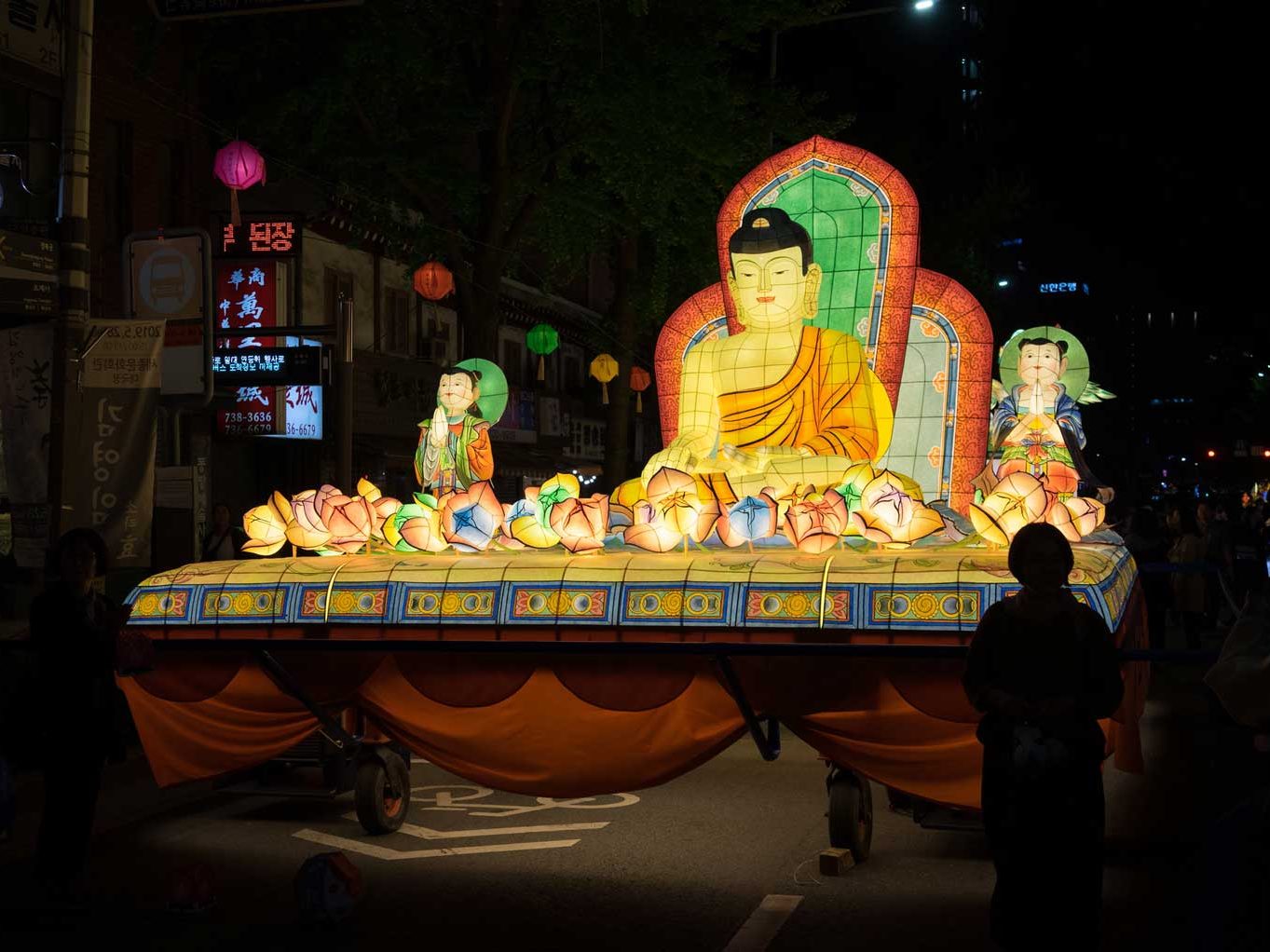
East Asian Buddhists observe the Buddha’s birthday as a separate holiday, while Theravada communities celebrate it as part of Vesak. Japanese Buddhists call it Hanamatsuri, the Flower Festival. Celebrants make flower offerings and bathe Buddha statues with scented water, recalling the dragon kings who bathed the newborn Siddhartha. China and Vietnam also mark this Buddhist holiday with lantern festivals and temple ceremonies. In Korea, it falls on a national public holiday and coincides with an internationally renowned lantern festival inscribed on the UNESCO Intangible Cultural Heritage list. In 2014, Buddhist leaders from more than forty countries established International Buddhist Day, to be observed on the same date.
Bodhi Day
- Japan: Rohatsu, December 8
- China: Laba, 8th day, 12th lunar month
- Korea: Seongdo Jaeil, 8th day, 12th lunar month
- South and Southeast Asia, Tibet: celebrated on Vesak
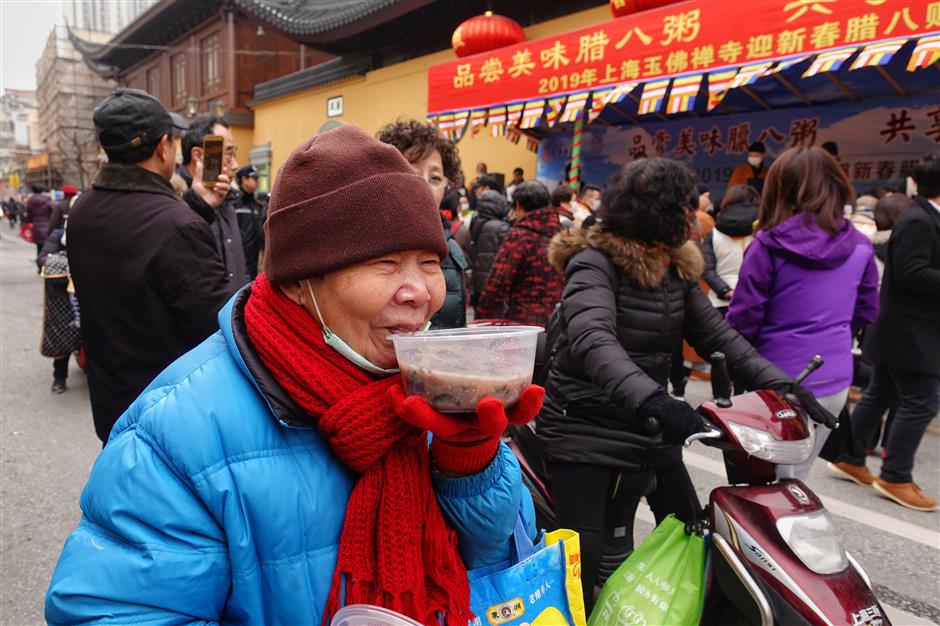
Bodhi Day commemorates the Buddha’s awakening and his triumph over Mara. In Zen Buddhism, a weeklong intensive retreat customarily precedes the holiday. On the eve of Bodhi Day, practitioners often meditate through the night, recalling the Buddha’s all-night vigil before his enlightenment. Korean Buddhists observe the day with temple ceremonies. During China’s Laba Festival, celebrated on the same date, monks distribute bowls of steaming rice porridge with nuts and dried fruits. This echoes the food that the young woman Sujata offered the Buddha on the eve of his enlightenment. In India, Tibet, and Southeast Asia, Buddhists commemorate the awakening as part of Vesak rather than as a separate holiday.
Dharma Day

- India and Nepal: Asalha Puja, full moon, 8th lunar month
- Mongolia: Kukhor Duchen, 4th day, 6th lunar month
- Sri Lanka: Esala Poya, full moon, 4th lunar month
- Tibet: Chokhor Duchen, 4th day, 6th lunar month
- Thailand: Asanha Bucha, full moon, 8th lunar month
Dharma Day commemorates the Buddha’s first teaching on the four noble truths and the eightfold path. The Buddha delivered this teaching to five ascetics at the Deer Park in Sarnath, near modern-day Varanasi. Buddhists mark the day by chanting, making offerings at monasteries, and circumambulating stupas. Many also treat this Buddhist holiday as an auspicious day to begin a new venture or renew vows. In Thailand and Sri Lanka, it is among the most important public holidays of the year. Tibetan Buddhists call it Chokhor Duchen, “Turning the Wheel Day.” The name marks the moment the Buddha set the wheel of the dharma in motion. Dharma Day also signals the beginning of the rain retreats, one of the major monastic observances.
Miraculous Events
- Tibet: Lhabab Duchen, 22nd day, 9th lunar month
- Buryatia: Lhabab Duisen, 22nd day, 9th lunar month
- Thailand: Ok Phansa, full moon, 11th lunar month
- Myanmar: Thadingyut, full moon, 11th lunar month
- Sri Lanka: Vap Poya, full moon, 11th lunar month
- Tibet: Chotrul Duchen, 15th day, 1st lunar month
Some Buddhist holidays commemorate miraculous events from the Buddha’s life story. One of the most widely observed, for instance, commemorates the Buddha’s descent from Trayastrimsa—the Heaven of the Thirty-Three Gods. There, he spent three months teaching the abhidharma to his mother Maya, who had taken rebirth as a male deity in Tushita heaven. According to tradition, the Buddha descended on a triple celestial ladder manifested by Indra and Brahma. He landed at Samkasya in India, one of the eight great places in the Buddha’s life. Tibetan Buddhists call this event Lhabab Duchen, while Thai Buddhists call it Ok Phansa, and in Myanmar, it is Thadingyut.
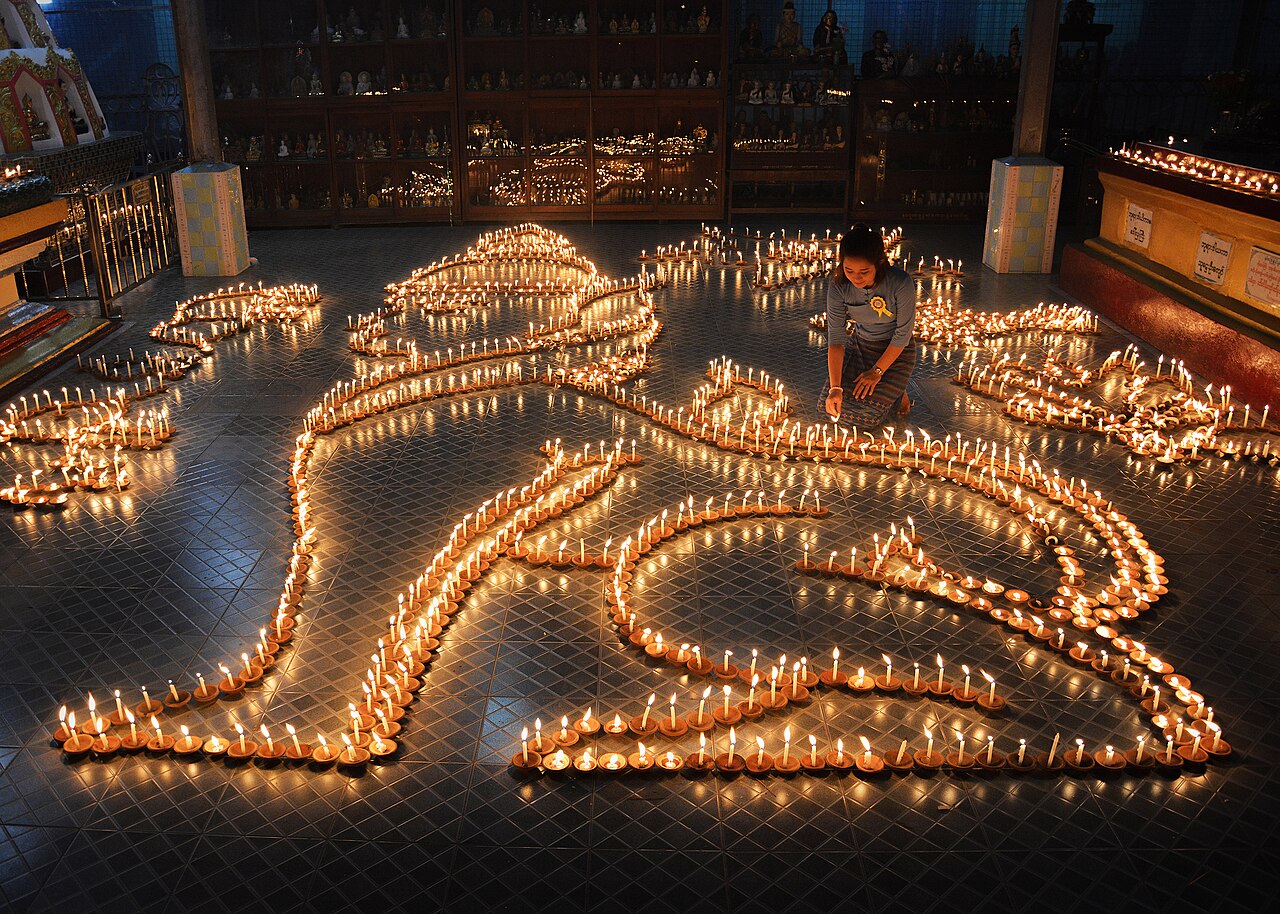
Chotrul Duchen, or Great Miracles Day, commemorates a miraculous event—the Buddha’s performance of miracles at Sravasti. Over the course of fifteen days, the Buddha defeated six rival teachers and inspired faith in his teachings. Both Lhabab Duchen and Chotrul Duchen rank among the four major holy days in the Tibetan tradition. Consequently, Tibetan Buddhists believe that virtuous and nonvirtuous actions multiply ten million times on each of these days. Common observances include lighting butter lamps and making offerings at stupas.
Parinirvana Day
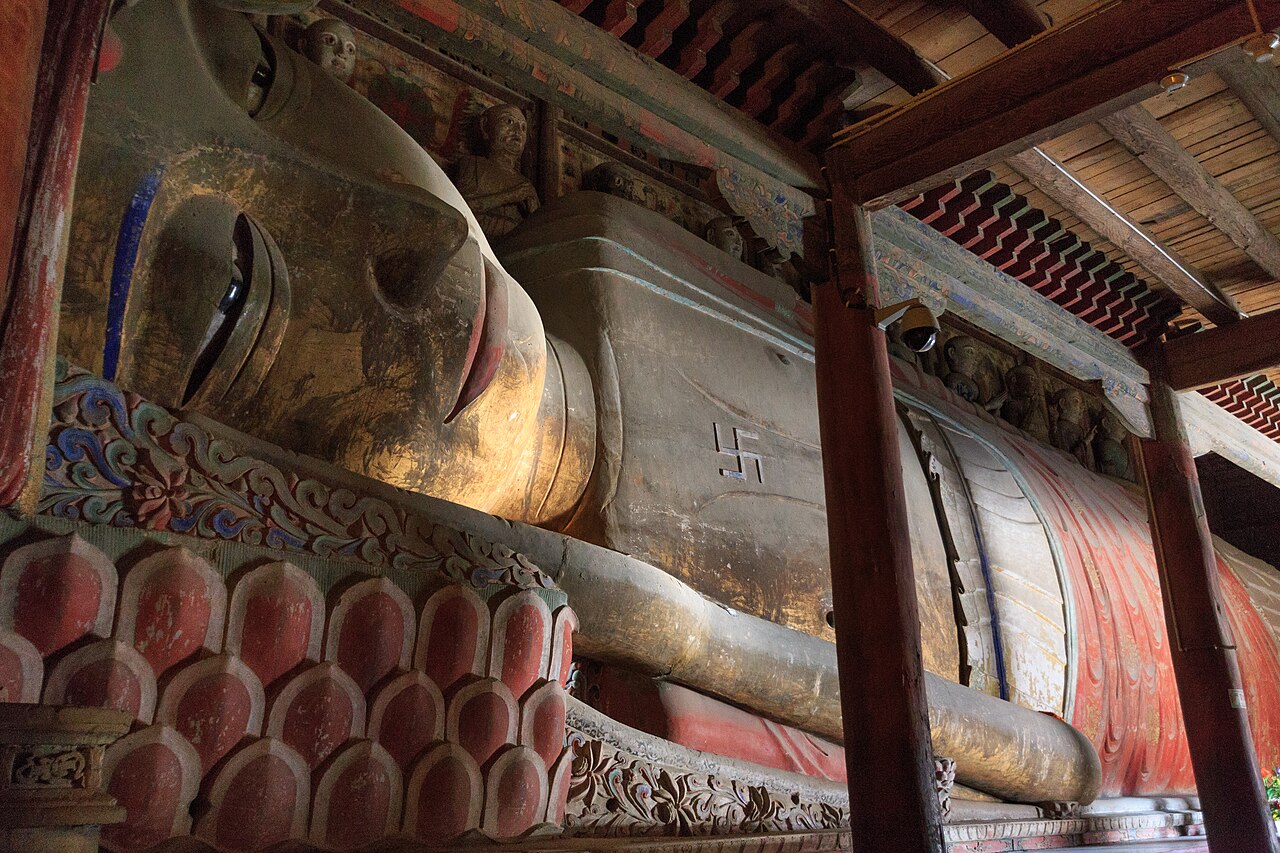
- Japan, February 15 (some schools celebrate on February 8)
- China, Korea, Vietnam: 15th day, 2nd lunar month
- Bhutan: 15th day, 4th Bhutanese lunar month
Parinirvana Day commemorates the Buddha’s death and final liberation. Primarily observed in East Asia, the day is more solemn than celebratory. Practitioners read accounts of the Buddha’s final days in texts such as the Mahaparinirvana Sutra. And they contemplate the teachings he gave before his death, with an emphasis on impermanence. The Buddha died in Kushinagar while lying between two trees. So, some temples and monasteries mark this Buddhist holiday by displaying images of the reclining Buddha and holding memorial services.
Monastic Observances
Alongside the daily routines of monastic life, special observances mark the monthly and annual calendar. Rituals, intensified practice, and specific rules of conduct characterize these observances. During the rains retreat, for instance, monastics must remain within the monastery grounds. Canonical narratives trace these traditions back to the time of the Buddha, though they have taken varied forms across time and cultures. Monastic observances often include lay participation, regularly bringing together the full Buddhist community.
Rains Retreat
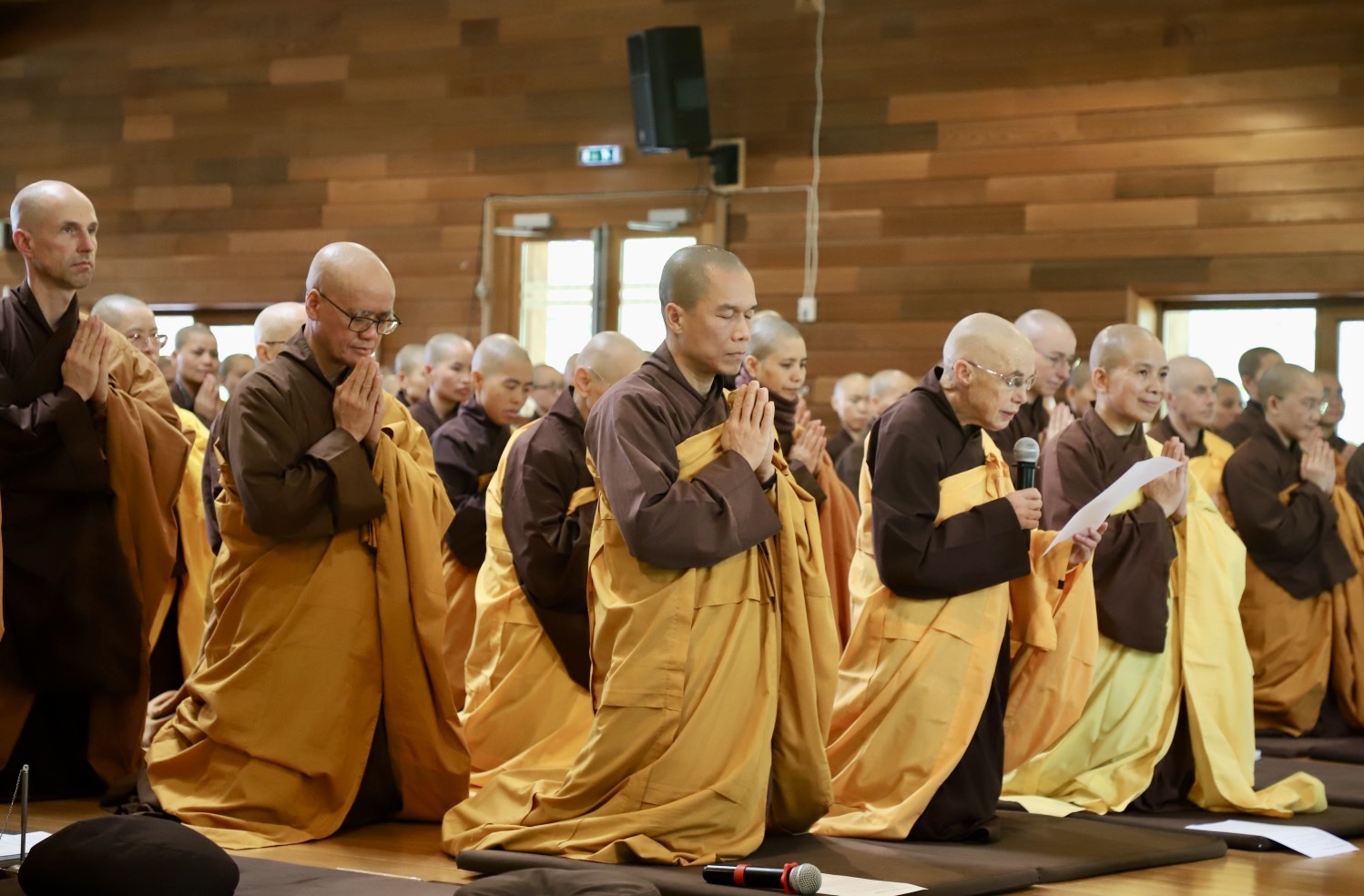
- India, Myanmar: 1st day of the waning moon, 4th lunar month, to the full moon, 7th lunar month
- Thailand: 1st day of the waning moon, 8th lunar month, to the full moon, 11th lunar month
Monastics throughout the Buddhist world observe the rains retreat (Pali: vassa; Skt.: varsa) as one of the most important events in the monastic calendar. It takes place annually during the three-month rainy season. According to tradition, the Buddha established it to prevent monastics from traveling during the monsoon. Walking during this time could harm insects, worms, and newly planted crops. Monastics remain within the monastery grounds and focus on study and contemplative practice. Scholars have suggested that this enforced stability may have contributed to the construction of the first permanent monasteries. Theravada, Mahayana, and Vajrayana traditions all observe the rains retreat, and it culminates in the Kathina ceremony.
Kathina
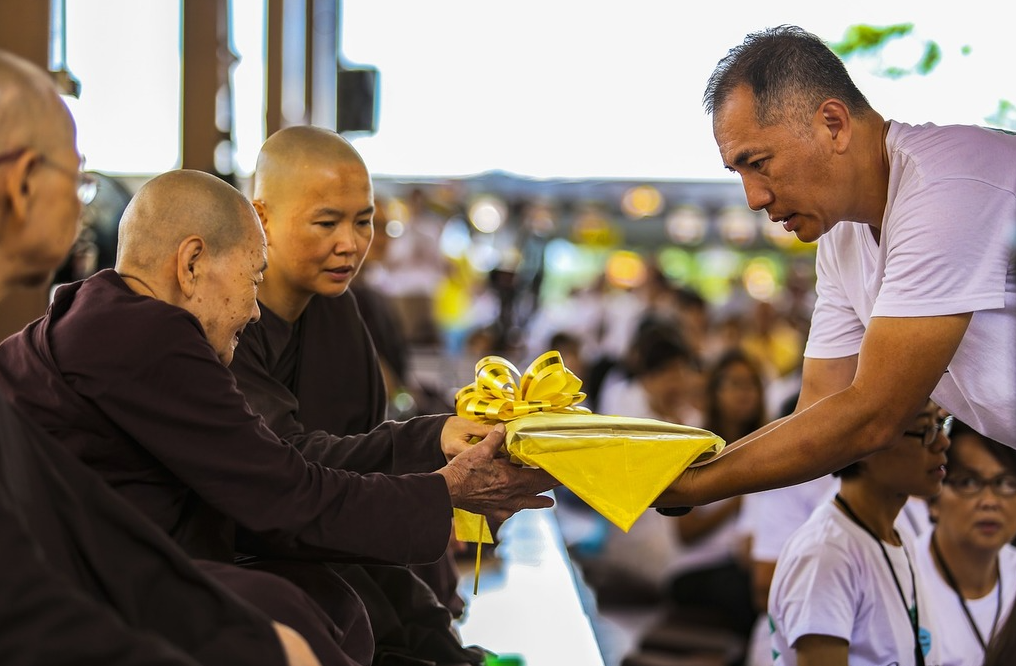
- India, Myanmar: full moon, 7th lunar month, until the full moon, 8th lunar month
- Thailand: full moon, 11th lunar month, until the full moon, 12th lunar month
Buddhist communities observe Kathina as a festival month immediately following the rains retreat. Individual monasteries schedule their Kathina ceremony—a robe-cloth offering—at any point within that month. The monastic code traces its origins to a group of monks who arrived at the Buddha’s residence with robes damaged from monsoon travel. The Buddha authorized a ceremony for the community to receive and distribute new cloth. Laypeople bring robes—typically three square meters of cloth—along with other gifts. These offerings are distributed to the entire monastic community among its members. Kathina remains a major observance in Theravada traditions and in diaspora communities worldwide. In Mahayana traditions, there is no equivalent festival period, though the practice of laypeople offering robes to monastics is common.
Uposatha

- Southeast Asia: full moon, new moon, and quarter moons of each lunar month
- Sri Lanka: full moon and new moon of each lunar month
Uposatha days are regular communal observances. Theravada communities hold them four times a month—on the full moon, new moon, and quarter moons. While in Sri Lanka, they occur twice a month. Monastics formally gather to recite the monastic rules of conduct (Pali: patimokkha; Skt.: pratimoksa) and confess misdeeds, because this ceremony is central to defining membership in the monastic community. Traditionally, it requires four or more monastics at a monastery or temple. Laypeople dressed in white often spend much of the day at the monastery. They prepare food for monastics, listen to chanting and sermons, and make offerings. Laypeople also often observe the eight precepts for the day, which include celibacy, fasting after midday, and abstaining from entertainment. Mahayana traditions maintain similar monastic observances, though generally with less elaborate structure and less lay participation. All major Buddhist holidays, including Vesak, fall on Uposatha days.
Sangha Day

- India and Nepal: Magha Puja, full moon, 3rd lunar month
- Thailand: Makha Bucha, full moon, 3rd lunar month
- Sri Lanka: Navam Poya, full moon 3rd lunar month
- Myanmar: Tabaung, full moon, 12th lunar month
- Laos: Boun Maka Busa, full moon, 3rd lunar month
- Cambodia: Meak Bochea, full moon, 3rd lunar month
- Less prominent in the Mahayana world, though some communities mark it
Sangha Day commemorates a spontaneous full moon gathering of 1,250 enlightened monks near Rajagaha. All were ordained by the Buddha, including his disciples Mahakashyapa, Sariputra, and Maudgalyayana. During this gathering, the Buddha summarized his teachings with an injunction to avoid evil, do good, and purify the mind. The event marks the auspicious founding of the monastic community. Accordingly, communities observe this Buddhist holiday with temple offerings, meditation, and processions honoring the three jewels.
Ancestor Holidays
Buddhist ancestor holidays blend doctrinal teachings with local customs and popular beliefs. These occasions bring communities together to express gratitude and maintain a connection with deceased relatives. They do so through ritual offerings and memorial services. Offerings to restless spirits and hungry ghosts (Pali: peta; Skt.: preta) are common, and they go by many names and take many forms. Central to these holidays is the transfer of merit to the dead—the idea that virtuous acts performed by the living can benefit those in other realms. In monasteries, monks and nuns observe the death anniversaries of past masters alongside more popular lay festivals. The Buddhist holidays described below are among the most widely observed ancestor festivals in the Buddhist world.
Ghost Festivals
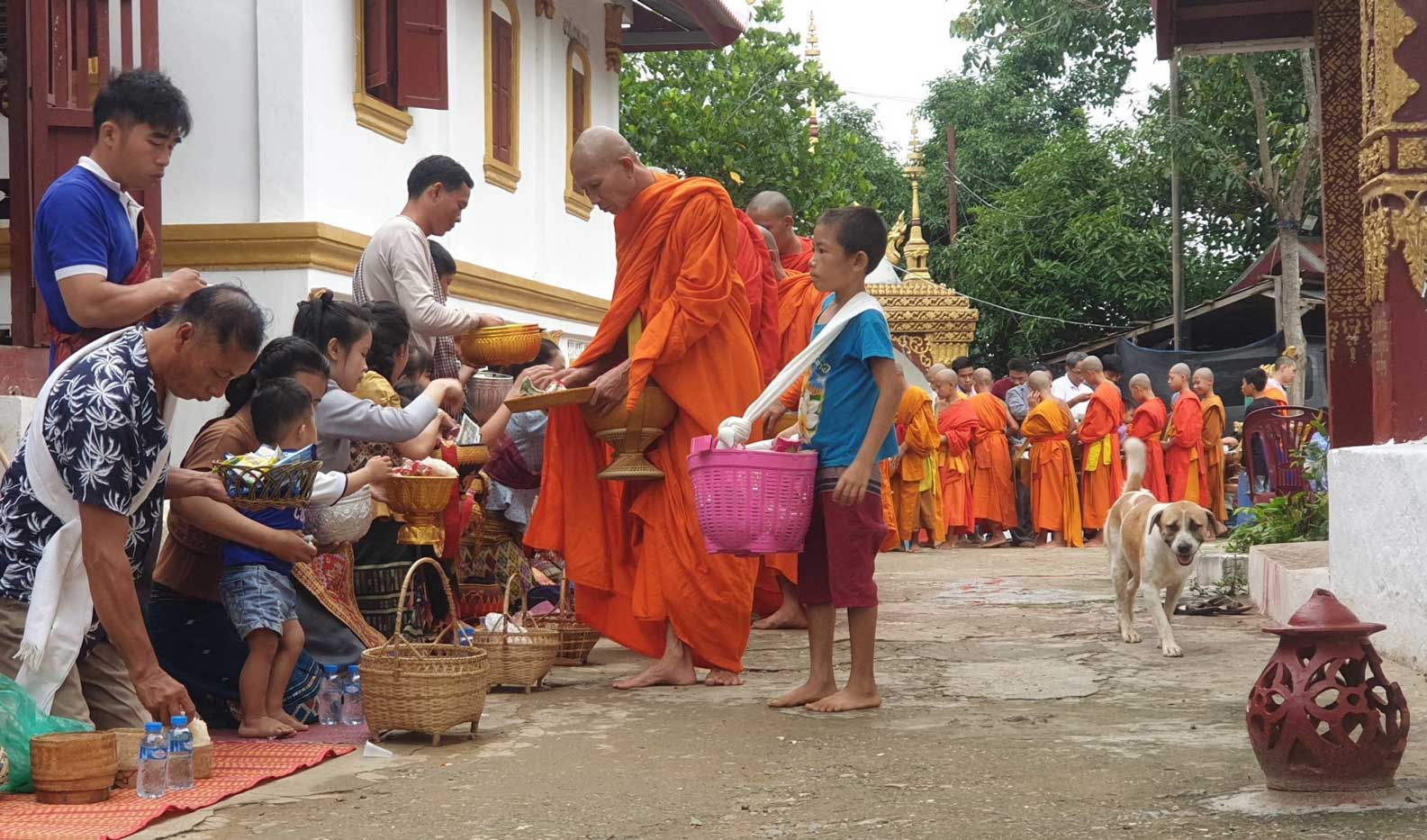
- China: Pudu, 15th day, 7th lunar month
- Korea: Beakjung, 15th day, 7th lunar month
- Vietnam: Tet Trung Nguyen, the 15th day, 7th lunar month
- Cambodia: Pchum Ben, fifteen days, starting with the new moon, 10th lunar month
- Laos: Boun Khao Padap Din, 15th day, 9th lunar month
- Thailand: Sat Thai, fifteen days, starting with the new moon, 10th lunar month
Hungry ghost festivals draw on the Ullambana Sutra. This Mahayana text tells the story of Maudgalyayana, the Buddha’s disciple. He goes to the underworld to free his mother from the realm of the hungry ghosts. During the Chinese and Vietnamese hungry ghost festivals, families honor their ancestors and appease wandering spirits. They offer food, incense, and burning joss paper—a currency to support beings in the afterlife. At public rituals and celebratory performances, organizers leave the front-row seats empty for spirits who attend.
Cambodian Buddhists observe a distinct fifteen-day festival. During this time, laypeople visit pagodas at dawn—the time when the gates to hell are open. They offer food to wandering spirits, including those with no living relatives to make offerings on their behalf. Similarly, in Theravada communities, the Petavatthu provides a scriptural basis for such offerings. This Pali canon text describes the state of being a hungry ghost in detail. Monastics make these offerings at the close of the rains retreat, when they hold special powers to benefit the dead. Common themes across these Buddhist holidays are filial piety, compassion, and the power of merit transfer.
Obon

- Traditional date: 15th day, 7th lunar month
- Western calendar: July 15, in Tokyo, Tohoku, and Hokuriku
- Western calendar: August 15, across most of Japan
The Obon Festival shares connections with hungry ghost festivals in Mahayana Buddhism. Traditionally falling on the 15th day of the 7th lunar month. Today, however, Obon takes place on either July 15 or August 15, depending on the region. This variation reflects Japan’s shift to the Gregorian calendar during the Meiji Restoration. It is one of the most important Buddhist holidays in Japan. Many people travel to their hometowns to celebrate with family.
On the first day, celebrants light small fires or lanterns in front of their houses to guide ancestral spirits home. They also make offerings at gravesites and temples. On the second day, celebrants perform folk dances in the streets. Called bon odori, the dances recall Maudgalyayana’s joy at freeing his mother from the realm of hungry ghosts. On the third day, celebrants set luminous paper lanterns afloat in lakes, rivers, and the ocean—sometimes by the hundreds of thousands. This helps guide the spirits back to their resting places. On the fourth day, families return to burial sites to tidy graves and say farewell until the following year. Obon has traveled the world with Japanese emigration. Diaspora communities in the United States, Brazil, and Argentina, among many other places, celebrate it as well.
Higan/Ohigan

- Japan: spring and fall equinoxes
Ohigan is a weeklong Japanese Buddhist holiday for honoring one’s ancestors, observed twice a year during the spring and fall equinoxes. The name translates as “crossing over to the other shore”—a reference to nirvana, the far shore beyond the ocean of samsara—and the equinox marks the time when the distance between the worlds of the living and the dead is shortest. People clean and tend family graves and decorate them with flowers, a tradition rooted partly in agricultural origins, when communities linked the honoring of ancestors to a good harvest. Participants chant and contemplate the six perfections (Skt.: paramita) and eat special sweets made of sticky rice wrapped in sweetened red bean paste—ohagi in the fall and botamochi in the spring.
Holidays for Buddhist Masters

- India: Ambedkar’s Birthday (Ambedkar Jayanti), April 14
- Worldwide: Dalai Lama’s Birthday, July 6th
- Japan: Nichiren (memorial), February 16
- Japan: Dogen, January 26 (birthday) and September 29 (memorial)
- Tibet: Tsongkhapa (memorial), 25th day, 10th lunar month
- Worldwide: Thich Nhat Hanh Continuation Day, October 11
Disciples mark the death anniversaries of their masters within a given lineage with ceremonial gatherings to commemorate their passing. Practices vary across traditions, but it is common for disciples to visit the master’s reliquary stupa or gather at monasteries and temples to chant scriptures, offer incense, and recount stories and teachings from the master’s life. In Tibetan Buddhism, these Buddhist holidays are often major observances—involving large monastic gatherings, butter lamp offerings, and recitation of the master’s teachings—reflecting the tradition’s emphasis on lineage and guru devotion. Buddhist communities increasingly recognize the birthdays of important figures as well. The dates listed here serve only as examples: They represent a small selection of the many such commemorations, both historical and contemporary.
New Year Buddhist Holidays
Buddhist New Year celebrations typically begin on the first day of a region’s lunar calendar and take place anywhere from late January through April. Celebrants clean their homes, symbolically sweeping away the difficulties of the departing year and welcoming auspicious opportunities in the one ahead. In many traditions, it is customary to make offerings at monasteries and sacred sites, take precepts, renew vows, and dedicate merit for health, success, and well-being. Many Buddhist celebrations have absorbed pre-Buddhist local customs, giving them a character that blends religious observance with broader cultural traditions. A few of the most well-known are listed below, but New Year celebrations take many forms, and every Buddhist culture observes them in its own way.
Chinese Lunar New Year
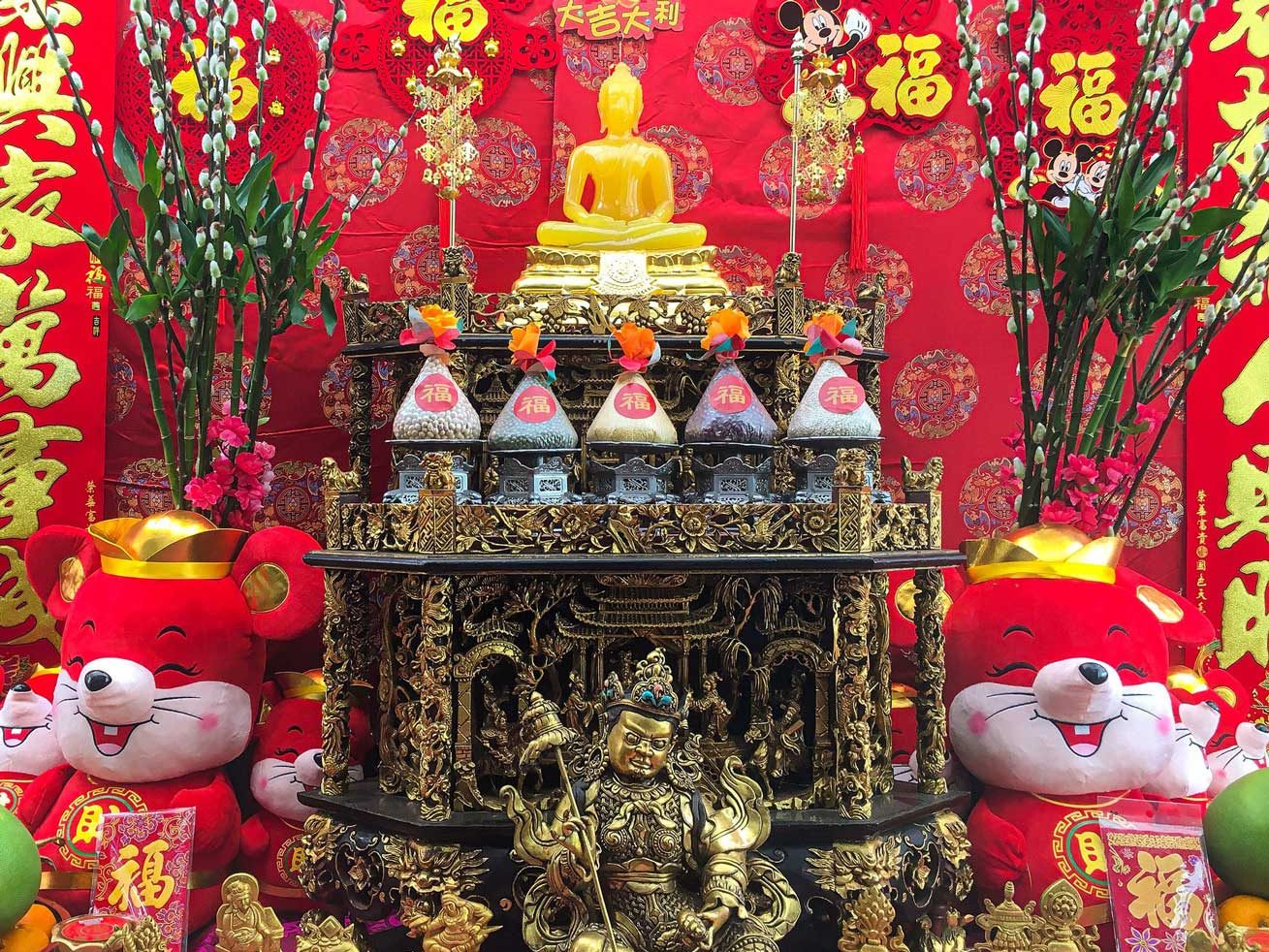
The Lunar New Year is a major cultural holiday in China, and Chinese diaspora communities around the world celebrate it widely. For Buddhists, it is a time to visit temples, honor the Buddha, and make offerings, because the holiday centers on purifying misdeeds from the previous year and renewing intentions for the one ahead. It is also traditional to abstain from eating meat on the first day of the new year and to release captive animals—birds, fish, or turtles—as a merit-making practice. Throughout the festival period, Buddhists offer prayers for health, prosperity, and well-being at temples.
Tibetan Losar
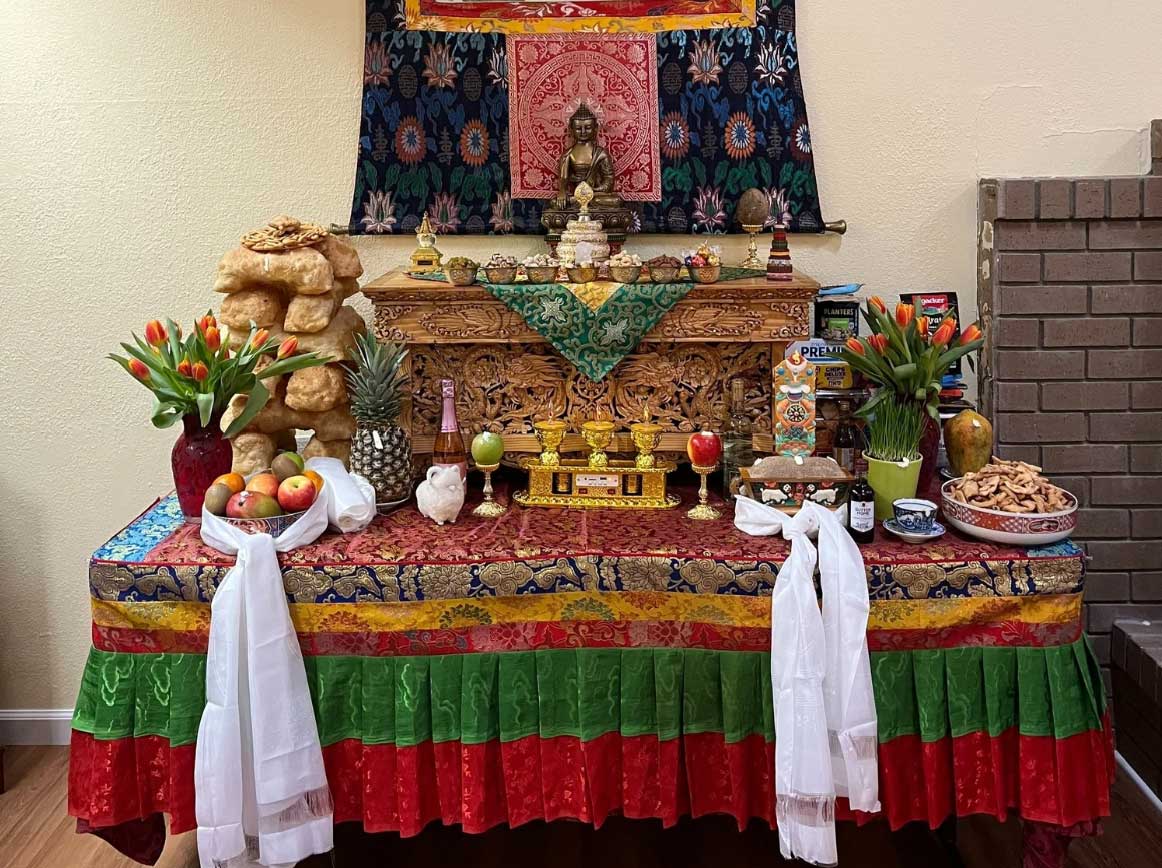
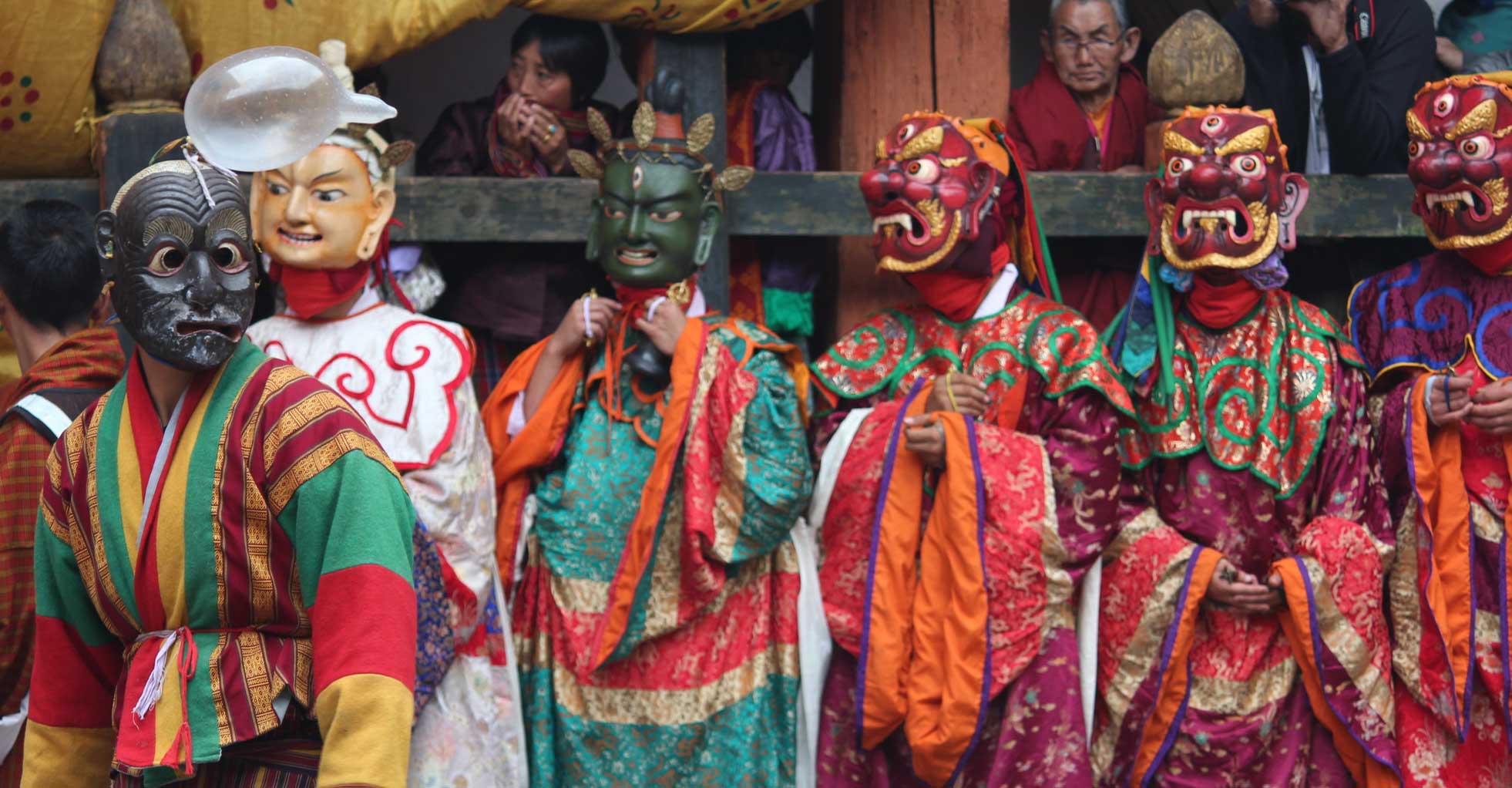
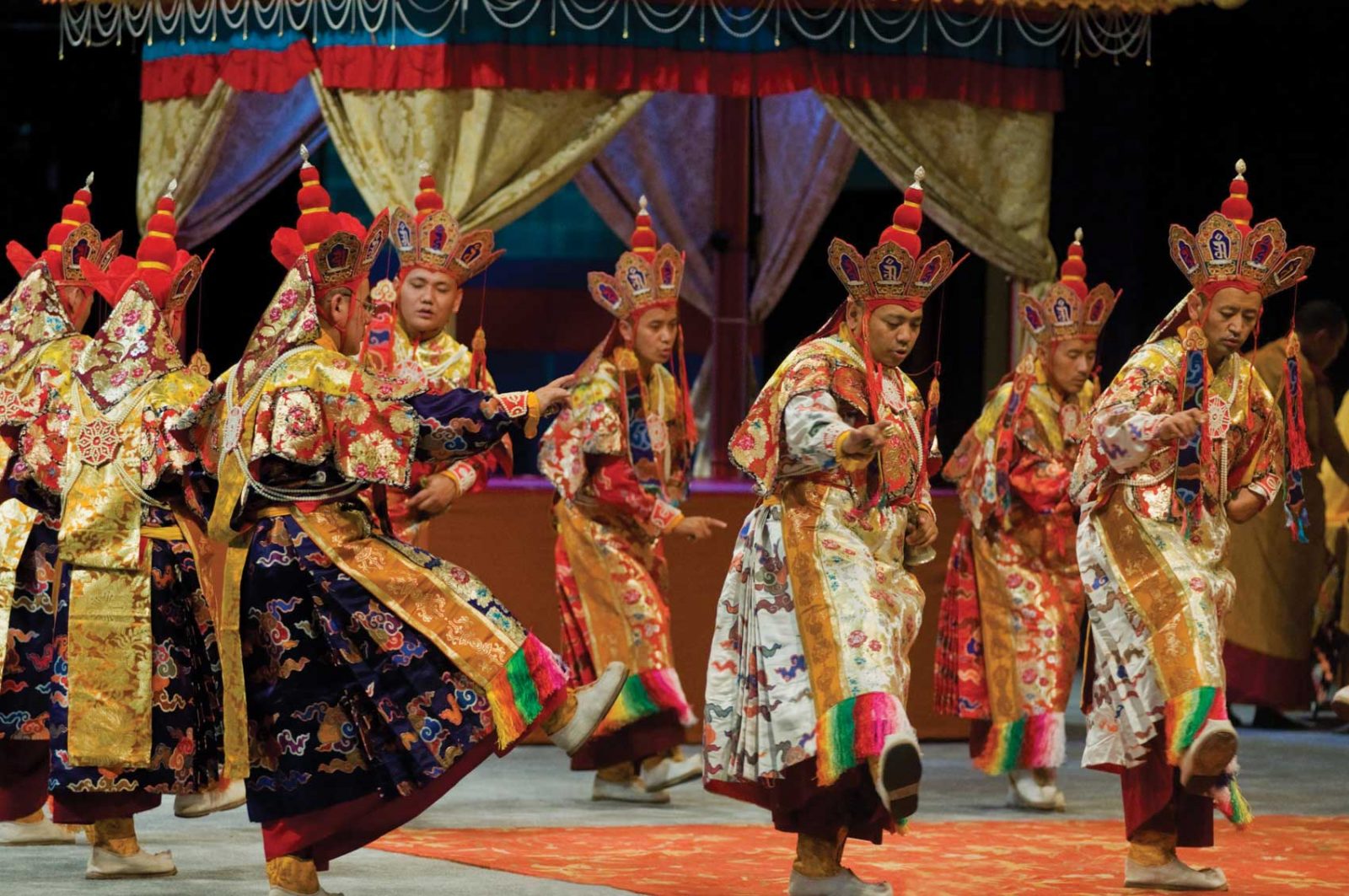
Losar, the Tibetan Lunar New Year, draws celebrations from Tibetan Buddhist communities in Tibet, Bhutan, Nepal, Mongolia, and the greater diaspora. Just before the new year, communities perform a ritual to purify themselves of misdeeds and remove obstacles for the year ahead. Monastics gather for ceremonies in the early morning, and throughout the first day of the year, people visit Buddhist teachers at their monasteries and residences. One of the most popular events is the cham dance, in which monks perform in ornate silk costumes and masks. Along with wearing festive clothing and hanging new prayer flags, Tibetans also sing, dance, give gifts, and cook special meals. Although Losar has pre-Buddhist roots in Tibetan culture, its Buddhist character is now central. In areas where Tibetan Buddhism has spread, however, communities celebrate the new year under other names—Sagaalgan in Buryatia, Zul in Kalmykia—each with its own distinct customs.
Japanese Shogatsu
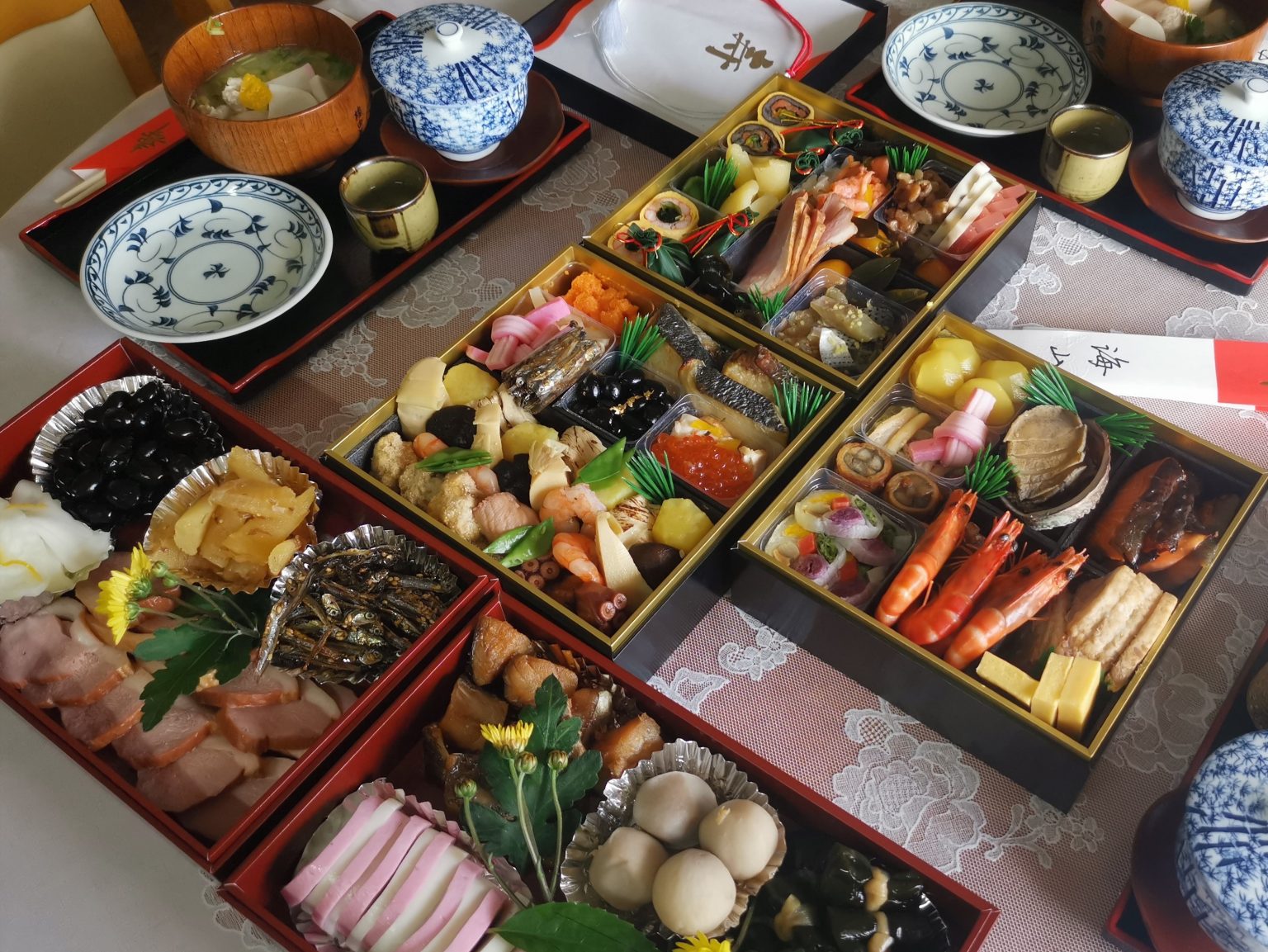
Shogatsu, the Japanese New Year, begins on January 1—unusual among Asian New Year celebrations. Japan adopted the Gregorian calendar during the Meiji Restoration, which is why this date is used. Many Japanese consider hatsumode—the first temple or shrine visit of the new year—especially important. It sets the tone for the year ahead. The blending of Buddhist and Shinto practice on this occasion is characteristic of Japanese religious life. During the holiday, temples ring their bells 108 times to dispel the 108 afflictions recognized in Buddhist teachings. Families decorate their houses with new ornaments, especially around the entryway, to symbolize a fresh beginning. Traditional foods include osechi ryori, a selection of dishes served in ornate lacquered containers.
Thai Songkran
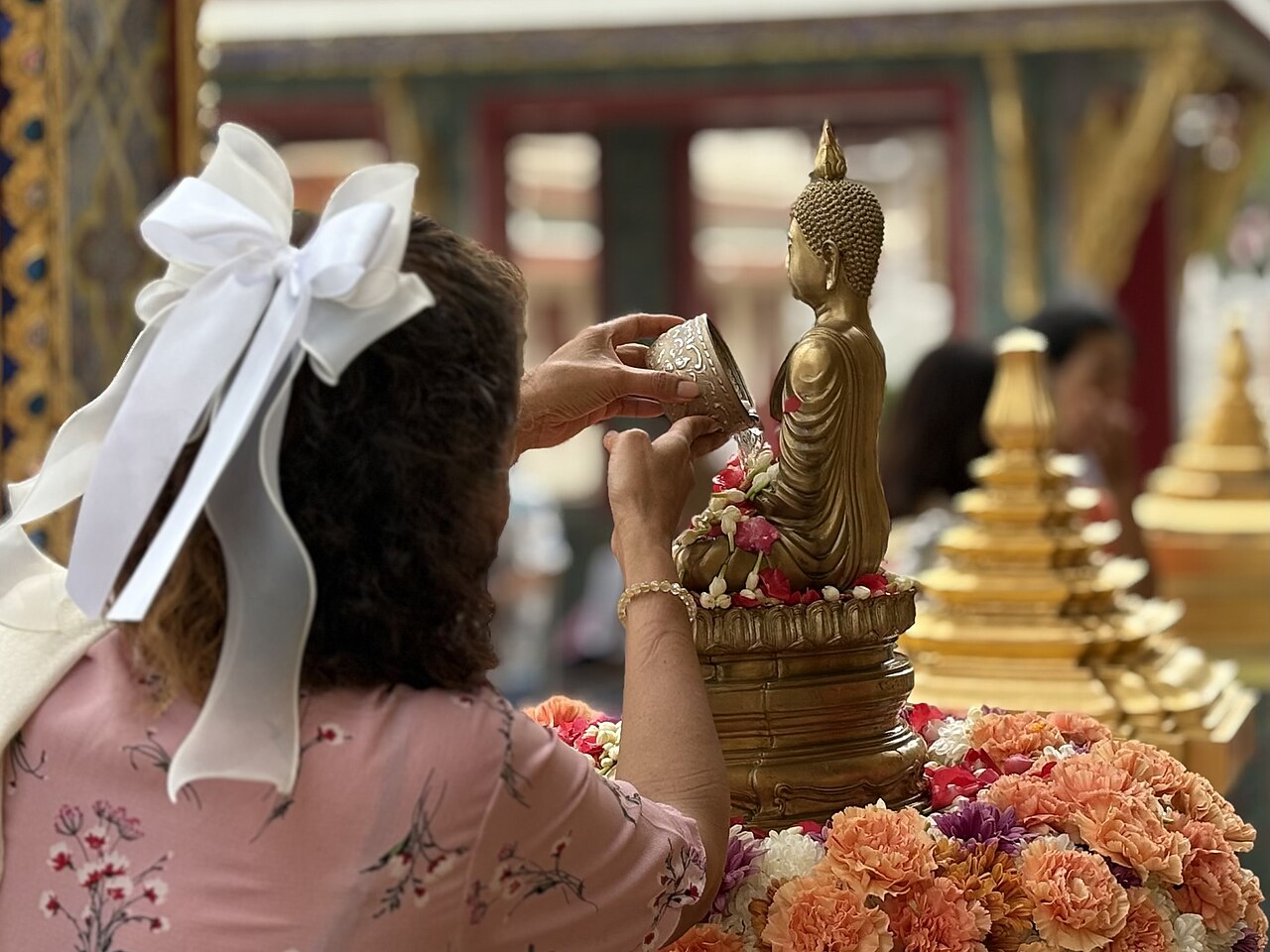
Songkran, the traditional Thai New Year, falls on April 13, when the sun moves from Pisces into Aries according to the Thai solar calendar. Thailand now officially observes January 1as its civil New Year, but Songkran remains a national holiday and one of the most important holidays of the new year. The festival is famous for jubilant water fights in the streets, which symbolize the ritual cleansing of the previous year’s misdeeds. Celebrants also wash Buddha statues, visit temples, and make offerings to monastics. In northern Thailand, people carry sand to temples to symbolically release the impurities of the departing year. Communities build sand stupas (Thai: chedi) outside temples and decorate them with sacred flags.
Bodhisattva and Tantric Buddhist Holidays
Mahayana and Vajrayana traditions share many holidays with the broader Buddhist world but also maintain observances that reflect their own distinctive character. In Mahayana Buddhism, bodhisattvas—those who vow to attain buddhahood for the benefit of all sentient beings—are central to numerous Buddhist holidays, with figures such as Avalokiteshvara, Tara, and Ksitigarbha venerated on specific days throughout the year. In Vajrayana Buddhism, the lunar calendar structures a cycle of monthly feast offerings centered on tantric deities and lineage figures. Tibetan Buddhist cultural regions—including Tibet, Bhutan, Nepal, and Mongolia—are home to many of these observances.
Bodhisattva Day
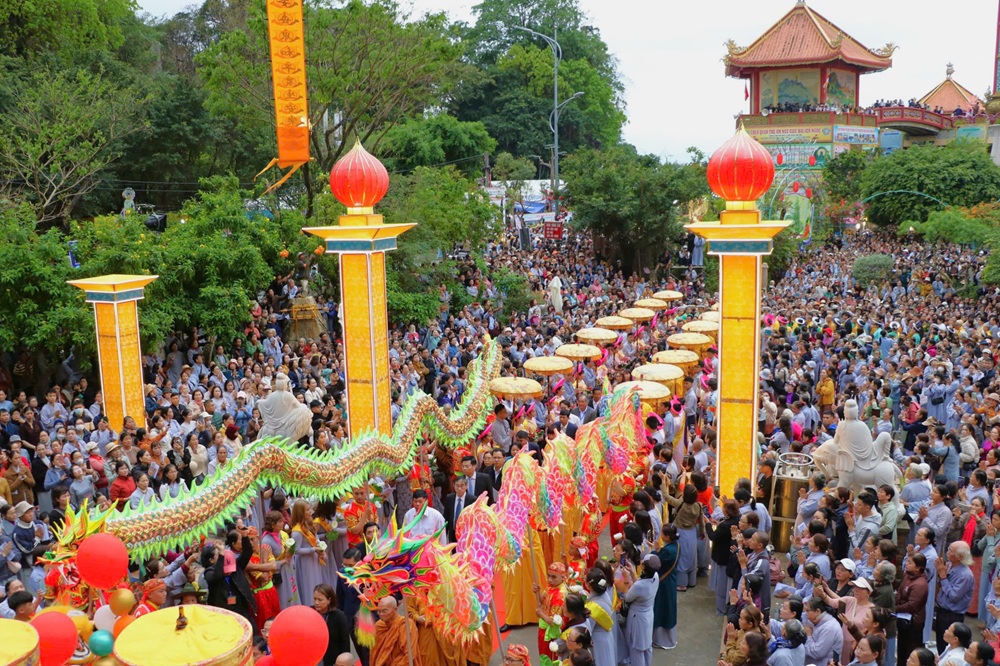
- Japan: Jizo Bon, August 23–24
- China: Guanyin, 19th day, 2nd lunar month (birthday); 19th day, 6th lunar month (enlightenment); 19th day, 9th lunar month (renunciation)
- Tibet: Drolma Tsogkhor (Tara Day), 8th day of each lunar month
- Buryatia: Maidarai Khural (Maitreya Day), between the 4th and 6th lunar month (day and month vary)
Bodhisattvas stand at the center of numerous Mahayana Buddhist holidays and festivals. In some traditions, communities venerate a bodhisattva monthly; in others, observances fall on specific days marking key events in the bodhisattva’s sacred biography. Tibetan Buddhists venerate Tara on a special day each month. In Nepal, devotees honor Avalokiteshvara twice a year during Rato Machhindranath Jatra, when a sacred image of the bodhisattva travels through the Kathmandu Valley on a ceremonial chariot. In China, devotees know this same bodhisattva as Guanyin and typically depict her in female form, with three separate holidays marking her birthday, enlightenment, and renunciation.
East Asian Buddhists venerate Ksitigarbha—called Dizang in China, Jizo in Japan, and Jijang in Korea—as the bodhisattva who rescues beings from hell realms. Mahayana communities also widely observe holidays for Samantabhadra, Manjushri, and Maitreya. These examples represent a small selection of the many bodhisattva days observed throughout the year.
Dakini Day
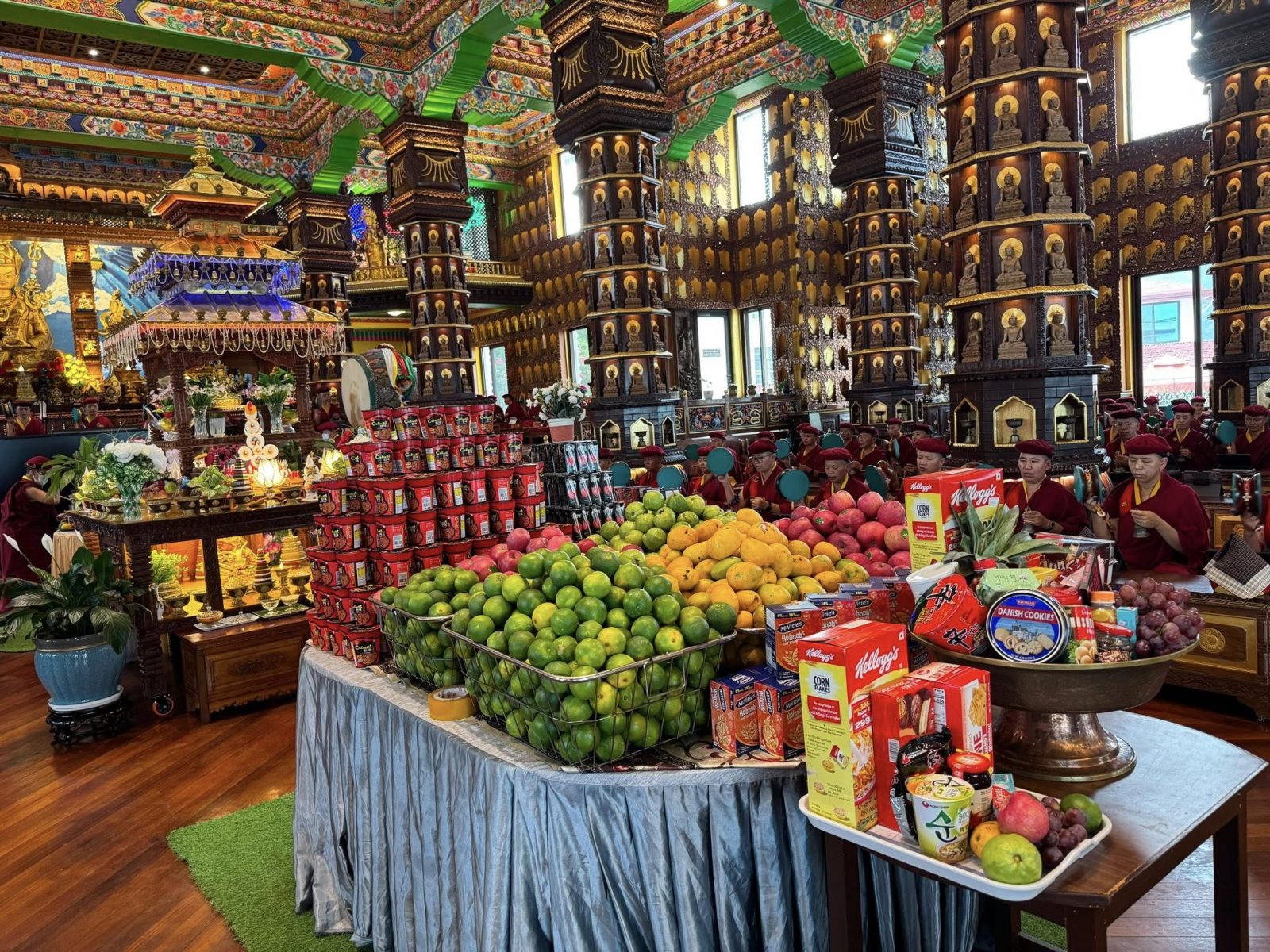
- Tibet, Mongolia, Bhutan: Khandro Tsok, 25th day of each lunar month
Dakini Day is a monthly Vajrayana Buddhist holiday honoring the feminine embodiment of wisdom and enlightenment. Dakinis—literally “sky-goers”—are female beings who appear in visionary experiences and serve as energetic forces inspiring insight and awakening. Each month, tantric practitioners gather to perform feast offerings (Tib.: tsok), a ritualized communal practice involving mantra recitation, visualization, and offerings to prominent female deities such as Yeshe Tsogyal. Dakini Day reflects the central role of feminine wisdom (Skt: prajna) in Vajrayana practice and stands among the most regularly observed days in the tantric calendar.
Guru Day
- Tibet, Mongolia, Bhutan: Lama Tsok, 10th day of every lunar month
Guru Day is a monthly Vajrayana Buddhist holiday that places devotion to the spiritual teacher at its heart, honoring the teacher’s essential role in transmitting initiations and esoteric teachings. Padmasambhava, the 8th-century Indian master credited with bringing tantric Buddhism to Tibet, is the figure Vajrayana Buddhists most widely venerate on this day, particularly in the Nyingma school, where each month’s observance focuses on a different manifestation of Padmasambhava. Practitioners perform guru yoga, recite mantras, and make food offerings to honor the guru and receive blessings. Observed in all Tibetan Buddhist schools, Guru Day reflects the tradition’s understanding that the living relationship between teacher and student is itself a vehicle of awakening.
Kalachakra Day
- Tibet, Bhutan: Dukhor Duchen, 15th day, 3rd lunar month
- Buryatia: Duinkhor Khural, 3rd day, 3rd lunar month
Tibetan Buddhists observe Kalachakra Day, primarily in the Gelug and Jonang schools, which focus on the teachings of the Kalachakra, or “Wheel of Time,” Tantra. Practitioners believe the effects of reciting mantras, making offerings, and other positive actions multiply greatly on this day. In Bhutan, monastics also perform blessings for vehicles and machinery. The Dalai Lama and other renowned teachers have regularly given large-scale initiations on Kalachakra Day, drawing practitioners from around the world.
Buddhism for Beginners is a free resource from the Tricycle Foundation, made possible by the generous support of the Tricycle community. It reflects our mission to make the Buddha’s teachings widely available. We welcome your feedback at feedback@tricycle.org.


