Los Angeles is a city of stark contradictions. Sun-drenched optimism lives in the shadow of volatile anxiety; sprawling, glittering wealth exists just blocks from profound poverty. Recently, this inherent tension has been amplified by a series of calamities that have left us emotionally raw and philosophically adrift. Raging fires periodically turn the sky an apocalyptic orange, social upheaval spills into the streets, and the chilling fear of ICE raids tears through communities. The public dialogue surrounding these events is often fiercely political, designed to sort us into neat, opposing camps: good or bad, right or wrong, us or them.
Yet in the smoky aftermath of the Eaton Fire, an unusual feeling emerged—not of division but of connectedness. Strangers offered spare rooms to those who had evacuated. Community centers overflowed with donations. There was a palpable sense of people simply helping people. I am reminded of a story shared on comedian Conan O’Brien’s podcast by his assistant, Sona Movsesian, who lost her home in that very fire. She described the surreal experience of that loss, and how she and her neighbors were immediately enveloped by an outpouring of support from their community. Conan likened it to the spirit in New York City after 9/11—a brief, profound moment when the usual barriers fell away, and people sat together, sharing stories and sustenance. It was beautiful, and, like all such moments, heartbreakingly short-lived.
This left me, and many others, with a confusing tangle of feelings. Are Angelenos inherently good and compassionate, or are we selfish and divided? The evidence points to both. We see incredible generosity alongside shocking indifference. We feel a deep craving for connection and community, while simultaneously feeling hardened by the crowd and desperate for privacy. We are capable of holding immense joy in one hand and simmering anger in the other. This internal conflict can feel like a personal failing, a sign that we are not spiritually or emotionally “together.”
Yet what if this messiness weren’t a flaw but a fundamental truth of the human condition?
Buddhist philosophy offers a gentle correction to this feeling of being fractured: The self is not a single, solid thing but a dynamic flow of thoughts, feelings, and sensations. Our suffering, or dukkha, arises from resisting this natural flux. We cling to what feels good and push away what feels bad, launching an endless inner battle. This struggle to freeze our experience into a permanent “self ” is the very root of our pain. The path forward, then, isn’t to eliminate life’s mess but to change how we meet it. Our task is to cultivate an awareness that can welcome all of it—the joy, the anger, the fear, the love—without being overthrown by any single part. This is how we make peace with our complexity, discovering that a heart spacious enough to hold it all is, itself, the essence of wisdom and compassion.
An illustration of this capacity came during the Wisdom for Life “Power of Love Summit,” in a talk by Trudy Goodman, meditation teacher and founder of InsightLA. The summit brought together Buddhist teachers, scientists, and relationship specialists to explore love’s many dimensions, and Goodman’s reflection offered a profound, heartfelt perspective from the aftermath of the city’s blazes. She spoke of taking a stroll by the ocean, describing the scene: “I went for a walk on the beach the other day here in Los Angeles, where I am, and there were these black beautiful stripes on the beach,” she said. “I’d never seen anything like that. . . . And then I looked closely, and I saw charred bits, and I realized, oh, my goodness, this is the debris from the fires. This is people’s houses, cars, and computers, and kitchens, everything.”
She described the simultaneous horror of that realization against the timeless, indifferent backdrop of the waves. “I think spending time in nature is another way to access the compassion that nature offers to us . . . we have life and death, we have the giving birth, a joyful side of life, and the dying side of life. And I think the most loving thing we can do is learn how to hold it all. Same heart.”
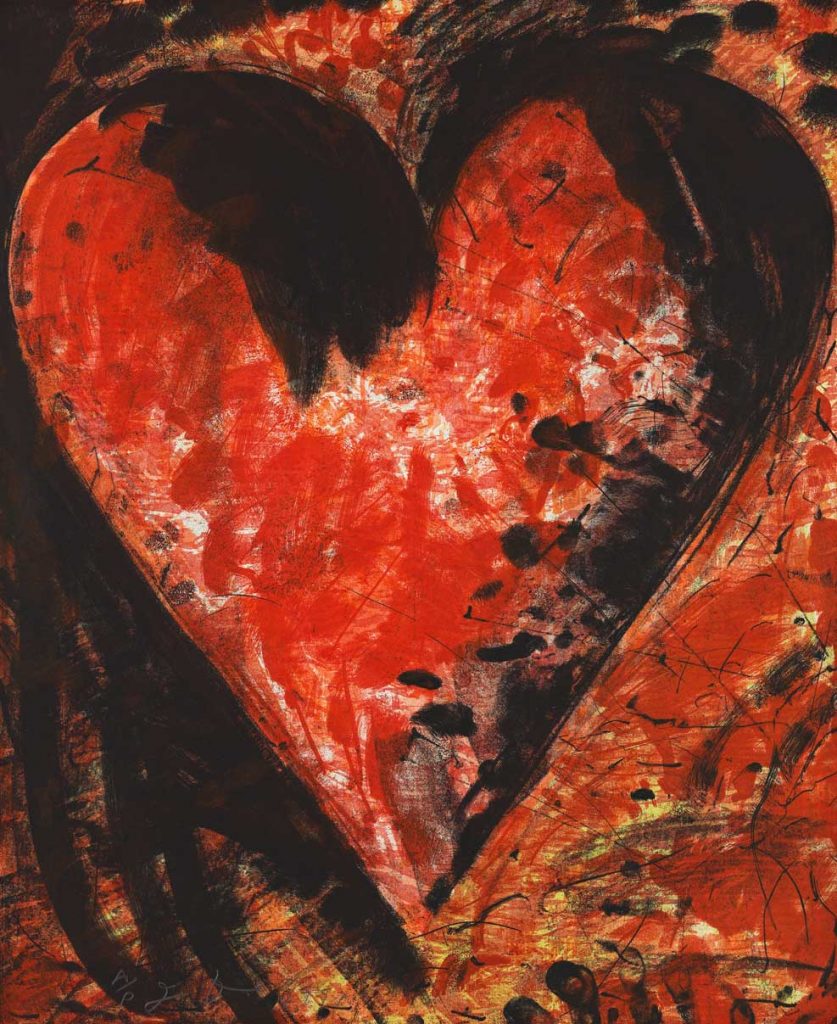
Same heart. This simple phrase had a powerful effect on me. It’s a perfect, visceral description of the capacity to hold death and life, sorrow and wonder, devastation and beauty, not as opposing forces but as coexisting aspects of a single, vast reality. It’s all happening in the same field of experience, felt by the same heart.
We so often fall back into “all-or-nothing” thinking because it feels clear and, in a sense, easy. It provides a simple, if false, certainty. A personal experience during the fires brought this into sharp focus for me. In the midst of all the chaos, my neighbor, who had already evacuated to safety, texted me with a request: “Could you please water my plants? I feel so sorry for them.”
We cling to what feels good and push away what feels bad, launching an endless inner battle.
My immediate reaction was a mix of surprise and frustration. Here I was, feeling the grit of ash on my skin, the smell of smoke permeating my unwashed hair, watching dishes pile up as we tried desperately to conserve water. Hadn’t she heard the urgent pleas to refrain from nonessential water use, as firefighters were literally running out of water to combat the blaze? Didn’t she know the air was unbreathable, the streets deserted? A part of me tightened, thinking, “How can she be so out of touch?”
And yet.
“I feel sorry for them.” I paused and checked my heart again, beneath the initial reaction. Yes, there it was too: a genuine pang of empathy. The plants were dry and thirsty. The trees were dying. The earth was suffering. I felt that sorrow as well. Were our hearts really so different? Hers held concern for the living things in her care. Mine held concern for the larger community and a frustrated sense of scarcity. Both were forms of care. Both were valid. The problem wasn’t her request or my reaction; it was my mind’s insistence that only one could be “right.”
Buddhism offers a radical alternative to this inner conflict. It teaches that our fundamental nature—buddha-nature—is inherently pure and awake. Qualities like compassion, wisdom, and kindness are not foreign substances we must manufacture through sheer force of will. They are already within us, like seeds waiting for the right conditions to grow.
So many of us exhaust ourselves trying to force ourselves to feel a certain way. In my neighbor’s case, I could have berated myself: “I’m a terrible person—I should be more accepting and generous.” But this spiritual striving is just another form of violence against ourselves. The more skillful path, illuminated by Buddhist practice, is to gently shine a light on the seeds of compassion that are already there.
She cared for the plants, and so did I. I could get behind that. I didn’t need to wish a new feeling into being; I simply needed to acknowledge and nurture the one that was already present. The fear, frustration, and worry were also there— true and valid. The practice is not to erase them but to make space for them all. They can coexist in the same heart.
This is the essence of practices found across Buddhist traditions, each offering a way to touch the wholeness of our same heart.
In Theravada Buddhism, metta (loving-kindness) meditation doesn’t ask us to fabricate a feeling that isn’t there. Instead, it begins by recognizing our own innate wish for peace, then gently extends that same simple wish to others. We are encouraged to start exactly where we are, perhaps by picturing a beloved pet, so that the heart’s natural capacity for care unfolds without force.
In Mahayana Buddhism, the focus is on bodhicitta—the “awakened heartmind.” This is not something we must construct but the very potential for boundless compassion that already resides within us. Sometimes called our “soft spot,” this tender, open quality is our true nature. Even when it is clouded by confusion or fear, bodhicitta remains present and undiminished, like the vast sky behind passing storms.
In Vajrayana Buddhism, the practice of tonglen is perhaps the most direct engagement with life’s painful contradictions. We consciously breathe in the suffering, pain, and heat of ourselves and others, and breathe out feelings of coolness, peace, and spaciousness. This is a profound alchemy that occurs within the same heart, transforming the energy of rejection into the energy of compassionate embrace.
The beauty of the Buddhist path is that it makes room for all of life’s contradictions. It begins by acknowledging an underlying truth: Yes, there is suffering. This is not a condemnation but a clear-eyed recognition of reality. We often believe our survival lies in avoiding or numbing this truth, yet that very resistance magnifies our pain. Real resilience emerges when we turn toward it—when we open to the reality of suffering and the complexity of our own hearts. In that courageous, open space, we discover our capacity to acknowledge pain while simultaneously touching our innate softness. It is this conscious embrace of the whole that allows us to genuinely connect with the suffering and the beauty of the entire universe.
The beauty of the Buddhist path is that it makes room for all of life’s contradictions.
This wisdom was effortlessly distilled by the late Zen teacher Shunryu Suzuki Roshi. When his student David Chadwick confessed, “Inside, there’s a yes and a no,” Suzuki offered a simple, life-changing directive: “Follow the yes.” He was not dismissing the “no” or suggesting we suppress our fear or judgment. Instead, he was pointing to a fundamental choice we can make within the field of our own awareness. We can fully acknowledge the “no”—the fear, the resistance, the critical voice—without granting it control. The practice is to notice it all, and then consciously choose to nurture and act from the “yes,” allowing that part of our complex heart to steer the ship gently.
This dance of creation and destruction, hope and despair, is timeless. The Chinese poet Li Po (701–762 CE), whose life was deeply influenced by Taoism and Chan Buddhism, captured this same feeling with aching clarity over a millennium ago. Having witnessed the devastation of war, he wrote of a city reduced to ruins, where the impermanence of human endeavor is set against the enduring face of nature:
At Chin-Ling
Tucked into the earth, Chin-ling City,
the river curving past, flowing away:there were once a million homes here,
and red towers along narrow lanes.A vanished country all spring grasses
now, the palace buried in ancient hills,this moon remains, facing the timeless
island across Hot Lake waters, empty.
The poem is a testament to the same heart. There is deep sorrow in the “vanished country” and “ancient hills” that bury a palace. And there is a serene, abiding beauty in the “spring grasses” and the moon that “remains.” Li Po doesn’t resolve the tension; he holds it, allowing the grief and the beauty to illuminate each other.
On a beach in modern Los Angeles, a wise teacher looked at the charred remnants of people’s lives and saw not just tragedy but also a strange, obscure beauty. She didn’t turn away from the horror, but she also didn’t close her heart to the wonder. She said yes to the sadness and the joy, yes to the death and the life.
This is our practice. It is not about achieving a state of blissful, conflict-free numbness. It is about cultivating a heart so spacious, so resilient, that it can hold it all—the political divisions, the personal judgments, the devastating fires, and the unexpected kindnesses. We can feel our hearts tighten in fear and judgment, and we can also feel them soften with recognition and compassion. We can water the seeds of “yes” without denying the existence of “no.”
We learn to trust that this heart, this very one, with all its contradictions and complexities, is already vast enough. It is, and has always been, the same heart.

Thank you for subscribing to Tricycle! As a nonprofit, we depend on readers like you to keep Buddhist teachings and practices widely available.